L'Église de Nossa Senhora da Assunção
Cette église d'apparence simple cache un secret sous son portail Renaissance.
L'histoire complète se débloque dans le tour
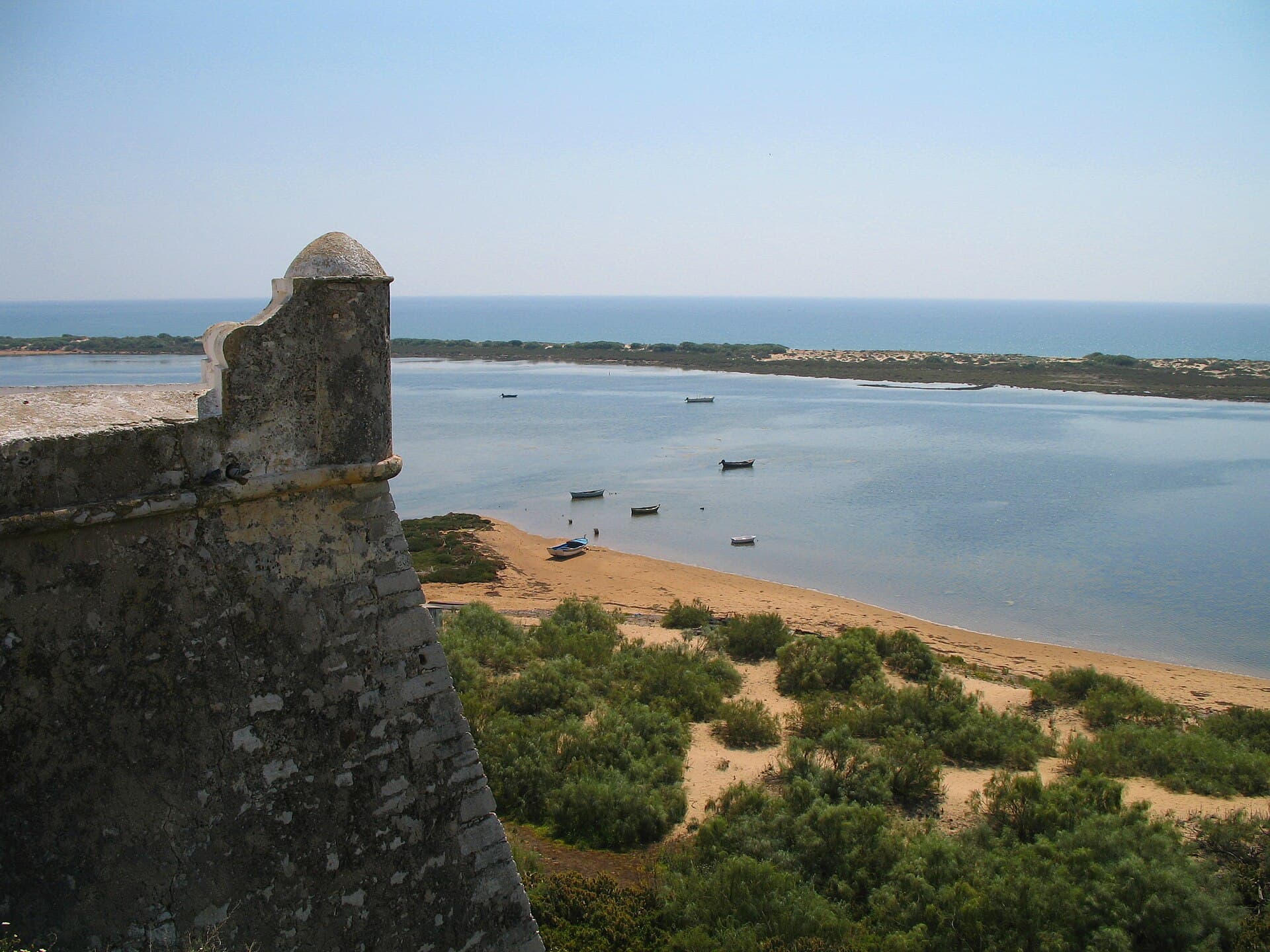 Marc Ryckaert (MJJR) / CC BY 2.5, via Wikimedia Commons
Visite audio autoguidée de Cacela Velha — parcours GPS à pied, lecture hors ligne, narration en 32 langues.
“Là où les murmures anciens rencontrent le ballet des marées.”
Pas les cartes postales. Les histoires que même les habitants ignorent — soufflées à l'oreille, là où elles se sont passées.
Cette église d'apparence simple cache un secret sous son portail Renaissance.
Le 'Velha' du nom est simple, mais 'Cacela' raconte l'histoire d'une autre langue.
Ce fort du XVIIIe siècle monte la garde, mais ses racines plongent bien plus profondément, à l'époque de différents conquérants.
Découvrez tous les secrets de Cacela Velha
Chaque adresse, chaque révélation en entier — dans ton oreille, là où elle s'est passée.
Tu choisis tes lieux. Tu marches. La voix te révèle ce que les autres ignorent.


Votre visite audioguidée de Cacela Velha vous attend — choisissez vos lieux, votre langue, et lancez-vous dès votre arrivée.
AcheterLume intègre un guide en réalité augmentée. Levez votre téléphone : sa caméra montre la rue devant vous, avec une flèche lumineuse posée sur l'image réelle qui pointe toujours vers votre prochain arrêt — aucune carte à déchiffrer, aucun mauvais virage. Comme tout dans Lume, ça fonctionne entièrement hors-ligne.
Cacela Velha, un minuscule hameau blanchi à la chaux, perché sur une basse falaise à l'extrémité est du Parc Naturel de Ria Formosa, offre une évasion sereine en Algarve. Ce village de poche, abritant une cinquantaine d'habitants, peut être exploré à pied en quelques minutes, mais son charme perdure longtemps après. C'est un endroit où le temps semble ralentir, où le parfum du bougainvillier flotte dans l'air, et où les vues imprenables sur la lagune inspirent une contemplation tranquille.
Ce qui distingue vraiment Cacela Velha, c'est son caractère préservé. Contrairement à de nombreuses destinations animées de l'Algarve, vous ne trouverez pas ici de boutiques de souvenirs ou de promenades bondées. Au lieu de cela, le village offre un aperçu authentique de la vie portugaise traditionnelle, avec ses maisons blanches simples souvent ornées de garnitures bleues ou jaunes. L'attrait principal est sans aucun doute le paysage en constante évolution de la Ria Formosa, une zone humide protégée d'importance internationale, où les bancs de sable changeants, les eaux turquoises calmes et la diversité de l'avifaune créent un chef-d'œuvre en constante évolution.
Que vous soyez attiré par sa riche histoire, sa beauté tranquille ou l'attrait de sa plage de marée unique, Cacela Velha promet une expérience à la fois intemporelle et profondément gratifiante. C'est une destination pour la contemplation silencieuse, la photographie évocatrice et une connexion authentique au patrimoine naturel et culturel de l'est de l'Algarve.
L'histoire de Cacela Velha s'étend sur des millénaires, avec des preuves d'occupation phénicienne et romaine. Son emplacement stratégique, surplombant l'entrée de la Ria Formosa, en faisait un point de navigation et un port clé pour les premiers navigateurs. Des fouilles archéologiques ont mis au jour des bassins de salaison de poisson romains, des fragments de marbre et des indices de commerce ancien, soulignant son importance précoce le long de la côte de l'Algarve. Certains spéculent même sur une ville celtibère perdue dans les environs, ses secrets encore enfouis sous terre.
Pendant la période islamique, du VIIIe au XIIIe siècle, Cacela Velha, alors connue sous le nom de Qast'alla Daraj, a prospéré en tant que ville fortifiée. Le géographe du XIIe siècle al-Idrīsī la décrivit comme une forteresse bien peuplée au bord de la mer, entourée de jardins abondants et de champs de figuiers. Les fouilles révèlent un quartier almohade avec des maisons regroupées autour de patios, des rues avec des égouts publics et d'importants silos à grains, soulignant son rôle de centre agricole. Le village fut également le lieu de naissance du célèbre poète arabe du Xe siècle Ibn Darraj al-Qastalli, dont l'héritage est encore célébré aujourd'hui.
Dans les années 1240, la forteresse maure de Cacela Velha tomba aux mains des forces du roi Sancho II, menées par Paio Peres Correia et l'Ordre de Santiago, marquant son intégration au Portugal chrétien. Le roi Dinis lui accorda plus tard une charte en 1283, l'élevant au statut de ville. Cependant, sa proéminence commença à décliner au cours des siècles suivants. L'ensablement progressif de la rivière Pedra Alva et la formation des dunes de la Ria Formosa éloignèrent la ville de la mer, diminuant ses activités maritimes.
Au XIVe siècle, des attaques de pirates répétées entraînèrent un exode de la population, de nombreux habitants se déplaçant vers des fermes intérieures. Le tremblement de terre dévastateur de 1755 porta un coup final, endommageant gravement ce qui restait et conduisant finalement à la dissolution de son statut de municipalité et à son intégration à Vila Real de Santo António. Malgré ces revers, Cacela Velha joua un rôle crucial, bien qu'étonnant, dans l'histoire du Portugal du XIXe siècle. En 1833, pendant la Guerre Libérale, 2 500 troupes libérales débarquèrent ici, initiant une campagne qui conduirait à la reconquête de Lisbonne et à un tournant dans le conflit.
Le tissu historique de Cacela Velha, paradoxalement, a survécu grâce à son obscurité même. Contrairement à d'autres villes qui ont subi une modernisation, son développement minimal a préservé ses paysages de rues traditionnels et son intégrité architecturale. Depuis la fin du XXe siècle, les efforts se sont concentrés sur la conservation du patrimoine, avec sa désignation comme Bien d'Intérêt Public et son intégration au Parc Naturel de Ria Formosa. Aujourd'hui, les découvertes archéologiques, les festivals locaux comme les 'Noites da Moura Encantada' et les traditions orales vivantes continuent de souligner sa pertinence durable pour l'identité régionale et le tourisme culturel.
Cacela Velha est un village à savourer lentement, où les principales attractions sont ses vues et son atmosphère tranquille. Commencez par la Forteresse de Cacela Velha, une structure du XVIIIe siècle construite sur des fondations mauresques, offrant des vues imprenables sur la lagune de la Ria Formosa et l'océan Atlantique. Adjacente au fort se trouve l'Église de Nossa Senhora da Assunção, une église blanchie à la chaux du XVIe siècle avec un portail Renaissance, reconstruite après le tremblement de terre de 1755. Son extérieur simple dissimule un intérieur avec des retables baroques et des carreaux portugais traditionnels.
Promenez-vous dans les rues étroites et sinueuses du village, admirant les maisons traditionnelles de l'Algarve avec leurs façades blanches distinctives et leurs accents colorés. Cherchez les panneaux de rue dédiés aux poètes, un clin d'œil à l'héritage littéraire du village. Le Miradouro de Cacela Velha (point de vue) près de l'église et du fort offre l'une des vues les plus célèbres de la Ria Formosa, particulièrement magique à marée basse lorsque les bancs de sable émergent, ressemblant à une miniature des Maldives.
Depuis le village, un chemin mène à Praia da Fábrica, souvent considérée comme l'une des plus belles plages du Portugal. À marée basse, vous pouvez traverser la lagune peu profonde pour atteindre les sables immaculés. À marée haute, les pêcheurs locaux proposent de courtes promenades en bateau. La plage elle-même est intacte, avec du sable doré, des eaux claires et un sentiment de tranquillité sauvage, parfaite pour de longues promenades et l'observation des oiseaux dans le Parc Naturel de Ria Formosa.
Cacela Velha est magnifique toute l'année, mais le meilleur moment pour visiter est pendant la basse saison (printemps, automne et hiver) lorsque le village est calme, la lumière est superbe pour la photographie et le temps est doux. Le printemps (mars à mai) et l'automne (septembre à novembre) offrent des températures agréables et moins de monde, idéales pour l'exploration. L'été (juin à août) est parfait pour profiter de la plage et de la lagune, mais le village lui-même peut être très fréquenté. Vérifiez toujours les horaires des marées avant votre visite, car le paysage de la Ria Formosa et l'accès à Praia da Fábrica sont considérablement affectés par les marées. La marée basse révèle les magnifiques bancs de sable et permet de marcher jusqu'à la plage.
Cacela Velha est mieux accessible en voiture, car les options de transport public sont limitées, ce qui contribue à son atmosphère paisible. Il y a un parking gratuit à l'entrée du village, bien qu'il puisse se remplir rapidement en été, il est donc conseillé d'arriver tôt ou en fin d'après-midi. De l'aéroport de Faro, il faut compter environ 40 minutes de route vers l'est.
Le village lui-même est petit et facilement praticable à pied avec des chaussures confortables, car certaines rues sont pavées. Il n'y a pas de frais d'entrée pour visiter le village ou ses plages. Pour l'accès à la plage de Praia da Fábrica, vérifiez les horaires des marées : à marée basse, vous pouvez traverser la lagune peu profonde ; à marée haute, les pêcheurs locaux proposent des promenades en bateau pour quelques euros depuis Sítio da Fábrica. Sachez qu'il n'y a pas d'installations sur Praia da Fábrica – pas de toilettes, de nourriture, d'eau ou d'ombre – alors apportez tout ce dont vous avez besoin. Le village compte quelques restaurants, souvent spécialisés dans les fruits de mer frais, y compris les huîtres et les palourdes locales.
Cacela Velha en coréen, en chinois ou en hébreu — et dans 29 autres langues, chaque étape narrée par une voix native. La plus large gamme de langues de tous les audioguides autoguidés.
Disponible en :