Amana Woolen Mill
La filature de laine d'Amana, pierre angulaire des Colonies, a une histoire marquée par l'innovation et des revers dramatiques.
L'histoire complète se débloque dans le tour
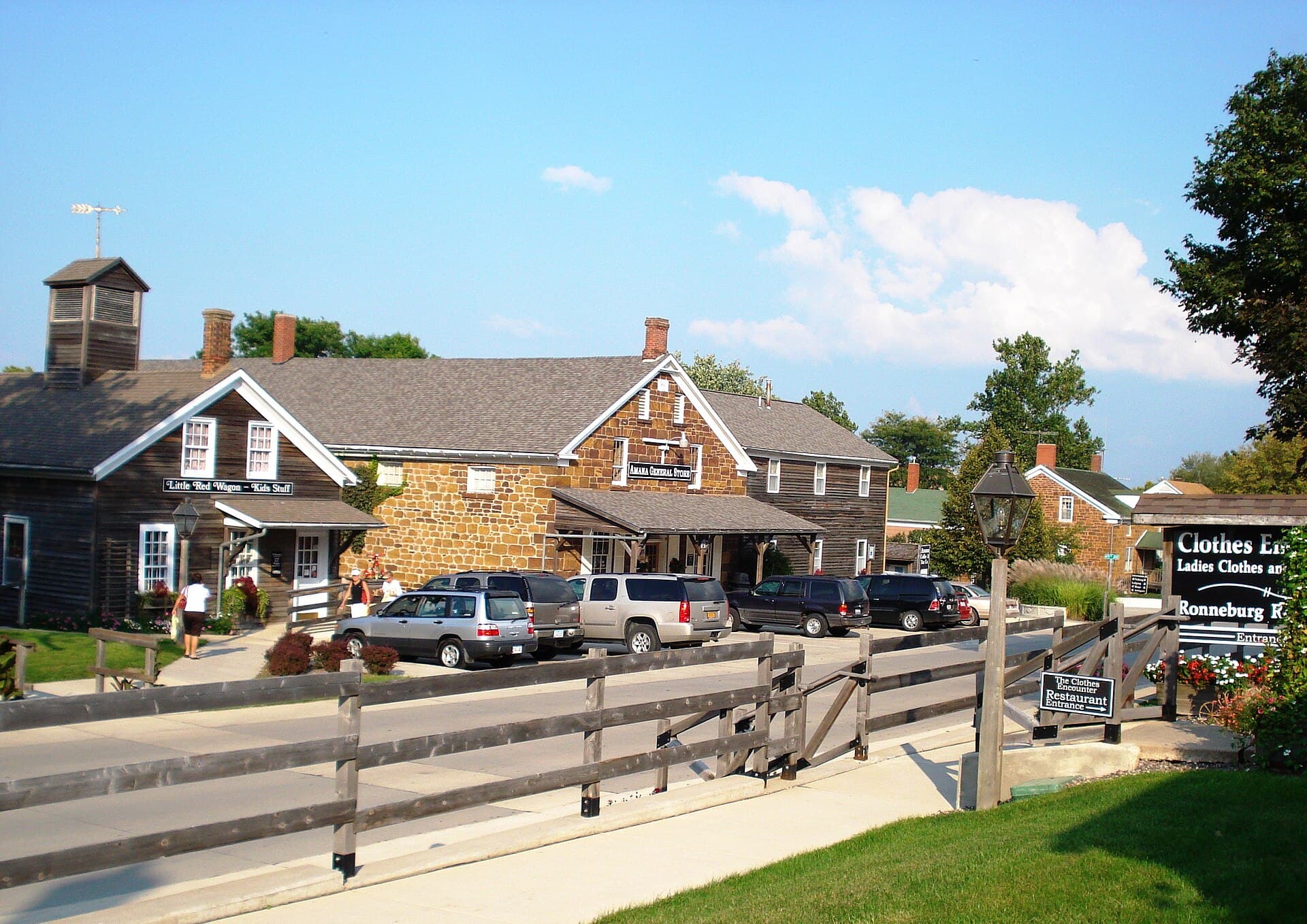 Kepper66 at en.wikipedia / public domain, via Wikimedia Commons
Visite audio autoguidée de Amana — parcours GPS à pied, lecture hors ligne, narration en 32 langues.
“Là où l'héritage allemand rencontre l'ingéniosité communautaire.”
Pas les cartes postales. Les histoires que même les habitants ignorent — soufflées à l'oreille, là où elles se sont passées.
La filature de laine d'Amana, pierre angulaire des Colonies, a une histoire marquée par l'innovation et des revers dramatiques.
Imaginez une ville où personne n'avait de cuisine chez soi.
Le nom 'Amana' n'était pas le premier choix pour cette colonie communale.
Découvrez tous les secrets de Amana
Chaque adresse, chaque révélation en entier — dans ton oreille, là où elle s'est passée.
Tu choisis tes lieux. Tu marches. La voix te révèle ce que les autres ignorent.


Votre visite audioguidée de Amana vous attend — choisissez vos lieux, votre langue, et lancez-vous dès votre arrivée.
AcheterLes Colonies d'Amana, un site historique national dans le centre-est de l'Iowa, offrent un aperçu fascinant de l'une des sociétés communales les plus anciennes d'Amérique. Composées de sept villages – Amana, East Amana, West Amana, South Amana, High Amana, Middle Amana et Homestead – ces colonies ont été fondées en 1855 par des piétistes allemands en quête de liberté religieuse. Pendant plus de 80 ans, les Inspirationnistes ont vécu une vie communautaire, partageant les ressources et travaillant en coopération, guidés par les principes d'autosuffisance et de savoir-faire de qualité.
Aujourd'hui, les Colonies d'Amana allient leur profond héritage à l'entrepreneuriat moderne, attirant des centaines de milliers de visiteurs chaque année. Vous y trouverez une architecture du XIXe siècle magnifiquement préservée, des boutiques artisanales et des industries artisanales traditionnelles, aux côtés d'une cuisine d'inspiration allemande et de festivals tout au long de l'année. C'est un lieu où le passé est palpable, mais le présent prospère, offrant une expérience unique du Midwest.
L'histoire des Colonies d'Amana commence en Allemagne au XVIIIe siècle, enracinée dans un mouvement religieux appelé le piétisme. Dirigée par des figures comme Eberhard Ludwig Gruber et Johann Friedrich Rock, la Communauté de la Vraie Inspiration prônait un renouveau de la foi par la réflexion, la prière et l'étude de la Bible, croyant que Dieu pouvait inspirer les individus directement par le Saint-Esprit. Confrontée à la persécution et aux difficultés économiques en Allemagne, la communauté, sous la direction de Christian Metz, chercha la liberté religieuse en Amérique.
Ils s'installèrent d'abord près de Buffalo, New York, en 1843-44, établissant la Société Ebenezer et formalisant leur mode de vie communal en mettant en commun les ressources et en partageant la propriété. Cependant, à mesure que leur population atteignait environ 1 200 personnes et que des préoccupations surgissaient quant aux influences extérieures de Buffalo, les Inspirationnistes commencèrent à chercher des terres agricoles plus isolées. En 1855, ils trouvèrent ce qu'ils cherchaient dans la vallée de la rivière Iowa, achetant 26 000 acres de terres fertiles avec une abondance de force hydraulique et de matériaux de construction. Ils établirent leur première colonie en Iowa, choisissant le nom Amana, signifiant 'reste fidèle', tiré du Cantique des Cantiques.
Six villages furent initialement fondés à un ou deux miles de distance : Amana, East Amana, West Amana, South Amana, High Amana et Middle Amana. Le village de Homestead fut ajouté en 1861, offrant à la Colonie un accès crucial au chemin de fer. Pendant 80 ans, les Colonies d'Amana fonctionnèrent comme une commune autosuffisante. Les résidents se voyaient attribuer des emplois, recevaient un logement, des soins médicaux, des repas, des produits de première nécessité et la scolarisation de leurs enfants, avec une petite allocation d'achat pour le magasin général. La vie était simple et tranquille, axée sur le bien commun et la fréquentation fréquente de l'église. L'agriculture et l'artisanat qualifié, en particulier la production de laine et de calicot, étaient essentiels à leur économie, les reliant au monde extérieur.
Ce mode de vie communal a profondément façonné les Colonies d'Amana, de leur architecture unique – un mélange de styles coloniaux américains et allemands adaptés aux besoins pratiques de la vie communautaire – à leurs traditions culinaires distinctives. Cependant, le début de la Grande Dépression en 1932, associé à un désir croissant parmi les jeunes générations d'atteindre des objectifs individuels, a conduit à un moment charnière connu sous le nom de 'Grand Changement'. La communauté a voté pour passer du communalisme à une société à but lucratif, l'Amana Society, Inc., qui continue de gérer les terres et les grandes entreprises aujourd'hui, tout en encourageant les entreprises privées. Malgré ce changement, l'Église d'Amana a été maintenue, et le paysage, avec ses plus de 450 bâtiments de l'ère communale, reflète encore vivement son héritage unique.
Explorer les Colonies d'Amana est un voyage à travers le temps et la tradition. Commencez par le Centre des visiteurs des Colonies d'Amana pour un aperçu de l'histoire de la région et pour vous procurer un guide. Le Musée de la Société du Patrimoine d'Amana, réparti sur plusieurs bâtiments du XIXe siècle, y compris une école et la Maison Noé, offre une plongée plus profonde dans la vie communale avec des expositions et un film de 22 minutes.
Visitez la filature de laine d'Amana, en activité continue depuis 1857, où vous pourrez voir la production textile traditionnelle et acheter des couvertures et d'autres articles. Le magasin de meubles d'Amana, occupant une partie de l'ancienne filature de calicot, présente des meubles artisanaux de qualité. Pour un avant-goût du passé, visitez la seule cuisine communale intacte restante à Middle Amana, qui fait maintenant partie du Musée du Patrimoine d'Amana, et envisagez de vivre l'expérience d'un repas communal traditionnel. Le magasin général de High Amana, conservé tel qu'il était en 1918, offre une expérience de magasinage nostalgique.
La Guilde des Arts d'Amana à High Amana, installée dans une ancienne église de village, promeut l'artisanat traditionnel comme le travail du bois, la vannerie et la ferblanterie à travers des ateliers et des événements. Vous pouvez également explorer diverses boutiques artisanales dans les villages, offrant de tout, des courtepointes et broderies aux vins locaux et viandes fumées. L'architecture distincte d'influence allemande, avec des bâtiments en brique, en grès et en bois, est visible dans chaque village.
Les Colonies d'Amana sont une destination accueillante toute l'année, chaque saison offrant des charmes uniques. La meilleure période pour un temps agréable se situe généralement de mai à septembre, avec des températures maximales quotidiennes comprises entre 18°C et 30°C. Juillet est le mois le plus ensoleillé et offre des niveaux d'humidité agréables. L'automne, en particulier septembre et octobre, transforme le paysage avec un feuillage d'automne éclatant et propose des événements comme l'Apfelfest (fête de la pomme) et le plus grand festival, l'Oktoberfest, avec de la musique, de la nourriture et de la bière allemandes. L'hiver apporte le Winterfest en janvier, tandis que le printemps accueille le Maifest début mai.
Les Colonies d'Amana sont situées dans le centre-est de l'Iowa, à environ 32 kilomètres au sud de Cedar Rapids. Les sept villages sont répartis sur une boucle de 27 kilomètres, il est donc recommandé d'avoir une voiture pour explorer. De nombreuses entreprises et attractions ont leurs racines dans l'histoire communale, et les artisans locaux perpétuent les métiers traditionnels. Dîner 'à la familiale' est une tradition populaire dans de nombreux restaurants, faisant écho aux repas communaux du passé, avec de grands bols de plats d'accompagnement passés autour de la table. Bien que les plats principaux ne soient généralement pas rechargeables, les accompagnements le sont souvent. N'oubliez pas de goûter à la cuisine traditionnelle d'inspiration allemande, aux vins locaux et aux produits de boulangerie.
Pour les besoins médicaux, la Colonies Family Medical Clinic à Amana offre des soins primaires complets et des services de radiographie sur place, avec des horaires pratiques les lundis, mardis, mercredis et vendredis, et fermée les jeudis. Certains services, comme les soins d'urgence pour les lacérations et les fractures, sont également disponibles.
Amana en coréen, en chinois ou en hébreu — et dans 29 autres langues, chaque étape narrée par une voix native. La plus large gamme de langues de tous les audioguides autoguidés.
Disponible en :