George Washington's Study
Even as president, Washington maintained a strict private space.
Full story unlocks in the tour
 Jim.henderson / Public domain, via Wikimedia Commons
Self-guided audio walking tour of Mount Vernon — GPS route, offline playback, story-driven narration in 32 languages.
“Walk the grounds where a nation's first leader shaped his vision.”
Not the postcards. The stories even locals don't know — whispered in your ear, right where they happened.
Even as president, Washington maintained a strict private space.
The nation wanted to honor its first president in the capital, but Washington had other plans for his final resting place.
Mount Vernon wasn't always called Mount Vernon.
Discover every secret of Mount Vernon
Every address, every reveal in full — in your ear, right where it happened.
You pick your stops. You walk. The voice reveals what the others miss.
Your self-guided audio tour of Mount Vernon is ready — pick your landmarks, choose your language, and start the moment you arrive.
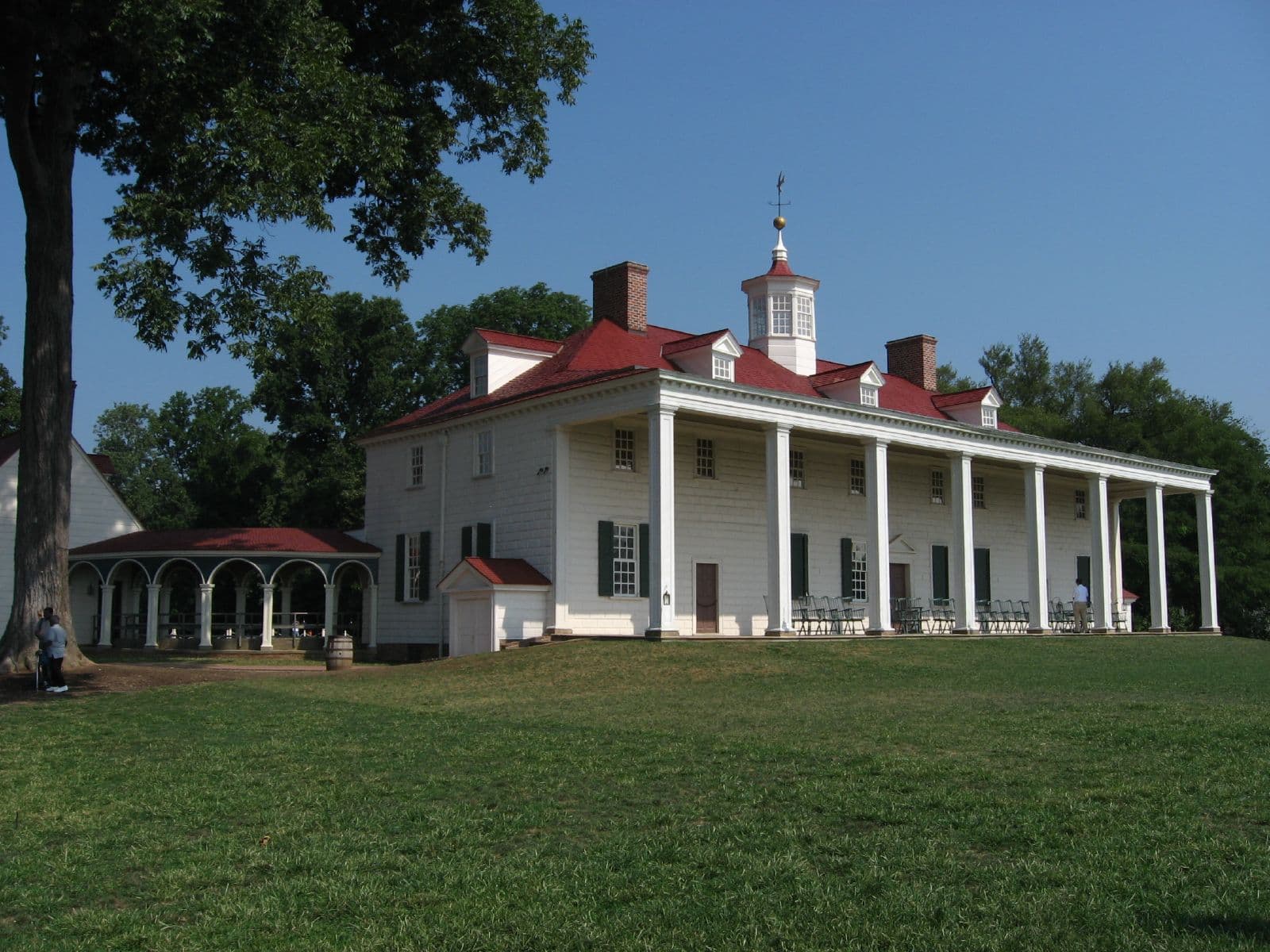
BuyMount Vernon, the enduring estate of George Washington, stands as a profound testament to early American history and the life of its most revered leader. Located along the Potomac River in Fairfax County, Virginia, approximately 15 miles south of Washington, D.C., this meticulously preserved plantation offers an immersive journey into the 18th century. More than just a house, Mount Vernon is a sprawling complex encompassing the Mansion, expansive gardens, a working farm, and numerous outbuildings, all overseen by Washington himself.
Stepping onto the grounds, visitors are invited to explore the personal world of the nation's first president, from the architectural details he personally supervised to the innovative agricultural practices he championed. The estate serves as a powerful reminder of the ideals that shaped a fledgling nation and the complex realities of colonial life. With over a million visitors annually, Mount Vernon remains one of America's most popular historic destinations, offering a unique blend of historical insight, natural beauty, and contemplative spaces.
The story of Mount Vernon begins long before George Washington's ownership. The land was originally part of a 5,000-acre grant secured in 1674 by John Washington, George Washington's great-grandfather. Initially known as "Little Hunting Creek," the property passed down through the Washington family. In 1734, George Washington's father, Augustine, moved his family, including a two-year-old George, into a new one-and-a-half-story home built on the site, which would form the core of the future mansion.
Upon Augustine's death in 1743, the property passed to George's elder half-brother, Lawrence Washington. It was Lawrence who renamed the estate "Mount Vernon" in honor of British Admiral Edward Vernon, under whom he had served in the War of Jenkins' Ear. George Washington began leasing the estate in 1754, finally inheriting it in 1761 after Lawrence's widow passed away. Over the next 45 years, Washington meticulously expanded and refined the estate, transforming the modest farmhouse into the grand 21-room, two-and-a-half-story Palladian-style mansion seen today. He personally oversaw every detail, from design to decoration, even during the Revolutionary War, conscious of how the estate reflected his growing status as a Virginia gentleman and a national leader.
After Washington's death in 1799, the estate faced a period of decline under successive generations of the Washington family. By the late 1850s, the property had shrunk considerably, and the mansion was falling into disrepair. In a remarkable display of civic determination, Ann Pamela Cunningham founded the Mount Vernon Ladies' Association in 1853, a national organization dedicated to preserving the estate. This pioneering preservation group purchased the mansion and 200 acres in 1858 for $200,000, saving it for future generations when neither the federal government nor the state of Virginia would. Today, the Mount Vernon Ladies' Association continues to operate Mount Vernon as a museum and historic site, relying solely on private contributions. It was designated a National Historic Landmark in 1960.
George Washington considered himself a farmer first, and Mount Vernon was his laboratory for agricultural innovation. He implemented advanced farming techniques, including complex crop rotations, the use of nitrogen-fixing crops, and various soil amendments to improve productivity. Visitors can explore the four-acre farm site, where costumed interpreters demonstrate 18th-century farming and fishing practices. Washington also built a unique 16-sided wheat treading barn, where horses would walk over wheat to separate the grain from the husks. His dedication to improving American agriculture was a lifelong pursuit, reflecting his forward-thinking approach to managing his extensive estate.
A visit to Mount Vernon offers a comprehensive look into George Washington's world. Begin at the Donald W. Reynolds Museum and Education Center, where interactive exhibits and artifacts provide context for the estate's history and Washington's life. Then, embark on a tour of the Mansion, stepping into the meticulously restored rooms where George and Martha Washington lived. Note the Palladian architectural style and the detailed craftsmanship Washington oversaw.
Beyond the Mansion, explore the expansive grounds, including four distinct gardens that Washington cultivated. Walk the pathways to the Old and New Tombs, the final resting place of George and Martha Washington, and attend a daily wreath-laying ceremony. The Slave Memorial offers a poignant space for reflection. Discover the working farm, where heritage-breed animals and colonial farming techniques are demonstrated by costumed interpreters. A shuttle can take you to Washington's reconstructed Gristmill and Distillery, open from April to October, offering a glimpse into his commercial enterprises.
Do not miss the various outbuildings, such as the blacksmith shop, greenhouse, and slave quarters, which offer a fuller picture of daily life on the plantation. For a different perspective, consider a sightseeing cruise on the Potomac River, offering views of the estate from the water.
Mount Vernon is open 365 days a year, with hours varying by season. The estate is generally open from 9 AM to 5 PM from April to October, and 9 AM to 4 PM from November to March. For comfortable weather and fewer crowds, the best times to visit are January to February and September to October. Fall offers mild temperatures and beautiful autumn foliage. If you prefer warmer weather, late May to September provides pleasant conditions for outdoor exploration. July and August are the warmest months, with average highs in the mid-70s Fahrenheit.
Mount Vernon is located approximately 15 miles south of Washington, D.C., in Fairfax County, Virginia. Free parking is available on-site. You can also reach Mount Vernon by public transportation (Fairfax Connector bus from Huntington Metro station), shuttle service from Old Town Alexandria, boat cruise, or bike. Purchase tickets online in advance to receive a discount and select a timed entry for the Mansion tour, especially on busy days. General admission includes access to the historic area, gardens, outbuildings, and museums, as well as an audio tour. Wear comfortable shoes, as there is a lot of walking involved, and bring water, particularly on warm days. Bags larger than 16x16x8 inches are not permitted inside the Mansion. Outside food and drink, other than bottled water, are prohibited on the estate, but dining options are available at the Mount Vernon Inn Restaurant and The General's Canteen.
Mount Vernon in Korean, in Chinese or in Hebrew — and 29 more languages, every stop narrated by a native voice. The widest language range of any self-guided audio tour.
Available in: