Amed's Salt Pans
For centuries, the people of Amed have gathered salt, not from sprawling, flat beds, but from an ingenious, surprising material.
Full story unlocks in the tour
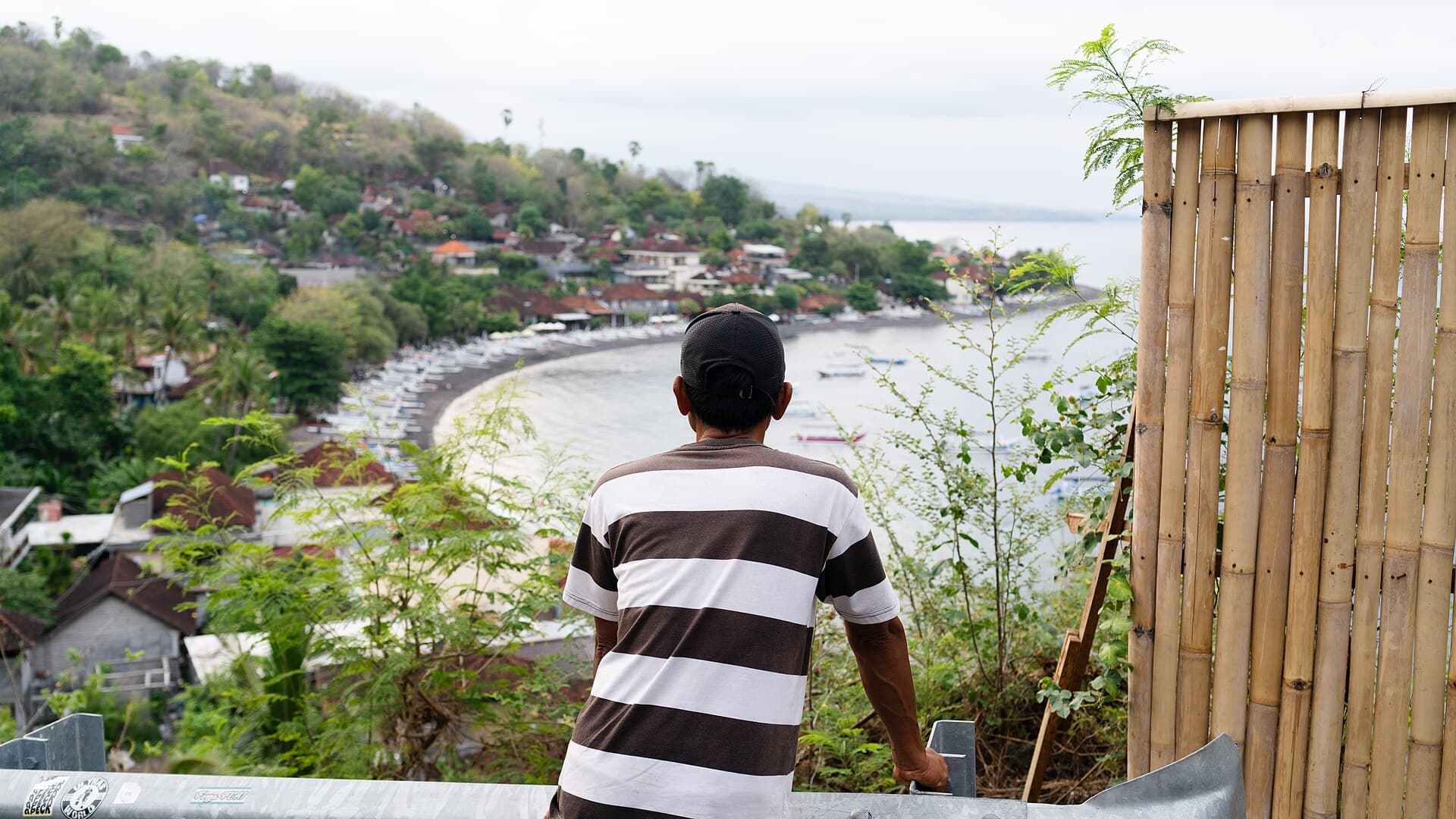 Deerpeter / CC BY-SA 4.0, via Wikimedia Commons
Self-guided audio walking tour of Amed — GPS route, offline playback, story-driven narration in 32 languages.
“Where volcanic shores meet living reefs, and ancient traditions endure.”
Not the postcards. The stories even locals don't know — whispered in your ear, right where they happened.
For centuries, the people of Amed have gathered salt, not from sprawling, flat beds, but from an ingenious, surprising material.
One of Bali's most celebrated dive sites is not a natural marvel, but a casualty of war, now a flourishing underwater metropolis.
Beyond the renowned American wreck, another, more enigmatic vessel rests beneath Amed’s waves, its narrative still largely unwritten.
Discover every secret of Amed
Every address, every reveal in full — in your ear, right where it happened.
You pick your stops. You walk. The voice reveals what the others miss.


Your self-guided audio tour of Amed is ready — pick your landmarks, choose your language, and start the moment you arrive.
BuyLume has a built-in augmented-reality guide. Hold your phone up and its camera shows the street ahead of you, with a glowing arrow laid over the real view that always points to your next stop — no map to puzzle over, no wrong turns. Like everything in Lume, it works fully offline.
Amed, a quiet coastal expanse on Bali's eastern edge, offers a serene escape from the island's more bustling tourist centers. This area, often referred to collectively as Amed, is actually a string of seven traditional fishing villages—Amed, Jemeluk, Bunutan, Lipah, Selang, Banyuning, and Aas—each possessing its own particular allure. Here, the dramatic landscapes are defined by black volcanic sand beaches, a striking contrast to the verdant green of Bali’s interior, all framed by the majestic presence of Mount Agung, Bali’s largest volcano.
Life in Amed unfolds at a measured pace, deeply connected to the rhythms of the sea. Generations of families have relied on traditional fishing methods, venturing out in colorful jukung boats, and practicing the ancient craft of salt farming. This authentic slice of Balinese coastal life, combined with exceptional diving and snorkeling opportunities, makes Amed a cherished destination for those seeking both adventure and peaceful moments by the ocean.
For centuries, Amed was primarily a quiet fishing community, its livelihood intricately tied to the ocean. Families engaged in traditional fishing methods, using jukung (traditional Balinese boats) to provide for themselves, creating a rhythm of life deeply connected with the sea. Alongside fishing, salt farming has been a crucial part of Amed's economy for hundreds of years, with a distinctive method of producing salt through the evaporation of seawater in hollowed-out coconut tree trunks. This practice, preserving a significant part of Amed's cultural heritage, continues to this day.
The mid-1980s marked a turning point for Amed. While a paved road was introduced in 1985, it wasn't until the 1970s and 1980s that scuba divers began to discover the pristine coral reefs and the celebrated USAT Liberty shipwreck, which had been submerged since 1963, near Tulamben. This discovery unveiled a world of underwater beauty that had remained largely unseen, drawing more dive shops and resorts to the area.
Despite the growth of dive tourism, Amed has largely managed to maintain its low-key, unobtrusive presence, avoiding the massive five-star hotels and skyscrapers found in other parts of Bali. The area's relative isolation, with tarmac roads only laid in 2000 and telephone lines in 2003, helped preserve its unique character. Today, Amed balances tradition and tourism, with a growing emphasis on sustainable practices. Balinese Hindu traditions, influenced by the Tri Hita Karana philosophy of harmony with God, people, and nature, remain deeply embedded in daily rituals, temple ceremonies, and festivals. The region is also known for traditional arts like ikat weaving and wood carving, further enriching its cultural identity.
Amed’s allure stems from its diverse attractions, both above and below the water. The area is celebrated for its world-class diving and snorkeling locations. The most famous is the USAT Liberty Shipwreck, a flourishing artificial reef near Tulamben, teeming with marine life. Closer to Amed, explore the Japanese Shipwreck in Lipah Bay, an enigmatic relic that has transformed into a lively underwater ecosystem. Jemeluk Bay offers excellent snorkeling directly offshore, with a "Coral Wall" and an underwater temple featuring sunken Balinese statues.
Beyond the reefs, immerse yourself in local culture by visiting the traditional salt farms, where you can observe the age-old method of salt production using coconut tree trunks. Take a sunrise or sunset fishing trip on a traditional jukung boat with local fishermen, a truly authentic Balinese experience. For land-based exploration, the volcanic landscape surrounding Amed provides opportunities for trekking, with Mount Agung as a constant, dramatic backdrop. Nearby, the Tirta Gangga Water Palace and Lempuyang Temple offer spiritual and architectural wonders.
Amed experiences a tropical climate with consistent temperatures throughout the year, typically ranging from 28–32°C during the day and 24–26°C at night. The ideal time to visit Amed is during the dry season, which extends from May to October. During these months, you can anticipate clear skies, calm seas, and excellent visibility for snorkeling and diving. July and August are particularly pleasant, with slightly cooler temperatures and more breezes. For fewer crowds and potentially better prices, consider the shoulder months of April and November. The wet season, from November to March, brings higher humidity and more rainfall, though showers are often heavy but brief, and diving is still possible with reduced visibility.
Reaching Amed typically involves a 2.5 to 3.5-hour drive from Ngurah Rai International Airport (DPS) or other popular areas like Ubud or Kuta. Private car services with a driver are highly recommended and can be arranged through your accommodation or local transport providers. While ride-sharing apps like Gojek and Grab officially operate in Amed, finding an available driver can be challenging. Public transport to Amed is not a realistic option.
Once in Amed, navigating the 14-kilometer coastal strip can be done by scooter, which are readily available for rent. Many hotels can also arrange a car with a driver for day trips. Within the immediate village areas, walking or renting a bicycle are good options. Remember to dress respectfully when visiting temples, covering your shoulders and wearing a sarong.
Amed in Korean, in Chinese or in Hebrew — and 29 more languages, every stop narrated by a native voice. The widest language range of any self-guided audio tour.
Available in: