Les rives de Candidasa
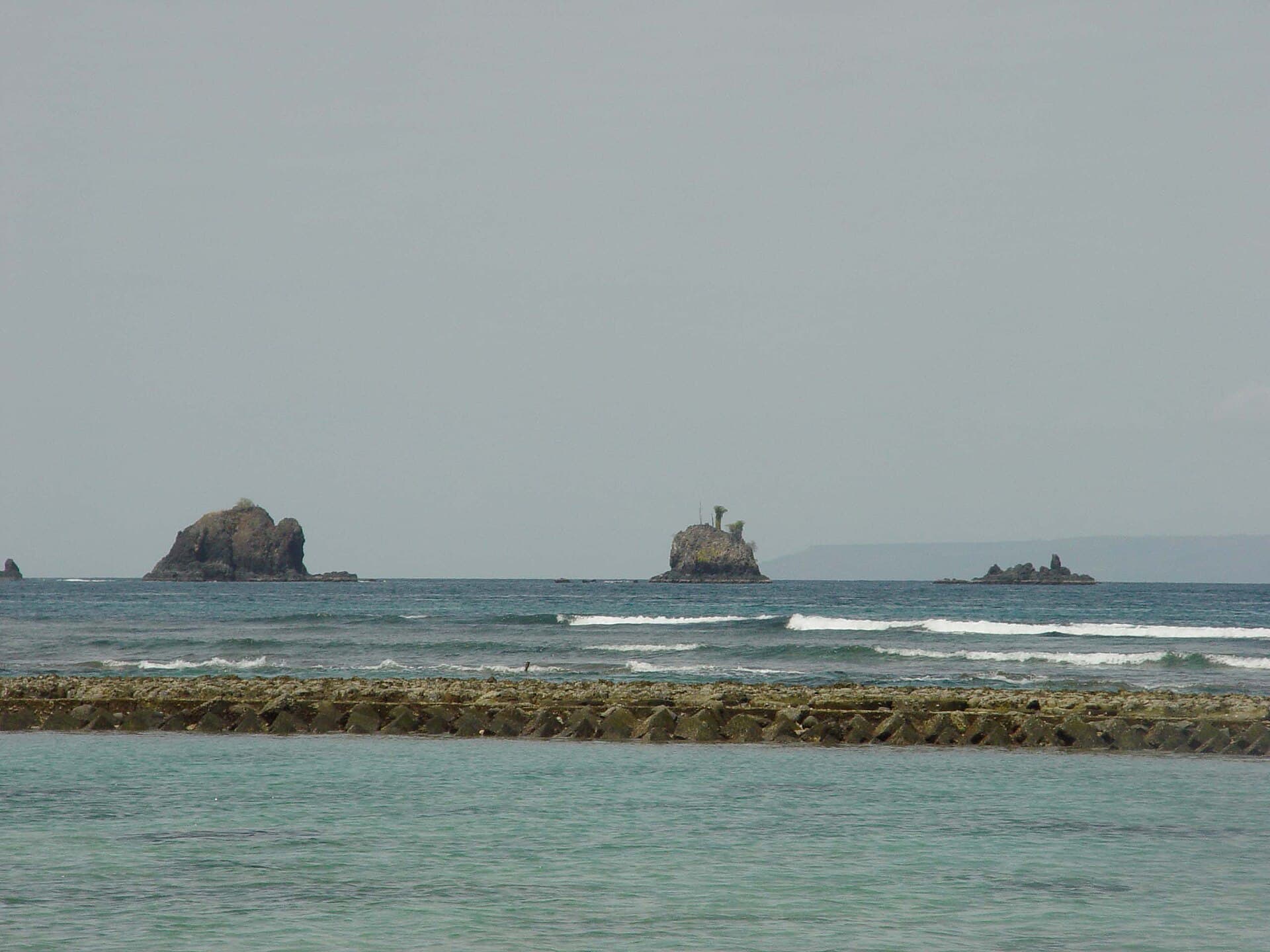
Les étendues de sable qui attiraient autrefois les visiteurs à Candidasa ont en grande partie disparu, une conséquence imprévue du développement.
L'histoire complète se débloque dans le tour
 っ / CC BY-SA 3.0, via Wikimedia Commons
Visite audio autoguidée de Candidasa — parcours GPS à pied, lecture hors ligne, narration en 32 langues.
“Le bord tranquille de l'Est de Bali, où les histoires anciennes rencontrent la mer paisible.”
Pas les cartes postales. Les histoires que même les habitants ignorent — soufflées à l'oreille, là où elles se sont passées.
Les étendues de sable qui attiraient autrefois les visiteurs à Candidasa ont en grande partie disparu, une conséquence imprévue du développement.
Un lagon animé au cœur de la ville offre plus que ses célèbres fleurs de lotus.
Cet ancien temple, à une courte distance de Candidasa, abrite une population ailée plutôt unique.
Découvrez tous les secrets de Candidasa
Chaque adresse, chaque révélation en entier — dans ton oreille, là où elle s'est passée.
Tu choisis tes lieux. Tu marches. La voix te révèle ce que les autres ignorent.


Votre visite audioguidée de Candidasa vous attend — choisissez vos lieux, votre langue, et lancez-vous dès votre arrivée.
AcheterLume intègre un guide en réalité augmentée. Levez votre téléphone : sa caméra montre la rue devant vous, avec une flèche lumineuse posée sur l'image réelle qui pointe toujours vers votre prochain arrêt — aucune carte à déchiffrer, aucun mauvais virage. Comme tout dans Lume, ça fonctionne entièrement hors-ligne.
Candidasa, une paisible ville côtière le long de la côte est de Bali, offre un répit calme loin des stations balnéaires plus animées du sud de l'île. Centrée autour d'un lagon d'eau douce, la ville se déploie le long de Jalan Raya Candidasa, son artère principale, où règne un rythme de vie détendu. C'est une destination qui encourage les visiteurs à ralentir leur rythme, présentant un mélange de culture balinaise traditionnelle et un accès pratique à certains des sites naturels et historiques les plus captivants de l'Est de Bali.
Bien que Candidasa ne présente pas de vastes étendues de sable doré comme certaines autres plages balinaises, elle compense par une allure tranquille et une focalisation sur l'exploration sous-marine. La région est réputée pour ses opportunités de plongée et de snorkeling, avec des eaux claires entourant les îles et les récifs voisins. Au-delà de la côte, la régence de Karangasem environnante révèle un paysage verdoyant de rizières, de villages anciens et de grands palais d'eau, positionnant Candidasa comme une base idéale pour l'immersion culturelle et l'aventure.
À Candidasa, vous découvrirez une gamme d'hébergements, des modestes maisons d'hôtes aux complexes plus raffinés, dont beaucoup offrent un accès direct à l'eau. L'atmosphère de la ville est décontractée, avec de petits restaurants familiaux et une absence notable de la vie nocturne animée que l'on trouve ailleurs sur l'île. C'est un endroit où les sons de l'océan remplacent le bourdonnement de la circulation, et où la vie côtière balinaise authentique peut encore être expérimentée.
Les origines de Candidasa remontent au XIIe siècle, lorsqu'elle existait en tant que village de pêcheurs. Au cours de cette période ancienne, elle était connue sous deux noms distincts : Teluk Kehen, signifiant « la Baie du Feu », et Cilidasa. Le nom Cilidasa, signifiant « dix enfants », est particulièrement significatif, car on pense qu'il est lié au temple de Puri Candidasa. Cet ancien temple, datant du XIe siècle, abrite une statue vénérée de la déesse de la fertilité Hariti, entourée de dix enfants. La légende balinaise raconte que Hariti, autrefois stérile, a miraculeusement donné naissance à dix enfants, transformant le temple en un lieu de pèlerinage pour les couples désireux de fonder une famille. Le nom moderne, Candidasa, est considéré comme une corruption linguistique ou un raccourcissement de Cilidasa.
Candidasa est restée un village de pêcheurs relativement calme pendant des siècles, largement inconnue du tourisme de masse jusqu'aux années 1970. Son attrait a grandi grâce à son cadre côtier serein et à d'excellentes opportunités de snorkeling et de plongée. Cette nouvelle popularité a conduit à un boom touristique rapide et à une augmentation de la construction dans les années 1970 et 1980. Cependant, cette période de développement intense a eu un coût environnemental important. Pour fournir des matériaux pour les nouveaux hôtels, bungalows et restaurants, le récif corallien au large a été largement exploité pour la chaux.
Cette pratique non durable a eu un impact dévastateur : le retrait du récif corallien a éliminé la barrière côtière naturelle qui protégeait les plages de Candidasa. Par conséquent, les rivages de sable autrefois dorés ont été minés et emportés. Les propriétaires d'hôtels locaux ont tenté d'atténuer l'érosion dans les années 1990 en construisant des épis en béton en forme de T s'avançant dans l'eau, avec des résultats mitigés. Aujourd'hui, la plage principale de Candidasa est une combinaison de petites parcelles de sable, de galets et de ces contreforts en béton. L'incident sert de rappel poignant des dangers du développement incontrôlé et de son impact irréversible sur l'environnement.
Malgré les défis de l'érosion des plages, le tourisme à Candidasa a connu une résurgence, bien qu'avec une orientation différente. La ville a embrassé son rôle d'alternative tranquille aux régions plus animées de Bali, attirant les visiteurs qui recherchent une expérience plus décontractée et un accès facile aux attractions culturelles et sous-marines de l'Est de Bali. Depuis 2016, des efforts ont été faits pour la restauration des coraux, avec des initiatives comme l'ONG « Ocean Gardener » qui a établi des pépinières de coraux durs et installé des « araignées » pour aider à la récupération des récifs. Candidasa offre désormais un mélange de vie de village balinaise traditionnelle avec une sélection croissante de maisons d'hôtes et de restaurants, conservant un charme à l'ancienne qui la distingue.
Candidasa est un excellent point de départ pour explorer les riches attractions culturelles et naturelles de l'Est de Bali.
Au cœur de la ville, le Lagon aux lotus de Candidasa offre une belle vue, rempli de fleurs de lotus roses et fuchsia vives. De l'autre côté de la route, le Temple de Puri Candidasa, datant du XIe siècle, est dédié à la déesse de la fertilité Hariti.
À une courte distance en voiture, l'ancien Temple de Goa Lawah, également connu sous le nom de « Temple de la Grotte des Chauves-souris », est construit autour d'une grotte grouillant de milliers de chauves-souris frugivores. C'est un site fascinant et sacré, surtout au crépuscule lorsque les chauves-souris émergent. Plus à l'intérieur des terres, le village traditionnel de Tenganan Pegringsingan offre un aperçu de la culture Bali Aga, avec son tissage distinctif en double ikat.
L'Est de Bali abrite également de magnifiques palais d'eau royaux. Le Palais de l'eau de Taman Ujung, construit en 1919, présente un mélange captivant d'architecture balinaise et européenne au milieu de vastes bassins et jardins. À proximité, le Palais de l'eau de Tirta Gangga, construit en 1946, présente de sereins bassins alimentés par des sources, des sculptures sur pierre complexes et des fontaines.
Pour ceux qui apprécient la côte, Virgin Beach (également connue sous le nom de Pasir Putih ou Plage de Sable Blanc) est une étendue isolée de sable blanc doux et d'eaux claires, idéale pour la baignade et les bains de soleil. Un autre excellent endroit pour le snorkeling et la plongée est Blue Lagoon Beach près de Padangbai, connue pour ses eaux calmes et claires et sa vie marine abondante.
Ceux qui recherchent l'aventure peuvent explorer les sentiers de randonnée vers les temples à flanc de colline comme Pura Silayukti près de Padangbai, offrant une signification historique et des vues côtières pittoresques. Pour des vues panoramiques, surtout au lever ou au coucher du soleil, Bukit Cinta offre des vues imprenables sur le mont Agung.
Candidasa connaît un climat tropical tout au long de l'année, avec des températures moyennes d'environ 25,6°C (78°F). La saison sèche, d'avril à octobre, est généralement considérée comme la période la plus favorable pour visiter, offrant des journées principalement ensoleillées et des mers plus calmes. Cette période est idéale pour la plongée, le snorkeling et d'autres activités nautiques, avec une excellente visibilité sous-marine. Les mois de transition d'avril et septembre offrent un temps agréable avec des prix potentiellement plus accessibles que la haute saison de juillet et août.
La saison humide, de novembre à mars, apporte des précipitations accrues, mais les averses sont généralement de courtes occurrences l'après-midi plutôt que des pluies prolongées. Bien que quelques jours nuageux soient possibles, l'atmosphère détendue de Candidasa reste constante, ce qui en fait une destination viable même pendant cette période. Les jours de semaine sont généralement plus calmes que les week-ends, lorsque les touristes nationaux visitent souvent.
Le moyen le plus confortable de se rendre à Candidasa est d'utiliser une voiture privée avec chauffeur depuis l'aéroport international Ngurah Rai (aéroport de Denpasar), un trajet d'environ une heure et demie. Bien que les applications de covoiturage comme Grab ou Go-Jek soient une option, une voiture privée assure un voyage pittoresque et détendu. Certains hébergements peuvent proposer des transferts aéroport, souvent moyennant des frais supplémentaires. Il est déconseillé de louer un scooter pour le trajet depuis l'aéroport en raison de la distance, des conditions routières difficiles et d'une circulation qui ne respecte pas toujours des règles strictes.
Une fois à Candidasa, la ville est facile à naviguer, la plupart des hôtels, restaurants et magasins bordant la route principale, Jalan Raya Candidasa. Pour explorer au-delà des environs immédiats, louer un scooter est un choix courant pour de plus courtes distances, bien que la prudence soit recommandée sur les routes actives. Des taxis locaux sont également disponibles. Pour des excursions plus longues vers les attractions voisines, engager un chauffeur pour la journée est une option pratique et sécurisée.
Candidasa est généralement considérée comme une destination sûre, le vol mineur étant la principale préoccupation, similaire à d'autres zones touristiques de Bali. Il est sage d'être conscient de vos effets personnels. Les courants océaniques peuvent parfois être forts en dehors des lagons protégés, il est donc préférable de nager là où les habitants ou d'autres voyageurs sont présents.
Candidasa en coréen, en chinois ou en hébreu — et dans 29 autres langues, chaque étape narrée par une voix native. La plus large gamme de langues de tous les audioguides autoguidés.
Disponible en :