The Name's True Origin
The name Lovina, often linked to 'love' and 'Indonesia,' possesses a more personal and surprising genesis.
Full story unlocks in the tour
 Unknown author / CC BY-SA 3.0, via Wikimedia Commons
Self-guided audio walking tour of Lovina — GPS route, offline playback, story-driven narration in 32 languages.
“Where volcanic sands meet the Bali Sea, and time yields to the dolphin's rhythm.”
Not the postcards. The stories even locals don't know — whispered in your ear, right where they happened.
The name Lovina, often linked to 'love' and 'Indonesia,' possesses a more personal and surprising genesis.
For a period, the designation Lovina was deemed contentious and even prohibited.
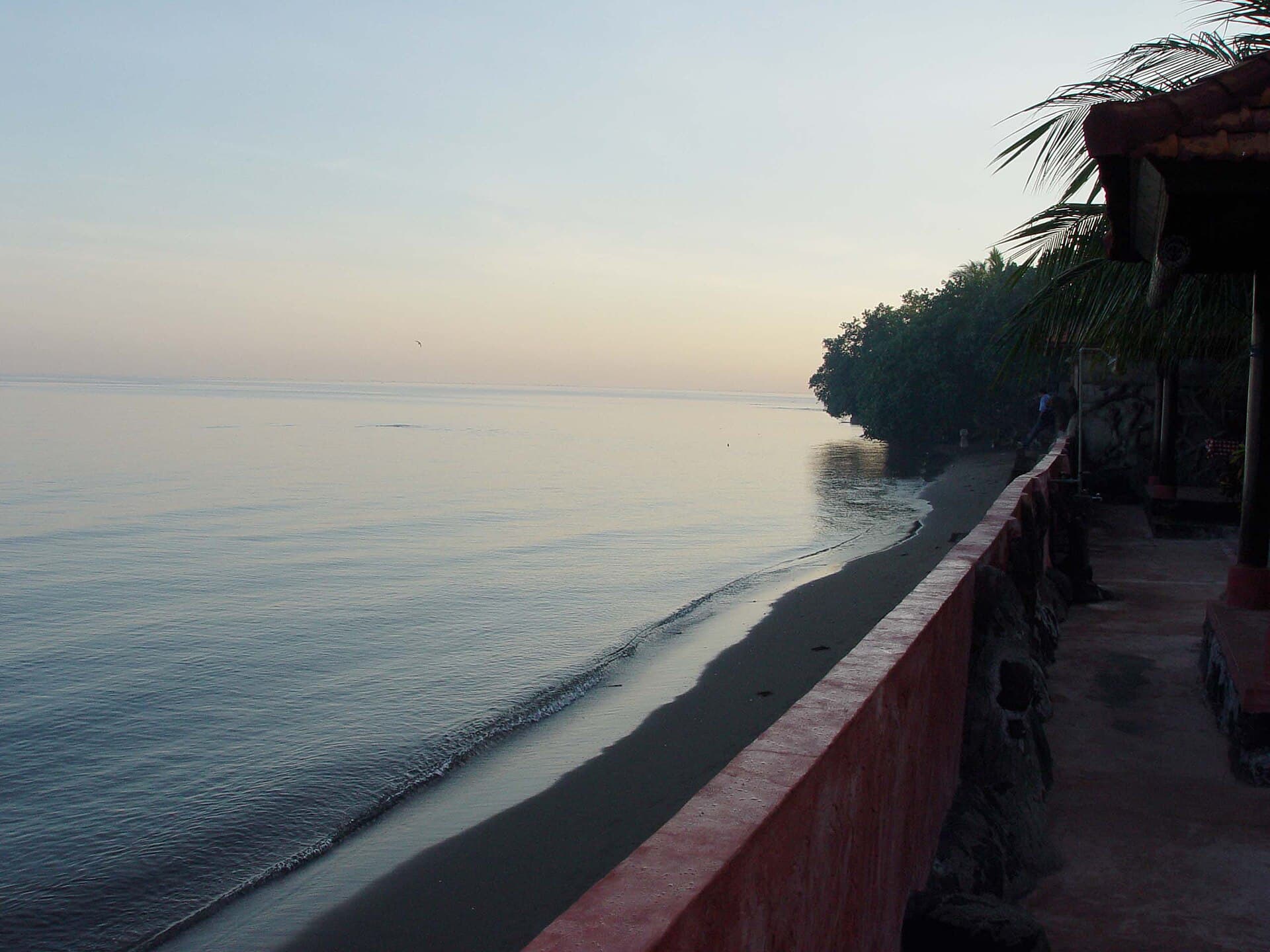
Unlike the pale sands often depicted in Bali, Lovina's shores narrate a distinct geological account.
Discover every secret of Lovina
Every address, every reveal in full — in your ear, right where it happened.
You pick your stops. You walk. The voice reveals what the others miss.

Your self-guided audio tour of Lovina is ready — pick your landmarks, choose your language, and start the moment you arrive.
BuyLume has a built-in augmented-reality guide. Hold your phone up and its camera shows the street ahead of you, with a glowing arrow laid over the real view that always points to your next stop — no map to puzzle over, no wrong turns. Like everything in Lume, it works fully offline.
Lovina, a calm coastal expanse on Bali's northern shores, presents a marked contrast to the lively southern regions of the island. Spanning a series of appealing villages, including Kalibukbuk, Kaliasem, Anturan, and Tukad Mungga, Lovina is distinguished by its tranquil, black volcanic sand beaches and peaceful ambiance. It is a place where life's rhythm slows, inviting visitors to unwind and connect with a more genuine Balinese experience.
While well-known for its early morning dolphin watching excursions, Lovina offers a broader spectrum of experiences, from exploring diverse marine life through snorkeling and diving to uncovering cultural sites and natural wonders in the surrounding hills. The area particularly appeals to travelers seeking a relaxed escape, providing peaceful sunsets, mountain vistas, and a welcoming, small-town atmosphere.
The narrative of Lovina is intricately linked to Anak Agung Panji Tisna, a descendant of the King of Buleleng and a true visionary. In the 1950s, after extensive travels across Europe and Asia, particularly inspired by the way of life he observed in Bombay (now Mumbai), Tisna returned to Bali with a fresh perspective for the social welfare and development of the Buleleng region. He envisioned a coastal leisure area akin to what he had witnessed abroad, on land he owned at Kampung Baru Beach.
In 1953, Tisna established an inn on his property, a three-room cottage with a seaside restaurant, which he named 'Lovina.' The name itself is thought to derive from 'Lafeina,' a small hotel in India where he stayed while writing his book 'Ni Ketut Widhi.' Initially, the name Lovina encountered resistance and was even prohibited, considered 'alien' and not a traditional Balinese pronunciation. Tourist businesses temporarily adopted alternative names like Manggala, Krisna, or Nirwana.
Despite early obstacles, Lovina endured. As tourism to North Bali steadily increased, the name Lovina was eventually reinstated, proving easier for visitors to recall and favored by tour operators. Tisna's pioneering endeavors earned him the posthumous title of 'the father of Balinese tourism' from the government, acknowledging his significant contribution to the island's development. The Lovina Guesthouse played a crucial role in promoting the area, stimulating the local economy and tourism sector.
Over the decades, Lovina has transformed from a simple cottage to a cherished tourist destination, recognized for its peaceful ambiance, striking sunsets, and, most famously, its early morning dolphin watching experiences. The area, a collective of seven coastal villages including Kalibukbuk (considered the heart of Lovina), Kaliasem, and Temukus, continues to draw visitors seeking a more relaxed and authentic Bali. The local government actively supports its development while striving to safeguard its cultural and natural identity, exemplified by events like the annual Lovina Festival, which celebrates local heritage, dance, and art.
Lovina presents a variety of attractions beyond its celebrated dolphin excursions. Rise early to witness the sunrise while observing wild bottlenose dolphins playing in the calm waters from a traditional jukung boat. For underwater exploration, Lovina's calm waters are ideal for snorkeling and diving, revealing colorful coral reefs and diverse marine life. You can even embark on a bioluminescent plankton tour at night for a singular experience.
Inland, uncover natural hot springs at Air Panas Banjar, featuring warm sulfur pools amidst tropical gardens. A brief journey will lead you to the serene Brahmavihara-Arama Buddhist Monastery, Bali's largest Buddhist monastery, which includes a miniature replica of Borobudur. For waterfall enthusiasts, the nearby Gitgit, Sekumpul, and Aling-Aling Waterfalls offer impressive natural splendor and opportunities for hiking. The area also includes Krisna Funtasticland, an amusement park, and Krisna Water Sports for family entertainment. Do not miss the opportunity to experience local culture through traditional dances and handicrafts in nearby villages.
The optimal time to visit Lovina is during the dry season, which extends from April to October. During these months, the weather is warm and bright with minimal rainfall, creating ideal conditions for outdoor activities like dolphin watching, snorkeling, and sightseeing. The seas are calmer, making dolphin sightings more consistent. While July and August can be busier, Lovina generally maintains a relaxed atmosphere compared to South Bali. The rainy season, from November to March, still offers viable travel with short bursts of rain and often clear mornings, and the north tends to receive less rain than the south.
Lovina is situated on the northwestern side of Bali, approximately a 2.5 to 3.5-hour drive from Ngurah Rai International Airport (DPS) in Denpasar. Private car transfers are a comfortable option, and many visitors combine the journey with stops at other attractions like Gitgit Waterfall. Once in Lovina, navigating the area is relatively straightforward. The area is walkable, and bicycles and scooters are readily available for rent, offering an economical way to explore. Taxis and local drivers are also available for longer excursions.
The official currency is the Indonesian Rupiah (IDR). ATMs are present, but carrying cash is advisable for smaller purchases or in more remote areas. Bahasa Indonesia is the official language, but English is widely spoken in tourist areas. Lovina generally maintains a secure environment for visitors, though standard precautions for personal belongings are always recommended. Dress modestly when visiting temples and remain hydrated in the tropical climate.
Lovina in Korean, in Chinese or in Hebrew — and 29 more languages, every stop narrated by a native voice. The widest language range of any self-guided audio tour.
Available in: