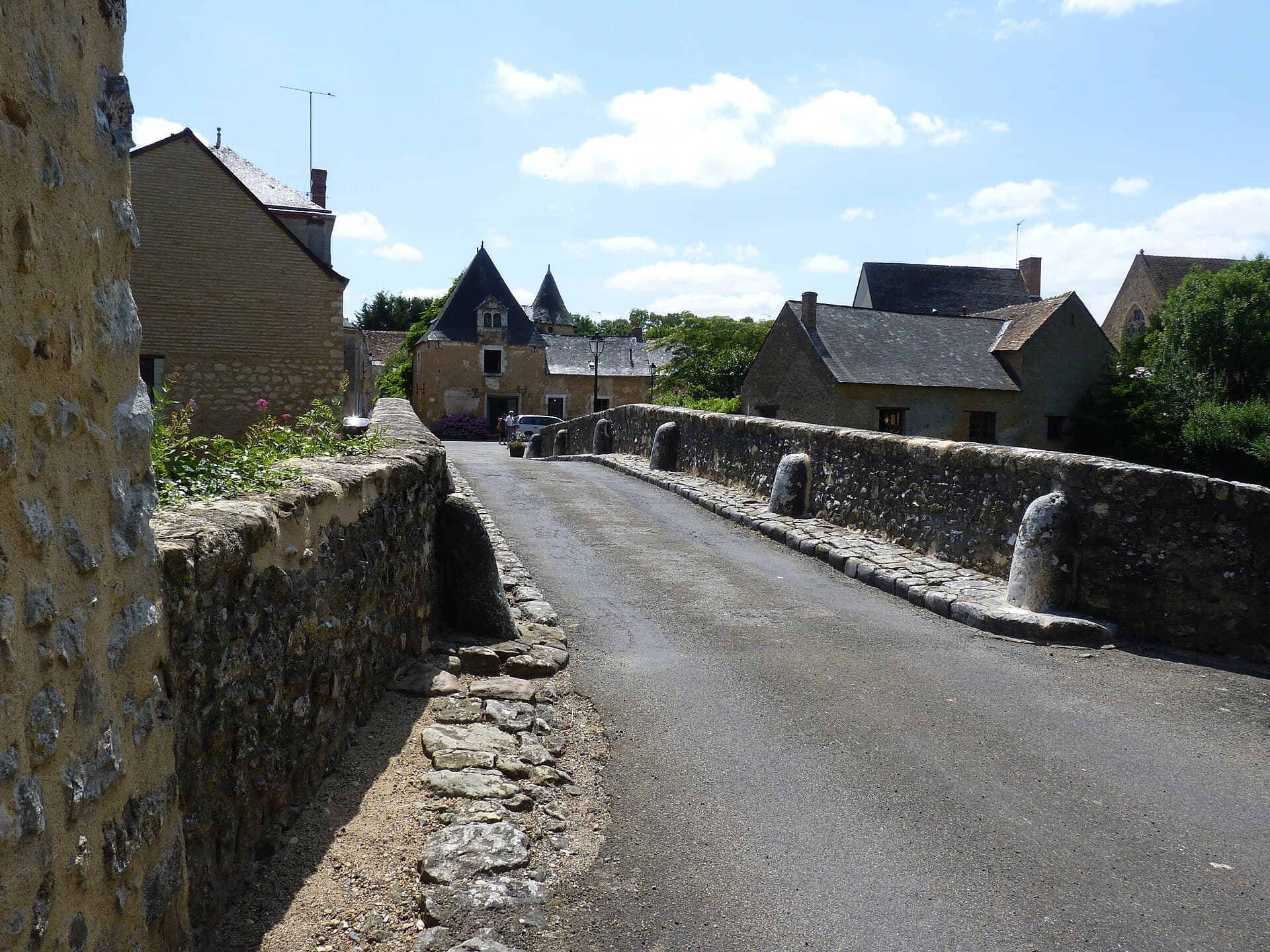
Manoir de la Cour
Le Manoir de la Cour, un manoir médiéval, recèle un secret particulier lié à sa fonction d'origine.
L'histoire complète se débloque dans le tour
 Touzé Eric / CC BY-SA 3.0, via Wikimedia Commons
Visite audio autoguidée de Asnières-sur-Vègre — parcours GPS à pied, lecture hors ligne, narration en 32 langues.
“Là où les pierres ancestrales murmurent des récits oubliés.”
Pas les cartes postales. Les histoires que même les habitants ignorent — soufflées à l'oreille, là où elles se sont passées.
Le Manoir de la Cour, un manoir médiéval, recèle un secret particulier lié à sa fonction d'origine.
Observez attentivement les fresques de l'église Saint-Hilaire, et vous pourriez apercevoir un détail inhabituel concernant l'un des saints représentés.
La rivière Vègre, d'apparence tranquille, qui donne son nom au village, a autrefois joué un rôle étonnamment actif dans l'industrie locale, au-delà de la simple alimentation des moulins.
Découvrez tous les secrets de Asnières-sur-Vègre
Chaque adresse, chaque révélation en entier — dans ton oreille, là où elle s'est passée.
Tu choisis tes lieux. Tu marches. La voix te révèle ce que les autres ignorent.
Votre visite audioguidée de Asnières-sur-Vègre vous attend — choisissez vos lieux, votre langue, et lancez-vous dès votre arrivée.
AcheterLume intègre un guide en réalité augmentée. Levez votre téléphone : sa caméra montre la rue devant vous, avec une flèche lumineuse posée sur l'image réelle qui pointe toujours vers votre prochain arrêt — aucune carte à déchiffrer, aucun mauvais virage. Comme tout dans Lume, ça fonctionne entièrement hors-ligne.
Asnières-sur-Vègre, un village du département de la Sarthe en France, semble exister dans une douce distorsion temporelle. Ses maisons en pierre, dont beaucoup datent du Moyen Âge, bordent des ruelles étroites qui descendent vers la rivière Vègre. Ce n'est pas un lieu de grands monuments, mais plutôt un lieu de beauté tranquille et durable, où le passé est tissé dans le tissu même de la vie quotidienne. Le village a été reconnu comme l'un des « Plus Beaux Villages de France », une distinction réservée aux communautés exceptionnellement charmantes et bien préservées.
La vie ici se déroule au rythme dicté par la rivière et les saisons. Vous trouverez un profond sentiment de paix en parcourant ses chemins anciens, en écoutant le doux murmure de la Vègre et en admirant les jardins méticuleusement entretenus. C'est une destination pour ceux qui apprécient l'authenticité, l'histoire et l'élégance simple de la France rurale, loin des routes touristiques animées.
## Des racines romaines à l'épanouissement médiéval Les origines d'Asnières-sur-Vègre remontent à l'Antiquité, avec des preuves de présence romaine dans la région. Cependant, c'est à l'époque médiévale que le village a véritablement commencé à prendre forme. Son emplacement stratégique sur la rivière Vègre en a fait un lieu de peuplement désirable, et au XIe siècle, une église et un manoir fortifié y furent établis. Le nom même du village, « Asnières », proviendrait du latin « asinaria », en référence à l'élevage d'ânes, suggérant son importance agricole historique.
## Seigneurs féodaux et murs fresqués Tout au long du Moyen Âge, Asnières-sur-Vègre fut sous l'influence de divers seigneurs féodaux. Le Manoir de la Cour, un exemple architectural significatif de cette époque, reflète le pouvoir et l'influence de cette noblesse locale. L'église du village, dédiée à Saint-Hilaire, connut également un développement important à cette époque, avec des ajouts et des embellissements, y compris les remarquables fresques qui ornent son intérieur. Ces fresques, datant du XIIe au XVIe siècle, offrent un rare aperçu de l'art religieux médiéval et des croyances de la communauté.
## Résilience et préservation Comme de nombreux villages français, Asnières-sur-Vègre a connu des périodes de prospérité et de difficultés, notamment la Guerre de Cent Ans et les Guerres de Religion. Malgré ces défis, le village a conservé son caractère essentiel. Au cours des siècles plus récents, un effort concerté a été fait pour préserver son patrimoine architectural. Ce dévouement à la conservation est évident dans l'état de ses bâtiments historiques et l'ambiance générale du village, lui valant sa prestigieuse reconnaissance comme l'un des plus beaux villages de France.
Commencez votre exploration à l'Église Saint-Hilaire, une merveille romane dotée d'une impressionnante collection de fresques médiévales qui représentent des scènes bibliques et des saints. Prenez votre temps pour déchiffrer les récits peints sur ses murs anciens. À quelques pas de là se trouve le Manoir de la Cour, un manoir fortifié avec un mélange saisissant d'architecture médiévale et Renaissance. Bien que certaines parties soient privées, son extérieur et ses jardins offrent un aperçu captivant de la vie des habitants passés. Promenez-vous dans les rues étroites et pavées, en admirant les maisons en pierre bien conservées, souvent ornées de fleurs vives. La rivière Vègre elle-même est un point central, avec de charmants ponts et des endroits tranquilles parfaits pour un moment de réflexion. Ne manquez pas le Jardin Mosaïque, un jardin contemporain qui offre un contraste délicieux avec les pierres anciennes du village.
Le meilleur moment pour visiter Asnières-sur-Vègre est à la fin du printemps (mai-juin) ou au début de l'automne (septembre-octobre). Le temps est agréable, idéal pour la marche, et les jardins du village sont en pleine floraison ou affichent de riches couleurs automnales. L'été (juillet-août) est également agréable, bien qu'il puisse faire plus chaud et qu'il y ait plus de visiteurs.
Asnières-sur-Vègre se découvre idéalement à pied. Portez des chaussures confortables pour marcher sur les rues pavées irrégulières. Un parking est disponible à l'entrée du village. Il y a quelques petits commerces locaux et un ou deux restaurants, mais pour des services plus étendus, vous devrez vous aventurer dans les villes voisines plus grandes. Envisagez de combiner votre visite avec d'autres charmants villages de la région de la Sarthe. Les options d'hébergement à Asnières-sur-Vègre sont limitées, principalement des chambres d'hôtes, il est donc recommandé de réserver à l'avance.
Asnières-sur-Vègre en coréen, en chinois ou en hébreu — et dans 29 autres langues, chaque étape narrée par une voix native. La plus large gamme de langues de tous les audioguides autoguidés.
Disponible en :