Peachtree Street (and its many namesakes)
You'll find 'Peachtree' everywhere in Atlanta, but it has little to do with the fruit.
Full story unlocks in the tour
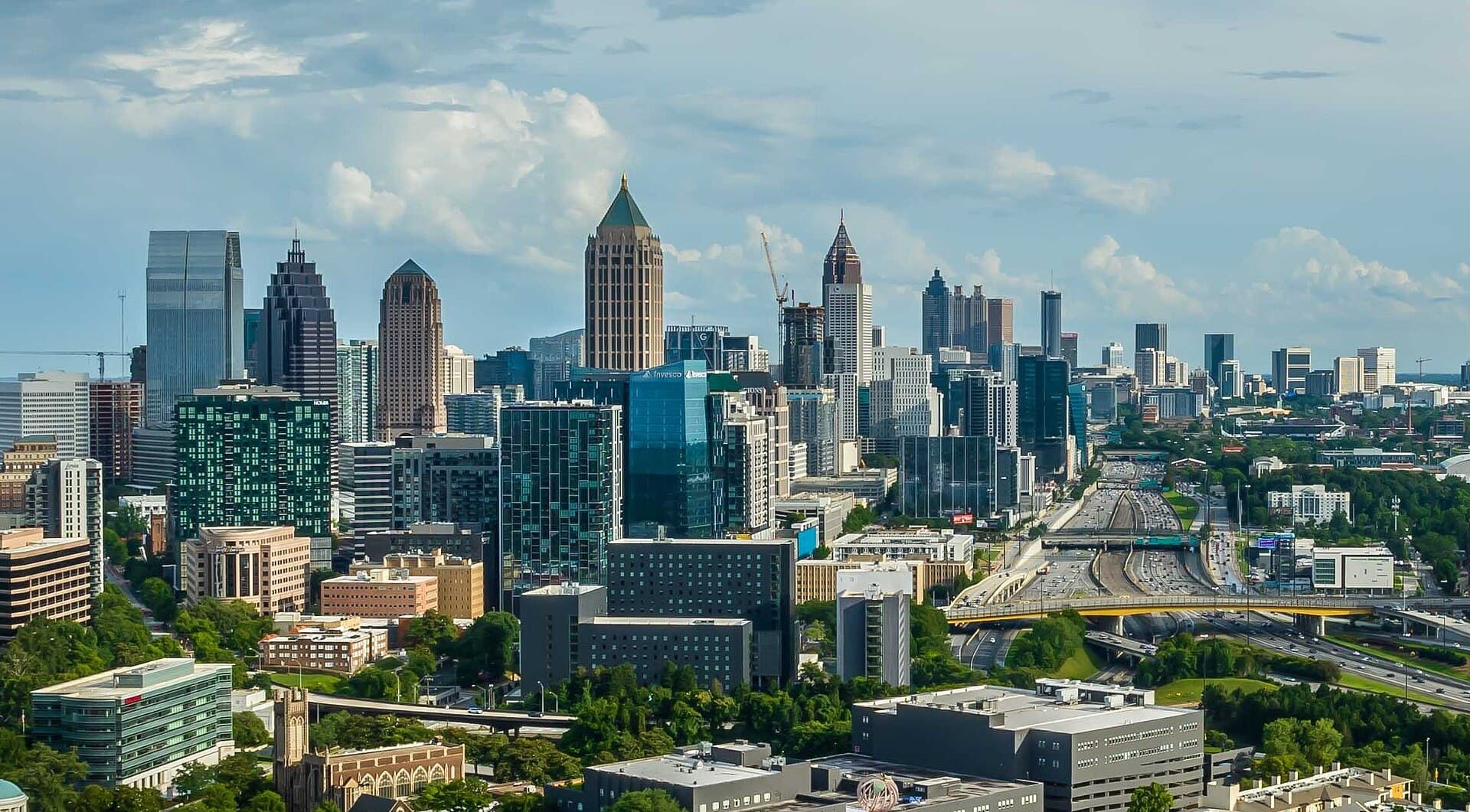 AtlChampion / CC BY-SA 4.0, via Wikimedia Commons
Self-guided audio walking tour of Atlanta — GPS route, offline playback, story-driven narration in 32 languages.
“Atlanta: A city reborn, where history echoes beneath a canopy of green.”
Not the postcards. The stories even locals don't know — whispered in your ear, right where they happened.
You'll find 'Peachtree' everywhere in Atlanta, but it has little to do with the fruit.
Amidst a bustling city of millions, an ancient woodland remains undisturbed.
Atlanta's official symbol tells a powerful story of destruction and defiance.
Discover every secret of Atlanta
Every address, every reveal in full — in your ear, right where it happened.
You pick your stops. You walk. The voice reveals what the others miss.


Your self-guided audio tour of Atlanta is ready — pick your landmarks, choose your language, and start the moment you arrive.
BuyLume has a built-in augmented-reality guide. Hold your phone up and its camera shows the street ahead of you, with a glowing arrow laid over the real view that always points to your next stop — no map to puzzle over, no wrong turns. Like everything in Lume, it works fully offline.
Atlanta, Georgia, often called the 'City in a Forest,' lives up to its name with nearly half its area covered by trees, a rare sight for a major metropolitan center. This urban oasis, situated over 1,000 feet above sea level, offers a more temperate climate than many other Southern cities. Founded in 1837 as a railroad terminus, Atlanta quickly became a pivotal transportation hub, a role it maintains today with Hartsfield-Jackson International Airport, the world's busiest by passenger traffic.
Beyond its green landscape and logistical importance, Atlanta is a city of profound historical significance. It served as a strategic Confederate city during the Civil War, leading to its near-total destruction in 1864. From these ashes, Atlanta rebuilt itself, adopting the phoenix as its symbol and 'Resurgens' as its motto, embodying a spirit of constant renewal. The city also played a central role in the American Civil Rights Movement, being the birthplace of Martin Luther King Jr. and a major organizing center for the movement.
Atlanta's story began in 1837, not with a natural harbor or a grand river, but with a stake driven into the ground, marking the end of a proposed state rail line. This humble beginning earned it the name 'Terminus.' Its strategic location soon attracted other rail lines, transforming it into a crucial transportation hub for the Southern United States. By 1847, the settlement was incorporated as Atlanta, a name believed to be a feminized version of 'Atlantic,' referencing the Western and Atlantic Railroad.
The city's burgeoning importance made it a prime target during the American Civil War. In 1864, Union General William T. Sherman's troops captured and subsequently burned much of the city to the ground during his March to the Sea, leaving only a few hundred buildings standing. This devastating event, however, paved the way for a remarkable rebirth. Atlanta quickly rebuilt during the Reconstruction era, attracting new residents and solidifying its role as an industrial center and the unofficial capital of the 'New South.' The state capital even moved from Milledgeville to Atlanta in 1868.
The 20th century saw Atlanta continue its trajectory of growth and transformation. It became a major hub for manufacturing and technology after World War II. Crucially, Atlanta emerged as a vital center for the American Civil Rights Movement in the 1950s and 60s, with leaders like Martin Luther King Jr. spearheading significant change. The city's commitment to progress was encapsulated in Mayor William Hartsfield's famous slogan, 'the city too busy to hate.' In more recent history, Atlanta hosted the 1996 Summer Olympics, further cementing its status as an international city.
Begin your exploration at Centennial Olympic Park, a lasting legacy of the 1996 Summer Olympics, offering expansive green space and interactive fountains. Nearby, delve into the world of a beloved beverage at the World of Coca-Cola, where you can learn about its history and sample flavors from around the globe. For a deeper dive into civil rights history, visit the Martin Luther King Jr. National Historical Park, encompassing his birth home, Ebenezer Baptist Church, and The King Center. Art and nature converge at the Atlanta Botanical Garden, home to 30 acres of diverse blooms, including one of the world's largest orchid collections, and the unique Kendeda Canopy Walk, a 600-foot-long urban forest skywalk. Animal lovers will appreciate Zoo Atlanta, which houses significant populations of gorillas and orangutans, and is one of only four U.S. zoos entrusted by China to house giant pandas. Take a stroll or bike ride along the Atlanta BeltLine, a 22-mile loop connecting parks, shops, restaurants, and a lively display of street art. For a unique dining experience, visit The Varsity, the world's largest drive-in restaurant.
Atlanta offers pleasant weather during spring (March-May) and fall (September-November), making these seasons ideal for outdoor activities and exploring the city's parks. Spring brings blooming dogwoods and cherry blossoms, while fall features cooler temperatures and colorful foliage. Summer (June-August) can be hot and humid, but it's also when many festivals and events take place. Winter (December-February) is the slowest tourist season, offering milder temperatures compared to many Northern cities and more competitive hotel rates for budget travelers.
Hartsfield-Jackson Atlanta International Airport (ATL) is a major global hub. From the airport, you can reach downtown Atlanta via taxi, ride-sharing services, or the MARTA train. Taxis offer fixed fares to downtown, Midtown, and Buckhead. The MARTA (Metropolitan Atlanta Rapid Transit Authority) rail system provides a fast and affordable option, with the Red and Gold lines connecting directly from the airport station to downtown in about 18-20 minutes. A one-way ticket on MARTA costs $2.50. While MARTA offers a robust network of heavy rail and bus services across Fulton, DeKalb, and Clayton counties, recent federal scrutiny has highlighted concerns regarding safety and security. MARTA police patrol buses, trains, stations, and parking lots, and the MARTA App allows users to report concerns. It's advisable to be aware of your surroundings, particularly during off-peak hours. Atlanta's extensive tree canopy, while beautiful, can contribute to seasonal allergies, so pack accordingly if you're susceptible.
Atlanta in Korean, in Chinese or in Hebrew — and 29 more languages, every stop narrated by a native voice. The widest language range of any self-guided audio tour.
Available in: