Puerto de Saint-Goustan
En 1776, un renombrado estadista americano llegó a Auray, lejos de su destino previsto.
La historia completa se desbloquea en el tour
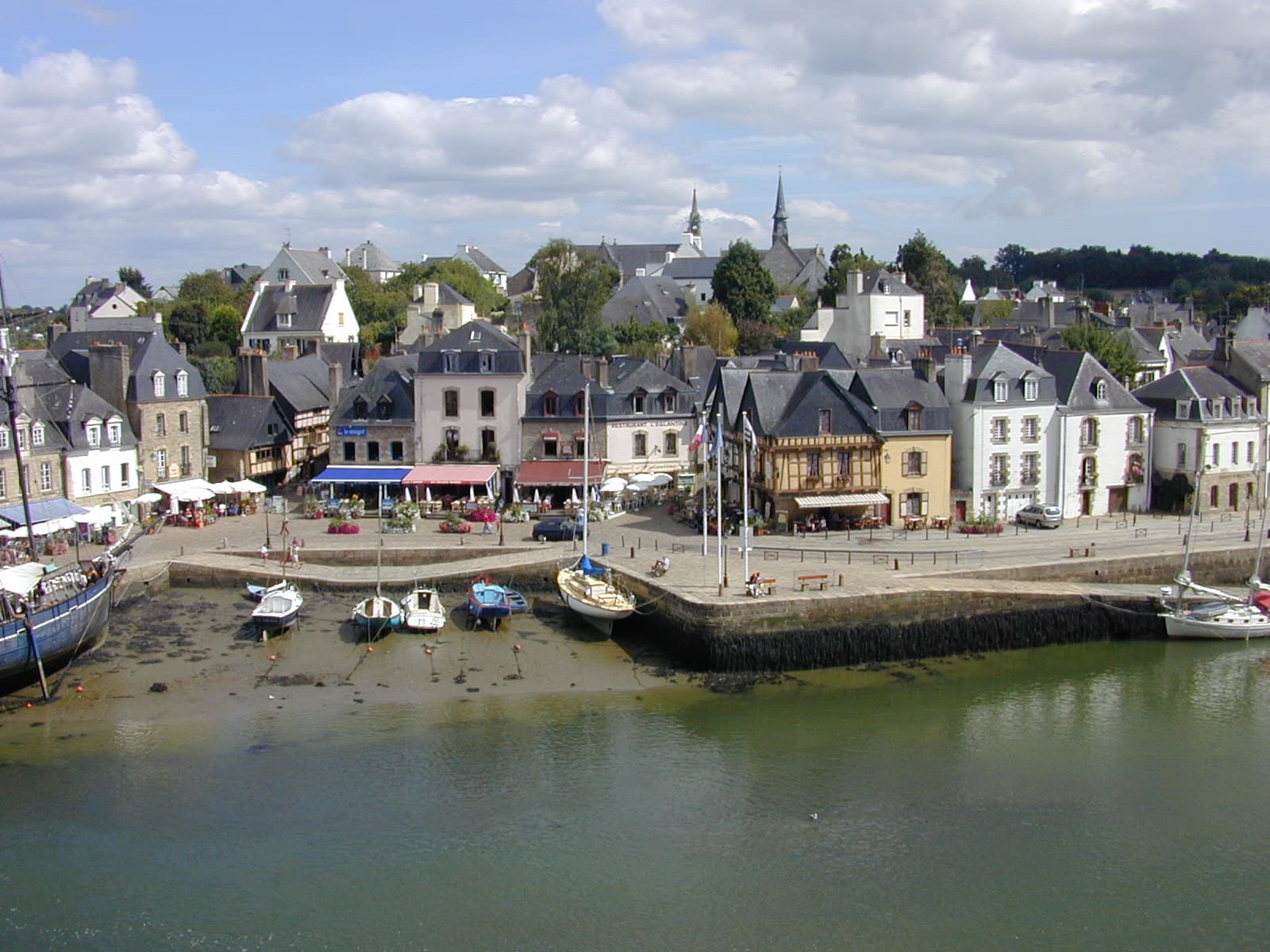 William M. Connolley at English Wikipedia / CC BY-SA 3.0, via Wikimedia Commons
Tour de audio autoguiado de Auray — ruta GPS a pie, reproducción offline, narración en 32 idiomas.
“Donde las piedras milenarias se encuentran con la eterna canción del mar en Bretaña.”
No las postales. Las historias que ni los locales conocen — al oído, justo donde ocurrieron.
En 1776, un renombrado estadista americano llegó a Auray, lejos de su destino previsto.
El antiguo puente que conecta la parte alta de Auray con su puerto esconde una sorprendente comodidad moderna.
Las aguas que rodean Auray no son solo para la navegación; nutren un célebre manjar local.
Descubre todos los secretos de Auray
Cada dirección, cada revelación al completo — a tu oído, justo donde ocurrió.
Eliges tus paradas. Caminas. La voz te revela lo que los demás ignoran.


Tu tour de audioguía por Auray te espera — elige tus lugares, tu idioma y empieza al llegar.
ComprarLume incluye una guía de realidad aumentada. Levanta el móvil y su cámara muestra la calle que tienes delante, con una flecha luminosa sobre la imagen real que siempre apunta a tu próxima parada — sin mapas que descifrar, sin giros equivocados. Como todo en Lume, funciona completamente sin conexión.
Auray, una cautivadora ciudad en el departamento de Morbihan en Bretaña, presenta una convincente fusión de carácter histórico y encanto costero. Dividida en una ciudad alta y el puerto inferior de Saint-Goustan, invita a la exploración a lo largo de sus calles empedradas y entre sus casas de entramado de madera. El legado marítimo perdurable de la ciudad es particularmente evidente en Saint-Goustan, un puerto medieval que alguna vez rebosó de comercio y ahora ofrece una atmósfera tranquila, con coloridos barcos y cafés junto al agua.
La ventajosa posición de Auray cerca del espléndido Golfo de Morbihan la convierte en un excelente punto de partida para descubrir las maravillas naturales e históricas del sur de Bretaña. Ya sea atraído por su venerable arquitectura, sus animados mercados o la serena belleza de sus paisajes circundantes, Auray promete un auténtico encuentro bretón. La ciudad mantiene un espíritu genuino, con una fuerte presencia de la cultura y las tradiciones bretonas.
## De fortaleza medieval a centro comercial La historia de Auray está profundamente entrelazada con su ubicación estratégica en el estuario del río Auray, que desemboca en el Golfo de Morbihan. Los orígenes de la ciudad se remontan al siglo IX con un castillo de mota y patio, que evolucionó hasta convertirse en una fortaleza medieval en el siglo XIII. El puerto de Saint-Goustan, establecido en el siglo XIII por los Duques de Bretaña, se convirtió rápidamente en un importante centro comercial. Durante los siglos XVI y XVII, el comercio de vino y grano elevó a Saint-Goustan al tercer puerto más importante de Bretaña, facilitando el comercio hasta España y Gran Bretaña.
## La Guerra de Sucesión Bretona Auray ocupa un lugar destacado en la historia francesa como el lugar de la Batalla de Auray el 29 de septiembre de 1364. Este conflicto decisivo puso fin a la Guerra de Sucesión Bretona, con Jean de Montfort y sus aliados ingleses asegurando la victoria sobre Carlos de Blois. La batalla involucró a dos destacadas figuras militares francesas, Bertrand du Guesclin y Olivier de Clisson. La iglesia erigida en el campo de batalla por Montfort ahora funciona como una escuela para sordos.
## Un desembarco diplomático y un declive gradual En un episodio fascinante, Benjamin Franklin llegó al Puerto de Saint-Goustan en diciembre de 1776, buscando el apoyo francés para la Guerra de Independencia Americana. A pesar de este momento de trascendencia internacional, la prominencia comercial del puerto disminuyó gradualmente con el desarrollo de puertos más grandes como Lorient en el siglo XVII y la llegada del ferrocarril en el siglo XIX, que desvió el comercio. Hoy en día, el puerto se ha transformado en un puerto deportivo, conservando cuidadosamente su arquitectura y carácter históricos.
Comience su viaje en el Puerto de Saint-Goustan, el puerto medieval de Auray. Pasee por los muelles de piedra, admire el antiguo puente y observe los coloridos barcos. Muchas de las estructuras de entramado de madera que bordean el puerto datan de los siglos XV, XVI y XVII. Cruce el Pont de Saint-Goustan para ascender a la ciudad alta a través de las Rampes du Loc'h, un sendero que ofrece amplias vistas del puerto.
En la ciudad alta, el Casco Antiguo de Auray presenta pasajes estrechos como la Rue du Château y la Rue Saint-René, llenos de tiendas de artesanos y boutiques que ofrecen productos bretones locales. Visite la Église Saint-Gildas del siglo XVII, reconocida por sus detalles arquitectónicos góticos y renacentistas, que incluyen un retablo de estilo Laval y carpintería del siglo XVIII. El Ayuntamiento del siglo XVIII en la Place de la République es otro punto de interés arquitectónico.
Más allá del centro de la ciudad, considere una visita a la Basílica de Sainte-Anne d'Auray, un importante destino de peregrinación en Bretaña, situada a solo 7 kilómetros. Para probar la vida local, el mercado de los lunes en la Place de la République es uno de los más célebres de Bretaña, ofreciendo productos frescos, mariscos, quesos y pan artesanal.
El momento ideal para experimentar Auray es desde finales de primavera hasta principios de otoño (mayo a septiembre), cuando el clima es templado y adecuado para actividades al aire libre. El verano (junio a agosto) es particularmente animado, con varios festivales y eventos, mientras que el otoño ofrece una visita más serena en medio de los colores cambiantes del follaje. Julio y agosto suelen tener temperaturas diurnas promedio de alrededor de 22-23°C (72-73°F), siendo julio a menudo el mes más seco. El invierno tiene su propio encanto acogedor, con iluminaciones navideñas y un mercado en diciembre.
Auray está bien conectada y es fácilmente accesible. Se puede llegar a la ciudad en tren, con servicios directos de TGV desde París (aproximadamente 3 horas) hasta la estación de tren de Auray, que también sirve como centro para trenes regionales a Vannes, Lorient y Quimper. En coche, Auray es accesible a través de la autopista N165. Los aeropuertos más cercanos están en Lorient, Rennes y Nantes.
Una vez en Auray, la ciudad se explora mejor a pie, especialmente el histórico barrio de Saint-Goustan con sus calles peatonales. La Oficina de Turismo de Auray, ubicada en 3 Rue Louis Billet, proporciona mapas e información, y ofrece visitas guiadas durante los meses de verano. Hay aparcamientos disponibles en el centro de la ciudad. Para productos locales y recuerdos, explore las tiendas de Saint-Goustan o visite el mercado de los lunes para probar las delicias bretonas.
Auray en coreano, en chino o en hebreo — y 29 idiomas más, cada parada narrada por una voz nativa. La mayor variedad de idiomas de cualquier audioguía autoguiada.
Disponible en: