The name 'Azrou'
The town's name isn't just a label; it's a direct reference to a striking geological feature that dominates the landscape.
Full story unlocks in the tour
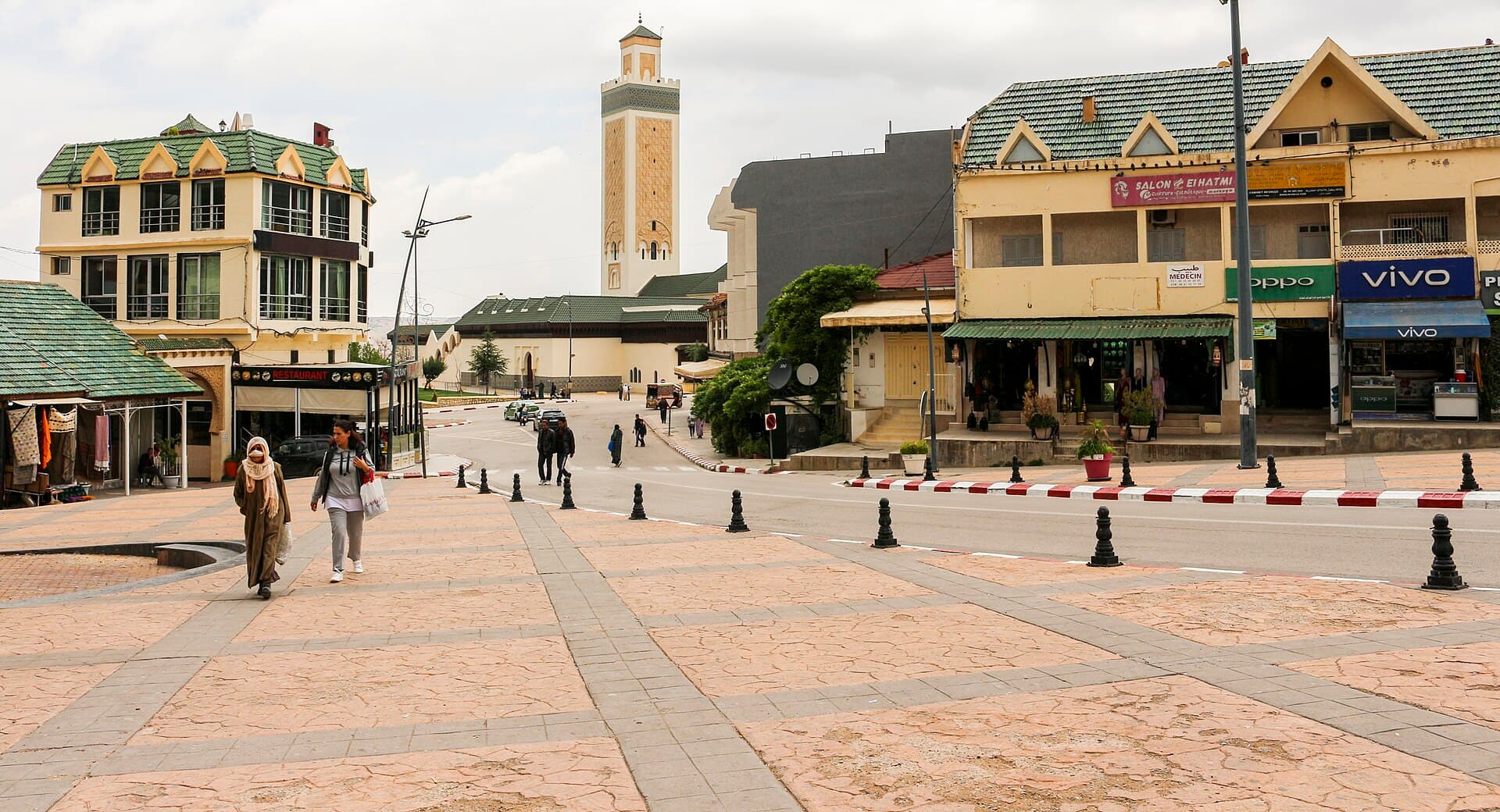 Mounir Neddi / CC BY-SA 4.0, via Wikimedia Commons
Self-guided audio walking tour of Azrou — GPS route, offline playback, story-driven narration in 32 languages.
“Where ancient cedars meet mountain whispers and Berber traditions endure.”
Not the postcards. The stories even locals don't know — whispered in your ear, right where they happened.
The town's name isn't just a label; it's a direct reference to a striking geological feature that dominates the landscape.
One of Morocco's oldest and most historically significant high schools, located in Azrou, was established with a specific, and controversial, colonial agenda.
Unlike many Moroccan towns, Azrou's buildings tell a story of adapting to a very different climate, reflected in their unusual rooflines.
Discover every secret of Azrou
Every address, every reveal in full — in your ear, right where it happened.
You pick your stops. You walk. The voice reveals what the others miss.

Your self-guided audio tour of Azrou is ready — pick your landmarks, choose your language, and start the moment you arrive.
BuyLume has a built-in augmented-reality guide. Hold your phone up and its camera shows the street ahead of you, with a glowing arrow laid over the real view that always points to your next stop — no map to puzzle over, no wrong turns. Like everything in Lume, it works fully offline.
Azrou, meaning 'rock' in the Amazigh language, is a mountain town in Morocco's Middle Atlas, named for the striking volcanic outcrop at its heart. Situated at an elevation of approximately 1,250 meters (4,100 feet), it offers a refreshing escape from the heat of Morocco's imperial cities. The town is a vital cultural nexus, serving as a traditional market center for the surrounding Berber communities and holding the esteemed title of 'Capital of Amazigh Culture'. Its unique blend of natural beauty—dense cedar forests, rolling hills, and diverse wildlife—and authentic Berber heritage makes it a compelling destination for those seeking to immerse themselves in Morocco's highland secrets.
Azrou's history is deeply intertwined with its identity as a Berber stronghold and its strategic location in the Middle Atlas Mountains. The town's name itself, derived from the Amazigh word for 'rock', points to the enduring presence of the large volcanic outcrop that defines its center.
One of the most significant chapters in Azrou's past is the establishment of the Lycée Tarik Ibn Ziad, originally known as the Collège Berbère. Built by French colonial authorities, this institution had a controversial purpose: to train a Berber elite for administrative roles while actively prohibiting Arabic and Islam in its curriculum, a deliberate attempt to create a divide within Moroccan society. After Morocco gained independence in 1956, the college was renamed and transitioned into an Arabic school, reflecting the changing political landscape.
Azrou also played a unique role in interfaith relations. From 1955 to 1964, the Toumliline Monastery, founded by Benedictine monks near the town, hosted dialogues between Christians, Jews, and Muslims of various nationalities, fostering a rare environment of mutual understanding. The monastery eventually closed in 1968 due to internal and global tensions, later serving as a film set for 'Of Gods and Men'.
Despite its cultural and historical significance, Azrou experienced a period of neglect by Moroccan authorities after independence, with development often prioritizing the nearby town of Ifrane. Nevertheless, Azrou has continued to thrive as a center for Berber traditions, its weekly souk drawing thousands from mountain communities and its artisanal cooperatives preserving the craft of carpet weaving and woodwork.
Begin your exploration at the Cèdre Gouraud Forest, a magnificent expanse of ancient Atlas cedars, some over 900 years old. This forest is famously home to troops of Barbary macaques, the only primate species native to Africa found north of the Sahara. You can observe these fascinating creatures in their natural habitat, particularly active in the mornings. Remember to maintain a respectful distance and avoid feeding them.
Immerse yourself in local life at Azrou's weekly Amazigh market, held every Tuesday. This bustling souk is a crossroads where thousands of Berber people from surrounding mountain settlements gather to trade produce, livestock, and traditional crafts. Arrive early to witness the lively animal market.
In the town center, seek out the 'Great Rock' itself, the volcanic outcrop that gives Azrou its name. Wander through the town's medina to observe the unique European-influenced architecture, characterized by red-tiled, slanted roofs designed for winter snow. Explore the Berber carpet cooperatives and the Ensemble Artisanal to see local artisans at work and purchase exquisite handmade carpets, woodcarvings, and pottery.
For further natural beauty, visit Aguelmam Azegza Lake, a tranquil volcanic lake, or consider a hike through the surrounding hills for panoramic views of the city and valley.
Azrou is a year-round destination, each season offering a distinct experience. For a blend of comfortable weather and lively scenery, spring (April to May) and autumn (September to October) are ideal, with crisp mountain air perfect for exploring the cedar forests. Summers (July to August) are warm and dry, providing a refreshing escape from Morocco's desert heat, with clear skies and cool evenings. Winters bring a dusting of snow, transforming Azrou into a picturesque wonderland, with opportunities for skiing at nearby Michlifen.
Azrou is easily accessible from major Moroccan cities. From Fez, it's about a 90-minute drive via the N13 or N8 routes, with bus services also available. Shared taxis (grand taxis) are a common and convenient way to travel from Fez or Meknes. The closest airport is Fes-Saiss (FEZ), approximately 1.5 hours away. Within Azrou, walking is a pleasant way to explore the town center and nearby hills. For venturing into the cedar forests or to more distant attractions, a local taxi is recommended. Amazigh (Berber), Arabic, and French are commonly spoken. The local currency is the Moroccan Dirham (MAD).
Azrou in Korean, in Chinese or in Hebrew — and 29 more languages, every stop narrated by a native voice. The widest language range of any self-guided audio tour.
Available in: