Stadtkirche (Iglesia de la Ciudad)
Examine el Retablo de Niederwildungen de 1403 y discernirá un detalle que se adelantó siglos a su tiempo.
La historia completa se desbloquea en el tour
 Asio otus / CC BY-SA 3.0, via Wikimedia Commons
Tour de audio autoguiado de Bad Wildungen — ruta GPS a pie, reproducción offline, narración en 32 idiomas.
“Donde el esplendor barroco se encuentra con aguas curativas y el encanto de un cuento de hadas.”
No las postales. Las historias que ni los locales conocen — al oído, justo donde ocurrieron.
Examine el Retablo de Niederwildungen de 1403 y discernirá un detalle que se adelantó siglos a su tiempo.
Este gran castillo barroco, que alguna vez fue una fortaleza, comparte una conexión inesperada con un querido cuento de hadas.
Durante la Segunda Guerra Mundial, este elegante salón de paseo, diseñado para paseos tranquilos y beber agua mineral, sirvió para un propósito muy diferente.
Descubre todos los secretos de Bad Wildungen
Cada dirección, cada revelación al completo — a tu oído, justo donde ocurrió.
Eliges tus paradas. Caminas. La voz te revela lo que los demás ignoran.

Tu tour de audioguía por Bad Wildungen te espera — elige tus lugares, tu idioma y empieza al llegar.
ComprarLume incluye una guía de realidad aumentada. Levanta el móvil y su cámara muestra la calle que tienes delante, con una flecha luminosa sobre la imagen real que siempre apunta a tu próxima parada — sin mapas que descifrar, sin giros equivocados. Como todo en Lume, funciona completamente sin conexión.
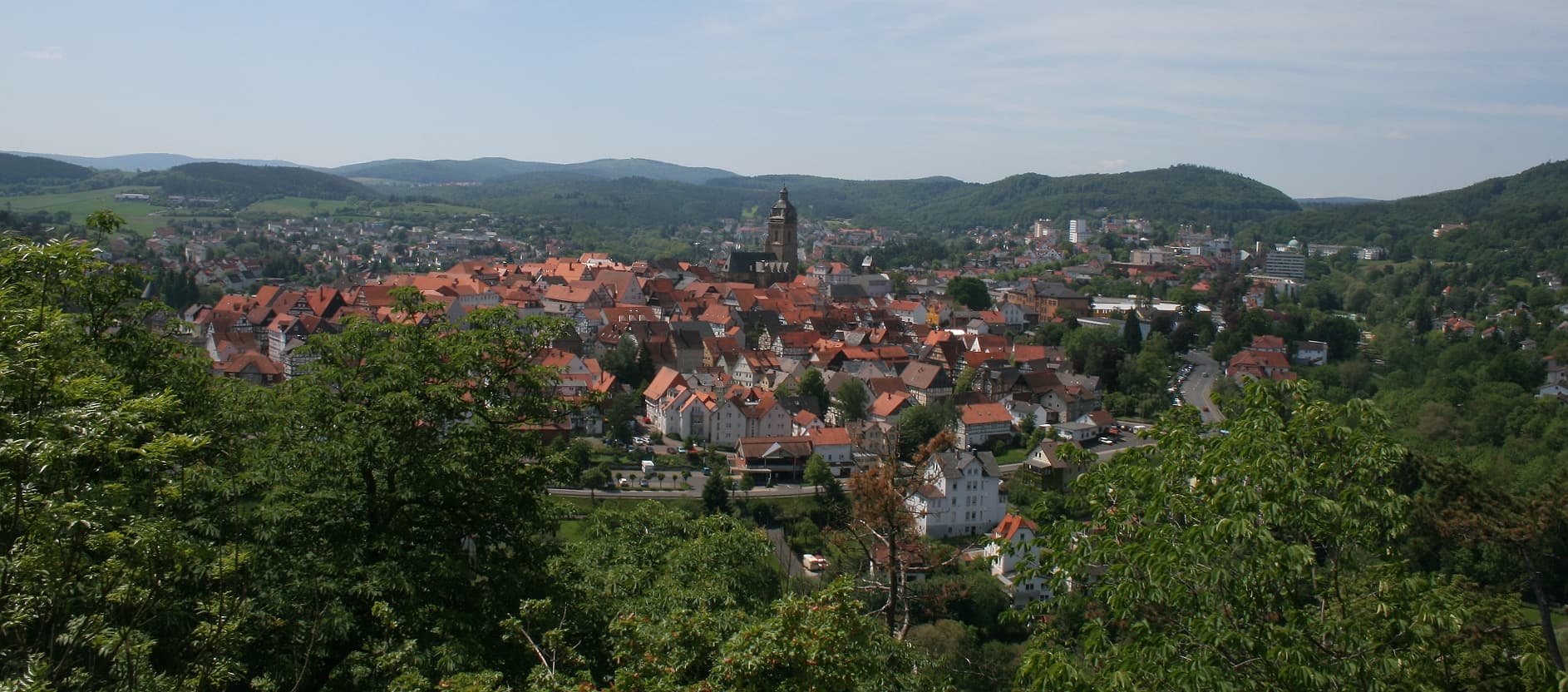
Bad Wildungen, una ciudad balneario en la región de Hesse, Alemania, ofrece una serena escapada, con una arraigada cultura balnearia y un ambiente acogedor. Se asienta en las laderas orientales del bosque de Kellerwald, aproximadamente a 40 kilómetros al suroeste de Kassel. La identidad de la ciudad está profundamente arraigada en sus manantiales ricos en minerales, que han atraído a visitantes en busca de salud y bienestar durante siglos.
Más allá de su reputación como centro de salud, Bad Wildungen presenta una fusión de encanto histórico y esplendor natural. La ciudad exhibe distintivas casas de entramado de madera, elegantes villas de principios del siglo XX y amplios parques. Sirve como puerta de entrada al Parque Nacional Kellerwald-Edersee, declarado Patrimonio de la Humanidad por la UNESCO, ofreciendo abundantes oportunidades para actividades al aire libre como senderismo y ciclismo.
La distintiva estructura urbana de Bad Wildungen presenta dos centros separados: el histórico casco antiguo con sus estructuras medievales y el extenso distrito balneario, caracterizado por amplios paseos y conjuntos de parques. Estas áreas están conectadas por espacios verdes, creando un ambiente armonioso donde la vida urbana y la naturaleza se entrelazan.
## De Asentamiento Medieval a Balneario Real La narrativa de Bad Wildungen comienza en la Alta Edad Media, con su primera mención escrita alrededor del año 800 d.C. como "villa wildungun" en el Valle de Wilde. El asentamiento, inicialmente modesto, creció en importancia con el tiempo, y en 1242, el área conocida como Nieder-Wildungen recibió derechos de ciudad. La evolución de la ciudad estuvo íntimamente conectada con su ubicación estratégica y, crucialmente, con el descubrimiento de sus manantiales minerales.
Durante siglos, la ciudad permaneció bajo el patrocinio de los Condes, y más tarde Príncipes, de Waldeck. El Castillo de Friedrichstein, que se alza imponente sobre la ciudad, comenzó como una fortaleza en el siglo XIII y se transformó en un palacio barroco entre 1707 y 1714 bajo el Príncipe Federico Antonio Ulrico de Waldeck. El período medieval también vio la construcción de la Stadtkirche (Iglesia de la Ciudad) en el siglo XIV, que se convirtió en un punto focal espiritual y cultural.
## El Surgimiento de una Ciudad Balneario Las cualidades terapéuticas de los manantiales minerales de Bad Wildungen se documentaron por primera vez en el siglo XVI, con el Dr. Johann Thölde publicando relatos detallados de sus ventajas medicinales en 1580. Para el siglo XVII, viajeros de toda Europa viajaban a la ciudad para "tomar las aguas", estableciendo una tradición de turismo de salud. El siglo XIX trajo avances significativos a la cultura balnearia de la ciudad, incluida la construcción del primer balneario construido a propósito en 1830 y la llegada del ferrocarril en 1884, mejorando su accesibilidad. La ciudad se expandió considerablemente durante este período, con nuevos hoteles, casas de huéspedes y la creación de extensos jardines balnearios. En 1906, la ciudad recibió oficialmente el prefijo "Bad", que significa "baño" o "balneario", solidificando su estatus como un centro de salud internacional.
## Bienestar Moderno e Integración Paisajística La Belle Époque fue testigo de la construcción de muchos edificios elegantes de estilo villa e instalaciones balnearias sofisticadas, muchas de las cuales perduran hoy. En el período de posguerra, Bad Wildungen experimentó una inversión sustancial en instalaciones médicas, estableciéndose como un centro de rehabilitación moderno, particularmente reconocido por los tratamientos ortopédicos. Un momento crucial en el desarrollo contemporáneo de la ciudad fue la celebración de la Exposición Estatal de Jardines de Hesse en 2006. Este evento llevó a la creación del parque balneario más grande de Europa, que abarca 600 hectáreas, y que conecta orgánicamente el centro histórico con el distrito turístico a través de un sistema de "puentes verdes".
Comience su exploración en el Casco Antiguo (Altstadt), donde casas de entramado de madera notablemente conservadas de varios siglos bordean calles estrechas y sinuosas. La Plaza del Mercado (Marktplatz) sirve como punto central, rodeada de edificios medievales. Ascienda al Schloss Friedrichstein, un palacio barroco que se originó como una fortaleza del siglo XIII. Ofrece amplias vistas de la ciudad y las montañas circundantes de Kellerwald y alberga un museo de arte regional y exposiciones históricas.
La Stadtkirche (Iglesia de la Ciudad), una iglesia gótica tardía del siglo XIV, se erige como otro punto culminante histórico. Contiene valiosos artefactos, incluidos altares medievales e impresionantes vidrieras. De particular interés es el Retablo de Niederwildungen de Konrad von Soest, que data de 1403. Camine por la Brunnenallee, un amplio paseo bordeado de elegantes villas de estilo guillermino y edificios balnearios, que conduce al Wandelhalle, una elegante galería de bebidas donde podrá degustar las aguas minerales locales. El Kurpark, uno de los parques balnearios más grandes de Europa, se extiende por 6 kilómetros, uniendo Bad Wildungen con el distrito de Reinhardshausen. Cuenta con senderos de cura de terreno esculpido, senderos para caminar y áreas para la relajación. No pase por alto los Jardines Dorados dentro del Kurpark, un área diseñada para evocar la edad de oro del balneario alrededor de 1900.
Bad Wildungen experimenta un clima templado con estaciones distintas. El período más cómodo para actividades al aire libre es desde finales de junio hasta finales de agosto, cuando las temperaturas son agradablemente cálidas, promediando 17-18°C, con máximas que alcanzan los 22-23°C. La primavera (abril a mayo) y el otoño (septiembre a octubre) ofrecen temperaturas más suaves y follaje cambiante, lo que los hace adecuados para explorar los parques y la naturaleza circundante. Los inviernos (diciembre a febrero) son frescos, con temperaturas promedio de alrededor de 1-3°C, a veces bajando de cero.
Bad Wildungen es una ciudad compacta, y muchas de sus atracciones, incluidas las áreas de spa, son fácilmente accesibles a pie. Hay autobuses locales disponibles para moverse por la ciudad y sus alrededores. Si planea explorar la región más amplia de Hesse, como el Parque Nacional Kellerwald-Edersee, alquilar un coche es una opción práctica. También hay taxis disponibles. La moneda oficial es el Euro (EUR); el cambio de divisas está disponible en los bancos y los cajeros automáticos están ampliamente distribuidos. Para vuelos internacionales, el Aeropuerto de Frankfurt (FRA) es el centro de aviación más grande, ubicado a 126 km de Bad Wildungen. El Aeropuerto de Paderborn-Lippstadt (PAD) está más cerca, aproximadamente a 65 km, y sirve a algunas ciudades europeas. Al preparar su viaje, considere llevar varias capas de ropa debido al clima templado. Los zapatos cómodos para caminar son esenciales para explorar los parques y senderos de la ciudad.
Bad Wildungen en coreano, en chino o en hebreo — y 29 idiomas más, cada parada narrada por una voz nativa. La mayor variedad de idiomas de cualquier audioguía autoguiada.
Disponible en: