Allées d'Étigny
Au-delà de ses élégants tilleuls et de ses boutiques, cette avenue centrale cache un secret particulier sur sa fondation même.
L'histoire complète se débloque dans le tour
 Zyonig at English Wikipedia / Public domain, via Wikimedia Commons
Visite audio autoguidée de Bagnères-de-Luchon — parcours GPS à pied, lecture hors ligne, narration en 32 langues.
“Là où la grandeur de la Belle Époque rencontre la nature sauvage des Pyrénées.”
Pas les cartes postales. Les histoires que même les habitants ignorent — soufflées à l'oreille, là où elles se sont passées.
Au-delà de ses élégants tilleuls et de ses boutiques, cette avenue centrale cache un secret particulier sur sa fondation même.
Les eaux curatives de Luchon ont une histoire bien plus profonde que les bassins romains, s'étendant à un voyage géologique presque incroyable.
Cette station de ski populaire, accessible par télécabine, était autrefois reliée à la ville par un mode de transport différent, aujourd'hui historique.
Découvrez tous les secrets de Bagnères-de-Luchon
Chaque adresse, chaque révélation en entier — dans ton oreille, là où elle s'est passée.
Tu choisis tes lieux. Tu marches. La voix te révèle ce que les autres ignorent.


Votre visite audioguidée de Bagnères-de-Luchon vous attend — choisissez vos lieux, votre langue, et lancez-vous dès votre arrivée.
AcheterLume intègre un guide en réalité augmentée. Levez votre téléphone : sa caméra montre la rue devant vous, avec une flèche lumineuse posée sur l'image réelle qui pointe toujours vers votre prochain arrêt — aucune carte à déchiffrer, aucun mauvais virage. Comme tout dans Lume, ça fonctionne entièrement hors-ligne.
Bagnères-de-Luchon, souvent simplement appelée Luchon, est une ville thermale captivante au cœur des Pyrénées centrales françaises, dans le département de la Haute-Garonne. C'est un lieu où la grandeur de la Belle Époque se mêle harmonieusement à la beauté sauvage des montagnes.
La ville est réputée pour ses sources thermales, dont les propriétés thérapeutiques sont célébrées depuis l'époque romaine, attirant des visiteurs en quête de bien-être et de ressourcement. Au-delà de ses eaux curatives, Luchon sert de porte d'entrée vers un vaste terrain de jeu naturel, offrant un éventail diversifié d'activités de plein air tout au long de l'année, du ski et du snowboard en hiver à la randonnée, au VTT et au parapente en été.
Avec son architecture élégante, ses avenues bordées d'arbres et son atmosphère animée, Luchon offre un mélange unique de détente et d'aventure, en faisant une destination attrayante pour les familles, les amateurs de sport et ceux qui cherchent simplement à se détendre au milieu des paysages naturels.
L'histoire de Bagnères-de-Luchon s'étend sur plus de deux millénaires, ses origines étant profondément liées aux propriétés thérapeutiques de ses eaux thermales. Des preuves suggèrent une présence humaine dans la région de Luchon depuis le Paléolithique, avec des traces d'anciens ancêtres ibéro-aquitains trouvées dans des sites funéraires d'altitude à proximité.
La colonisation romaine du territoire au siècle précédant Jésus-Christ marqua un tournant significatif. Les Romains, reconnaissant la qualité exceptionnelle des eaux, développèrent les thermes vers 25 av. J.-C., un chef romain nommé Tibère Claude construisant trois bassins. La ville était alors connue sous le nom d'ILIXON, d'après une divinité pré-romaine des eaux. Pendant des siècles, les thermes restèrent utilisés par les habitants locaux, bien que leur renommée plus large diminua après la chute de l'Empire romain.
Le milieu du XVIIIe siècle vit une résurgence de l'importance de Luchon. En 1759, Antoine Mégret, Baron d'Étigny, intendant de Gascogne, initia une revitalisation de la ville thermale. Il supervisa la construction d'une route carrossable reliant Luchon à Montréjeau et établit les emblématiques Allées d'Étigny. Ses efforts, incluant la persuasion de figures influentes comme le Duc de Richelieu à suivre une cure, propulsèrent Luchon de nouveau sous les feux de la rampe. Le XIXe siècle devint l'âge d'or de Luchon, attirant l'aristocratie européenne et de nombreuses célébrités, dont l'Impératrice Eugénie, Alexandre Dumas, Gustave Flaubert et Edmond Rostand, tous attirés par l'attrait de ses cures thermales. L'arrivée du train et la construction du casino consolidèrent encore sa popularité. En 1834, Vincent de Chausenque, dans son ouvrage "Les Pyrénées ou voyages pédestres", attribua à Bagnères-de-Luchon le surnom durable de "Reine des Pyrénées".
Au début du XXe siècle, Luchon étendit son attrait avec l'ouverture du Grand Hôtel de Superbagnères en 1922, relié par un chemin de fer à crémaillère, la transformant en une double station thermale et de sports d'hiver. Aujourd'hui, Bagnères-de-Luchon continue d'embrasser son héritage durable tout en offrant des équipements modernes et un large éventail d'activités pour les visiteurs contemporains.
Bagnères-de-Luchon offre un mélange d'élégance Belle Époque et de beauté pyrénéenne. Commencez votre exploration par une promenade le long des Allées d'Étigny, l'avenue centrale de la ville. Bordée de tilleuls, de boutiques, de cafés et de restaurants, elle est parfaite pour une promenade tranquille.
Les Thermes de Luchon sont un arrêt significatif, que ce soit pour une cure prescrite ou une séance de relaxation au circuit thermoludique moderne "Ressources & Vous". Cette installation rénovée comprend des piscines thermales sulfurées (dont une piscine extérieure sur le toit), des jacuzzis, des saunas et un mur de glace.
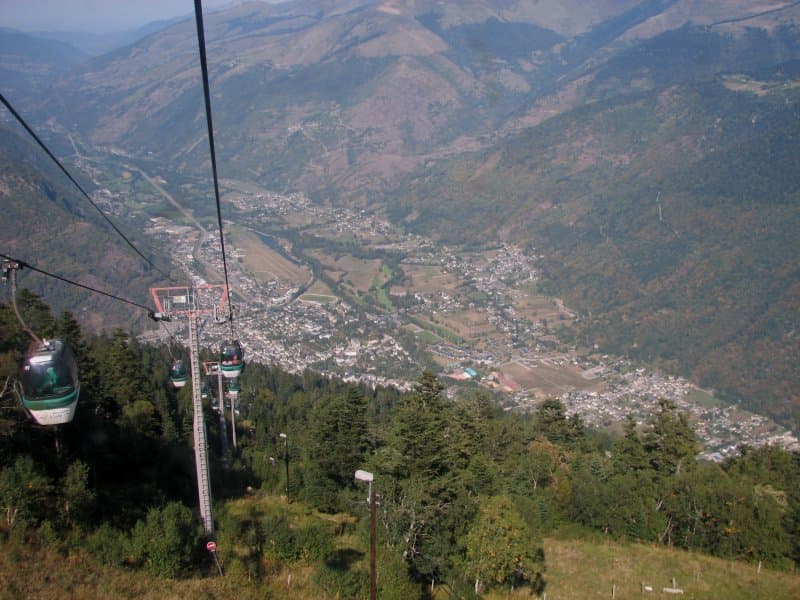
Pour des vues imprenables sur la montagne, prenez la télécabine depuis Luchon jusqu'à la station de ski de Luchon-Superbagnères. En hiver, c'est un paradis du ski, tandis qu'en été, elle se transforme en un centre de randonnée et de VTT, offrant de larges panoramas sur les Pyrénées, y compris le Pic de l'Aneto.
Les montagnes luchonnaises environnantes offrent de nombreuses attractions naturelles. Explorez la Vallée du Lys avec ses cascades, ou faites une randonnée jusqu'au Lac d'Oô, un lac saisissant avec une chute d'eau emblématique de 275 mètres. Le Forau de Aiguallut, un spectaculaire gouffre où l'eau du glacier de l'Aneto disparaît sous terre, est un autre monument naturel remarquable. Pour les amateurs de cyclisme, le légendaire Col de Peyresourde offre des vues imprenables et est une ascension célèbre du Tour de France.
Bagnères-de-Luchon est une destination ouverte toute l'année, avec des charmes distincts selon la saison. Pour les activités estivales comme la randonnée, le VTT, le parapente et les sports en eau vive, les mois de mai à octobre sont recommandés. Juillet et août offrent des températures diurnes chaudes, en moyenne autour de 24°C (75°F), idéales pour les aventures en plein air, bien que les soirées puissent être fraîches. Juillet voit également la ville accueillir une étape du Tour de France.
L'hiver, de décembre à mars, est parfait pour le ski, le snowboard et la raquette à Luchon-Superbagnères. Bien que janvier soit le mois le plus froid avec des températures diurnes moyennes d'environ 7°C (44°F), la station de ski offre un domaine varié. Le printemps et l'automne offrent un temps plus doux, propice à la marche et à la découverte des paysages changeants.
Bagnères-de-Luchon est située dans le département de la Haute-Garonne, en région Occitanie, à environ 1h30 de Toulouse en voiture via l'autoroute A64 (sortie Montréjeau, puis N125). Elle est également accessible en train TER depuis Toulouse-Matabiau jusqu'à Montréjeau, avec des navettes de correspondance vers Luchon.
La ville elle-même est compacte et se prête à la marche, les Allées d'Étigny servant d'artère principale pour les magasins, cafés et restaurants. Une télécabine (Crémaillère Express) assure une liaison rapide de 8 minutes de Luchon directement à la station de ski de Superbagnères. Les offices de tourisme locaux peuvent fournir des détails sur les activités, les transports et les événements. Les options d'hébergement vont des hôtels et maisons d'hôtes aux locations de vacances et campings. Lors des repas, recherchez les spécialités locales telles que l'agneau de montagne, les plats de gibier, les cèpes et les tartes aux myrtilles, souvent accompagnés de l'eau minérale locale.
Bagnères-de-Luchon en coréen, en chinois ou en hébreu — et dans 29 autres langues, chaque étape narrée par une voix native. La plus large gamme de langues de tous les audioguides autoguidés.
Disponible en :