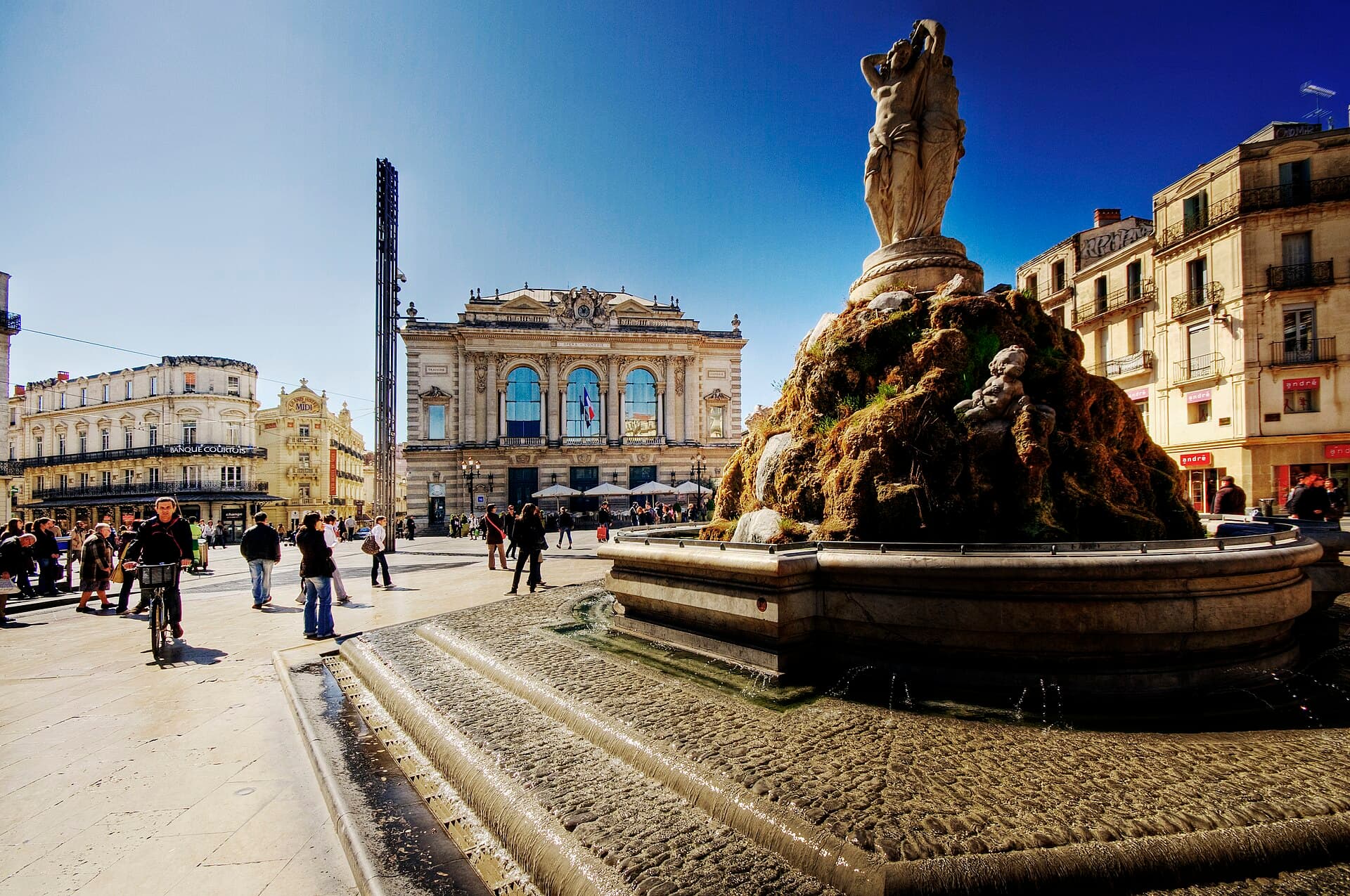
Montpellier, FranceWolfgang Staudt / CC BY 2.0, via Wikimedia Commons
FR

Montpellier

Self-guided audio walking tour of Montpellier — GPS route, offline playback, story-driven narration in 32 languages.

Montpellier: Where sun-drenched medieval passages greet contemporary design.

The secrets of Montpellier

Montpellier, as no one tells it.

Not the postcards. The stories even locals don't know — whispered in your ear, right where they happened.

3 secrets below. Many more wait inside the tour.
University of Montpellier Faculty of Medicine

Montpellier holds the Western world's oldest continuously operating medical school, established in 1220. Its beginnings, however, were less formal.

Full story unlocks in the tour
Verdanson River

A river flows through the heart of Montpellier, yet remains unseen.

Full story unlocks in the tour
Musée Fabre

The Musée Fabre, a notable art museum, owes its expansive collection to a painter who struck an unusual agreement with the city.

Full story unlocks in the tour
The full tour

Discover every secret of Montpellier

Every address, every reveal in full — in your ear, right where it happened.

Get the key to Montpellier

You pick your stops. You walk. The voice reveals what the others miss.

Montpellier — people walking on sidewalk near building during daytime
Photo: KWON JUNHO / Unsplash
Montpellier — a group of people standing on top of a set of stairs
Photo: Julien Daga / Unsplash
Montpellier — a large monument with a clock on top of it
Photo: Chloé V. / Unsplash
Choose your time

How long do you have in Montpellier?

Your self-guided audio tour of Montpellier is ready — pick your landmarks, choose your language, and start the moment you arrive.

Buy
About Montpellier

The story of Montpellier

Montpellier, a sun-kissed city in southern France, offers a captivating fusion of medieval allure and contemporary vitality. As the capital of the Hérault department in the Occitania region, it stands as the third-largest French city near the Mediterranean coast. Its urban canvas features narrow, winding medieval pathways that open into grand 18th-century boulevards and innovative modern architecture. With a Mediterranean climate that delivers an average of 300 days of sunshine each year, Montpellier invites exploration of its historic core, known as the Écusson, and its lively cultural landscape.

Beyond its architectural appeal, Montpellier is a youthful city; students account for nearly a quarter of its population, one of the highest proportions in Europe. This youthful energy fuels a dynamic atmosphere, evident in its bustling squares, diverse culinary offerings, and a flourishing arts scene. The city's dedication to modern design is showcased in new districts that sharply contrast with its ancient core, creating a singular urban fabric recognized globally for its architectural innovation.

History

From Woad Mountain to Academic Center

Montpellier's origins trace back to 985 AD, established by the local feudal dynasty, the Guilhem family. Unlike many of its Roman-rooted neighbors, Montpellier is exclusively a medieval creation, initially named 'Woad Mountain' (mons pisleri) after the woad plant used for dyeing. Its strategic placement near the Mediterranean coast, yet sufficiently inland to be safe from pirate incursions, fostered rapid expansion as a trading center. By the 12th century, Montpellier was a significant hub for Mediterranean trade, recognized for its spice imports and a flourishing Jewish cultural life, sustained by traditions of tolerance towards diverse communities.

The city's academic reputation began to bloom in the 12th century with the emergence of medical education. In 1180, Lord Guilhem VIII granted freedom for anyone to teach medicine, leading to the official founding of the Faculty of Medicine in 1220. This institution is recognized as the oldest continuously operating medical school in the Western world. The University of Montpellier was formally established in 1289 by Pope Nicholas IV, encompassing medicine, law, and liberal arts, making it one of France's oldest universities.

Montpellier became an important city under the Crown of Aragon, even serving as the birthplace of James I of Aragon, before its sale to France in 1349. The 16th century saw Montpellier become a major center for Protestantism, leading to significant conflicts during the Wars of Religion. The Cathédrale Saint-Pierre, originally a monastery chapel founded in 1364, suffered extensive damage during these wars before its reconstruction. In 1593, the Jardin des Plantes, France's oldest botanical garden, was established for the study of medicinal plants, further solidifying Montpellier's scientific prominence. Louis XIV later designated Montpellier as the administrative capital of the Languedoc region, a period that saw the construction of grand structures like the Promenade du Peyrou and the Arc de Triomphe.

What to see

Begin your exploration at the Place de la Comédie, the animated core of Montpellier, often affectionately termed 'the Egg' by locals for its oval shape. This expansive pedestrian square is framed by the elegant Opéra Comédie and features the Three Graces fountain.

From there, wander into the Écusson, the historic city center, a maze of narrow, medieval passages like Rue du Bras de Fer and Rue de l'Argenterie, filled with independent boutiques and cafes.

Visit the imposing Cathédrale Saint-Pierre, a Gothic fortress-like structure with a monumental porch supported by massive cylindrical pillars. Adjacent to the cathedral is the historic Faculty of Medicine, part of the University of Montpellier, the oldest continuously operating medical school in the Western world.

Discover the tranquil Jardin des Plantes, France's oldest botanical garden, established in 1593. It offers a calm retreat with diverse plant collections, ancient trees, and a focus on medicinal plants.

Stroll along the Promenade du Peyrou, a grand 18th-century esplanade offering expansive views of the city, the Cévennes, and the Pyrenees. Here you will find the Arc de Triomphe (Porte du Peyrou) and the Château d'Eau, a historic water tower fed by the impressive Saint-Clément Aqueduct with its double row of arches.

Art enthusiasts should not miss the Musée Fabre, one of France's most significant art museums outside of Paris, housing extensive collections from the 14th to the 21st century, including works by European masters.

When to visit

The most agreeable times to visit Montpellier are during spring (May to mid-June) and autumn (late September to October). During these shoulder seasons, the weather is mild and pleasant, with average temperatures ranging from 18°C to 24°C in spring and 20°C to 27°C in early autumn. You will avoid the peak summer crowds and often find more favorable hotel rates. Summer (July and August) is warm and lively, with temperatures frequently exceeding 30°C, drawing beachgoers and festival attendees, but also bringing larger crowds and higher prices. Winter (December to February) is the most economical time to visit, offering a quieter experience with mild temperatures.

Practical

Montpellier's city center is easily traversed on foot, particularly the pedestrianized Écusson. The city also operates an efficient tramway system that connects various districts and is recognized for its artistic designs. For those arriving by air, Montpellier has its own airport, and is also accessible from nearby airports in Nîmes, Béziers, or Marseille. The TGV train service connects Montpellier to Paris in approximately 3.5 hours.

While exploring, ensure you wear comfortable shoes for walking the stone pathways. Many shops and restaurants in the historic center are independent, offering unique local finds and culinary experiences. Montpellier is generally a dry city, with most rainfall occurring from October to February. Consider acquiring a Montpellier City Card for discounts on attractions and public transport. Tipping is appreciated but not mandatory, as service charges are usually included in restaurant bills.

Good to know
What is Montpellier known for?
Montpellier is recognized for its compelling history, especially its medieval medical school—the oldest continuously operating in the Western world—and its fusion of historic architecture with modern urban planning. It is also known for its youthful population and Mediterranean climate.
Is Montpellier a walkable city?
Yes, Montpellier's historic center, the Écusson, is largely pedestrianized and very walkable, making it ideal for exploring on foot.
How far is Montpellier from the beach?
Montpellier's city center is less than 30 minutes from the Mediterranean Sea, with popular beaches like Palavas-les-Flots easily accessible.
What is the currency used in Montpellier?
As part of France and the European Union, the official currency used in Montpellier is the Euro (€).
Is English widely spoken in Montpellier?
While French is the official language, English is generally understood in tourist areas, hotels, and larger shops, particularly by younger generations. However, knowing some basic French phrases will enhance your experience.
What are some traditional foods to try in Montpellier?
Montpellier, situated in the Occitanie region, presents Mediterranean-inspired cuisine. Seek out local seafood, Pélardon cheese, and regional wines, especially from the Languedoc-Roussillon vineyards.
On the map

Montpellier in your own language — all 32· 32

Montpellier in Korean, in Chinese or in Hebrew — and 29 more languages, every stop narrated by a native voice. The widest language range of any self-guided audio tour.

Available in:

  • English
  • FrenchFrançais
  • SpanishEspañol
  • GermanDeutsch
  • ItalianItaliano
  • PortuguesePortuguês
  • DutchNederlands
  • PolishPolski
  • SwedishSvenska
  • DanishDansk
  • NorwegianNorsk
  • FinnishSuomi
  • RussianРусский
  • UkrainianУкраїнська
  • TurkishTürkçe
  • CzechČeština
  • HungarianMagyar
  • RomanianRomână
  • BulgarianБългарски
  • GreekΕλληνικά
  • Japanese日本語
  • Korean한국어
  • Chinese中文
  • Arabicالعربية
  • Hebrewעברית
  • Hindiहिन्दी
  • Thaiไทย
  • VietnameseTiếng Việt
  • IndonesianBahasa Indonesia
  • MalayBahasa Melayu
  • CatalanCatalà
  • BasqueEuskara
More cities in Occitania
Montpellier
$9.99
No booking · code valid 1 year · 12h to walk once activated
Load on Wi-Fi, then walk offline — no roaming abroad
Get the key to Montpellier