Church of Saint-Étienne
Within the Gothic walls of Saint-Étienne, a figure stands as a stark reminder of mortality, unlike any other tomb you might expect.
Full story unlocks in the tour
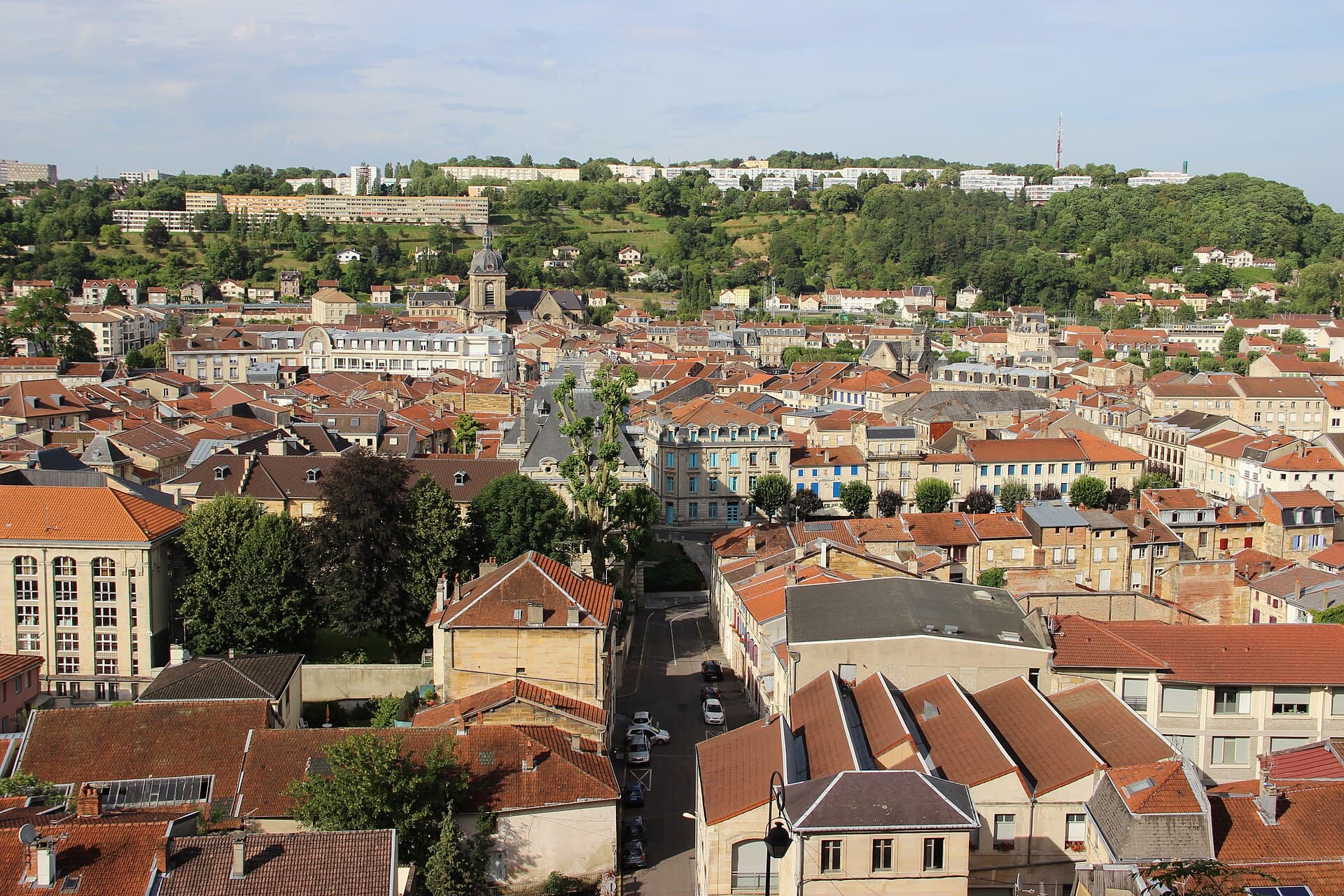 Ketounette / CC BY-SA 4.0, via Wikimedia Commons
Self-guided audio walking tour of Bar-le-Duc — GPS route, offline playback, story-driven narration in 32 languages.
“Where Renaissance grandeur meets a sweet, singular secret.”
Not the postcards. The stories even locals don't know — whispered in your ear, right where they happened.
Within the Gothic walls of Saint-Étienne, a figure stands as a stark reminder of mortality, unlike any other tomb you might expect.
This quiet French town holds a surprising claim to a revolutionary invention that changed personal transportation forever.
There's a local delicacy so rare and labor-intensive, it's been dubbed 'Bar caviar.'
Discover every secret of Bar-le-Duc
Every address, every reveal in full — in your ear, right where it happened.
You pick your stops. You walk. The voice reveals what the others miss.
Your self-guided audio tour of Bar-le-Duc is ready — pick your landmarks, choose your language, and start the moment you arrive.
BuyLume has a built-in augmented-reality guide. Hold your phone up and its camera shows the street ahead of you, with a glowing arrow laid over the real view that always points to your next stop — no map to puzzle over, no wrong turns. Like everything in Lume, it works fully offline.
Bar-le-Duc, the historic capital of the Meuse department in northeastern France, offers a captivating journey through time, split distinctly into an upper and lower town. The upper town, or Ville Haute, is a testament to its Renaissance golden age, featuring an exceptional collection of 16th to 18th-century mansions built from local blond stone, complete with sculpted pediments and intricate ornamentation.
The lower town, stretching along the Ornain River, presents a different character with its more modern bustle, intersected by the river and the Marne-Rhine Canal. This division provides a varied experience, from the tranquil, elevated streets of aristocratic residences to the lively commercial areas and scenic riverside paths.
Beyond its architectural beauty, Bar-le-Duc is also recognized for its unique culinary heritage and a surprising connection to a world-changing invention. It holds the prestigious 'Ville d'Art et d'Histoire' label, underscoring its cultural and historical significance.
## From Roman Settlement to Ducal Seat Bar-le-Duc's origins trace back to the 1st century AD as a Gallo-Roman settlement named Caturiges, strategically positioned along a Roman road by the Ornain River. By the 6th century, it had expanded and become a fortified town. A pivotal moment arrived in 951 AD when Duke Frederick of Ardennes constructed a fortress on a rocky spur overlooking the valley, establishing the foundation of the Upper Town and solidifying Bar-le-Duc as a strategic stronghold.
## The Duchy of Bar and Renaissance Flourish From the 10th century, Bar-le-Duc served as the seat of the County of Bar, which was elevated to a Duchy in 1354, making its ruler a Peer of France. The 15th and 16th centuries marked a golden age, with significant cultural and architectural development under the patronage of rulers like Antoine the Good and Charles III. This period saw the construction of many elegant Renaissance houses in the Ville Haute, transforming it into one of France's most remarkable Renaissance urban ensembles.
## Turbulent Transitions and Modern Significance The Duchy of Bar was eventually incorporated into the Duchy of Lorraine, and then into the Kingdom of France in 1766. The 19th century brought industrial expansion, with the town becoming known for traditional crafts and later for breweries and factories. During the First World War, Bar-le-Duc played a crucial role as the southern anchor of the 'Voie Sacrée' (Sacred Way), a vital supply route to the besieged city of Verdun, with thousands of trucks passing through daily. Today, the town preserves its layered past, from medieval remnants like the clock tower to its significant Renaissance architecture and memorials commemorating its wartime contributions.
Begin your exploration in the Ville Haute, the upper town, renowned for its Renaissance architecture. Wander along Rue des Ducs-de-Bar, a grand aristocratic street lined with 16th-century mansions. The Place Saint-Pierre showcases more elegant façades, including the Florainville mansion, now the Law Courts.
Visit the Church of Saint-Étienne, a Gothic structure with a 16th-century façade and a 17th-century bell tower. It houses Ligier Richier's haunting 'Le Transi,' a sculpture depicting a decaying corpse, and 'Christ and the Two Thieves.' Nearby, you'll find the 12th-century Clocktower, a remnant of the old ducal palace, and the Gilles de Trèves College, built between 1571 and 1574 with its distinctive stone balustrades.
Descend to the lower town to explore Rue du Bourg, once the main business district, still featuring beautifully decorated façades with gargoyles and Renaissance ornaments. The Musée Barrois, housed in the remains of the former Dukes' castle, offers diverse collections spanning from antiquity to the 20th century, including archaeological finds and local artworks. For scenic views, head to the Grangettes belvedere overlooking the lower town.
Bar-le-Duc is pleasant to visit throughout the year, with each season offering a different appeal. Spring (April-June) brings blooming landscapes and mild weather, ideal for walking and outdoor exploration. Summers are warm and suitable for outdoor attractions. Early July is particularly lively with the annual RenaissanceS festival, a street arts event celebrating the town's heritage. Autumn provides beautiful foliage and a quieter atmosphere for sightseeing. Winters are generally mild, making it a good time to enjoy indoor attractions and local cuisine.
Bar-le-Duc is located in the Meuse department of the Grand Est region, approximately 200 km east of Paris. The Ornain River flows through the town, crossed by seven bridges, and is paralleled by the Marne-Rhine Canal, which offers opportunities for water tourism and scenic walks.
The town is best explored on foot, especially the historical upper town. The Bar-le-Duc Tourist Office, located at 7 Rue Jeanne d'Arc, provides brochures and can arrange guided visits throughout the year for groups. While French is the primary language, English may be spoken in tourist areas. The local currency is the Euro (€).
For dining, options range from traditional French cuisine to international fare. Consider trying the local specialty, Bar-le-Duc jelly.
Bar-le-Duc in Korean, in Chinese or in Hebrew — and 29 more languages, every stop narrated by a native voice. The widest language range of any self-guided audio tour.
Available in: