El Campanario de Bergues
El icónico campanario, Patrimonio de la Humanidad por la UNESCO, emite una melodía distintiva desde su carillón. Hay un secreto juguetón detrás de su sonido único.
La historia completa se desbloquea en el tour
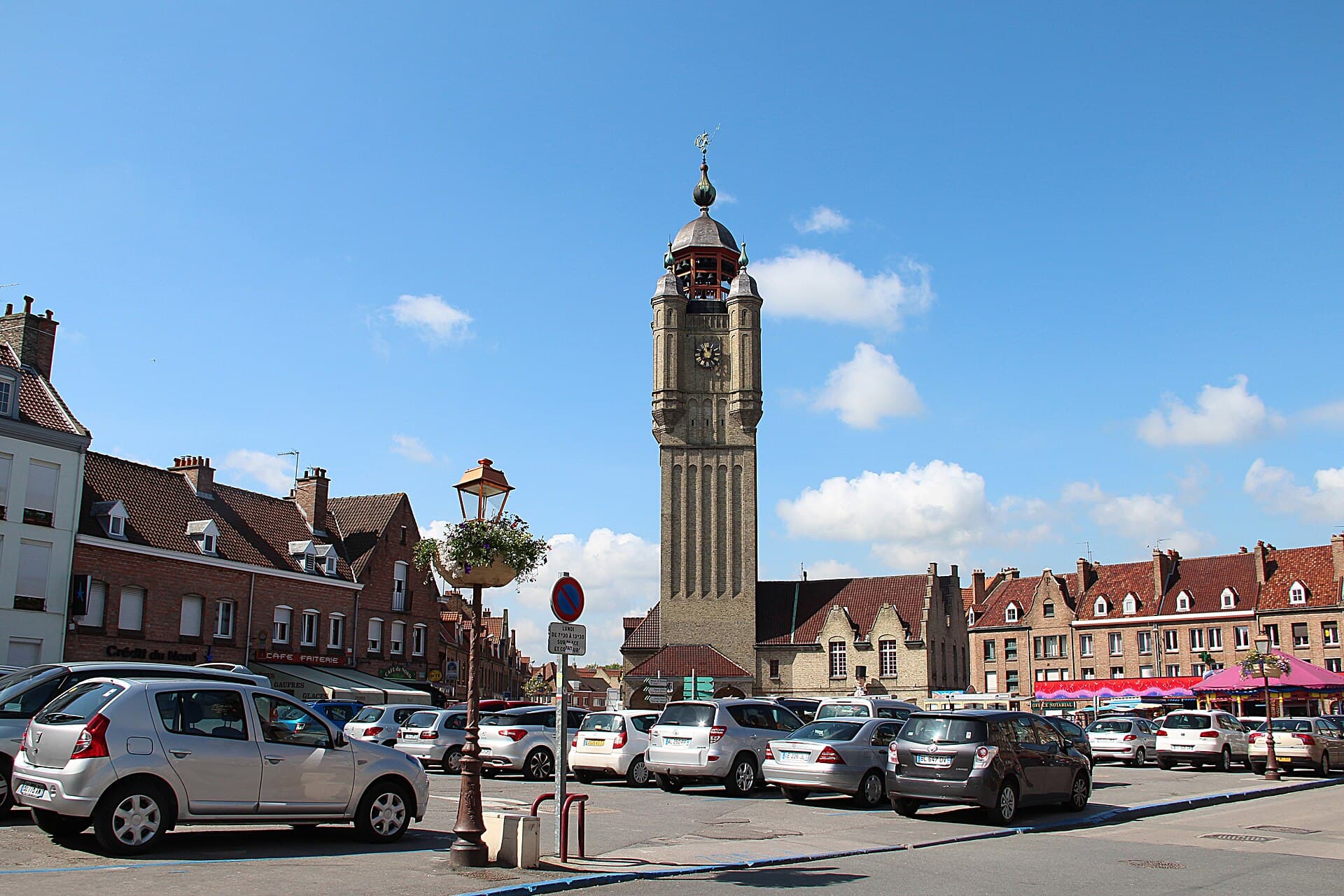 Jean-Pol GRANDMONT / CC BY 4.0, via Wikimedia Commons
Tour de audio autoguiado de Bergues — ruta GPS a pie, reproducción offline, narración en 32 idiomas.
“Más allá del encanto cinematográfico, Bergues es un corazón flamenco fortificado, que late con campanas antiguas y canales tranquilos.”
No las postales. Las historias que ni los locales conocen — al oído, justo donde ocurrieron.
El icónico campanario, Patrimonio de la Humanidad por la UNESCO, emite una melodía distintiva desde su carillón. Hay un secreto juguetón detrás de su sonido único.
Bergues, con su paisaje flamenco llano, parece un lugar improbable para una 'montaña' en su nombre. El origen reside en una sutil característica geográfica que dio forma a su primer asentamiento.
Los tranquilos canales que serpentean por Bergues parecen una pintoresca adición al pueblo. Sin embargo, sus orígenes son mucho más estratégicos que escénicos.
Descubre todos los secretos de Bergues
Cada dirección, cada revelación al completo — a tu oído, justo donde ocurrió.
Eliges tus paradas. Caminas. La voz te revela lo que los demás ignoran.


Tu tour de audioguía por Bergues te espera — elige tus lugares, tu idioma y empieza al llegar.
ComprarLume incluye una guía de realidad aumentada. Levanta el móvil y su cámara muestra la calle que tienes delante, con una flecha luminosa sobre la imagen real que siempre apunta a tu próxima parada — sin mapas que descifrar, sin giros equivocados. Como todo en Lume, funciona completamente sin conexión.
Bergues, una ciudad fortificada en el departamento de Nord, en el norte de Francia, ofrece una cautivadora mezcla de influencias francesas y flamencas. Conocida localmente como 'la otra Brujas de Flandes', es un lugar donde la historia resuena a través de su arquitectura bien conservada y sus tranquilas vías fluviales. La ciudad obtuvo un significativo reconocimiento moderno como la principal ubicación de rodaje de la inmensamente popular película francesa de 2008 "Bienvenue chez les Ch'tis" (Bienvenidos al Norte), que mostró con cariño el encanto único de la región y la calidez de sus habitantes.
Rodeada por extensas murallas y una red de canales, Bergues invita a los visitantes a retroceder en el tiempo. Su campanario, declarado Patrimonio de la Humanidad por la UNESCO, con su distintivo carillón, se erige como un orgulloso símbolo de las libertades comunales y ofrece amplias vistas de la llanura flamenca circundante. Más allá de su fama cinematográfica, Bergues es un destino para aquellos que buscan una auténtica cultura fronteriza francesa, un ritmo relajado y la oportunidad de explorar siglos de historia grabados en sus fachadas de ladrillo y sus tranquilas plazas.
La historia de Bergues se remonta a alrededor del año 800 d.C., con sus orígenes ligados a la Abadía de Saint-Winnoc. El nombre de la ciudad en sí, derivado del holandés 'groene berg' o 'colina verde', apunta a su asentamiento inicial en una pequeña área elevada dentro de un paisaje pantanoso. En 885, Balduino el Calvo, Conde de Flandes, fortificó Bergues para protegerse de las incursiones vikingas, confiando las reliquias de San Winnoc, quien convirtió la región al cristianismo, a las autoridades religiosas locales.
Durante la Edad Media, Bergues floreció como un importante centro religioso y comercial, conectado al mar a través del canal de Colme. Se convirtió en un próspero centro de pañería y miembro de la rama londinense de la Liga Hanseática en el siglo XIII. La creciente independencia de la ciudad fue simbolizada por la construcción de su campanario y el fortalecimiento de sus murallas.
Bergues fue frecuentemente disputada por fuerzas francesas, españolas e inglesas debido a su ubicación estratégica. Fue incorporada oficialmente a Francia en 1668 por el rey Luis XIV tras el Tratado de Aquisgrán. El ingeniero militar de Luis XIV, el mariscal Vauban, fue entonces encargado de modernizar y expandir las defensas de la ciudad, creando las murallas en forma de estrella que en gran parte permanecen hoy en día. Estas extensas fortificaciones, en parte medievales y en parte diseño de Vauban, se extienden por varios kilómetros e incluyen puertas de la ciudad originales como la Porte de Cassel y la Porte de Marbre.
A pesar de sus fuertes defensas, Bergues sufrió una destrucción significativa durante la Primera y la Segunda Guerra Mundial. Durante la Batalla de Dunkerque en 1940, el 80% de la ciudad fue arruinada, y su campanario fue dinamitado en 1944. Sin embargo, la ciudad experimentó una exitosa reconstrucción después de la guerra, con el campanario reconstruido a su diseño original en 1961, completo con su carillón de 50 campanas. Esta resiliencia, junto con su perdurable carácter flamenco, ha permitido a Bergues resurgir como un notable destino histórico y cultural.
Los lugares de interés en Bergues se concentran dentro de su histórico centro fortificado. El monumento más prominente es el Campanario de Bergues (Beffroi de Bergues), declarado Patrimonio de la Humanidad por la UNESCO. Los visitantes pueden subir sus 206 escalones para disfrutar de amplias vistas de la ciudad y la llanura flamenca circundante. El campanario alberga un carillón con 50 campanas, que suenan para el mercado de los lunes y otras festividades.
Un paseo por Les Remparts, las extensas fortificaciones que rodean la ciudad, es esencial. Estas murallas en forma de estrella, diseñadas por Vauban en el siglo XVII, ofrecen un circuito escénico alrededor del casco antiguo, incluyendo varias puertas de la ciudad originales como la Porte de Cassel. El Canal de Bergues y su zona portuaria son icónicos, con casas coloridas y barcos amarrados a lo largo de las orillas. Hay excursiones en barco disponibles, que ofrecen una perspectiva diferente de la ciudad.
Otros puntos de interés incluyen el Musée du Mont-de-Piété, el principal museo de arte e historia de Bergues, ubicado en una antigua casa de empeños del siglo XVII. Las ruinas de la Abadía de Saint-Winoc, con su torre cuadrada, torre puntiaguda y jardín, también merecen ser exploradas. Para los fans de la película 'Bienvenue chez les Ch'tis', una visita guiada dedicada al 'Ch'ti Tour' explora las ubicaciones de rodaje.
Las épocas ideales para visitar Bergues para disfrutar de un clima agradable y menos multitudes son la primavera (abril-junio) y principios de otoño (septiembre). Durante estos meses, las temperaturas son suaves y las calles suelen estar más tranquilas. El verano (finales de junio a principios de septiembre) ofrece un clima cálido, con máximas diarias promedio alrededor de 21°C (70°F) en julio y agosto, y más sol. Sin embargo, los fines de semana de verano pueden ser más concurridos debido al turismo cinematográfico. Aunque el invierno trae menos horas de luz, puede ofrecer mercados navideños ocasionales y luces festivas.
Bergues está convenientemente ubicada a aproximadamente 9 kilómetros al sur de Dunkerque y a 15 kilómetros de la frontera belga. El aeropuerto internacional más cercano es el Aeropuerto de Lille (LIL), a unos 80 kilómetros. El Aeropuerto de Bruselas (BRU) y el Aeropuerto de París Charles de Gaulle (CDG) también son opciones viables, que requieren un coche de alquiler o una combinación de tren y autobús para llegar a Bergues.
Conducir es una forma práctica de llegar a Bergues, ya que está a poca distancia de las autopistas A25 y A16. Bergues tiene su propia estación de tren, Gare de Bergues, con servicios de tren regionales frecuentes desde Dunkerque, que tardan unos 10 minutos. Aunque no hay servicios directos de autobús de larga distancia, los viajeros pueden tomar un autocar a Dunkerque o Lille y luego hacer transbordo a un tren regional.
Dentro de la ciudad, el centro histórico es compacto y se puede recorrer a pie. Un sendero peatonal recorre las murallas, proporcionando un circuito escénico. La Oficina de Turismo, ubicada en el campanario, ofrece información y visitas guiadas.
Bergues en coreano, en chino o en hebreo — y 29 idiomas más, cada parada narrada por una voz nativa. La mayor variedad de idiomas de cualquier audioguía autoguiada.
Disponible en: