La Zizzola
Cette villa octogonale, un symbole marquant de Bra, aurait été un lieu de rassemblement pour les sorcières locales.
L'histoire complète se débloque dans le tour
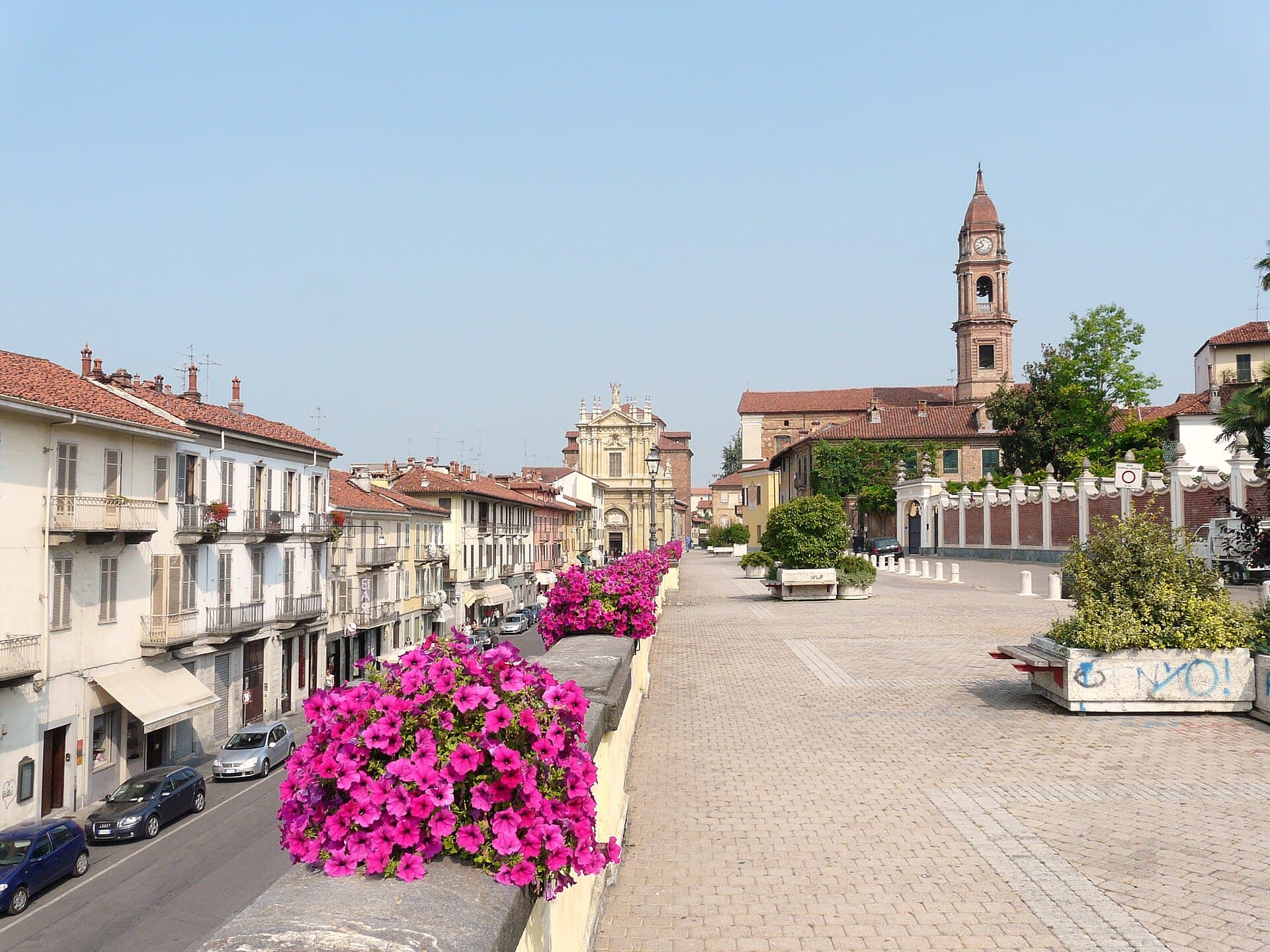 Davide Papalini / cc by-sa 3.0, via Wikimedia Commons
Visite audio autoguidée de Bra — parcours GPS à pied, lecture hors ligne, narration en 32 langues.
“Là où le temps ralentit et chaque bouchée raconte une histoire.”
Pas les cartes postales. Les histoires que même les habitants ignorent — soufflées à l'oreille, là où elles se sont passées.
Cette villa octogonale, un symbole marquant de Bra, aurait été un lieu de rassemblement pour les sorcières locales.
Le mouvement mondial qui défend une 'alimentation bonne, propre et juste' a ses racines dans cette rue discrète.
Cette saucisse locale, aujourd'hui faite de veau et de porc, avait autrefois un ingrédient principal surprenant et entièrement différent.
Découvrez tous les secrets de Bra
Chaque adresse, chaque révélation en entier — dans ton oreille, là où elle s'est passée.
Tu choisis tes lieux. Tu marches. La voix te révèle ce que les autres ignorent.


Votre visite audioguidée de Bra vous attend — choisissez vos lieux, votre langue, et lancez-vous dès votre arrivée.
AcheterLume intègre un guide en réalité augmentée. Levez votre téléphone : sa caméra montre la rue devant vous, avec une flèche lumineuse posée sur l'image réelle qui pointe toujours vers votre prochain arrêt — aucune carte à déchiffrer, aucun mauvais virage. Comme tout dans Lume, ça fonctionne entièrement hors-ligne.
Bra, une ville de la région du Piémont en Italie, est un nom murmuré parmi les amateurs de gastronomie du monde entier, en grande partie en raison de son rôle central en tant que berceau du mouvement Slow Food. Cette ville discrète mais historiquement substantielle, située à environ 50 kilomètres au sud-est de Turin, offre un mélange distinctif de tradition gastronomique, d'architecture baroque et d'un rythme de vie détendu.
Au-delà de sa renommée culinaire, Bra offre une porte d'entrée vers les collines pittoresques des Langhe et du Roero, une zone classée au patrimoine mondial de l'UNESCO, célébrée pour ses vignobles et ses paysages pittoresques. La ville elle-même, avec son charmant centre historique, invite à l'exploration, révélant un passé façonné par des origines romaines, des seigneurs médiévaux et la Maison de Savoie.
Les origines de Bra remontent à la période néolithique, avec des preuves de présence humaine dans la région depuis cette époque. À l'époque romaine, au IIe siècle av. J.-C., l'important centre commercial et militaire de Pollentia (aujourd'hui Pollenzo) fut fondé sur les rives du fleuve Tanaro, près de l'actuelle Bra. La ville de Bra elle-même aurait été fondée vers 1082 par un groupe de moines. Le nom "Bra" pourrait dériver de "Barderate", une ancienne terre ligure, ou du mot celtique ou germanique "Breit", signifiant "campagne ouverte".
Au Moyen Âge, la ville était connue sous le nom de Brayda, un terme courant dans le nord de l'Italie pour désigner les champs accordés aux seigneurs locaux. La famille Brayda construisit un château fortifié au XIIIe siècle, bien que cette forteresse fut plus tard détruite par les Français en 1515 et complètement démantelée en 1552. Bra devint une commune libre au XIIe siècle, bien qu'elle restât sous l'influence de puissantes villes voisines comme Alba et Asti, ainsi que des seigneuries de Savoie, Saluzzo et Monferrato. Elle fut élevée au rang de ville en 1760 par Carlo Emanuele III de Savoie.
Les XVIIe et XVIIIe siècles virent un épanouissement de l'architecture baroque à Bra, laissant un héritage d'églises et de palais impressionnants. Le XIXe siècle fut marqué par la naissance de figures notables, dont Saint Giuseppe Benedetto Cottolengo et les frères Craveri, qui fondèrent le Musée des Sciences. Le XXe siècle apporta l'essor des industries de la tannerie, attirant la migration vers la région.
Cependant, c'est à la fin du XXe siècle que Bra acquit une reconnaissance internationale en tant que berceau du mouvement Slow Food. Fondé en 1986 par le journaliste local Carlo Petrini en signe de protestation contre l'ouverture d'une chaîne de restauration rapide à Rome, Slow Food prône une alimentation "bonne, propre et juste", la préservation des traditions régionales et la promotion d'un rythme de vie plus lent. Bra continue d'être le siège du mouvement et accueille le festival biennal "Cheese", un événement de renommée internationale célébrant les fromages artisanaux.
Le centre historique de Bra est un endroit charmant à explorer à pied, avec ses églises baroques, ses façades aux couleurs pastel et ses boutiques locales. Ne manquez pas l'église de Santa Chiara, un chef-d'œuvre baroque de Bernardo Vittone, connue pour son intérieur unique en forme de vague. L'église de Sant'Andrea, avec une façade conçue par Gian Lorenzo Bernini, est un autre monument architectural significatif. Le Palazzo Traversa, une résidence noble gothique, abrite aujourd'hui le Musée d'Archéologie, d'Histoire et d'Arts de Bra, offrant un aperçu du passé de la ville.
Pour une vue imprenable sur la ville, dirigez-vous vers la colline de Monte Guglielmo, où vous trouverez la Zizzola, une villa octogonale qui est un symbole de Bra et abrite désormais un musée multimédia. Plongez dans la scène culinaire locale en visitant le marché animé de Bra, qui se tient plusieurs jours, notamment le vendredi, offrant des produits frais et des délices régionaux. Un court voyage à Pollenzo, un site du patrimoine mondial de l'UNESCO, vous permet de visiter l'Université des Sciences Gastronomiques et la Banca del Vino (Banque du Vin), une mémoire historique des vins italiens.
Bra est également une excellente base pour explorer les régions viticoles environnantes des Langhe et du Roero, avec des opportunités de dégustations de vins dans les vignobles locaux des villages voisins comme Barolo et La Morra.
Les meilleures périodes pour visiter Bra sont le printemps (mai, juin) et le début de l'automne (septembre, octobre). Ces mois offrent un temps agréable pour explorer la ville et les vignobles environnants. L'automne est particulièrement populaire pour les festivals de vendanges et la chasse aux truffes dans la région voisine des Langhe. Le festival biennal 'Cheese', un événement international majeur, a généralement lieu en septembre. Bien que juillet et août puissent être chauds, ils sont également animés par les festivals locaux.
Bra est facilement explorable à pied en raison de sa taille compacte. Pour se rendre à Bra, des services de train directs sont disponibles depuis Turin. Si vous conduisez, prenez l'A6 vers le sud depuis Turin. Un parking est disponible près de la gare de Bra 24h/24 et 7j/7. Les transports en commun à Bra comprennent plusieurs lignes de bus locales.
La monnaie officielle en Italie est l'Euro (€, EUR). Bien que les cartes de crédit soient largement acceptées dans les grands établissements, il est conseillé d'avoir de l'argent liquide pour les petits magasins et les marchés. L'italien est la langue prédominante, bien que l'anglais soit parlé dans les zones touristiques. Le coût journalier moyen pour un visiteur à Bra peut varier de 80 à 150 $.
Bra en coréen, en chinois ou en hébreu — et dans 29 autres langues, chaque étape narrée par une voix native. La plus large gamme de langues de tous les audioguides autoguidés.
Disponible en :