St Michael's Hill
Una ilusión óptica, que engaña a la vista, se originó en una antigua cafetería de Bristol.
La historia completa se desbloquea en el tour
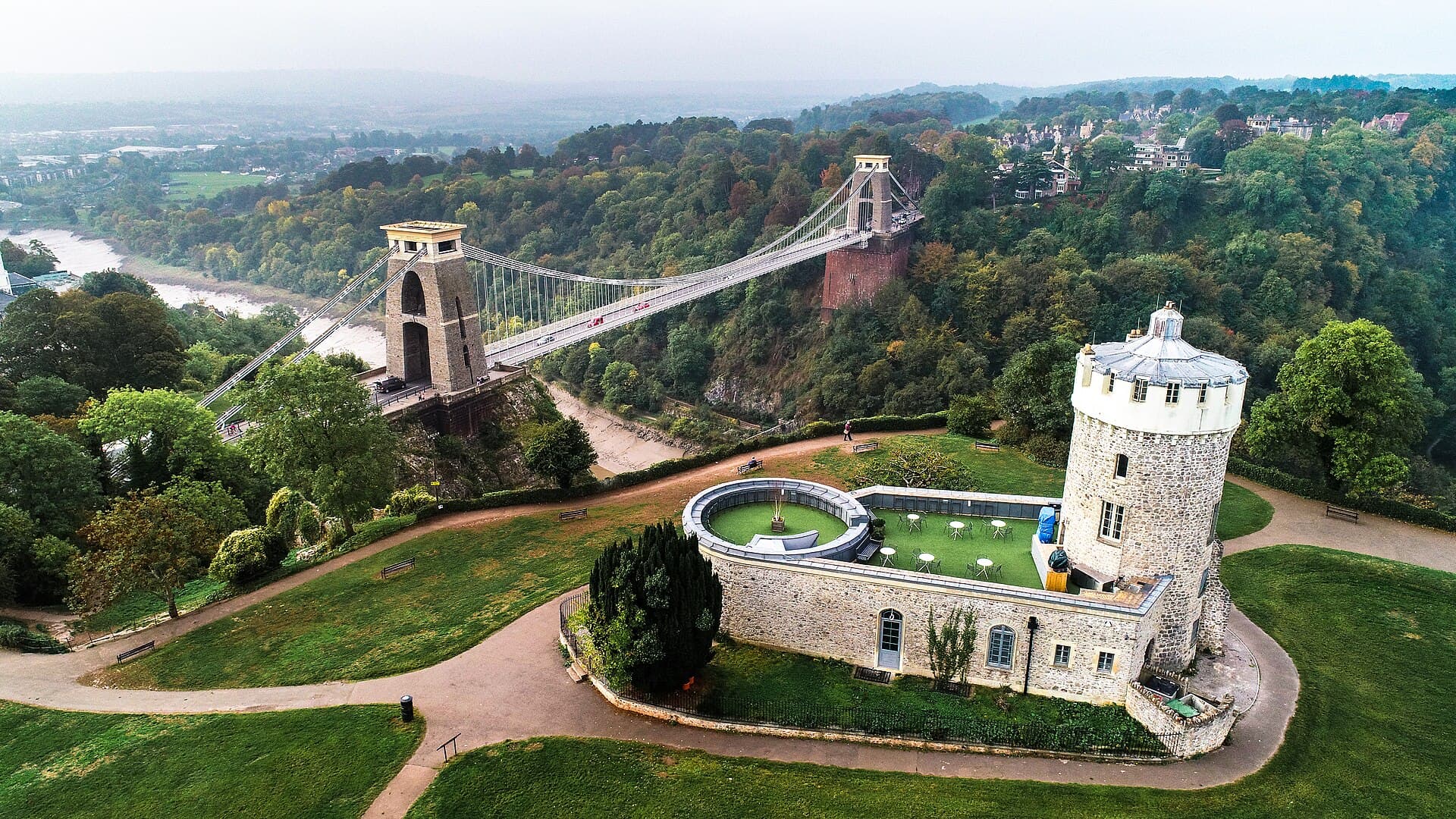 Chris Lathom-Sharp / CC BY-SA 4.0, via Wikimedia Commons
Tour de audio autoguiado de Bristol — ruta GPS a pie, reproducción offline, narración en 32 idiomas.
“Donde los legados marineros convergen con el arte callejero contemporáneo y un espíritu independiente.”
No las postales. Las historias que ni los locales conocen — al oído, justo donde ocurrieron.
Una ilusión óptica, que engaña a la vista, se originó en una antigua cafetería de Bristol.
Esta notable hazaña de ingeniería fue el lugar del primer salto de puenting moderno del mundo.
Un volumen dentro de los archivos de la ciudad está encuadernado en un material inesperadamente sombrío.
Descubre todos los secretos de Bristol
Cada dirección, cada revelación al completo — a tu oído, justo donde ocurrió.
Eliges tus paradas. Caminas. La voz te revela lo que los demás ignoran.


Tu tour de audioguía por Bristol te espera — elige tus lugares, tu idioma y empieza al llegar.
ComprarLume incluye una guía de realidad aumentada. Levanta el móvil y su cámara muestra la calle que tienes delante, con una flecha luminosa sobre la imagen real que siempre apunta a tu próxima parada — sin mapas que descifrar, sin giros equivocados. Como todo en Lume, funciona completamente sin conexión.
Bristol, una ciudad en el suroeste de Inglaterra, se asienta sobre el río Avon, entrelazando una profunda herencia marítima con un carácter contemporáneo y autosuficiente. Durante ocho siglos, ha servido como un centro económico y cultural fundamental. Desde sus orígenes como 'Brycgstow', que significa 'el lugar de encuentro en el puente' en sajón antiguo, Bristol ha madurado hasta convertirse en una dinámica extensión urbana. Sus contornos están moldeados por su histórico puerto, su llamativo arte callejero y un profundo sentido de comunidad.
La ciudad es célebre por su dedicación a la innovación y la sostenibilidad, habiendo sido la primera ciudad del Reino Unido en ser designada Capital Verde Europea en 2015. Bristol también es reconocida por su animado panorama cultural, siendo la cuna del trip-hop y el drum and bass, y hogar de la galardonada Aardman Animations, creadores de Wallace y Gromit. Con sus variados barrios, desde el bohemio Stokes Croft hasta la venerable Ciudad Vieja, Bristol presenta una distintiva gama de experiencias para cada visitante.
Bristol se clasifica constantemente como un lugar principal para residir y explorar en el Reino Unido, frecuentemente destacada por su ambiente agradable y su elevada calidad de vida. Las dimensiones compactas de la ciudad la hacen ideal para la exploración a pie o en bicicleta, permitiendo a los visitantes descubrir fácilmente sus muchas atracciones, desde maravillas de la ingeniería hasta tiendas y restaurantes independientes.
## De Brycgstow a Puerto Global La narrativa de Bristol comienza como 'Brycgstow', un término del inglés antiguo que significa 'el lugar junto al puente', un asentamiento que surgió entre los ríos Avon y Frome. En el siglo X, se estableció una casa de moneda, y la ciudad rápidamente ganó prominencia en la era normanda. En 1373, el rey Eduardo III otorgó a Bristol el estatus de condado, una distinción rara que subrayó su creciente importancia económica.
## Era de Exploración y Comercio Las conexiones marítimas de la ciudad se expandieron considerablemente durante la Edad Media, fomentando el comercio con Gales, Irlanda, Islandia, Francia, España y Portugal, negociando con lana, pescado, vino y grano. Este legado marinero se profundizó con la Era de la Exploración. En 1497, John Cabot partió de Bristol a bordo del Matthew, convirtiéndose en el primer europeo desde los vikingos en pisar tierra firme de América del Norte. Este viaje solidificó el papel de Bristol como un puerto importante y encendió siglos de preeminencia marítima.
## Revolución Industrial y Cambio Social Los siglos XVII y XVIII trajeron una inmensa prosperidad, aunque acompañada de un capítulo sombrío: Bristol se convirtió en un nexo central para el comercio transatlántico de esclavos. Miles de barcos partieron de Bristol hacia África Occidental, un legado que ahora es una parte profundamente contemplada de la identidad de la ciudad. La Revolución Industrial remodeló aún más Bristol, con la expansión de industrias como el vidrio, el papel, el jabón y los productos químicos. A finales del siglo XVIII y principios del XIX, se produjeron importantes desarrollos de infraestructura, incluida la construcción de un puerto flotante y avances en la construcción naval.
## El Legado de Brunel y el Impacto de la Guerra La era victoriana se distinguió por la brillantez de Isambard Kingdom Brunel, cuyas hazañas de ingeniería reconfiguraron el horizonte de Bristol. Concibió el célebre Puente Colgante de Clifton, el SS Great Britain (el primer gran transatlántico del mundo) y el Great Western Railway, que unía Bristol con Londres. Sin embargo, la importancia industrial de la ciudad la convirtió en un objetivo durante la Segunda Guerra Mundial. El 'Bristol Blitz' entre 1940 y 1941 devastó el centro de la ciudad, aniquilando calles y monumentos medievales, lo que llevó a una extensa reconstrucción de posguerra.
## Bristol Moderna: Creatividad e Innovación A finales del siglo XX, Bristol se reinventó, evolucionando hasta convertirse en líder en la fabricación de aeronaves y, posteriormente, en un importante centro financiero y de alta tecnología. Hoy en día, Bristol es reconocida por su dinámica escena de arte callejero, defendida por artistas como Banksy, y su posición como líder mundial en innovación de energía alternativa. La ciudad sigue abrazando su carácter independiente, cultivando un floreciente panorama cultural y un compromiso con la justicia social y la sostenibilidad.
Comience su exploración en Harbourside, el núcleo histórico y cultural de Bristol. Aquí, puede visitar el SS Great Britain, el innovador barco de vapor de hierro de Isambard Kingdom Brunel, ahora un museo galardonado. Cerca, el museo M Shed ofrece información sobre el patrimonio social e industrial de Bristol. Un corto paseo lleva al Puente Colgante de Clifton, otra de las creaciones de Brunel, que se extiende sobre el desfiladero de Avon y ofrece amplias vistas.
Adéntrese en las dimensiones artísticas de Bristol explorando el arte callejero disperso por toda la ciudad, particularmente en áreas como Stokes Croft, que posee una atmósfera vanguardista y bohemia. La ciudad es famosa por su cultura del grafiti, que precede a Banksy y continúa evolucionando. Para el arte y la historia en interiores, el Bristol Museum & Art Gallery alberga diversas colecciones, desde artefactos antiguos hasta bellas artes.
Descubra la Ciudad Vieja, todavía parcialmente rodeada por restos de murallas, y visite iglesias históricas como St. John on the Wall. St. Nicholas Market es esencial por sus tiendas de moda y su variada selección de comida callejera. Para un punto de vista distintivo, considere un viaje en ferry a lo largo del Floating Harbour. No se pierda la Torre Cabot en Brandon Hill Park, que ofrece vistas panorámicas de la ciudad.
Bristol da la bienvenida a los visitantes durante todo el año, aunque desde finales de primavera hasta principios de verano (abril-junio) ofrece un clima agradable con menos multitudes y precios más accesibles para vuelos y alojamientos. Las temperaturas promedio rondan los 18°C en verano. La ciudad experimenta un clima oceánico, con lluvias distribuidas a lo largo del año, promediando entre 13 y 18 días de lluvia al mes. El período con más lluvia suele ser entre agosto y enero. Para actividades de clima cálido, de finales de junio a principios de septiembre es ideal. Agosto es especialmente popular, ya que alberga el Bristol International Balloon Fiesta, uno de los festivales de globos aerostáticos más grandes de Europa. Si está considerando una visita en invierno, el Bristol Light Festival a finales de enero y principios de febrero ofrece una experiencia única.
Bristol está bien conectada por carretera, ferrocarril y aire. El aeropuerto de Bristol (BRS) se encuentra aproximadamente a siete millas al suroeste del centro de la ciudad, con servicios de autobús y taxi disponibles para el viaje de 30 minutos. Bristol Temple Meads es la estación de tren principal, situada en el centro con conexiones directas a las principales ciudades del Reino Unido como Londres, Cardiff y Birmingham. La estación ofrece acceso sin escalones y ascensores a todas las plataformas.
Dentro de la ciudad, Bristol es compacta y fácil de recorrer a pie o en bicicleta, con una extensa red de carriles bici. Los autobuses públicos, operados principalmente por First Bus, son una opción conveniente para distancias más largas, y la mayoría de los autobuses son accesibles para sillas de ruedas. También hay taxis accesibles para sillas de ruedas en las paradas de toda la ciudad. Bristol opera una Zona de Aire Limpio (CAZ) en el centro de la ciudad, así que tenga en cuenta los posibles cargos si conduce. El estacionamiento en el centro de la ciudad puede ser costoso y limitado.
Bristol en coreano, en chino o en hebreo — y 29 idiomas más, cada parada narrada por una voz nativa. La mayor variedad de idiomas de cualquier audioguía autoguiada.
Disponible en: