Casa Kornmesser
Este exquisito edificio gótico, que adorna la plaza principal, ofrece más que una elegante fachada.
La historia completa se desbloquea en el tour
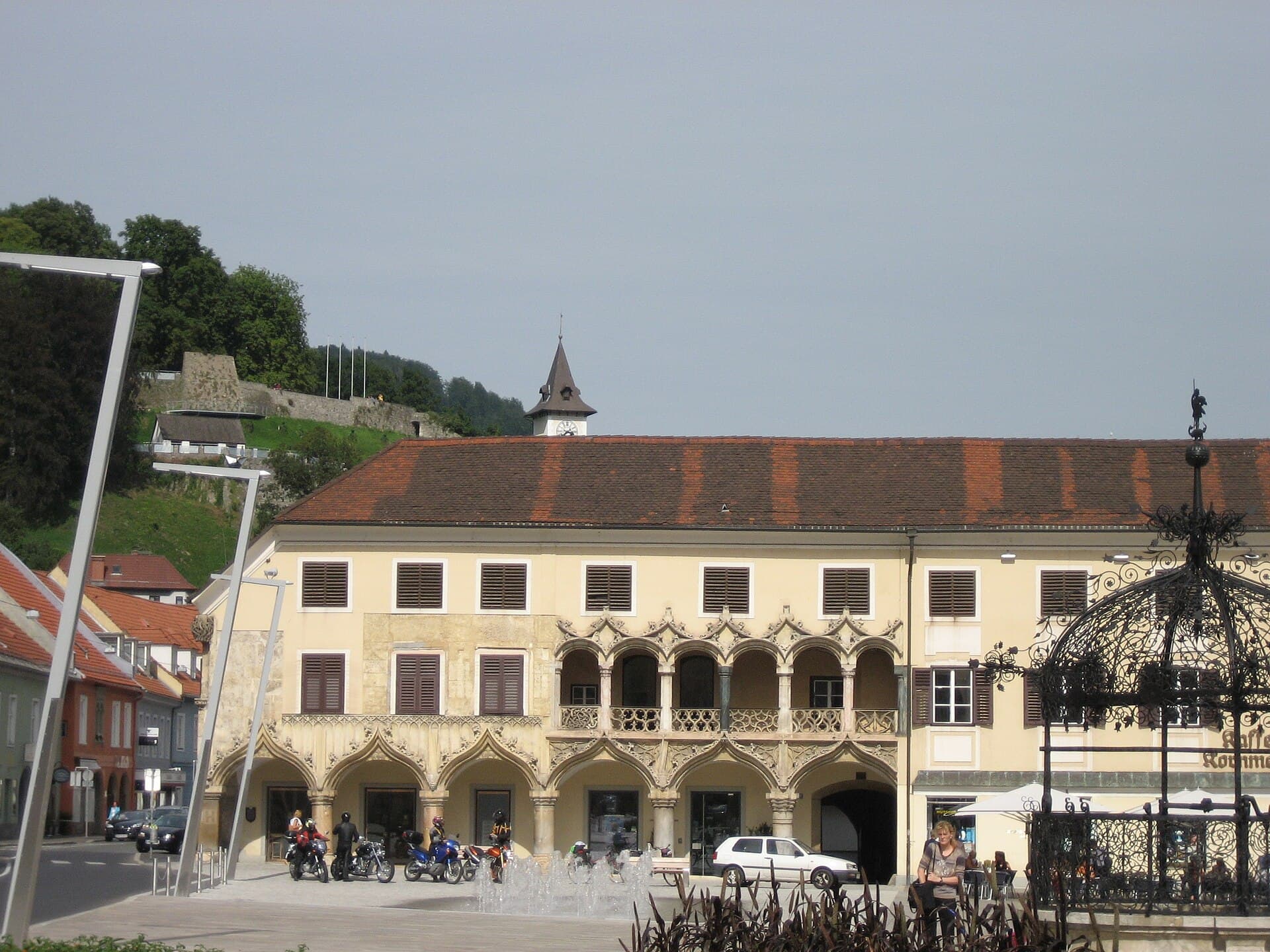 Marion Schneider & Christoph Aistleitner / CC BY-SA 2.5, via Wikimedia Commons
Tour de audio autoguiado de Bruck an der Mur — ruta GPS a pie, reproducción offline, narración en 32 idiomas.
“Donde dos ríos convergen, el tiempo deja su huella y las montañas extienden una invitación.”
No las postales. Las historias que ni los locales conocen — al oído, justo donde ocurrieron.
Este exquisito edificio gótico, que adorna la plaza principal, ofrece más que una elegante fachada.
La distintiva torre del reloj en la colina Schlossberg marca las horas sobre Bruck an der Mur, pero su iluminación alguna vez guardó un secreto particular.
El propio nombre de la ciudad, "Bruck an der Mur", hace referencia directa a un aspecto fundamental de su identidad.
Descubre todos los secretos de Bruck an der Mur
Cada dirección, cada revelación al completo — a tu oído, justo donde ocurrió.
Eliges tus paradas. Caminas. La voz te revela lo que los demás ignoran.


Tu tour de audioguía por Bruck an der Mur te espera — elige tus lugares, tu idioma y empieza al llegar.
ComprarLume incluye una guía de realidad aumentada. Levanta el móvil y su cámara muestra la calle que tienes delante, con una flecha luminosa sobre la imagen real que siempre apunta a tu próxima parada — sin mapas que descifrar, sin giros equivocados. Como todo en Lume, funciona completamente sin conexión.
Bruck an der Mur, una ciudad de aproximadamente 16.000 residentes, está situada en el estado austriaco de Estiria, donde se encuentran los ríos Mur y Mürz. Esta ubicación estratégica, rodeada por las montañas de Estiria y los bosques alpinos, ha moldeado su carácter como centro comercial histórico y centro de transporte contemporáneo. La ciudad presenta una mezcla de arquitectura histórica, legado cultural y esplendor natural, lo que la convierte en un destino atractivo para quienes buscan tanto la exploración como la serenidad.
Reconocida por su encanto escénico y sus actividades al aire libre, Bruck an der Mur ofrece acceso a senderismo, ciclismo y deportes de invierno en la región circundante de Hochschwab y el valle de Mürz. Su casco antiguo bien conservado, un monumento protegido, invita a los visitantes a pasear por siglos de historia, desde fortificaciones medievales hasta edificios renacentistas. El atractivo de la ciudad reside en su capacidad para entrelazar sin problemas su pasado como importante centro comercial medieval con su presente como un animado centro regional.
Bruck an der Mur, a veces conocida como la "ciudad de Kornmesser" debido a su prominente Casa Kornmesser, es más que una simple parada a lo largo del Mur y el Mürz. Es un lugar donde los ecos de las rutas comerciales y las antiguas fortificaciones se entrelazan con los sonidos de los ríos que fluyen y las brisas de la montaña, ofreciendo una experiencia austriaca distintiva.
## Desde cruces romanos hasta potencia medieval Los orígenes de Bruck an der Mur se remontan a la época romana, con descubrimientos arqueológicos y la presencia de una calzada romana que proporcionan evidencia de asentamientos tempranos. La referencia documentada más antigua de la zona, específicamente una mansión perteneciente al Arzobispado de Salzburgo, data del año 860 d.C., donde se la denominó "ad pruccam", una frase latina que significa "en el puente", enfatizando su posición estratégica. Otro registro del siglo IX identifica el asentamiento en el actual centro de la ciudad como "muorica kimundi", refiriéndose a la desembocadura del río Mürz.
El rey Otakar II de Bohemia restableció la ciudad en 1263, implementando murallas que transformaron Bruck en un asentamiento fortificado. Solo 14 años después, en 1277, el rey Rodolfo de Habsburgo concedió a Bruck sus privilegios de ciudad. Durante el período medieval, Bruck an der Mur se convirtió en un centro regional vital dentro de Estiria, especializándose en el intercambio de productos de hierro, grano y sal. Su ubicación en las rutas comerciales del río Mur facilitó el comercio entre el norte de Europa y el Adriático, con forjas y comerciantes locales utilizando la navegabilidad del río.
## Incendios, fortificaciones y crecimiento industrial El núcleo medieval de la ciudad, caracterizado por su trazado bien conservado, refleja su legado perdurable como centro comercial fortificado. Sin embargo, Bruck an der Mur también enfrentó desafíos, incluido un devastador incendio urbano en 1792 que destruyó por completo el castillo de Landskron del siglo XIII, dejándolo en ruinas que ahora forman una meseta romántica con vistas a la ciudad. A pesar de este revés, el siglo XIX trajo una importante expansión industrial, particularmente en el procesamiento de metales, basándose en las tradiciones anteriores de forja impulsada por el agua de la región. La fabricación de la ciudad todavía incluye productos metálicos y papel en la actualidad.
## Un centro moderno con raíces históricas Hoy en día, Bruck an der Mur prospera gracias al turismo, la recreación al aire libre y su posición como un importante centro de viajes en tren. Se encuentra en la línea ferroviaria principal que conecta Graz con Viena, sirviendo como un importante cruce ferroviario regional. La dedicación de la ciudad a preservar su pasado es evidente en su núcleo histórico protegido, que exhibe tesoros arquitectónicos como la gótica Casa Kornmesser y el Schlossberg con su distintiva torre del reloj. La economía local se ha orientado a enfatizar actividades sostenibles, como el ciclismo y el senderismo en las tierras altas circundantes, al tiempo que abraza su patrimonio cultural a través de su casco antiguo bien conservado.
Comience su exploración en la plaza principal, Kolloman-Wallisch-Platz, una de las plazas urbanas más grandes de Austria, donde se concentran muchos de los lugares de interés más importantes de Bruck. Aquí encontrará la Casa Kornmesser, un llamativo edificio gótico de principios del siglo XVI, notable por su intrincado diseño. Cerca se encuentra la Eiserner Brunnen (Fuente de Hierro), una fuente de hierro forjado del siglo XVII adornada con decoraciones estirias únicas. El pintoresco ayuntamiento y la antigua casa de baños también contribuyen a la atmósfera histórica de la plaza.
Ascienda la colina Schlossberg, que domina el centro de la ciudad, para descubrir las ruinas de la Fortaleza Landskron, devastada por el fuego en 1792. El Schlossberg también cuenta con una distintiva torre del reloj, un hito de Bruck, y ofrece amplias vistas del casco antiguo. A lo largo del lado sur del Stadtpark, una sección bien conservada de la antigua muralla de la ciudad conduce hasta el Schlossberg. Para una perspectiva diferente, visite el Europabrücke, también conocido como la "Brucker Harfe", un hito arquitectónico y un puente de arco que cruza el río Mur. No se pierda la Murjungfrau, una estatua similar a una sirena en una plataforma de observación con vistas al río Mur.
Más allá del centro de la ciudad, considere una visita al Naturschutzzentrum Weitental Bruck an der Mur (Centro de Naturaleza Weitental), a poca distancia a pie del centro de la ciudad, que ofrece oportunidades para conectar con la naturaleza y observar animales rescatados. La región también ofrece amplias oportunidades para practicar senderismo y ciclismo a lo largo de los ríos Mur y Mürz.
Bruck an der Mur ofrece experiencias distintas durante todo el año. Para los entusiastas del aire libre, los meses más cálidos de abril a octubre son ideales para practicar senderismo, ciclismo a lo largo de los ríos Mur y Mürz, y explorar las montañas circundantes. Julio, por ejemplo, registra temperaturas máximas promedio de alrededor de 28 °C (82 °F) y mínimas de alrededor de 15 °C (59 °F). Octubre trae temperaturas más frescas y moderadamente frías, con máximas de alrededor de 13 °C (55 °F) y mínimas de 3 °C (38 °F), y un 26% de probabilidad de lluvia o nieve. El invierno, de diciembre a marzo, transforma la región en un destino para deportes de invierno, incluyendo esquí y escalada en hielo.
Bruck an der Mur es de fácil acceso, especialmente en tren, ya que es un importante cruce ferroviario regional con conexiones cada hora a Viena y Graz, y conexiones cada dos horas a Salzburgo, Klagenfurt, Villach, Linz e Innsbruck. Los aeropuertos más cercanos son Graz (aproximadamente a 55 km) y Viena. Una vez en Bruck an der Mur, muchos de los lugares de interés de la ciudad se encuentran a poca distancia a pie de la Hauptplatz (Plaza Principal), a unos 15 minutos a pie de la estación de tren.
Para moverse por la ciudad, hay líneas de autobús locales disponibles y los billetes se pueden comprar directamente en el autobús. Si viaja en coche, tenga en cuenta que la mayoría de los aparcamientos en el centro de la ciudad están sujetos a tarifas y las plazas de aparcamiento pueden ser escasas durante los días laborables. Hay un cómodo aparcamiento subterráneo situado en la Hauptplatz. Los alojamientos van desde acogedoras casas de huéspedes hasta cómodos hoteles, que se adaptan a varios presupuestos. La cocina local ofrece abundantes especialidades de Estiria, a menudo maridadas con vinos regionales.
Bruck an der Mur en coreano, en chino o en hebreo — y 29 idiomas más, cada parada narrada por una voz nativa. La mayor variedad de idiomas de cualquier audioguía autoguiada.
Disponible en: