Brasserie de Murau
Murau est réputée pour sa tradition brassicole, mais la brasserie coopérative actuelle n'a pas toujours été le seul acteur en ville.
L'histoire complète se débloque dans le tour
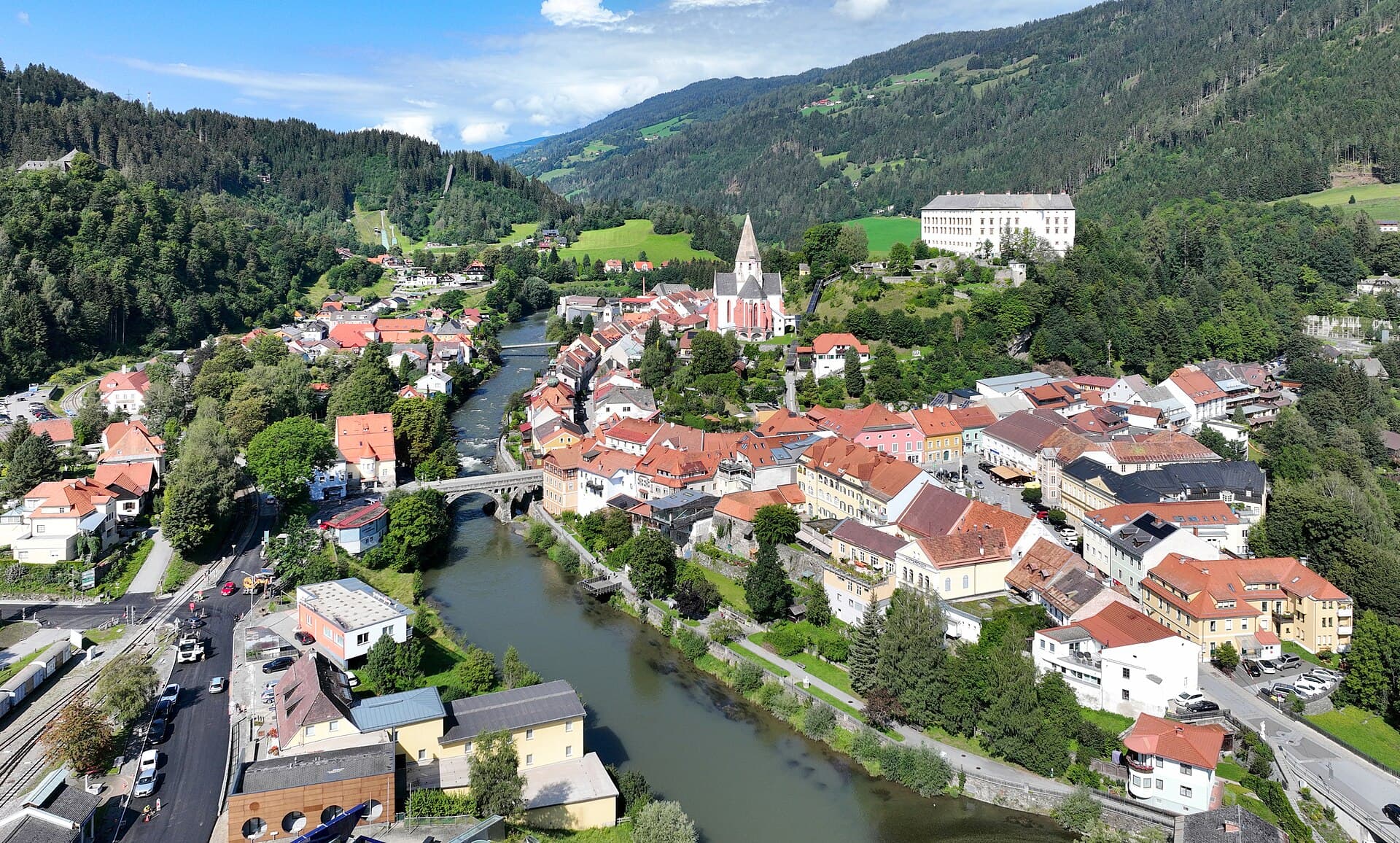 C.Stadler/Bwag / CC BY-SA 4.0, via Wikimedia Commons
Visite audio autoguidée de Murau — parcours GPS à pied, lecture hors ligne, narration en 32 langues.
“Là où les récits du bois rencontrent les traditions brassicoles.”
Pas les cartes postales. Les histoires que même les habitants ignorent — soufflées à l'oreille, là où elles se sont passées.
Murau est réputée pour sa tradition brassicole, mais la brasserie coopérative actuelle n'a pas toujours été le seul acteur en ville.
Le formidable château de Murau trône sur la colline du Schlossberg depuis des siècles, bien que son apparence Renaissance actuelle dissimule un passé tumultueux.
Murau est reconnue comme la capitale autrichienne du bois, mais le lien de la région avec le bois va au-delà de la simple économie.
Découvrez tous les secrets de Murau
Chaque adresse, chaque révélation en entier — dans ton oreille, là où elle s'est passée.
Tu choisis tes lieux. Tu marches. La voix te révèle ce que les autres ignorent.


Lume intègre un guide en réalité augmentée. Levez votre téléphone : sa caméra montre la rue devant vous, avec une flèche lumineuse posée sur l'image réelle qui pointe toujours vers votre prochain arrêt — aucune carte à déchiffrer, aucun mauvais virage. Comme tout dans Lume, ça fonctionne entièrement hors-ligne.
Murau, une ville captivante de l'ouest de la Styrie autrichienne, est nichée dans une vallée pittoresque creusée par la rivière Mur, encadrée par les Basses Tauern et les Alpes de Gurktal. Avec une altitude de 829 mètres au-dessus du niveau de la mer, Murau offre des paysages variés et des vues imprenables. La ville, siège administratif du district de Murau, conserve une échelle communautaire qui allie les commodités urbaines aux structures sociales traditionnelles.
Connue comme la capitale autrichienne du bois et même déclarée Ville de la Bière en 2010, Murau entrelace harmonieusement son environnement naturel avec un patrimoine culturel profondément enraciné. Le centre historique de la ville se découvre facilement à pied, révélant une architecture médiévale et des places accueillantes. De sa longue tradition brassicole à son engagement envers la foresterie durable, Murau offre un éventail distinctif d'expériences aux visiteurs en quête d'une rencontre autrichienne authentique.
L'emplacement de Murau en fait une porte d'entrée vers les activités de plein air, avec des opportunités de randonnée, de ski et de cyclisme le long de la rivière Mur. Le calendrier culturel de la ville est également animé, avec des festivals et des événements traditionnels qui reflètent son histoire durable et son esprit communautaire.
Les origines de Murau remontent à l'Antiquité, avec des preuves d'habitation de l'âge du Bronze à l'époque romaine. Bien que l'emplacement précis de l'ancienne capitale celtique de Noreia ait été autrefois théorisé près de Murau, les preuves archéologiques n'ont pas encore confirmé cette hypothèse.
La ville elle-même, initialement connue sous le nom de Murowe, fut documentée pour la première fois en 1250 comme le centre des domaines styriens détenus par la noble famille Liechtenstein dans la vallée de la Mur. Le célèbre minnesänger Ulrich von Liechtenstein (décédé en 1275), originaire de la ville voisine de Frauenburg, fit construire un château à Murau. Cependant, cette première fortification fut détruite lorsque le roi de Bohême Ottokar II occupa les terres styriennes après son triomphe à Kressenbrunn en 1260. Ulrich fut contraint de céder ses domaines et fut temporairement emprisonné. Les domaines de Liechtenstein furent ensuite restaurés après la défaite d'Ottokar lors de la bataille de Marchfeld en 1278.
Le fils d'Ulrich, Otto, commanda la construction de l'église paroissiale gothique Saint-Matthieu, avec sa tour de croisée distinctive, à partir de 1284. L'église fut consacrée en 1296. Les citoyens de Murau obtinrent les privilèges de ville en 1298, ce qui entraîna la fortification et une expansion substantielle de la ville. De 1480 à 1490, les forces hongroises sous le roi Matthias Corvin occupèrent Murau. Les Liechtenstein conservèrent la propriété jusqu'à la fin du XVIe siècle.
En 1623, Murau devint une possession de la Maison de Schwarzenberg. Ils entreprirent une reconstruction majeure du château de Murau, le transformant dans son style Renaissance actuel. Le château reste aujourd'hui en possession de la famille Schwarzenberg. Pendant la Seconde Guerre mondiale, un camp de prisonniers de guerre de la Wehrmacht était situé à Murau. En mai 1945, des résistants locaux libérèrent huit prisonniers de guerre restants et réussirent à convaincre les forces de l'Armée rouge approchantes que la ville était déjà occupée par les Britanniques, un acte intelligent qui a probablement épargné Murau de nouveaux conflits.
Le centre-ville médiéval compact de Murau invite à une exploration tranquille. Commencez par la place Schiller (Schillerplatz), un carrefour triangulaire au cœur de la ville. Un point de repère important est le château de Murau (Schloss Obermurau), un palais Renaissance appartenant à la famille Schwarzenberg. Des visites guidées offrent un aperçu de son passé, y compris la galerie de tableaux, la cuisine, le donjon et la chapelle, présentant des tapisseries historiques et des boiseries élaborées. La cour du château a également accueilli des pièces de Shakespeare dans le cadre du festival annuel Shakespeare in Styria.
À mi-chemin des pentes du château se dresse l'église paroissiale de Murau (Stadtpfarrkirche St. Matthäus), consacrée en 1296. Elle présente un mélange de piliers et d'arches gothiques avec des fresques baroques, une chaire et un maître-autel. L'Annakirche, datant d'environ 1400, est une autre église remarquable avec des fresques de la fin du XIVe siècle et des intérieurs gothiques. Pour un aperçu culturel unique, visitez le Musée de la Brasserie de Murau, qui explore la tradition brassicole de plus de 500 ans de la ville. Murau est également reconnue comme la capitale autrichienne du bois, et le Musée du Bois offre un aperçu de cet artisanat local. Promenez-vous le long de la rivière Mur pour des vues pittoresques.
La période la plus agréable pour visiter Murau est en juillet et août, lorsque le temps est généralement le plus confortable avec des maximales diurnes autour de 21°C (70°F) et un ensoleillement quotidien considérable. Cette période est idéale pour la randonnée et les activités de plein air. La saison de la randonnée s'étend de mai à octobre, le printemps et l'automne offrant des températures agréables et des paysages colorés.
Les hivers à Murau sont assez froids, janvier connaissant des maximales diurnes moyennes de 0°C (32°F) et des minimales nocturnes autour de -8°C (18°F). Bien que froid, l'hiver offre des opportunités de ski et de snowboard dans les stations voisines comme Kreischberg.
Murau est située dans la vallée styrienne de la Murtal et est facilement accessible en voiture via la B96 Murtalstraße ou la S36. Pour les transports en commun, le chemin de fer à voie étroite de la vallée de la Mur (Murtalbahn) relie Murau à Unzmarkt et à d'autres services ferroviaires internationaux. L'aéroport le plus proche est à Klagenfurt, à environ 75 kilomètres.
Explorer Murau à pied est simple, surtout dans le centre-ville compact. Pour une exploration plus large, le cyclisme le long du chemin de la rivière Mur est une option privilégiée, avec des chemins asphaltés bien entretenus adaptés à différents niveaux de compétence. La Murau GuestCard, souvent fournie par les hébergements participants, offre des réductions ou un accès gratuit à de nombreuses attractions locales et aux transports en commun, y compris le Murtalbahn et les bus locaux.
Murau en coréen, en chinois ou en hébreu — et dans 29 autres langues, chaque étape narrée par une voix native. La plus large gamme de langues de tous les audioguides autoguidés.
Disponible en :