Kastell Hartberg
Le Kastell, forteresse depuis le XIIe siècle, a jadis retenu une figure plutôt inattendue.
L'histoire complète se débloque dans le tour
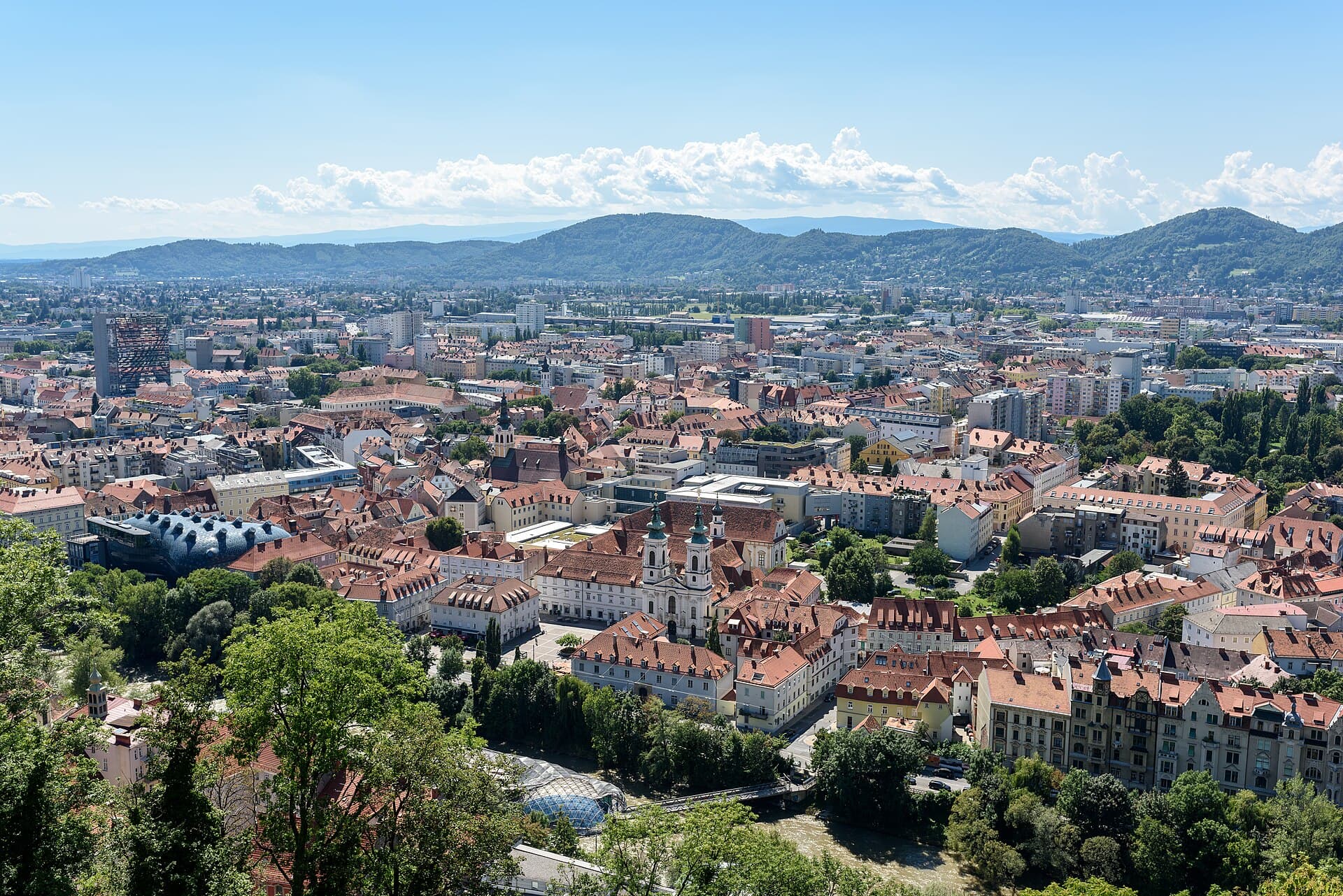 Photo of Graz, via Wikimedia Commons
Visite audio autoguidée de Hartberg — parcours GPS à pied, lecture hors ligne, narration en 32 langues.
“Là où les remparts ancestraux rencontrent les rythmes contemporains, et chaque pavé murmure une histoire.”
Pas les cartes postales. Les histoires que même les habitants ignorent — soufflées à l'oreille, là où elles se sont passées.
Le Kastell, forteresse depuis le XIIe siècle, a jadis retenu une figure plutôt inattendue.
Observez les façades des bâtiments autour de la Hauptplatz, et vous pourriez discerner un détail qui témoigne d'un passé ardent et oublié.
Sous l'extérieur tranquille de l'église paroissiale Saint-Martin se cachent les preuves d'une époque bien plus ancienne et tumultueuse.
Découvrez tous les secrets de Hartberg
Chaque adresse, chaque révélation en entier — dans ton oreille, là où elle s'est passée.
Tu choisis tes lieux. Tu marches. La voix te révèle ce que les autres ignorent.


Votre visite audioguidée de Hartberg vous attend — choisissez vos lieux, votre langue, et lancez-vous dès votre arrivée.
AcheterLume intègre un guide en réalité augmentée. Levez votre téléphone : sa caméra montre la rue devant vous, avec une flèche lumineuse posée sur l'image réelle qui pointe toujours vers votre prochain arrêt — aucune carte à déchiffrer, aucun mauvais virage. Comme tout dans Lume, ça fonctionne entièrement hors-ligne.
Hartberg, une charmante ville marchande de la Styrie autrichienne, offre une fusion captivante d'héritage médiéval et d'énergie contemporaine. Son cœur historique, enserré par les vestiges de ses murs d'enceinte d'origine, invite à la découverte avec ses ruelles étroites, ses places évocatrices et son architecture bien préservée. L'emplacement stratégique de la ville le long d'anciennes routes commerciales a façonné son caractère, laissant un héritage de fortifications et de résidences marchandes. Aujourd'hui, Hartberg est un centre régional qui équilibre son passé profond avec une approche tournée vers l'avenir en matière de durabilité et de culture locale. C'est un endroit où l'on peut se promener à travers des siècles d'histoire, puis profiter d'un café moderne ou d'un marché local.
Le nom même de la ville, dérivé de « Hartberg » signifiant « montagne dure » ou « montagne fortifiée », fait allusion à ses origines défensives. Elle fut documentée pour la première fois en 1125, lorsque le margrave Léopold Ier de Styrie y construisit un château. Au fil des siècles, Hartberg est passée d'une colonie fortifiée à une ville marchande florissante, jouant un rôle important dans le paysage économique et politique de la région. Son attrait durable réside dans cette intégration harmonieuse des différentes époques, où chaque tournant révèle une nouvelle couche de son histoire.
## Des routes romaines aux murs médiévaux Les origines de Hartberg remontent à l'époque romaine, avec des preuves d'une route romaine traversant la région. Cependant, sa véritable fondation en tant que colonie significative a commencé au XIIe siècle. En 1125, le margrave Léopold Ier de Styrie a établi un château sur la « montagne dure », donnant à la ville son nom durable. Cette fortification stratégique était cruciale pour sécuriser les frontières orientales du Saint-Empire romain germanique contre les incursions de l'Est. Le château, connu sous le nom de Kastell Hartberg, est devenu le cœur administratif et militaire de la région.
## Une ville forgée par le commerce et les conflits Tout au long du Moyen Âge, Hartberg a prospéré en tant que ville marchande, bénéficiant de son emplacement sur d'importantes routes commerciales. Elle a reçu sa charte de ville en 1286, lui accordant des droits et privilèges importants qui ont stimulé son expansion. Cependant, cette prospérité a souvent été interrompue par des conflits. L'importance stratégique de la ville en a fait une cible lors de diverses guerres, notamment contre les Hongrois et les Turcs ottomans. Les murs de la ville, construits et renforcés au fil des siècles, témoignent de ces temps turbulents. Le XVe siècle fut particulièrement difficile, les forces hongroises occupant la ville à plusieurs reprises, retenant même Maximilien Ier dans le Kastell.
## Réforme, Contre-Réforme et Splendeur Baroque La Réforme a apporté d'importants bouleversements religieux à Hartberg, le protestantisme y prenant une forte emprise. Cependant, la Contre-Réforme, menée par les Habsbourg, a finalement rétabli le catholicisme comme foi dominante. Cette période a également vu d'importantes transformations architecturales, de nombreuses structures médiévales étant rénovées ou remplacées dans le style baroque. L'église paroissiale Saint-Martin, tout en conservant son noyau gothique, a subi des modifications baroques encore visibles aujourd'hui. Les XVIIIe et XIXe siècles ont apporté des périodes de paix relative et de développement continu, l'économie de la ville se tournant vers l'agriculture et l'artisanat. L'arrivée du chemin de fer à la fin du XIXe siècle a davantage relié Hartberg au monde extérieur, facilitant le commerce et les voyages.
## Hartberg moderne : préserver le passé, embrasser l'avenir Au XXe siècle, Hartberg a connu une croissance et une modernisation constantes. Tout en protégeant son cœur historique, la ville a également adopté les développements contemporains, en particulier dans les domaines de la durabilité et des énergies renouvelables. Aujourd'hui, Hartberg est reconnue comme une « Région modèle pour le climat et l'énergie », démontrant un engagement envers la protection de l'environnement et l'innovation. La ville continue de prospérer en tant que centre régional pour le commerce, l'éducation et la culture, offrant une haute qualité de vie tout en honorant ses profondes racines historiques.
Commencez votre exploration sur la Hauptplatz, la place principale de Hartberg, un centre animé encadré par des bâtiments historiques avec des cours à arcades. La Mariensäule, une colonne mariale érigée en 1675, se dresse en évidence au centre, commémorant la fin de la peste. De là, dirigez-vous vers le Kastell Hartberg, l'ancien château de la ville, qui abrite aujourd'hui les bureaux municipaux et offre un aperçu de son passé défensif. Bien que largement reconstruit, ses origines remontent au XIIe siècle.
À quelques pas se trouve l'Église Paroissiale Saint-Martin, un édifice gothique dont les racines remontent à des structures romanes et carolingiennes antérieures. Son intérieur impressionnant présente des autels complexes et des vitraux. Ne manquez pas le Karner (Ossuaire) de Saint-Michel, un ossuaire roman circulaire adjacent à l'église, datant du XIIe siècle. Cette structure distinctive abritait autrefois les ossements des défunts et est un exemple rare en son genre.
Promenez-vous le long des sections restantes des murs médiévaux de la ville, en particulier près de la tour 'Schölbingerturm', pour avoir une idée des fortifications historiques de Hartberg. Pour une touche de nature, visitez le Stadtpark (Parc de la Ville), une étendue de verdure idéale pour une promenade tranquille. Si le temps le permet, le Musée Hartberg offre un aperçu plus approfondi de l'histoire de la ville et de la culture régionale.
Hartberg offre son charme toute l'année, mais les saisons intermédiaires du printemps (avril-mai) et du début de l'automne (septembre-octobre) offrent le temps le plus agréable pour les visites à pied. Les températures sont douces et le nombre de visiteurs est généralement plus faible. L'été (juin-août) est également un bon choix, avec des journées chaudes parfaites pour les activités de plein air et les festivals locaux, bien que cela puisse être plus fréquenté. L'hiver (novembre-mars) apporte une atmosphère plus calme et la possibilité de neige, créant un cadre pittoresque, presque féerique, surtout pendant la saison du marché de Noël.
Hartberg est facilement accessible en train et en bus, avec des liaisons régulières vers Graz et d'autres villes régionales. La gare est à quelques pas du centre-ville. Si vous venez en voiture, plusieurs parkings publics sont disponibles, souvent payants. Le centre-ville est compact et se prête parfaitement à l'exploration à pied. La plupart des magasins et restaurants acceptent les principales cartes de crédit, mais il est toujours judicieux d'avoir quelques euros pour les petits achats ou les étals de marché. L'allemand est la langue officielle, mais l'anglais est généralement compris dans les établissements accueillant des visiteurs. L'office de tourisme local, situé près de la Hauptplatz, fournit des cartes et des informations supplémentaires. Des toilettes publiques sont disponibles à divers endroits de la ville, souvent signalées. Envisagez d'acquérir une 'GenussCard' si vous prévoyez de visiter plusieurs attractions dans la région de la Styrie, car elle offre une entrée gratuite à de nombreux sites.
Hartberg en coréen, en chinois ou en hébreu — et dans 29 autres langues, chaque étape narrée par une voix native. La plus large gamme de langues de tous les audioguides autoguidés.
Disponible en :