Port Bo
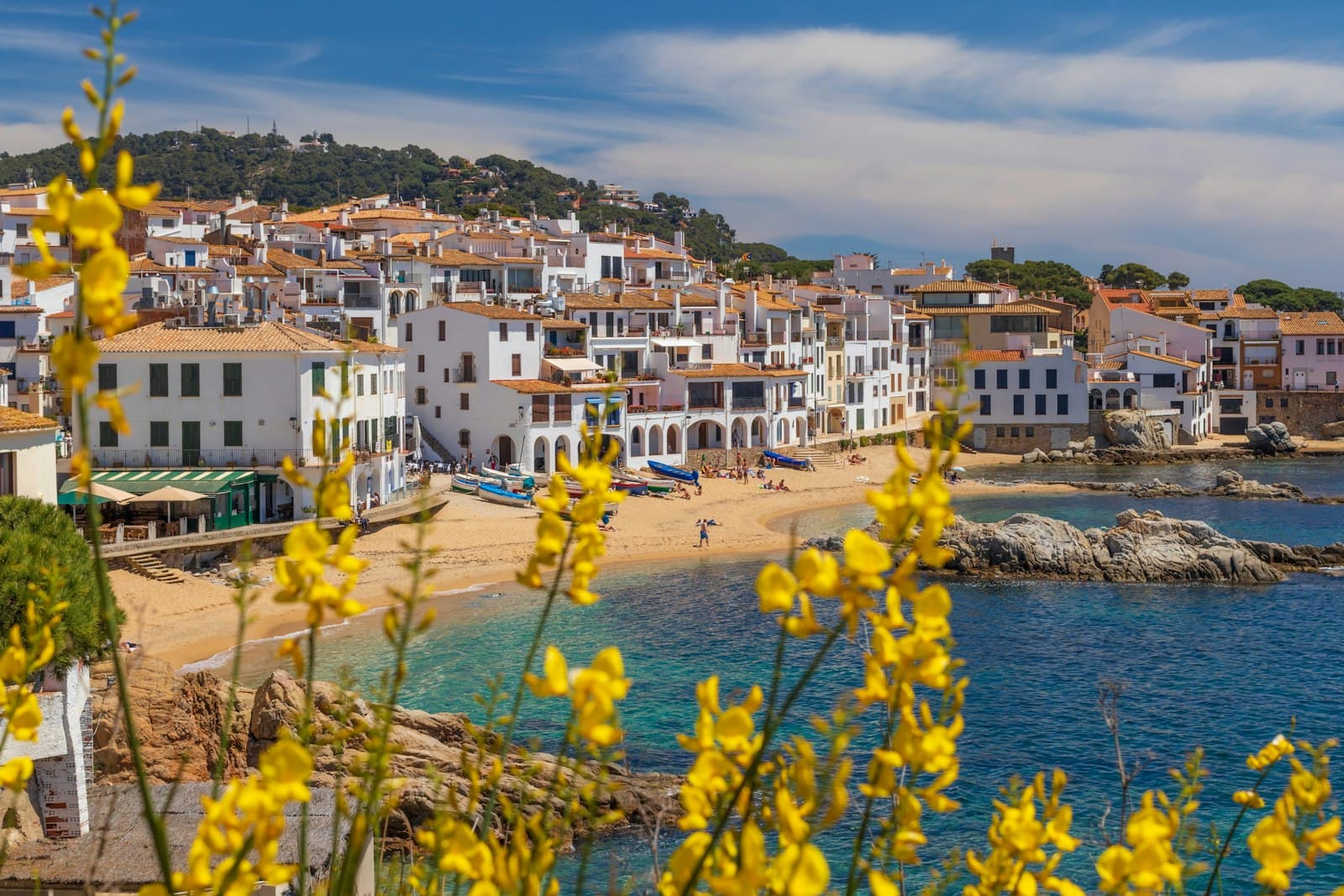
The graceful arches of Port Bo now invite leisurely meals, yet they once served a far more practical purpose.
Full story unlocks in the tour
 Jorge Franganillo / CC BY 2.0, via Wikimedia Commons
Self-guided audio walking tour of Calella de Palafrugell — GPS route, offline playback, story-driven narration in 32 languages.
“A sun-drenched coastal village where the Mediterranean meets whitewashed stone.”
Not the postcards. The stories even locals don't know — whispered in your ear, right where they happened.
The graceful arches of Port Bo now invite leisurely meals, yet they once served a far more practical purpose.
Beyond the lively flora and sculpted landscapes, the Cap Roig Gardens embody a profound, decades-long devotion.
The annual Habaneras Festival, a cherished local tradition, carries melodies that journeyed across oceans to reach the shores of Calella de Palafrugell.
Discover every secret of Calella de Palafrugell
Every address, every reveal in full — in your ear, right where it happened.
You pick your stops. You walk. The voice reveals what the others miss.


Your self-guided audio tour of Calella de Palafrugell is ready — pick your landmarks, choose your language, and start the moment you arrive.
BuyLume has a built-in augmented-reality guide. Hold your phone up and its camera shows the street ahead of you, with a glowing arrow laid over the real view that always points to your next stop — no map to puzzle over, no wrong turns. Like everything in Lume, it works fully offline.
Calella de Palafrugell, a coastal settlement in the province of Girona, Catalonia, Spain, extends an inviting escape on the Costa Brava. It stands as one of three towns, alongside Llafranc and Tamariu, that form part of the municipality of Palafrugell. This former fishing village has carefully preserved its authentic character, evident in its traditional whitewashed houses, narrow lanes, and small coves framed by a rugged coastline.
In contrast to some of the larger, more developed resorts along the Costa Brava, Calella de Palafrugell maintains a tranquil atmosphere, avoiding the intensity of mass tourism. Its appeal resides in its clear Mediterranean waters, welcoming beaches for families, and scenic coastal paths. Visitors can savor fresh seafood at establishments overlooking the sea, immersing themselves in a traditional Catalan seaside experience.
Calella de Palafrugell’s origins reach back to the 16th century, established by fishermen from the neighboring town of Palafrugell. It began as a modest fishing village, and its old maritime quarter, Port Bo, remains a culturally significant area. This quarter still displays the village's original layout, characterized by traditional white buildings with arcaded porches. The stone arches, or vaults, in Port Bo, once served practical purposes for mending fishing nets and auctioning fish; today, they shelter restaurants.
Over the centuries, Calella de Palafrugell has evolved, steadfastly working to preserve its traditional character despite growing popularity as a visitor destination. The town has successfully avoided the expansive hotels and widespread development seen in some other Costa Brava resorts. Its dedication to maintaining its authentic charm is visible in its architecture, with white two-story houses often accented by green or blue wooden details.
The town's maritime heritage is further illuminated by the Sa Perola Interpretation Centre in Port Bo, which was formerly a net-dyeing building. Now, it functions as a tourist office and museum, educating visitors about the local fishing history. This blend of historical preservation and natural splendor has allowed Calella de Palafrugell to become a cherished spot on the Costa Brava, offering a window into traditional Catalan life.
Begin your exploration at Port Bo, the historic maritime quarter with its iconic arcaded street, "Les Voltes," where old fishing vaults now host seafood restaurants. The beaches of Platja del Port de Malaspina and Platja de Portbò lie directly in front of these arches, often dotted with small fishing boats. Just a short walk away, Platja Canadell is another iconic beach known for its picturesque views and calm waters.
For a change of scenery, journey to the Cap Roig Gardens, a remarkable botanical garden situated on a reddish rocky cape at the southern end of town. These gardens feature over a thousand plant species and offer expansive views of the coast and the sea. The Camí de Ronda, a coastal path, provides an excellent way to explore the rugged coastline, connecting Calella de Palafrugell with neighboring towns like Llafranc and offering access to secluded coves such as Platja del Golfet.
Consider visiting the Sant Sebastià Lighthouse for sweeping views of Calella de Palafrugell and the surrounding beaches. While not directly within Calella, the Fundació Josep Pla in Palafrugell, the birthplace of the renowned writer, offers cultural insights into the region. Additionally, the Cork Museum in Palafrugell highlights another significant local tradition.
The most comfortable conditions in Calella de Palafrugell are typically found from May to October. For warm beach weather and a lively atmosphere, July and August are popular, with daytime temperatures averaging around 21-27°C (70-81°F). However, these months are also the busiest. For a slightly quieter experience with pleasant temperatures, late May, June, and September are recommended. The town experiences a distinct dry season from June to August.
Calella de Palafrugell is easily explored on foot due to its coastal layout with narrow, short streets. While there is a bus service connecting to Palafrugell and other Costa Brava centers, especially in summer, walking or cycling along the Camí de Ronda are popular ways to get around. If traveling during the peak summer months, it is advisable to make reservations for waterfront restaurants in advance, as they tend to fill up quickly. Accommodation options include hotels, apartments, and some campsites further from the beach. If hotels in Calella de Palafrugell are fully booked, nearby Begur or Llafranc also offer options. The town's beaches are Blue Flag standard, indicating their cleanliness and quality.
Calella de Palafrugell in Korean, in Chinese or in Hebrew — and 29 more languages, every stop narrated by a native voice. The widest language range of any self-guided audio tour.
Available in: