The Mathematical Bridge, Queens' College
The Mathematical Bridge is a marvel of engineering, seemingly held together by pure geometry. But the actual tale behind its construction is often misattributed.
Full story unlocks in the tour
 Jean-Christophe BENOIST / CC BY-SA 4.0, via Wikimedia Commons
Self-guided audio walking tour of Cambridge — GPS route, offline playback, story-driven narration in 32 languages.
“Beyond the dreaming spires, a city of quiet currents and profound discoveries.”
Not the postcards. The stories even locals don't know — whispered in your ear, right where they happened.
The Mathematical Bridge is a marvel of engineering, seemingly held together by pure geometry. But the actual tale behind its construction is often misattributed.
The King's College Chapel is renowned for its soaring fan-vaulted ceiling and incredible acoustics, especially during its celebrated carol services. But there's a secret to how those broadcasts achieve such pristine sound and visuals.
The Fitzwilliam Museum houses a vast collection of art and antiquities, from ancient Egyptian artifacts to Renaissance masterpieces. But within its extensive holdings, there's a lesser-known secret about some of its most delicate works.
Discover every secret of Cambridge
Every address, every reveal in full — in your ear, right where it happened.
You pick your stops. You walk. The voice reveals what the others miss.
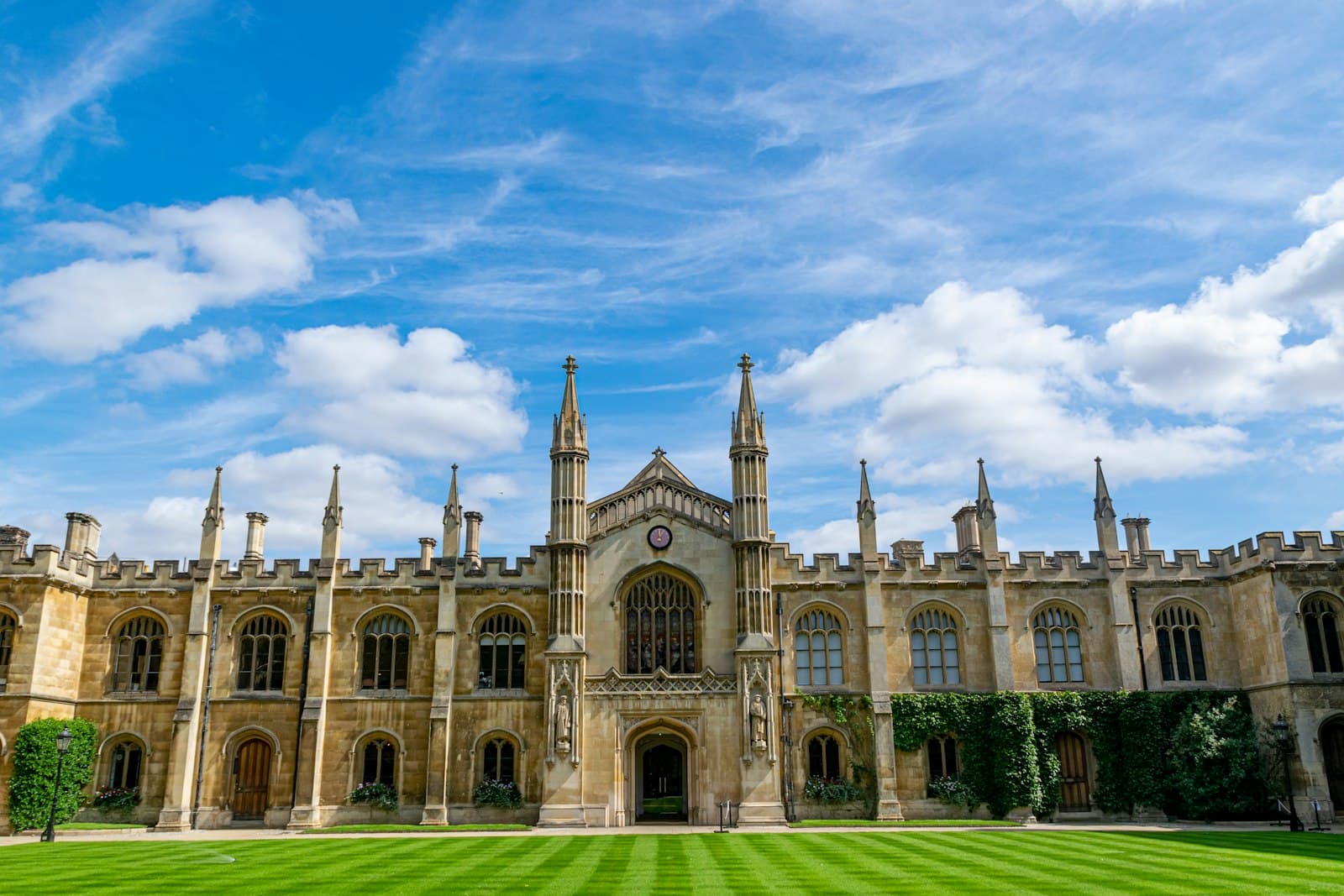

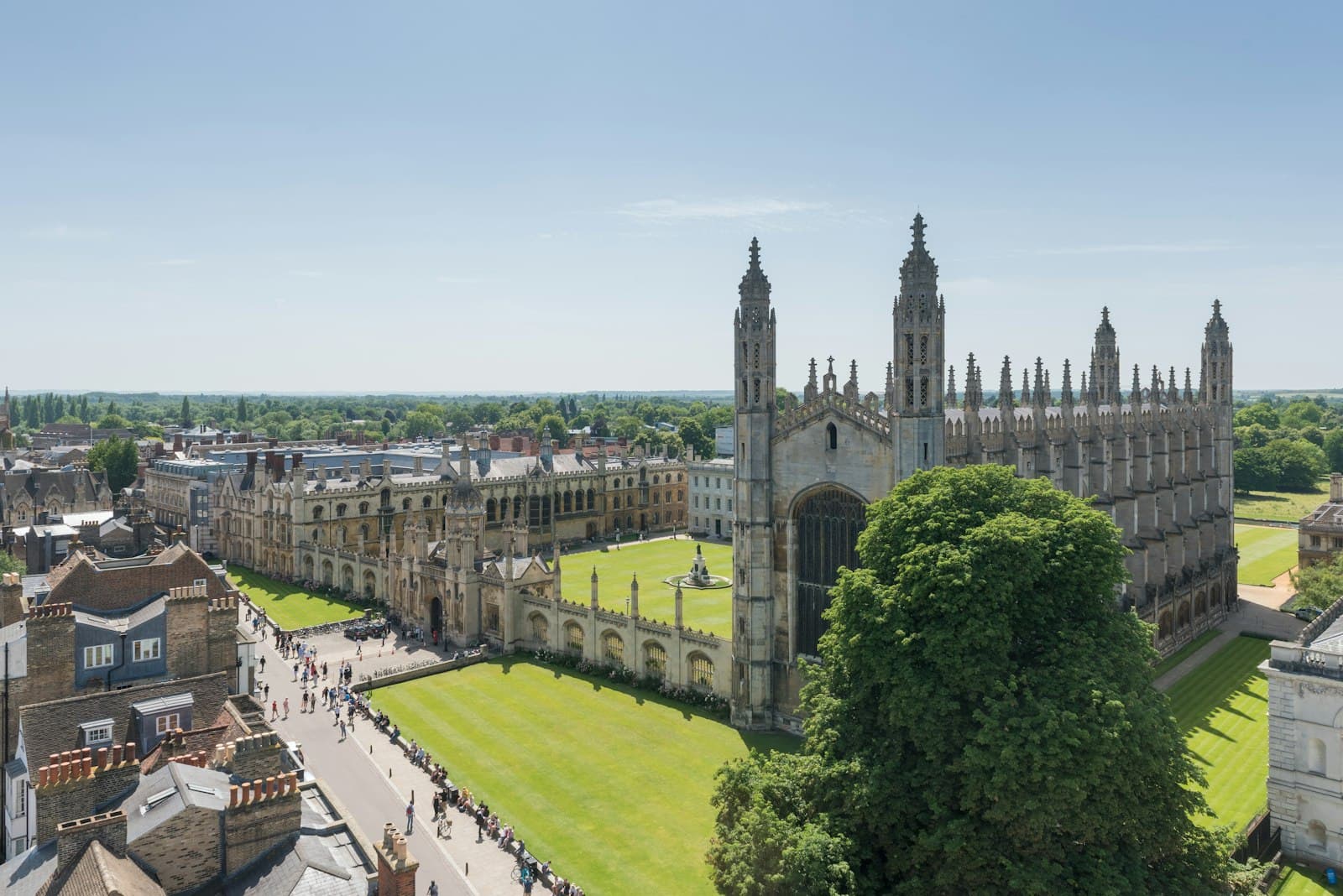
Your self-guided audio tour of Cambridge is ready — pick your landmarks, choose your language, and start the moment you arrive.
BuyLume has a built-in augmented-reality guide. Hold your phone up and its camera shows the street ahead of you, with a glowing arrow laid over the real view that always points to your next stop — no map to puzzle over, no wrong turns. Like everything in Lume, it works fully offline.
Cambridge, a city synonymous with intellectual pursuit and architectural grandeur, offers a captivating journey through centuries of academic excellence and cultural heritage. Situated about 50 miles north of London, it is a compact and walkable city, making it ideal for exploration on foot or by bicycle. The River Cam, winding its way through the heart of the city, is central to Cambridge's appeal, with traditional punts gliding beneath historic bridges and past verdant college grounds.
Beyond the iconic university, Cambridge thrives as a hub of innovation, often referred to as 'Silicon Fen' due to its concentration of technology and science startups. This blend of ancient tradition and modern dynamism creates a unique atmosphere, where historic colleges stand alongside contemporary research institutions. Whether you're drawn to the scholarly quiet of ancient libraries or the lively buzz of student life, Cambridge offers a distinct and enriching experience.
The origins of Cambridge stretch back to the Bronze Age, establishing it as a site of human settlement for millennia. Its strategic location on the River Cam contributed to its early development, with evidence of Roman and Viking presence. The city's pivotal transformation began in 1209, when scholars, fleeing civil unrest in Oxford, established what would become the University of Cambridge. This event laid the foundation for Cambridge's enduring legacy as a center of learning.
Over the centuries, the University grew through the establishment of its constituent colleges, each with its own distinct character and traditions. King's College, founded by Henry VI in 1441, and its magnificent chapel, a masterpiece of Perpendicular Gothic architecture, exemplify the ambition and artistry of the era. The chapel's construction spanned over 70 years, finally completed in 1515. Trinity College, founded by Henry VIII in 1546, became another cornerstone of the university, known for its grand courts and the Wren Library.
Cambridge played a significant role in scientific advancements, perhaps most famously as the place where James Watson and Francis Crick announced their discovery of the structure of DNA at The Eagle Pub in 1953. The city has fostered countless Nobel laureates across various disciplines, solidifying its reputation as a global intellectual leader. Today, Cambridge continues to evolve, balancing its deep historical roots with a forward-looking approach, evident in its thriving technology sector.
A visit to Cambridge is incomplete without exploring its iconic university colleges. King's College Chapel is a significant sight, celebrated for its fan-vaulted ceiling and impressive stained-glass windows. You can attend Evensong for a free and memorable experience of the chapel's acoustics. St John's College, with its picturesque Bridge of Sighs spanning the River Cam, offers another quintessential Cambridge view. While some colleges charge for entry, others, like Downing and Emmanuel, can be explored for free.
Punting on the River Cam provides a unique perspective of the 'Backs' – the scenic college grounds that line the river. Several companies offer guided punt tours, which often include views of King's College, Clare College, Trinity College, and St John's College. For art and history enthusiasts, the Fitzwilliam Museum houses a world-renowned collection spanning art and antiquities from diverse civilizations, and entry is free. Other notable attractions include the Cambridge University Botanic Garden, a peaceful retreat with diverse plant collections, and Great St. Mary's Church, where you can climb the tower for panoramic city views.
The best time to visit Cambridge is generally from May through the end of summer, when the weather is mild to warm and sunny, despite occasional rain. June and July are particularly pleasant, with temperatures reaching 20-23°C (69-73°F), making punting on the Cam especially enjoyable. Spring (March to May) brings blooming gardens and longer daylight hours, ideal for walking tours, though the university is closed to tourists during exam periods from early May to mid-June. Autumn (September to November) offers cooler temperatures, fewer crowds, and beautiful foliage, with a lively atmosphere as students return. Winter (December to February) is quieter, with festive decorations and fewer tourists, though the weather can be cold and damp.
Cambridge is a highly walkable city, with its compact center easily covered on foot. Cycling is also a popular mode of transport, with approximately 80 miles of dedicated cycling lanes. If arriving by car, consider using one of the five Park and Ride schemes located on the city's outskirts, offering free parking and bus services into the center. The city is well-connected by train, with frequent services from London King's Cross taking around 49 minutes.
Accommodation in Cambridge can be more expensive than in other UK cities, with average property prices higher than the national average. Booking in advance, especially during peak season, is advisable. While generally safe, standard precautions apply, particularly at night. Many colleges charge admission fees, and some may close during exam periods (around May) or for special events, so it's wise to check ahead.
Cambridge in Korean, in Chinese or in Hebrew — and 29 more languages, every stop narrated by a native voice. The widest language range of any self-guided audio tour.
Available in: