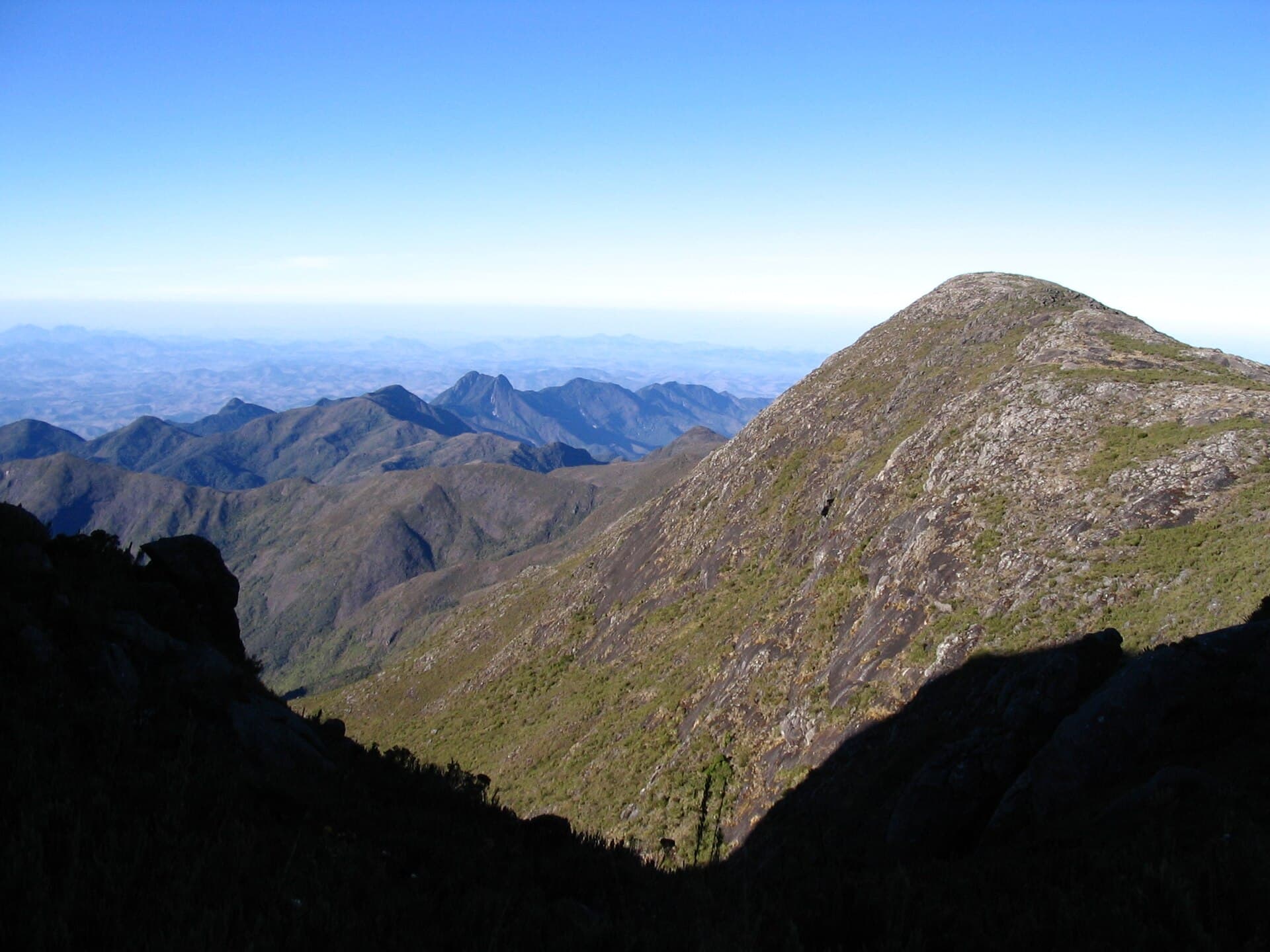
Caparaó, BrazilNo machine-readable author provided. Alexhubner assumed (based on copyright claims). / CC BY-SA 3.0, via Wikimedia Commons
BR

Caparaó

Self-guided audio walking tour of Caparaó — GPS route, offline playback, story-driven narration in 32 languages.

Where mountains meet the sky, and secrets drift through the Atlantic Forest.

The secrets of Caparaó

Caparaó, as no one tells it.

Not the postcards. The stories even locals don't know — whispered in your ear, right where they happened.

3 secrets below. Many more wait inside the tour.
Pico da Bandeira

Many visitors aspire to witness the sunrise from Pico da Bandeira, Brazil's third-highest peak. Yet, few realize the mountain's very name carries a forgotten royal decree.

Full story unlocks in the tour
Caparaó National Park

Caparaó National Park stands as a sanctuary of varied ecosystems, but its establishment in the 1960s had an unexpected, almost accidental, benefactor.

Full story unlocks in the tour
Vale Encantado

Vale Encantado is celebrated for its clear pools and cascading waterfalls. However, these inviting waters hold a particular quality that might give one pause before taking a plunge.

Full story unlocks in the tour
The full tour

Discover every secret of Caparaó

Every address, every reveal in full — in your ear, right where it happened.

Get the key to Caparaó

You pick your stops. You walk. The voice reveals what the others miss.

Choose your time

How long do you have in Caparaó?

Your self-guided audio tour of Caparaó is ready — pick your landmarks, choose your language, and start the moment you arrive.

Buy
About Caparaó

The story of Caparaó

Caparaó, a region spanning the border of Brazil's Minas Gerais and Espírito Santo states, is a domain where the mountains hold sway. It is characterized by the Serra do Caparaó, a rugged extension of the Serra da Mantiqueira, presenting a striking fusion of Atlantic Forest and high-altitude terrain. This area draws adventurers and nature lovers, primarily due to the Caparaó National Park, which safeguards a significant portion of this ecological treasure.

The park serves as a refuge for diverse ecosystems, ranging from dense montane rainforests at lower elevations to expansive alpine meadows higher up. It is a place where the air is crisp, the vistas are wide, and the paths lead to some of Brazil's most remarkable natural wonders. Whether one seeks the exhilaration of a high-altitude trek or the serenity of a secluded waterfall, Caparaó offers an immersive encounter with Brazil's natural legacy.

The area surrounding Caparaó National Park also provides a glimpse into local life, with towns such as Alto Caparaó acting as entry points to the park. These communities offer a base for exploration, with various lodging options and local flavors to discover. It is a destination that encourages visitors to slow their pace, connect with nature, and uncover the distinct allure of Brazil's highlands.

History

From Ancient Formations to Protected Status

The geological narrative of the Caparaó Mountains, home to Caparaó National Park, spans millions of years. These mountains form a northern extension of the Serra da Mantiqueira, itself part of the broader Serra do Mar Mountain Range System. This ancient range is distinguished by its uneven terrain and towering summits, sculpted over millennia by geological forces.

The human story of the wider region, particularly in areas like Serra da Capivara National Park (a distinct park in Brazil), reveals evidence of human presence as far back as 60,000 years ago, with prehistoric peoples leaving behind rock paintings and carvings. While direct archaeological evidence of such early human activity within Caparaó National Park itself is not as widely documented, the sheer age of the landscape suggests a long, unfolding natural history.

The modern history of Caparaó as a protected area commenced in the mid-20th century. Caparaó National Park was formally established by decree No. 50146 on May 24, 1961, by President Jânio Quadros. The park was created with the explicit aim of preserving its natural resources and fostering ecotourism. Initially encompassing approximately 33,000 hectares (82,000 acres), its area is now cited as around 31,800 hectares (79,000 acres), with about 80% residing within the state of Espírito Santo.

Since its inception, Caparaó National Park has become an essential sanctuary for the Atlantic Forest biome, one of Brazil's most biodiverse yet imperiled ecosystems. Its strategic location on the border of Minas Gerais and Espírito Santo enhances its role as a transboundary conservation area, encouraging collaborative efforts in biodiversity protection. However, the park continues to confront conservation challenges, including habitat degradation, illegal logging, and encroachment, necessitating ongoing work from government agencies, local communities, and conservation organizations to ensure its long-term preservation.

What to see

The Caparaó region is dominated by the grand Caparaó National Park, a sanctuary for those who love the outdoors. The park's central feature is Pico da Bandeira, Brazil's third-highest peak, reaching 2,892 meters (9,488 feet). The journey to its summit, particularly for sunrise, is a sought-after experience, offering expansive views that can, on clear days, extend to the Atlantic Ocean. The ascent is demanding but generally accessible to hikers in good physical condition and does not require specialized climbing equipment.

Beyond Pico da Bandeira, the park is crisscrossed with well-maintained paths suitable for various fitness levels. Visitors can explore the enchanting Vale Encantado, recognized for its clear natural pools and waterfalls, ideal for a refreshing swim. Other notable elevations within the park include Pico do Cristal, Morro da Cruz do Negro, and Pedra Roxa, all providing distinct vistas and opportunities for exploration. Waterfalls like Cachoeira Bonita and Cachoeira da Farofa also enhance the park's appeal.

The park's varied terrain supports a wide array of plant and animal life, making it an excellent location for birdwatching. Observe for colorful toucans, trogons, and the endemic cinnamon-vented piha. Camping is a favored activity within designated sites, offering a base for early morning summit attempts and stargazing under minimal light pollution.

When to visit

The optimal time to visit Caparaó National Park is during the dry season, typically from May to September. During these months, the weather is pleasantly cool, with clearer skies and more favorable trail conditions, making it ideal for hiking and outdoor pursuits. Temperatures in the lower areas of the park average between 19-22°C (66-72°F), while the higher elevations, including Pico da Bandeira, can experience significantly cooler temperatures, even dropping to -10°C (14°F) in winter.

Peak tourist season occurs in June and July. For those who prefer fewer crowds, consider visiting in the shoulder months of May or September, which offer a balance of pleasant weather and tranquility. While the rainy season from October to April brings lush landscapes and full waterfalls, be prepared for occasional showers.

Practical

Access to Caparaó National Park is available from two main entry points: one in Alto Caparaó, Minas Gerais, and the other in Pedra Menina, a district of Dores do Rio Preto, Espírito Santo. The Minas Gerais side (Alto Caparaó) generally provides more developed infrastructure and a wider selection of restaurants. While public transport is an option, renting a car offers greater flexibility for navigating the region's winding roads and scenic perspectives. A 4x4 vehicle might be necessary for the road to Pico da Bandeira during rainy conditions.

Accommodations range from hotels and pousadas in Alto Caparaó to comfortable chalets and guesthouses. It is advisable to pack warm layers, even in summer, as nights at Pico da Bandeira can be cold. Drones are not permitted within the national park. While some areas like Vale Encantado may have free entry, other parts of the park might require an entrance fee, so it is best to consult the official park website or inquire locally for current information.

Good to know
Is there an entrance fee for Caparaó National Park?
Entry to Vale Encantado is free, but other sections of Caparaó National Park may require an entrance fee. It is advisable to consult the official park website or inquire locally for the most current information.
What is the best time of year to hike Pico da Bandeira?
The best time to hike Pico da Bandeira is during the dry season, from May to September, when the weather is cooler and skies are clearer. Many choose an overnight hike to experience the sunrise from the summit.
Are there accommodations inside Caparaó National Park?
Caparaó National Park provides basic lodging and camping options for visitors seeking to stay overnight and fully immerse themselves in the natural splendor of the area.
Do I need a guide to explore Caparaó National Park?
While many paths within Caparaó National Park are clearly marked and can be explored independently, local guides are available and can offer insights into the park's biodiversity and conservation efforts.
What kind of wildlife can I expect to see in Caparaó National Park?
Caparaó National Park is home to varied wildlife, including mammals such as ocelots, pumas, and maned wolves, as well as howler monkeys and capuchins. Birdwatchers can observe toucans, trogons, and the cinnamon-vented piha.
What are the temperatures like in Caparaó National Park?
Temperatures in Caparaó National Park vary with elevation. Lower areas experience tropical climates with averages of 19-22°C (66-72°F), while higher elevations, including Pico da Bandeira, can drop to -10°C (14°F) in winter.
On the map
Caparaó
€9.90
No booking · activate anytime · 12h to walk it
Load on Wi-Fi, then walk offline — no roaming abroad
Get the key to Caparaó