Calle Moral
Una calle aparentemente común en Capileira guarda una sutil pista de una presencia mucho más antigua.
La historia completa se desbloquea en el tour
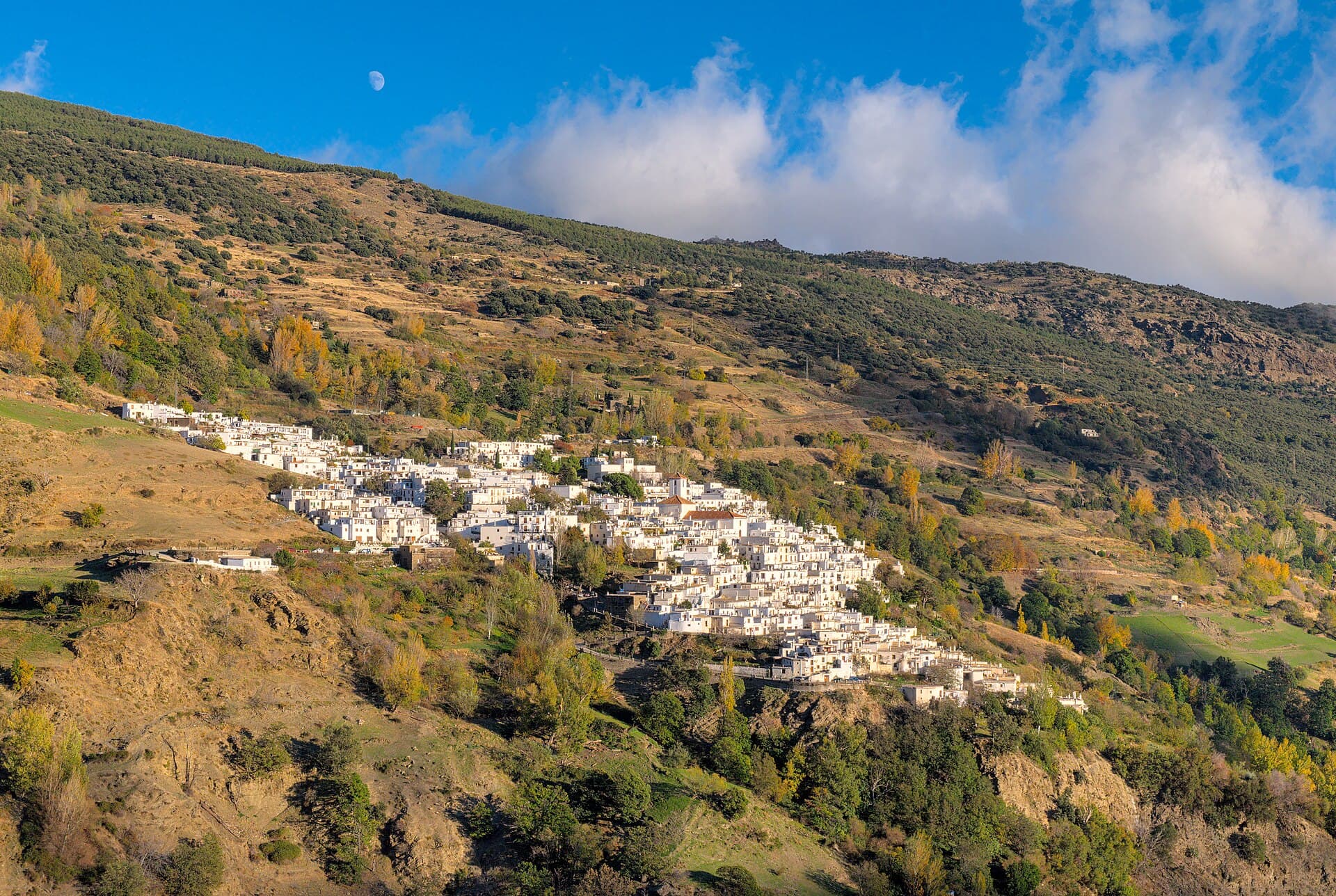 Trougnouf (Benoit Brummer) / CC BY 4.0, via Wikimedia Commons
Tour de audio autoguiado de Capileira — ruta GPS a pie, reproducción offline, narración en 32 idiomas.
“Donde el aire de la montaña se encuentra con los susurros moriscos en Sierra Nevada.”
No las postales. Las historias que ni los locales conocen — al oído, justo donde ocurrieron.
Una calle aparentemente común en Capileira guarda una sutil pista de una presencia mucho más antigua.
Los distintivos tejados planos de las casas de Capileira no son meramente estéticos; revelan una ingeniosa y antigua técnica de construcción.
El dramático desfiladero que abraza Capileira no es solo una maravilla natural; una vez fue un campo de batalla.
Descubre todos los secretos de Capileira
Cada dirección, cada revelación al completo — a tu oído, justo donde ocurrió.
Eliges tus paradas. Caminas. La voz te revela lo que los demás ignoran.


Tu tour de audioguía por Capileira te espera — elige tus lugares, tu idioma y empieza al llegar.
ComprarLume incluye una guía de realidad aumentada. Levanta el móvil y su cámara muestra la calle que tienes delante, con una flecha luminosa sobre la imagen real que siempre apunta a tu próxima parada — sin mapas que descifrar, sin giros equivocados. Como todo en Lume, funciona completamente sin conexión.
Capileira, uno de los pueblos blancos más atractivos de España, se aferra a las laderas de Sierra Nevada en Andalucía. A una altitud de 1.436 metros, es el más alto de los tres pueblos que forman el Barranco de Poqueira, un desfiladero declarado Conjunto Histórico-Artístico. Su elevación ofrece amplias vistas del barranco de Poqueira, los cercanos pueblos blancos de Bubión y Pampaneira, y en días claros, incluso la lejana costa de África.
El pueblo es un laberinto de calles estrechas y sinuosas, empedradas, flanqueadas por casas cúbicas encaladas que presentan distintivos tejados planos y chimeneas características. Esta arquitectura única, adaptada al terreno escarpado y al clima de montaña, refleja una mezcla de influencias moriscas y alpujarreñas tradicionales. Capileira sirve como puerta de entrada al Parque Nacional de Sierra Nevada, atrayendo a senderistas y a quienes buscan un ritmo de vida más lento en medio de una belleza natural impresionante.
Los orígenes de Capileira se remontan a tiempos antiguos, con su nombre derivado del latín 'capillaris-e', que significa 'pelo' o 'cabeza', una referencia a su posición elevada en la cima del barranco de Poqueira. Se han encontrado indicios de asentamientos góticos en la zona, lo que sugiere una larga presencia humana.
Durante el reino nazarí de Granada, Capileira formó parte de La Taha de Poqueira. Debido a su ubicación remota y estratégica, el dominio morisco llegó relativamente tarde, y el pueblo se convirtió en una fortaleza de montaña bajo control morisco durante el siglo XV. Después de la Rebelión de las Alpujarras de 1568, el rey Felipe II expulsó a casi todos sus habitantes. La zona fue repoblada con gente de otras partes de España, incluyendo Galicia, lo que llevó a influencias culturales únicas que aún son discernibles hoy en día.
Capileira, junto con sus pueblos vecinos de Bubión y Pampaneira, ha conservado el espíritu original de la región de las Alpujarras, manteniendo hábitos tradicionales y un profundo respeto por la naturaleza. Este compromiso con la preservación de su patrimonio llevó a que el valle de Poqueira y sus pueblos fueran declarados 'Conjunto Histórico'. La arquitectura, con sus casas de estilo bereber, calles estrechas y tejados planos de 'launa', es un testimonio de este legado perdurable.
Deambula por el laberinto de calles estrechas y empedradas de Capileira, donde las casas tradicionales encaladas con sus distintivos tejados planos y chimeneas en forma de sombrero crean un paisaje arquitectónico único. El pueblo en sí es un museo viviente, ofreciendo atisbos de un estilo de vida ancestral.
Visita la Iglesia Parroquial de Santa María la Mayor del siglo XVI, que alberga un retablo barroco del siglo XVIII y una imagen de la Virgen de la Cabeza, patrona de Capileira, que se dice fue donada por los Reyes Católicos. El campanario de la iglesia también fue inaugurado como museo en 2019.
Explora el Museo Etnológico Pedro Antonio de Alarcón, ubicado en una casa típica alpujarreña, que exhibe herramientas y equipos utilizados en la vida diaria en tiempos pasados, ofreciendo una visión de las costumbres populares de la región. Para vistas panorámicas, dirígete al Mirador El Cerrillo, también conocido como el 'Balcón de la Alpujarra', que ofrece vistas excepcionales del Barranco de Poqueira y las montañas circundantes. También podrás ver los antiguos lavaderos con tejados de caliza.
Capileira es un excelente punto de partida para numerosas rutas de senderismo en el Parque Nacional de Sierra Nevada, incluyendo senderos a los picos más altos como Mulhacén y Veleta. El popular sendero del Barranco de Poqueira conecta Capileira con Pampaneira y Bubión, permitiéndote explorar los otros pueblos del barranco. Antiguos canales de riego moriscos, conocidos como acequias, se pueden descubrir a lo largo de estas caminatas, que aún traen el deshielo de las montañas.
El clima más agradable para visitar Capileira suele ser de mayo a junio y de septiembre a octubre. Durante estos meses, las temperaturas son generalmente agradables y no hay demasiada lluvia, lo que lo hace ideal para explorar el pueblo y hacer senderismo. Julio y agosto ofrecen el clima más cálido y la mayor cantidad de sol, con máximas diurnas que alcanzan alrededor de 30-31°C, aunque las noches son más frescas debido a la altitud. Los meses de invierno son más fríos con nevadas ocasionales, pero aún pueden ofrecer días sorprendentemente cálidos y soleados para pasear.
Capileira se explora mejor a pie. Es aconsejable aparcar el coche en una de las zonas de aparcamiento público gratuito a la entrada o en la parte norte del pueblo, ya que las calles estrechas no están diseñadas para la conducción extensiva. Durante los fines de semana y días festivos, se recomienda llegar temprano para asegurar un lugar de estacionamiento.
Capileira ofrece buenos servicios, incluyendo supermercados, tiendas locales con productos regionales y una selección de bares y restaurantes donde se puede degustar la cocina tradicional alpujarreña como el plato alpujarreño. También están disponibles productos artesanales locales, como alfombras hechas a mano y cestas de esparto.
Para aquellos que planean hacer senderismo en el Parque Nacional de Sierra Nevada, un servicio de autobús especial opera desde Capileira en verano, y los fines de semana en primavera y otoño, llevando a los visitantes a las zonas más altas del parque. Es esencial reservar este autobús con antelación. Siempre consulta el pronóstico del tiempo y prepárate con el equipo adecuado para las excursiones de montaña.
Capileira en coreano, en chino o en hebreo — y 29 idiomas más, cada parada narrada por una voz nativa. La mayor variedad de idiomas de cualquier audioguía autoguiada.
Disponible en: