The distinctive wooden railway station in Cauterets looks like it belongs in the American Wild West, or perhaps a Norwegian mountain village. Its origins are even more unexpected.
JLPC / CC BY-SA 3.0, via Wikimedia CommonsCauterets
Self-guided audio walking tour of Cauterets — GPS route, offline playback, story-driven narration in 32 languages.
“Where Belle Époque grandeur meets Pyrenean wilderness.”
Cauterets, as no one tells it.
Not the postcards. The stories even locals don't know — whispered in your ear, right where they happened.
Cauterets' thermal waters have drawn visitors for centuries, including a very famous figure who, it is said, experienced a divine pause during her visits.
A central square in Cauterets carries a peculiar name, hinting at an unusual characteristic of the town's famous resource.
Discover every secret of Cauterets
Every address, every reveal in full — in your ear, right where it happened.
You pick your stops. You walk. The voice reveals what the others miss.


How long do you have in Cauterets?
Your self-guided audio tour of Cauterets is ready — pick your landmarks, choose your language, and start the moment you arrive.
BuyThe story of Cauterets
Cauterets, a captivating spa town and ski resort in the Hautes-Pyrénées department of southwestern France, offers a unique blend of natural splendor and historical elegance. Resting at an average altitude of 1,000 meters, the village is embraced by the towering peaks of the Pyrenees and borders the Pyrenees National Park. The town is celebrated for its thermal springs, which have been utilized for their therapeutic properties since Roman times.
Beyond its healing waters, Cauterets serves as a portal to a spectacular mountain landscape, featuring cascading waterfalls, serene alpine meadows, and pristine lakes. It provides a starting point for numerous hiking trails, including those leading to the iconic Pont d'Espagne and Lac de Gaube. In winter, the village transforms into a lively ski destination, with two distinct ski areas catering to both downhill and Nordic enthusiasts. The village maintains a lively atmosphere year-round, with a covered market, local shops, and cultural events.
From Roman Baths to Belle Époque Grandeur
The story of Cauterets is intrinsically linked to its thermal springs, recognized for their healing properties as early as the Gallo-Roman period. Archeological remains, including a swimming pool, attest to this early use of the thermal waters. By the Middle Ages, the practice of hydrotherapy was well-established, with records from the 12th century mentioning three baths fed by natural hot springs. Figures like Gaston Phébus, Count of Foix, visited in 1380 to treat his deafness.
The Renaissance saw a renewed interest in the baths, with Marguerite de Navarre, sister of King Francis I, making multiple visits in the 16th century, significantly boosting Cauterets' reputation. However, the French Wars of Religion led to a decline in hydrotherapy due to destruction and conflicts with Spain.
The 18th century marked a turning point with the construction of passable roads, facilitating access to the valley. The 19th century ushered in Cauterets' "golden age" as a spa town. The healing waters, abundant in sulfur and silicate of soda, were sought after for treating respiratory ailments, rheumatism, and skin diseases. This era saw the construction of grand hotels like the Grand Hôtel d'Angleterre and the Grand Hotel Continental, along with monumental facades that still define the village's architecture.
Cauterets became a fashionable destination, attracting a host of celebrities and European royalty. George Sand, Chateaubriand, Victor Hugo, Emile Zola, Sarah Bernhardt, and even Emperor Napoleon III and Empress Eugenie were among its distinguished visitors. King Edward VII of England also took the waters here. The old railway station, a unique wooden structure, was inaugurated in 1901, further solidifying Cauterets' status as a premier thermal resort. Although the railway line was abandoned in 1949, the station remains a protected historic monument. The town continues to embrace its thermal heritage, with renovated baths offering both medical cures and leisure experiences.
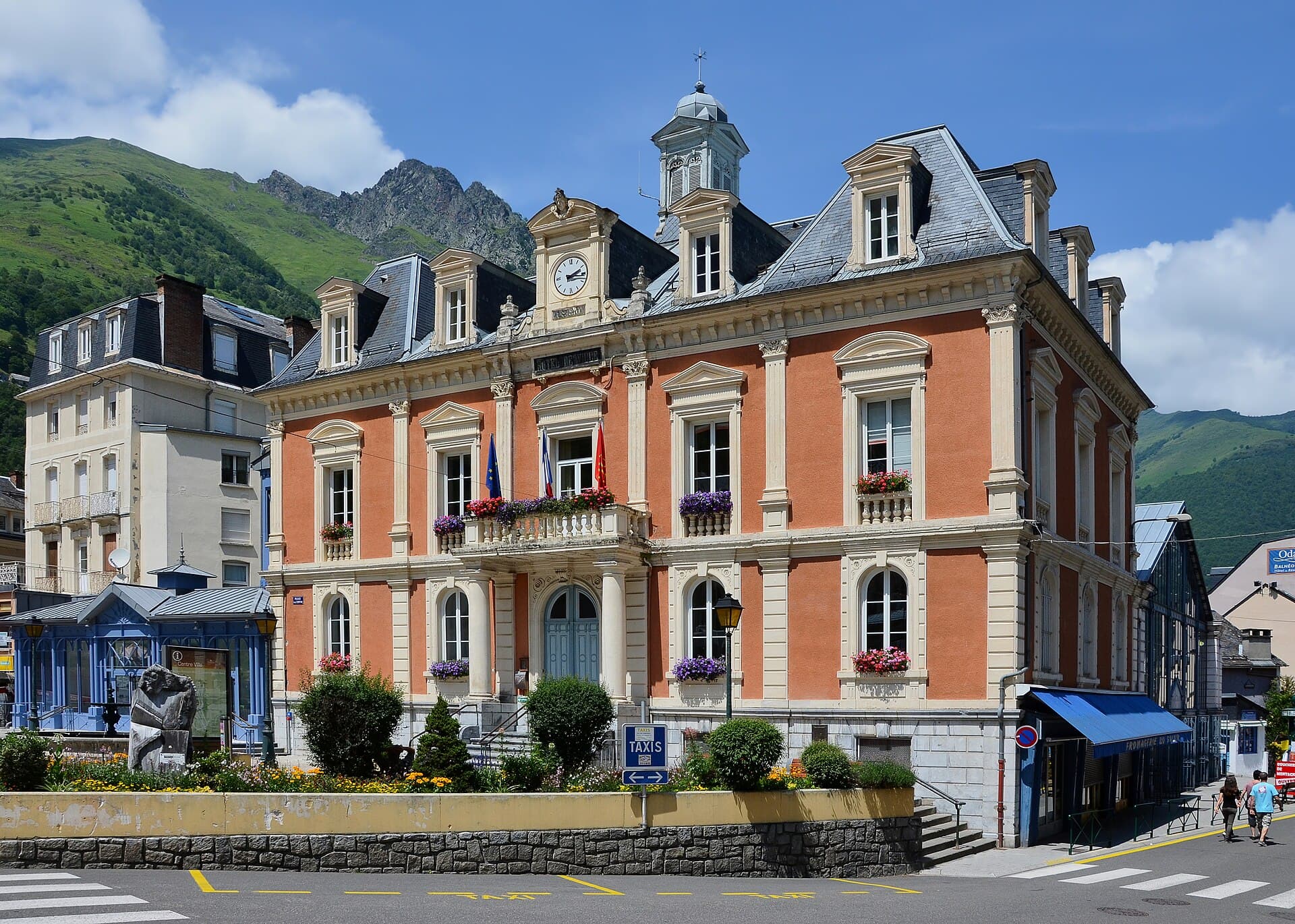
Begin your exploration at the Gare de Cauterets, the old railway station. This distinctive wooden building, a listed historic monument, once welcomed the first electric train in France and now serves as a bus terminal and event space. Walk along Rue Richelieu and Rue de la Raillère, the historic axis of the village, to admire the Belle Époque architecture, including grand hotels and elegant villas.
Experience the celebrated thermal waters at Les Bains du Rocher, a modern thermal spa offering relaxation and wellness, or visit the Thermes César for traditional medical cures. Take time to see the Esplanade des Œufs, a central square that was once the social hub of fashionable Cauterets, featuring a promenade with Eiffel-style arcades.
For outdoor enthusiasts, the Pont d'Espagne is a captivating sight. This spectacular stone bridge, a gateway to the Pyrenees National Park, offers expansive views of waterfalls and serves as a trailhead for numerous hikes. From Pont d'Espagne, you can take a chairlift or hike to Lac de Gaube, an emerald-blue alpine lake reflecting the majestic Vignemale peak. The Cirque du Lys ski area, accessible by cable car from the village, provides panoramic views of the Pyrenees. For a taste of local culture, visit the year-round covered market or the weekly Friday morning market.
Cauterets is a year-round destination, with distinct charms in each season. For comfortable hiking and exploring the high-altitude lakes and trails, the best time to visit is from June to September. July and August are the warmest months, with average daytime highs around 21-23°C. Early autumn offers fewer crowds and crisp reflections in the lakes.
Winter, from December to early April, is ideal for skiing and snow sports, with Cauterets known for its excellent snow cover. The ski season often presents the unique experience of winter conditions in the mountains while the village below enjoys milder weather. January and February are the coldest months, with average lows around -2°C.
Cauterets is located 32 km southwest of Lourdes, in the Hautes-Pyrénées department. The nearest airports are Pau Pyrénées and Lourdes Pyrénées. Once in Cauterets, a car is not strictly necessary, as free shuttle buses operate within the village and provide links to Pont d'Espagne, especially during peak seasons. Paid parking is available in the village, with some outdoor car parks free in summer. If driving in winter (November to March), snow tires or chains are legally required.
Accommodation options in Cauterets range from apartments and charming hotels with spas to family chalets, catering to various budgets. The local currency is the Euro (€). While credit cards are widely accepted, it's advisable to carry some cash for smaller purchases, particularly at local markets. Most museums typically operate from 10 AM to 6 PM, but it's always wise to verify specific opening hours and event schedules.
- What are the main attractions in Cauterets?
- Key attractions include the historic Gare de Cauterets, the thermal spas (Les Bains du Rocher and Thermes César), the Esplanade des Œufs, Pont d'Espagne, and Lac de Gaube.
- What kind of activities can I do in Cauterets?
- Cauterets offers hiking, mountaineering, skiing (downhill and cross-country), snowshoeing, mountain biking, and relaxing in the thermal baths. Cultural festivals and local markets are also popular.
- When is the best time for hiking in Cauterets?
- The best time for hiking and enjoying snow-free trails is from June to September.
- Is Cauterets a family-friendly destination?
- Yes, Cauterets is considered family-friendly, offering activities and amenities for all ages, including children's clubs and safe beginner ski areas.
- What local specialty should I try in Cauterets?
- A local specialty is the berlingot, a colorful boiled sweet that spa patients traditionally ate to mask the sulfur taste of the thermal water.
- How do I get around Cauterets?
- Free shuttle buses operate within the village and to Pont d'Espagne. Public transport is recommended, especially during high season, to avoid parking issues.