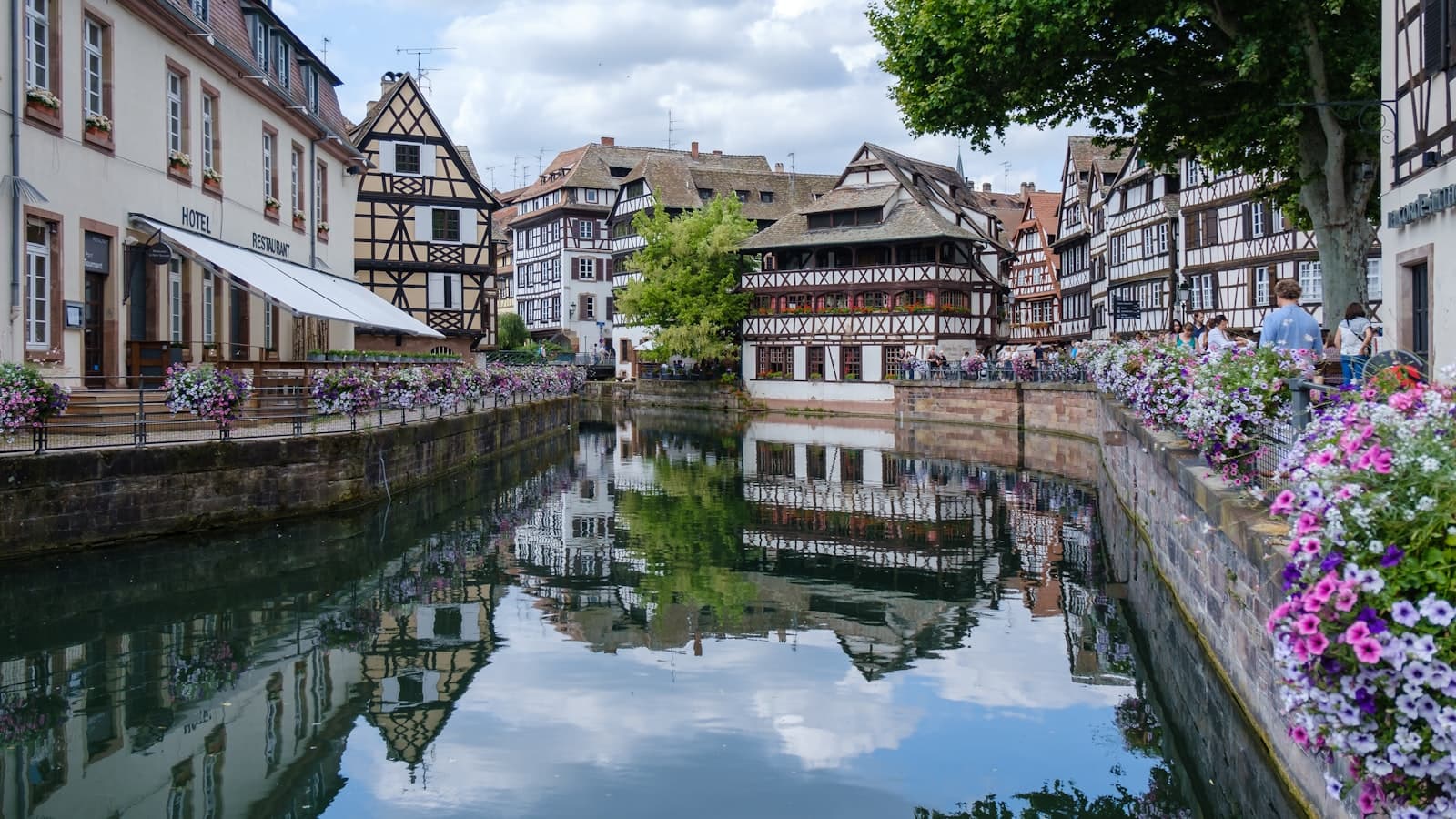
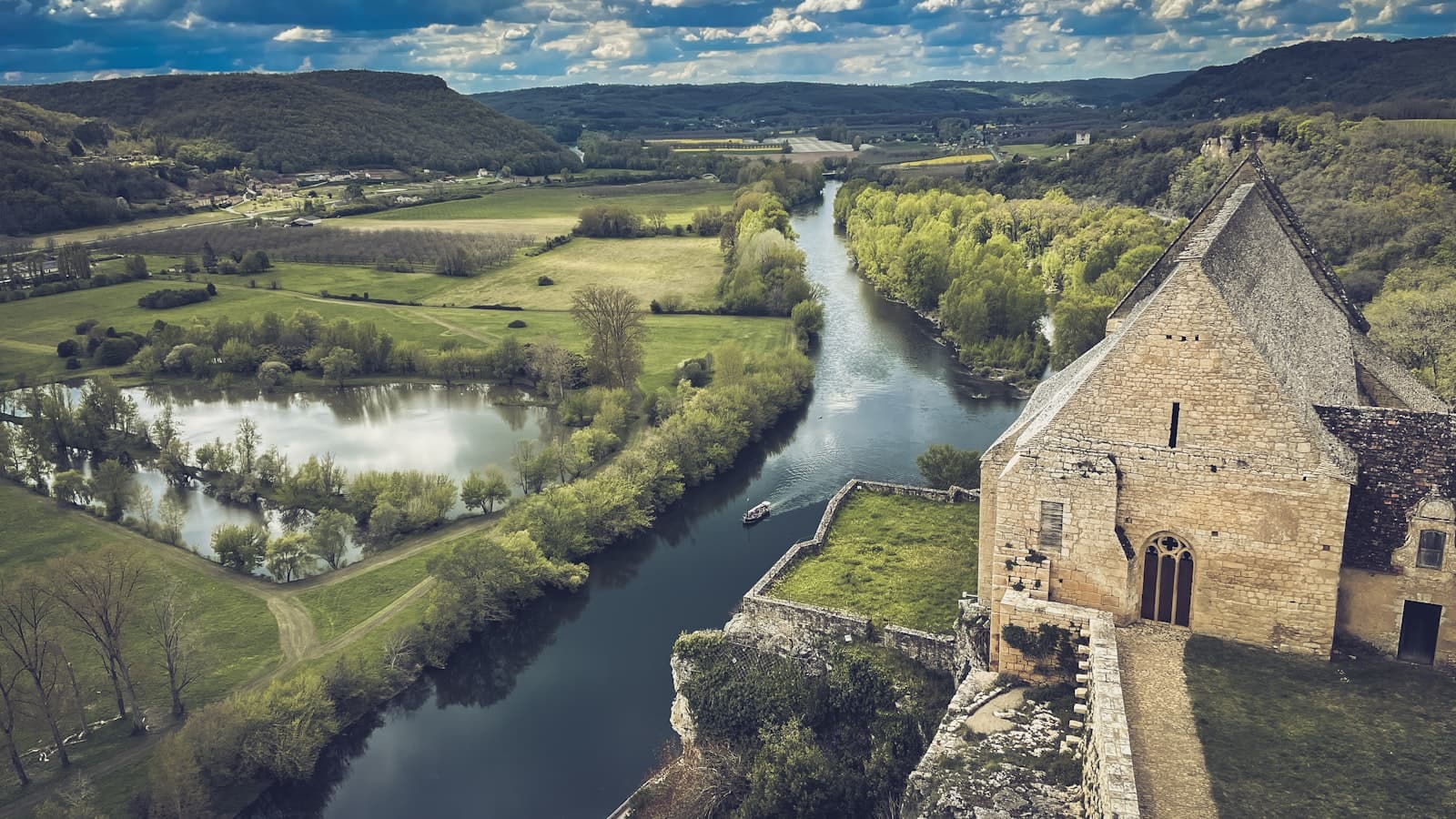
Chambéry, FranceFlorian Pépellin / CC BY-SA 3.0, via Wikimedia Commons
FR

Chambéry

Self-guided audio walking tour of Chambéry — GPS route, offline playback, story-driven narration in 32 languages.

Where Alpine grandeur meets Italianate charm.

The secrets of Chambéry

Chambéry, as no one tells it.

Not the postcards. The stories even locals don't know — whispered in your ear, right where they happened.

3 secrets below. Many more wait inside the tour.
Cathédrale Saint-François-de-Sales

Look closer at the intricate Gothic carvings and grand arches inside Chambéry's cathedral.

Full story unlocks in the tour
Fontaine des Éléphants (Elephant Fountain)

The city's most recognizable monument, featuring four elephants, carries a curious local nickname.

Full story unlocks in the tour
The Old Town's Covered Passageways

Wandering through Chambéry's historic center reveals a network of intriguing shortcuts.

Full story unlocks in the tour
The full tour

Discover every secret of Chambéry

Every address, every reveal in full — in your ear, right where it happened.

Get the key to Chambéry

You pick your stops. You walk. The voice reveals what the others miss.

Chambéry — white and brown concrete structure during day
Photo: Adrien Tutin / Unsplash
Chambéry — brown wooden house
Photo: Patrick Robert Doyle / Unsplash
Chambéry — a river running through a lush green countryside
Photo: Jametlene Reskp / Unsplash
Choose your time

How long do you have in Chambéry?

Your self-guided audio tour of Chambéry is ready — pick your landmarks, choose your language, and start the moment you arrive.

Buy
About Chambéry

The story of Chambéry

Chambéry, the historic capital of the Savoie region, rests in a valley at the foot of the French Alps, embraced by the Bauges and Chartreuse massifs. This compact city, with a population of approximately 59,000, blends the amenities of an urban center with a welcoming, human-scale atmosphere. Its distinctive character stems from a deep past as the seat of the House of Savoy, evident in the Italianate influences found throughout its architecture and gastronomy.

Often called a "Crossroads of the Alps," Chambéry's strategic location historically made it a significant transit hub between France, Switzerland, and Italy. Today, it serves as a gateway to dramatic mountain ranges and is bordered to the north by Lac du Bourget, France's largest natural lake. The city encourages exploration, with its pedestrianized old town inviting visitors to wander along worn lanes, discover arcaded façades, and uncover centuries of stories.

Beyond its scenic beauty and historical landmarks, Chambéry offers a lively cultural scene and a connection to literary history, having been home to philosopher Jean-Jacques Rousseau. Whether seeking outdoor adventures in the surrounding Alps, savoring local Savoyard cuisine, or delving into its compelling heritage, Chambéry provides a distinctive experience that captures the spirit of the French Alps.

History

From Roman Settlement to Savoyard Capital

The origins of Chambéry trace back to a Gallo-Roman settlement known as Lemencum, situated in a marshy area at the base of the Alps. The city's true rise to prominence began in 1232 when Count Thomas I of Savoy acquired land and rights from local feudal lords. In 1295, Count Amadeus V made the pivotal decision to establish Chambéry as the main residence and administrative center of the County of Savoy.

Chambéry flourished as the capital of the County and later the Duchy of Savoy, a sovereign state that, at its peak, stretched across the Alps from Bourg-en-Bresse to Turin, and from Geneva to Nice. This period, particularly the 15th and 16th centuries, transformed Chambéry into a significant cultural and political hub. The Château de Chambéry, originally an 11th-century fortified castle, was expanded and served as the primary residence for the Dukes of Savoy for over two centuries. The Sainte-Chapelle within the castle even housed the Holy Shroud of Turin from 1502 to 1578.

French Annexation and Modern Development

Chambéry's history is marked by periods of dispute between France and Italy. It was regularly invaded by French armies and became part of France in 1792 under the French Revolutionary government. After being returned to the House of Savoy by the treaties of Paris and Vienna, Chambéry and the surrounding region were definitively joined to France in 1860 following a plebiscite.

The city experienced significant development in the contemporary period. Although parts of the northern town were heavily bombed in 1944 during World War II, leading to reconstruction with wider streets, the southern sector has largely retained its 17th-century character, with architectural reminders from the 15th and 16th centuries. Today, Chambéry is recognized as a "City of Art and History" and continues to be an important administrative and commercial center, home to the University of Savoie.

What to see

Begin your exploration in the Old Town, a labyrinth of worn streets, arcaded façades, and secret passages. This area showcases the city's distinct Piedmontese-inspired architecture.

The Château des Ducs de Savoie is a central landmark, a fortified castle that served as the residence of the Dukes of Savoy. Today, it houses the Savoie Prefecture and the Departmental Council, with parts open for tours. Its Sainte-Chapelle, a flamboyant Gothic edifice, is particularly notable.

Visit the Fontaine des Éléphants. This monumental fountain, built in 1838, honors General Benoît de Boigne and features four elephant sculptures, a cherished symbol of the city.

The Cathédrale Saint-François-de-Sales, constructed in the 15th century, may appear unassuming from the outside, but its interior holds the largest collection of trompe-l'œil paintings in Europe, creating an astonishing illusion of grand Gothic architecture.

For art enthusiasts, the Musée des Beaux-Arts (Museum of Fine Arts), housed in a former grain exchange, offers an impressive collection of Italian paintings from the 14th to the 18th centuries, reflecting the region's historical ties with Italy.

Just outside the city center, Les Charmettes – Jean-Jacques Rousseau's House offers a glimpse into the life of the famous philosopher, who spent some of his formative years here. The country home and its 18th-century garden provide a tranquil retreat.

When to visit

The best time to visit Chambéry for pleasant weather and outdoor activities is from mid-June to mid-September. During these months, temperatures are generally warm, with July being the warmest, averaging highs of 26°C to 29°C. While summer can bring occasional rain and thunderstorms, it's ideal for exploring the city and nearby natural attractions like Lac du Bourget.

Spring (April to June) and early autumn (September to October) also offer good conditions with mild temperatures and fewer crowds, making them excellent for enjoying the historic center and surrounding landscapes. Winters are cool to cold, with average temperatures between -1°C and 7°C, and can include frost and fog, though proximity to ski resorts makes it a base for winter sports.

Practical

Chambéry is a compact and walkable city, making it easy to explore its historic center on foot. For venturing further afield, a local bus network is available, and bike rentals offer another way to get around. The city is well-connected by rail and road, with hourly trains from Lyon and regular services from Paris, though current disruptions on the line to Turin may impact travel times to the east.

When dining, remember that French meals are typically a leisurely affair; it's customary to signal the waiter when you're ready for the check rather than expecting it immediately. The local cuisine highlights Savoyard traditions, with an emphasis on cheeses like Beaufort, Reblochon, and Tomme de Savoie, which are integral to dishes like Fondue Savoyarde and Raclette. Don't forget to try Diots, local pork sausages. For those seeking local produce, the Marché des Halles operates Tuesday through Saturday mornings.

Layered clothing is advisable, even in summer, due to changeable alpine weather and cooler evenings. Comfortable, flat walking shoes are essential for navigating the historic center's charming, often uneven, streets.

Good to know
What is Chambéry known for?
Chambéry is known as the historic capital of the House of Savoy, its distinctive Italianate architecture, the unique Elephant Fountain, and housing Europe's largest *trompe-l'œil* painting in its cathedral. It's also recognized as the birthplace of the Opinel knife and for its connection to Jean-Jacques Rousseau.
Is Chambéry a walkable city?
Yes, Chambéry is a compact city with a well-preserved medieval center that is easily explored on foot. Its narrow, worn streets and pedestrian passages make it ideal for walking.
What local dishes should I try in Chambéry?
You should try traditional Savoyard dishes such as *Fondue Savoyarde* and *Raclette*, which feature local cheeses like Beaufort, Reblochon, and Tomme de Savoie. Also, look for *Diots*, local pork sausages, and the famous chocolate truffles, which were invented in Chambéry.
When is the best time to visit Chambéry?
The best time for warm-weather activities and pleasant exploration is from mid-June to mid-September. Spring and early autumn are also good for milder weather and fewer crowds.
What are the "traboules" of Chambéry?
Similar to those in Lyon, Chambéry's "traboules" are covered pedestrian passageways that allow you to move from one street to another by crossing through the inner courtyards of buildings in the old town.
What is the story behind the Elephant Fountain's nickname?
The Elephant Fountain is affectionately nicknamed "Les Quatre sans culs" (The Four Without Butts) by locals because the four elephant sculptures are depicted with only their front halves, their hindquarters seemingly missing.
On the map

Chambéry in your own language — all 32· 32

Chambéry in Korean, in Chinese or in Hebrew — and 29 more languages, every stop narrated by a native voice. The widest language range of any self-guided audio tour.

Available in:

  • English
  • FrenchFrançais
  • SpanishEspañol
  • GermanDeutsch
  • ItalianItaliano
  • PortuguesePortuguês
  • DutchNederlands
  • PolishPolski
  • SwedishSvenska
  • DanishDansk
  • NorwegianNorsk
  • FinnishSuomi
  • RussianРусский
  • UkrainianУкраїнська
  • TurkishTürkçe
  • CzechČeština
  • HungarianMagyar
  • RomanianRomână
  • BulgarianБългарски
  • GreekΕλληνικά
  • Japanese日本語
  • Korean한국어
  • Chinese中文
  • Arabicالعربية
  • Hebrewעברית
  • Hindiहिन्दी
  • Thaiไทย
  • VietnameseTiếng Việt
  • IndonesianBahasa Indonesia
  • MalayBahasa Melayu
  • CatalanCatalà
  • BasqueEuskara
More cities in Auvergne-Rhône-Alpes
Chambéry
$9.99
No booking · code valid 1 year · 12h to walk once activated
Load on Wi-Fi, then walk offline — no roaming abroad
Get the key to Chambéry