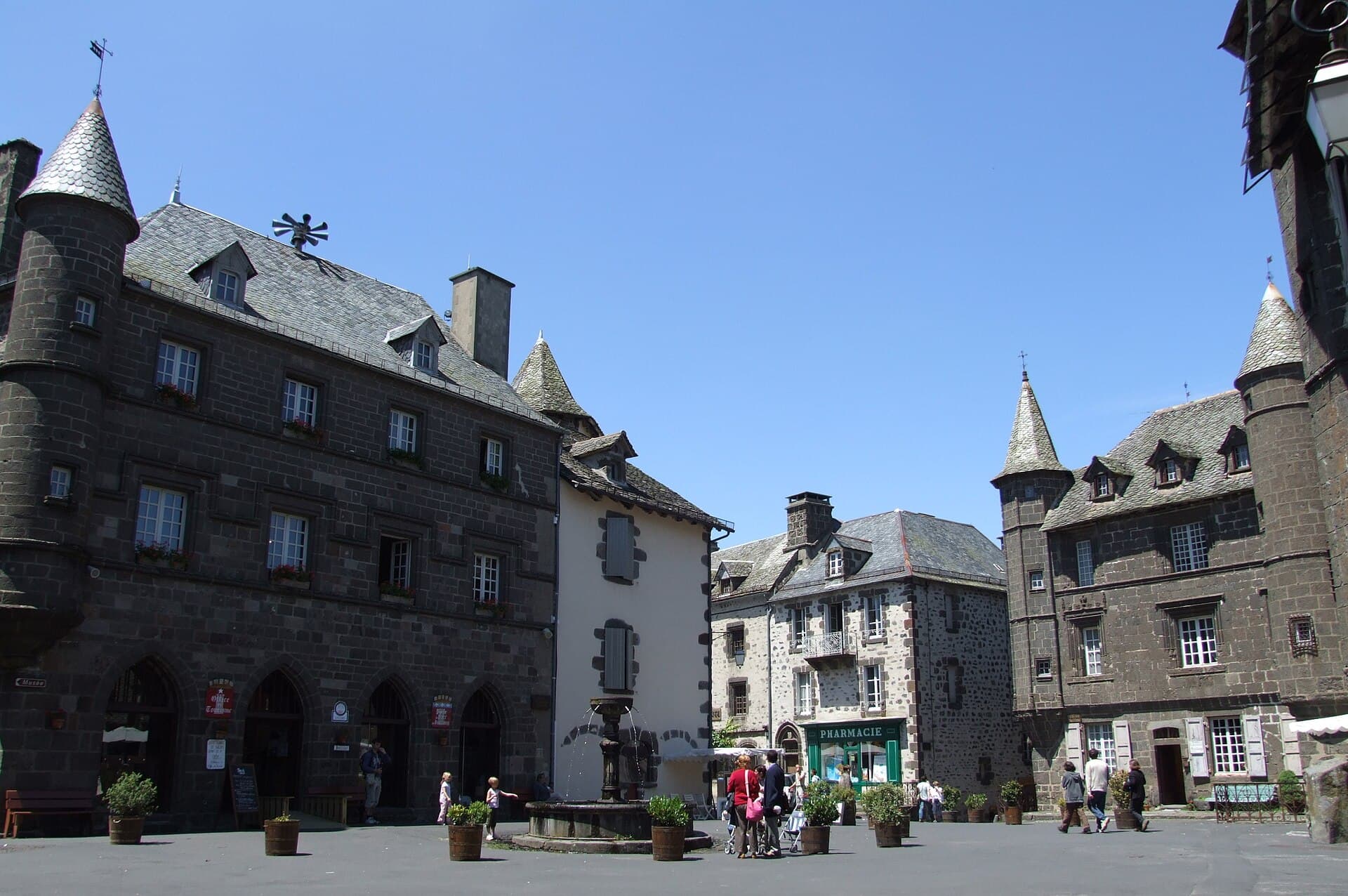
Plaza Tyssandier-d'Escous
La plaza central de Salers lleva el nombre de un hombre cuyo legado se extiende mucho más allá de los antiguos caminos del pueblo.
La historia completa se desbloquea en el tour
 Christophe.Finot / CC BY-SA 2.5, via Wikimedia Commons
Tour de audio autoguiado de Salers — ruta GPS a pie, reproducción offline, narración en 32 idiomas.
“Donde la piedra volcánica narra historias de grandeza medieval y tradición perdurable.”
No las postales. Las historias que ni los locales conocen — al oído, justo donde ocurrieron.
La plaza central de Salers lleva el nombre de un hombre cuyo legado se extiende mucho más allá de los antiguos caminos del pueblo.
La elaboración del queso Salers requiere una colaboración particular y de larga data entre el granjero, la vaca y el ternero.
Hay un aperitivo local que algunos describen como un gusto adquirido, quizás mejor probado por atrevimiento.
Descubre todos los secretos de Salers
Cada dirección, cada revelación al completo — a tu oído, justo donde ocurrió.
Eliges tus paradas. Caminas. La voz te revela lo que los demás ignoran.


Tu tour de audioguía por Salers te espera — elige tus lugares, tu idioma y empieza al llegar.
ComprarLume incluye una guía de realidad aumentada. Levanta el móvil y su cámara muestra la calle que tienes delante, con una flecha luminosa sobre la imagen real que siempre apunta a tu próxima parada — sin mapas que descifrar, sin giros equivocados. Como todo en Lume, funciona completamente sin conexión.
Salers, catalogado como uno de los "Pueblos Más Bonitos de Francia", es una cautivadora comuna en el departamento de Cantal, en el centro-sur de Francia. Situado en el borde occidental de la región volcánica de Cantal, a una altitud de aproximadamente 900 metros (alrededor de 3,000 pies), el pueblo ofrece vistas expansivas de los valles de Maronne y Aspre y las montañas de Cantal. Sus distintivos edificios de piedra volcánica gris oscuro con techos de losas le confieren una apariencia medieval sombría, pero evocadora. Pasear por sus antiguas calles se siente como un viaje en el tiempo, con gran parte de su carácter de los siglos XV y XVI notablemente conservado.
Más allá de su atractivo arquitectónico, Salers está profundamente entrelazado con su patrimonio agrícola. El pueblo es el homónimo y origen de la reconocida raza de ganado Salers y del distintivo queso Salers, ambos celebrados en el Día de la Vaca y el Queso en agosto. La región circundante, parte del Parque Natural Regional de los Volcanes de Auvernia, proporciona un telón de fondo espectacular para actividades al aire libre y una oportunidad para experimentar el auténtico estilo de vida de Cantal.
Los orígenes de Salers se remontan a casi mil años, con la ciudad desarrollándose alrededor de un castillo en una colina basáltica que domina el valle de Maronne. Durante la era feudal, Salers se estableció como un asentamiento fortificado. Su ubicación estratégica significó que no escapó a la agitación de la Guerra de los Cien Años, durante la cual fue saqueada a finales de la década de 1430. En respuesta a estas invasiones, los habitantes locales, conocidos como "sagraniers", fortificaron su ciudad para protegerse contra las fuerzas inglesas y los bandidos.
El siglo XV marcó un período de crecimiento y prosperidad significativos para Salers, con gran parte de la arquitectura actual de la ciudad construida durante este tiempo. A finales del siglo XV, Salers se había convertido en el centro administrativo del Bailiazgo de Alta Auvernia. Esta era de grandeza se refleja en su arquitectura civil, caracterizada por edificios de piedra volcánica negra con techos de losas, muchos de ellos con torrecillas, ventanas con parteluz y tallas intrincadas. Ejemplos destacados de este estilo renacentista se pueden ver alrededor de la Plaza Tyssandier-d'Escous, incluyendo el Ayuntamiento, la Maison Baillage y la Maison de la Ronade. La Maison des Templiers, con su galería gótica y esculturas simbólicas, ahora alberga un museo de artes y tradiciones locales.
Salers también posee un profundo patrimonio religioso, especialmente la Iglesia de Saint-Mathieu. Este Monumento Histórico catalogado presenta un pórtico románico y contiene importantes obras de arte, incluyendo una estatua policromada del siglo XV del Entierro de Jesús y tapices de Aubusson del siglo XVII. Las defensas medievales del pueblo aún son visibles hoy en día, con la Puerta del Campanario (también conocida como la Torre del Reloj) y la Puerta de la Martille como las únicas partes restantes de las murallas originales. Estos elementos históricos transportan colectivamente a los visitantes a través de siglos de historia auvernesa.
Comience su exploración en la plaza central, Place Tyssandier-d'Escous, que está bordeada de ornamentadas casas renacentistas del siglo XVI con dinteles tallados y ventanas con parteluz. Aquí encontrará el Ayuntamiento y la Maison Baillage, ambos construidos con la piedra de lava oscura local. Un corto paseo desde la plaza principal conduce a la Iglesia de Saint-Mathieu, un Monumento Histórico catalogado, notable por su pórtico románico y su interior que alberga tapices de Aubusson del siglo XVII y una escultura del siglo XV del Entierro de Jesús.
Descubra el pasado medieval del pueblo visitando la Porte du Beffroi (Puerta del Campanario) y la Porte de la Martille, dos puertas supervivientes de las murallas del siglo XV. La Maison des Templiers, una casa renacentista con una galería gótica, ahora sirve como museo de artes y tradiciones locales. Para disfrutar de vistas expansivas de las montañas de Cantal y los valles de Maronne, Rat y Aspre, diríjase a la Esplanade Barrouze. No pierda la oportunidad de probar el célebre queso Salers AOP, y otras especialidades locales como la truffade (un plato de patatas) y el pounti (col rellena), o probar el amargo licor de genciana Salers.
La mejor época para visitar Salers es durante los meses de junio, julio, agosto y septiembre. Durante este período, las temperaturas diurnas son agradables, oscilando típicamente entre 20°C (68°F) y 24°C (75°F). Aunque julio experimenta lluvias moderadas, el clima general durante estos meses de verano es generalmente agradable para explorar el pueblo y su belleza natural circundante. Agosto es una época particularmente animada, ya que Salers celebra el Día de la Vaca y el Queso.
Salers se encuentra en el departamento de Cantal, aproximadamente a 42 kilómetros al norte de Aurillac. El pueblo es compacto y se puede explorar fácilmente a pie en una o dos horas. Hay visitas guiadas por la ciudad disponibles. Aunque el francés es el idioma principal, parte de la información turística y las visitas guiadas pueden estar disponibles en inglés y español. Las comodidades en el pueblo incluyen baños públicos, un área de picnic y restaurantes. Hay estacionamiento disponible cerca. Para aquellos interesados en productos locales, muchas tiendas de temporada y mercados de productores ofrecen queso Salers, carnes locales y otras delicias regionales.
Salers en coreano, en chino o en hebreo — y 29 idiomas más, cada parada narrada por una voz nativa. La mayor variedad de idiomas de cualquier audioguía autoguiada.
Disponible en: