Church of Saint Jean Baptiste
The village church possesses a peculiar architectural feature that continues to puzzle historians.
Full story unlocks in the tour
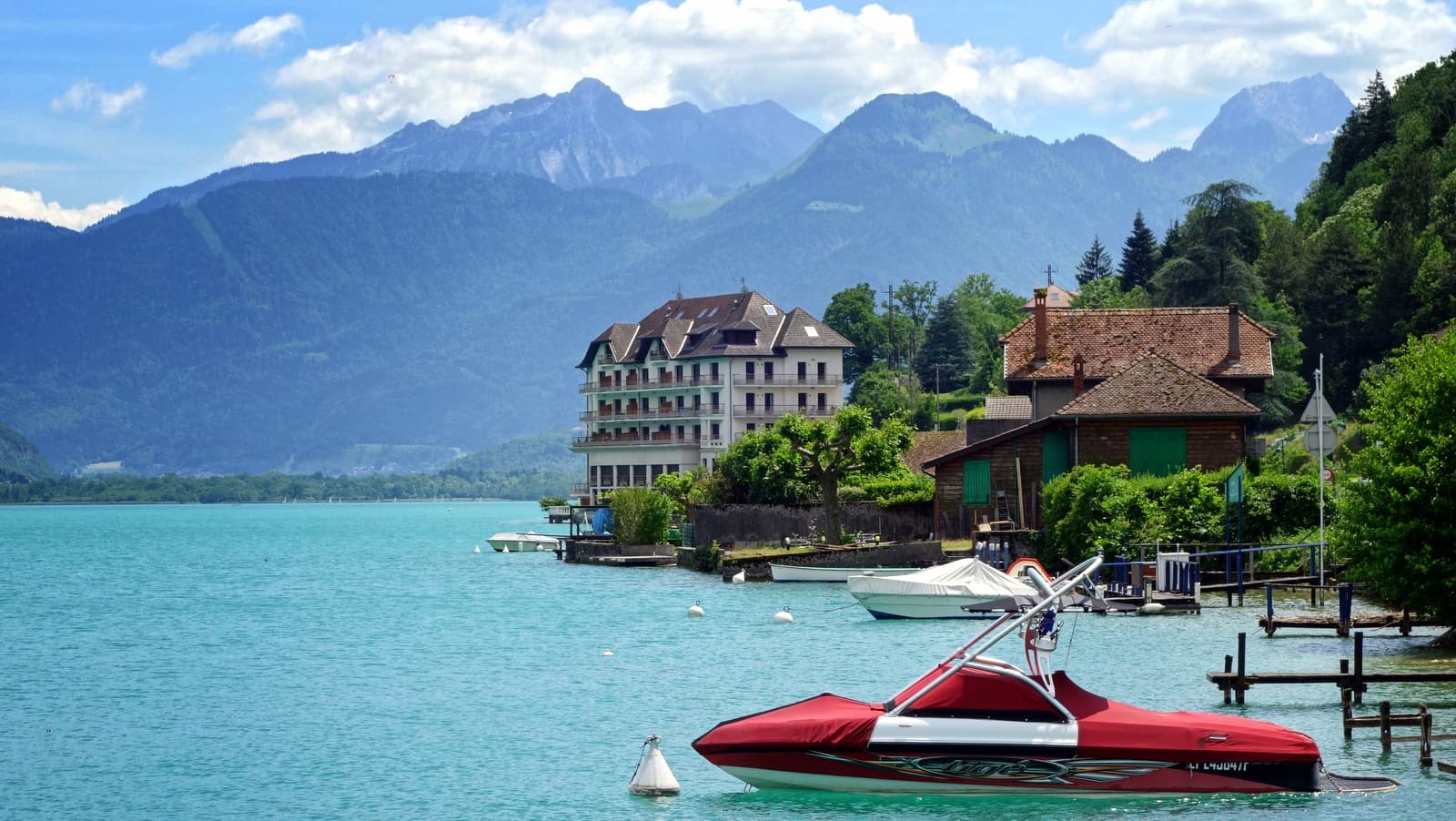 Miwok from France / cc0, via Wikimedia Commons
Self-guided audio walking tour of Charroux — GPS route, offline playback, story-driven narration in 32 languages.
“Where medieval echoes meet artisanal whispers.”
Not the postcards. The stories even locals don't know — whispered in your ear, right where they happened.
The village church possesses a peculiar architectural feature that continues to puzzle historians.
The celebrated Charroux mustard, once lost to the currents of industrialization, has a surprising comeback story.
Within the village, a secluded circular grassy area holds a significant place in Charroux's medieval defenses.
Discover every secret of Charroux
Every address, every reveal in full — in your ear, right where it happened.
You pick your stops. You walk. The voice reveals what the others miss.


Your self-guided audio tour of Charroux is ready — pick your landmarks, choose your language, and start the moment you arrive.
BuyLume has a built-in augmented-reality guide. Hold your phone up and its camera shows the street ahead of you, with a glowing arrow laid over the real view that always points to your next stop — no map to puzzle over, no wrong turns. Like everything in Lume, it works fully offline.
Charroux, officially recognized as one of "the most beautiful villages of France," is a medieval commune in the Allier department of the Auvergne-Rhône-Alpes region. It rests at an altitude of 413 meters, offering expansive views of the surrounding plains and the Sioule River valley. With a population of around 335 inhabitants, Charroux maintains a peaceful, modest character while drawing approximately 200,000 visitors each year.
The village presents a collection of well-preserved medieval architecture, including remnants of a Benedictine abbey, fortified elements, and inviting narrow, winding streets. Beyond its historical appeal, Charroux serves as a focal point for artisans, with workshops dedicated to painting, sculpture, glass engraving, pottery, and candle-making. Visitors can also sample local specialties such as the well-regarded Charroux mustard, saffron, oils, jams, and handmade soaps.
Charroux's origins stretch back to Gallo-Roman times, establishing itself as a crossroads for communication between major cities like Angoulême, Poitiers, and Limoges. Its prominence in the High Middle Ages was largely due to the Benedictine Abbey of Saint-Sauveur, founded in 783 by Count Roger de Limoges and his wife Euphrasie d'Auvergne. The abbey grew immensely powerful, counting up to 213 affiliated abbeys and priories. In 989, it hosted the first Council of the Peace of God, a pivotal event that established immunity from violence for non-combatants and clergy. The abbey's renown was further amplified by its possession of a relic of the True Cross, known as the Sainte Vertu, which legend says was a gift from Charlemagne. This relic attracted a significant influx of pilgrims and donations, funding the abbey's majestic reconstruction, with its altar blessed by Pope Urban II in 1096.
However, Charroux's prosperity faced numerous challenges. The Hundred Years' War saw the abbey plundered and ransacked multiple times, leading to its fortification. The 15th century brought the Plague, and the 16th century, the Wars of Religion, during which a Protestant army burned the village. Monastic life briefly resumed in 1580, but the church was deemed beyond repair, its nave shortened, and the rotunda partially restored. By the 18th century, the monastery was in such disrepair that it was closed by King Louis XV in 1760, a decision confirmed by Pope Clement XIII in 1762. The French Revolution saw the ruined abbey buildings sold and partly demolished, with only the Charlemagne Tower remaining.
Despite these periods of decline, Charroux endured. It was a "free city" since at least 1245 AD, granted autonomy and trading privileges by feudal lords to encourage settlement in a region prone to war, famine, or plague. This fostered a bourgeois class of "merchants and intellectuals, discerning and cultivated." Today, the village continues to flourish, recognized for its historical sites, cultural points of interest, and an active artisan community that preserves traditional crafts and local specialties.
Wandering through Charroux means stepping into a living museum of medieval architecture. Begin at the two stone entrance gateways, one still featuring a portcullis, sundial, and clock, which once guarded the town. Explore the narrow, winding streets, admiring the well-preserved 14th-century half-timbered and corbelled houses, and facades with carved stonework from the 15th to 18th centuries. Observe the decorative wells and stone benches that punctuate the village.
The most prominent historical site is the former Benedictine Abbey of Saint-Sauveur. While largely in ruins, you can still discern the tall octagonal Charlemagne Tower, a remnant of the 11th-century lantern tower, along with parts of the cloister and chapter house. The chapter house now hosts a museum with Gothic sculptures, abbey treasures, and a model of the original abbey. The 12th-century Church of Saint John the Baptist, a blend of Romanesque and Gothic styles, is another key landmark. For expansive views of the surrounding plains and the Auvergne mountains, seek out the village viewpoint and the 'Chaume du vent'.
Beyond historical structures, Charroux is known for its artisans. Visit the candle-making workshop, in operation since 1902, or explore shops offering local mustard, saffron, oils, jams, and handmade soaps. The Museum of Charroux and its Canton, housed within the ancient ramparts, recounts the village's story from Gallo-Roman times to the Middle Ages.
The most pleasant times to visit Charroux are generally from May to September, when temperatures are mild and rainfall is lower. These months offer comfortable conditions for exploring the village's outdoor attractions and enjoying its lively atmosphere. July and August are the warmest months, with average daily highs around 27°C (81°F) and the most sunshine. Spring, particularly May, is lovely with blooming flowers, and the annual flower festival is held then. Summer brings outdoor markets and music festivals. While quieter, winter offers festive decorations and holiday markets, with local cafés providing a cozy ambiance.
Charroux is a small village, easily explored on foot. Parking is available at the town walls, allowing visitors to walk through the largely pedestrianized area. The village has a few restaurants and small shops, including a bakery, in the older section. For a deeper understanding of the village's history and secrets, guided tours are available, especially on Wednesday mornings during the summer.
Charroux hosts various events throughout the year. A weekly market is held every Tuesday morning. In June, there's a children's festival, and the first weekend of August features a painters in the street and arts market. Late August brings the Franco-British literature lounge, and a Christmas market is held in December. For those interested in local produce beyond Charroux, nearby towns like Civray, Ruffec, and Sauze-Vaussais also host markets on various days of the week.
Charroux in Korean, in Chinese or in Hebrew — and 29 more languages, every stop narrated by a native voice. The widest language range of any self-guided audio tour.
Available in: