Lac Chelan
Sous la surface du lac Chelan, quelque chose d'ancien et de mystérieux est censé s'agiter.
L'histoire complète se débloque dans le tour
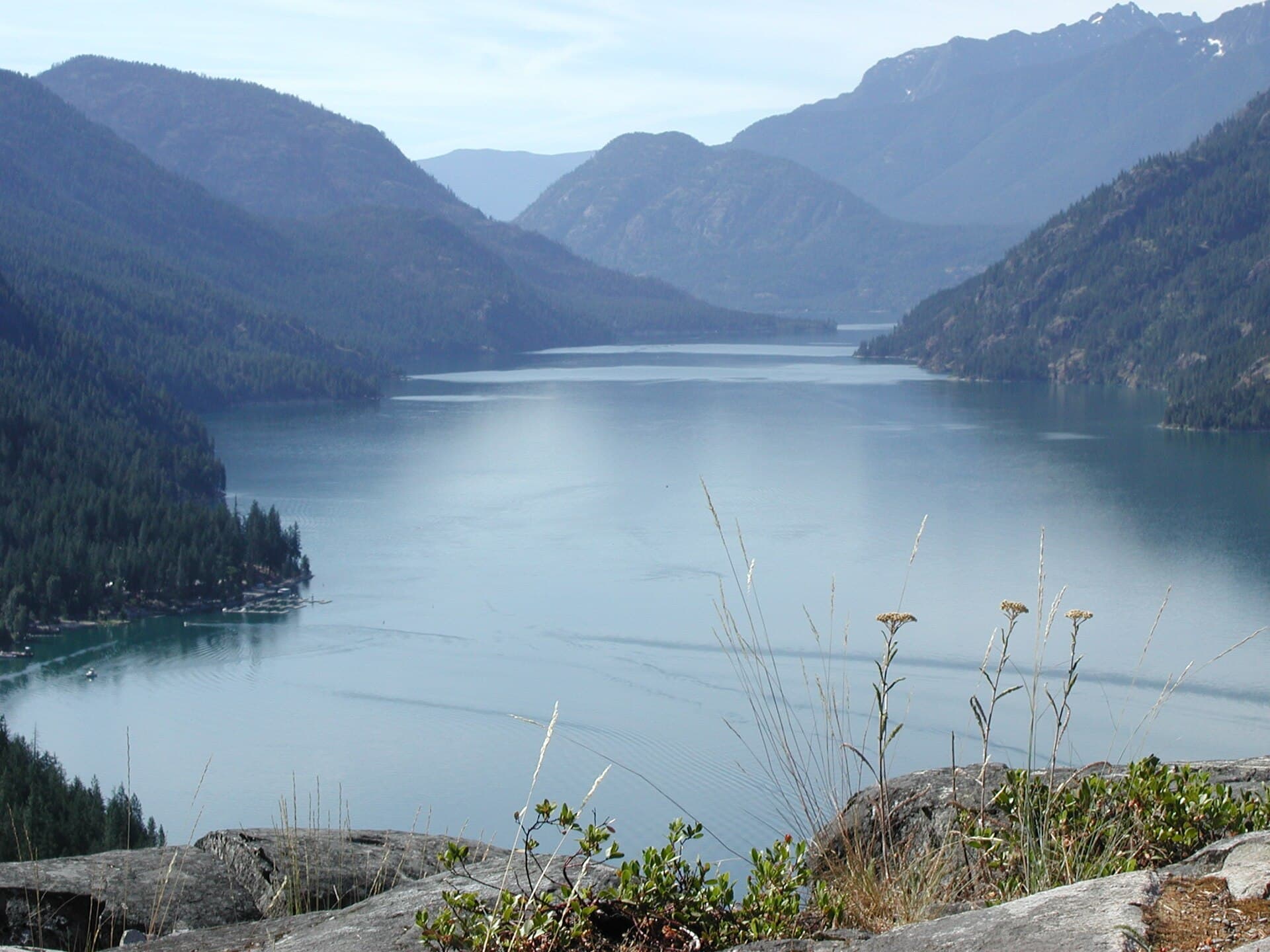 David Ansley / CC BY 2.5, via Wikimedia Commons
Visite audio autoguidée de Chelan — parcours GPS à pied, lecture hors ligne, narration en 32 langues.
“Là où les profondeurs glaciaires rencontrent les vignobles ensoleillés et où les légendes anciennes perdurent.”
Pas les cartes postales. Les histoires que même les habitants ignorent — soufflées à l'oreille, là où elles se sont passées.
Sous la surface du lac Chelan, quelque chose d'ancien et de mystérieux est censé s'agiter.
La rivière Chelan, autrefois un cours d'eau robuste, a connu une transformation surprenante pendant des décennies.
L'un des points saillants du lac Chelan fut autrefois un centre de loisirs et d'entrepreneuriat précoce, grâce à un Amérindien pionnier.
Découvrez tous les secrets de Chelan
Chaque adresse, chaque révélation en entier — dans ton oreille, là où elle s'est passée.
Tu choisis tes lieux. Tu marches. La voix te révèle ce que les autres ignorent.

Votre visite audioguidée de Chelan vous attend — choisissez vos lieux, votre langue, et lancez-vous dès votre arrivée.
AcheterChelan, Washington, est une destination captivante où la puissance brute de la nature rencontre les plaisirs raffinés de la viticulture. En son cœur se trouve le lac Chelan, un fjord glaciaire de plus de 80 kilomètres de long et de près de 450 mètres de profondeur, ce qui en fait le troisième lac le plus profond des États-Unis et le plus profond de Washington. Ce remarquable plan d'eau, creusé par la colossale calotte glaciaire continentale du Canada il y a plus de 10 000 ans, est entouré par les sommets spectaculaires des montagnes des Cascades, créant un paysage de contrastes profonds.
La ville de Chelan elle-même, à l'extrémité sud-est du lac, est un centre dynamique pour les loisirs, l'agriculture et une industrie viticole en pleine croissance. Ce qui a commencé comme une nature sauvage isolée, soutenue par l'exploitation forestière, minière et fruitière, est devenu un lieu de vacances de premier plan, attirant plus de deux millions de visiteurs par an. Ici, des eaux bleues cristallines rencontrent un climat ensoleillé et semi-désertique, favorisant un environnement où les aventures en plein air et les activités agricoles prospèrent.
La région du lac Chelan est habitée par le peuple Chelan, une tribu amérindienne de langue salish, depuis au moins 9 500 ans. Leur nom, « Tsill-ane », signifiant « eau profonde », décrit parfaitement le lac qui était au centre de leurs vies. Les Chelan vivaient toute l'année dans des villages, dont un sur le site actuel de la ville de Chelan, et utilisaient les montagnes environnantes pour la chasse, la pêche et la cueillette. Ils étaient ingénieux et mobiles, voyageant même à travers les montagnes des Cascades pour commercer avec d'autres tribus et s'aventurant dans les plaines du Montana pour chasser le bison.
Le contact européen a apporté des changements significatifs. L'explorateur David Thompson est arrivé dans le bassin du Columbia en 1811, et à cette époque, des maladies infectieuses comme la variole et la rougeole avaient déjà décimé environ 90 % de la population indigène. Alors que les colons blancs commençaient à arriver, la prise de décision tribale a changé, et le chef Moses, bien que n'étant pas lui-même un Chelan, a représenté la tribu dans les efforts visant à obtenir une grande réserve. En 1880, le camp Chelan a été établi par l'armée américaine pour contrôler et protéger la population indigène de la réserve Moses Columbia, bien qu'il ait été abandonné en moins d'un an.
La zone a été officiellement ouverte à la colonisation en 1886. Des pionniers comme William Sanders et Henry Domke sont arrivés, Domke établissant une première scierie. Ignatius A. Navarre et Lewis H. Spader sont également arrivés en 1886, Elizabeth Cooper Navarre devenant la première femme blanche à s'installer de façon permanente au bord du lac, et son fils Joseph le premier enfant blanc né là-bas. La ville de Chelan a été établie en 1889, initialement motivée par la quête d'or, d'argent et de cuivre. Le premier centre industriel, Lake Park, a vu l'essor de scieries, d'un bureau de poste, de magasins généraux et d'autres entreprises.
Le contrôle du niveau de l'eau du lac s'est avéré difficile. Les premières tentatives de construction de barrages en 1892 et 1893 pour fournir de l'eau aux biens immobiliers et améliorer la navigation ont toutes deux été détruites par des inondations. Un barrage hydroélectrique réussi a finalement été construit en 1899, apportant l'électricité à Chelan en 1903. L'actuel projet hydroélectrique du lac Chelan, achevé en 1927, a élevé le niveau du lac de 6,4 mètres. Ce projet, avec son barrage de 12 mètres de haut et de 150 mètres de large, détourne l'eau à travers un tunnel de 3,5 kilomètres vers une centrale électrique, générant une puissance hydroélectrique significative. Cependant, cela a également signifié que la rivière Chelan a été largement asséchée pendant des décennies, une conséquence écologique abordée avec des licences hydroélectriques mises à jour.
Dans les années 1920 et 1930, la beauté naturelle de Chelan, son climat doux et ses opportunités de loisirs ont commencé à attirer des touristes de tout le pays. La région a également acquis une réputation pour ses fruits de haute qualité, en particulier les pommes, les poires et les cerises, qui restent importants aujourd'hui. Le développement du lac Chelan en tant que zone de loisirs a consolidé son statut de destination populaire, un héritage qui continue d'attirer les visiteurs en quête de beauté naturelle et d'un large éventail d'activités.
Commencez votre exploration par le Théâtre Ruby historique, construit en 1913, offrant un aperçu du divertissement du début du XXe siècle. Flânez dans le centre-ville historique de Chelan, où vous trouverez des boutiques et diverses options de restauration, reflétant l'ambiance d'une rue principale américaine classique. Ne manquez pas l'église St. Andrew's, également connue sous le nom d'« église en rondins », la plus ancienne structure de Chelan, construite en 1898 à partir de rondins acheminés par radeau sur le lac.
Pour les amateurs de plein air, le parc Don Morse offre de nombreuses commodités, notamment un parcours de putting, des bateaux tamponneurs, des zones de baignade et des aires de pique-nique. À proximité, Lakeside Surf offre une occasion unique de surfer sur une vague stationnaire. Un court trajet en voiture vous mènera au parc d'État du lac Chelan, offrant divers campings et des vues imprenables sur le lac. Pour une perspective différente, envisagez une excursion en bateau pittoresque sur le lac jusqu'à Stehekin, une communauté unique accessible uniquement par l'eau, la randonnée ou l'hydravion.
Au-delà de la ville immédiate, la vallée viticole du lac Chelan propose plus de 40 établissements vinicoles, invitant les visiteurs à déguster les millésimes locaux et à en apprendre davantage sur la viticulture distinctive de la région. Les merveilles géologiques de la région, y compris le till glaciaire unique et les sols volcaniques, contribuent au caractère de ces vins.
Chelan offre un attrait toute l'année, mais la meilleure période pour visiter dépend largement des activités souhaitées. L'été (juin à août) est la haute saison, avec un temps chaud et ensoleillé parfait pour les activités lacustres, les sports nautiques et profiter du centre-ville animé. Le printemps (avril à mai) apporte la floraison des vergers et des vignobles, idéal pour la dégustation de vins et la randonnée par des températures plus douces. L'automne (septembre à octobre) offre un spectacle remarquable de feuillage d'automne, de festivals de récolte et d'excellentes conditions continues pour les visites de vignobles. L'hiver (novembre à mars) offre des opportunités de motoneige et de ski de fond dans les montagnes environnantes, ainsi qu'une atmosphère plus calme et sereine en ville.
Chelan est à environ trois heures de route de Seattle et de Spokane. La ville a une population permanente d'environ 4 000 habitants, qui peut atteindre 25 000 pendant les mois d'été en raison de sa popularité en tant que destination touristique. La ville de Chelan fonctionne sous une forme de gouvernement de « maire fort », avec un maire élu en tant que chef de l'administration et un conseil municipal en tant qu'organe législatif.
Les options d'hébergement vont des complexes hôteliers comme l'historique Campbells Resort, qui est une entreprise familiale depuis 1901, à divers hôtels, locations de vacances et campings. Pour ceux qui arrivent par avion, l'aéroport du lac Chelan dessert la région. Bien que le centre-ville de Chelan soit accessible à pied, une voiture est recommandée pour explorer la plus grande vallée du lac Chelan, y compris les vignobles et les attractions plus éloignées. Un parking public est disponible dans toute la ville. Sachez que les deux tiers nord des rives du lac Chelan sont largement inhabités en raison des pentes abruptes et de la protection en tant que forêt nationale et zones de loisirs.
Chelan en coréen, en chinois ou en hébreu — et dans 29 autres langues, chaque étape narrée par une voix native. La plus large gamme de langues de tous les audioguides autoguidés.
Disponible en :