Walla Walla Valley Wineries
Walla Walla's reputation for exceptional wine is widely known, but the lengths some vintners go to protect their precious vines remain a captivating secret.
Full story unlocks in the tour
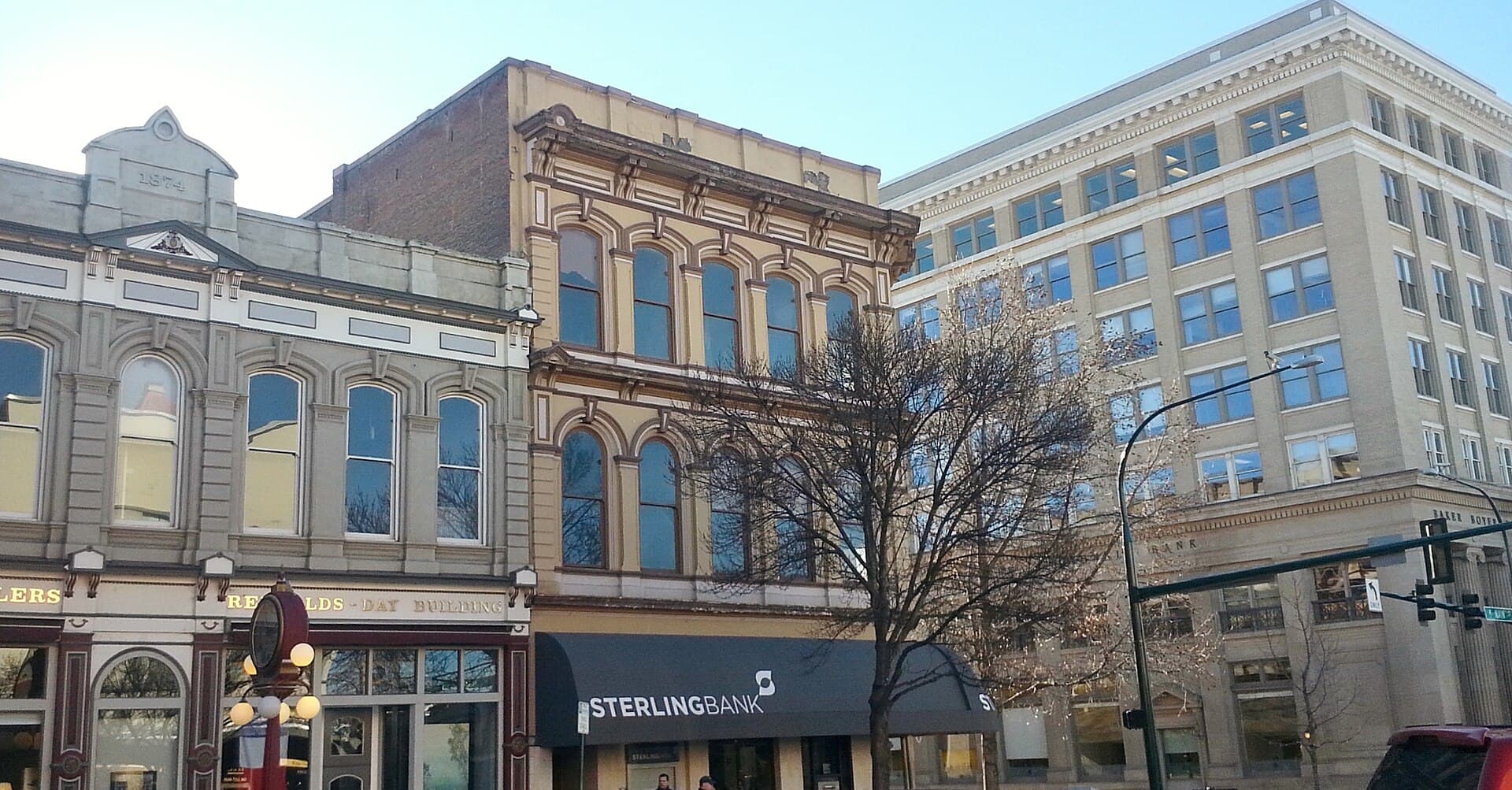 Squarestate7 / CC BY-SA 3.0, via Wikimedia Commons
Self-guided audio walking tour of Walla Walla — GPS route, offline playback, story-driven narration in 32 languages.
“Where the land remembers its waters, and the vines remember the sun.”
Not the postcards. The stories even locals don't know — whispered in your ear, right where they happened.
Walla Walla's reputation for exceptional wine is widely known, but the lengths some vintners go to protect their precious vines remain a captivating secret.
This historical museum, a keeper of the past, also holds an unexpected connection to the evolution of transit.
The city's distinctive name, 'Walla Walla,' resonates with more than just a pleasing cadence.
Discover every secret of Walla Walla
Every address, every reveal in full — in your ear, right where it happened.
You pick your stops. You walk. The voice reveals what the others miss.


Your self-guided audio tour of Walla Walla is ready — pick your landmarks, choose your language, and start the moment you arrive.
BuyLume has a built-in augmented-reality guide. Hold your phone up and its camera shows the street ahead of you, with a glowing arrow laid over the real view that always points to your next stop — no map to puzzle over, no wrong turns. Like everything in Lume, it works fully offline.
Walla Walla, a name that echoes with the sound of moving water, is a city in southeastern Washington celebrated for its flourishing wine industry, deep historical roots, and generous agricultural yield. Situated in the Walla Walla Valley, framed by the gentle undulations of the Palouse hills to the north and the formidable Blue Mountains to the east, the city presents a singular fusion of natural grandeur and cultural encounters. Once a vital provisioning point during the gold rush era, Walla Walla has blossomed into a primary destination for those who appreciate fine wine, recognized for its exceptional Cabernet Sauvignon, Syrah, and Merlot.
Beyond its acclaimed vineyards, Walla Walla maintains a delightful downtown area, filled with independent boutiques, art galleries, and farm-to-table dining establishments. The city's semi-arid, continental climate—characterized by arid, warm summers and cool, damp winters—creates optimal conditions for cultivating grapes, and also sustains a varied agricultural landscape, including the famed Walla Walla sweet onions. Whether you are exploring significant historical sites, engaging in outdoor pursuits, or savoring the region's culinary creations, Walla Walla offers a memorable escape for those seeking both repose and discovery.
The story of Walla Walla begins long before European settlement, with the region serving as the ancestral home of the Cayuse, Umatilla, and Walla Walla (Walúulapam) tribes for thousands of years. These Indigenous peoples thrived on the fertile lands, relying on fishing, hunting, and farming. The Lewis and Clark Expedition encountered the Walawalałáma (Walla Walla people) near the mouth of the Walla Walla River in 1806, noting their "honest and friendly" demeanor.
In 1818, the North West Company established Fort Nez Percés, a fur trading outpost at the confluence of the Walla Walla and Columbia Rivers, which was later renamed Fort Walla Walla by the Hudson's Bay Company in 1821. This fort became a significant waypoint for migrants journeying west to Oregon Country. The Whitman Mission was established in 1836, serving as a center for education and religious instruction for both Native Americans and settlers, though escalating tensions ultimately led to the tragic Whitman Massacre in 1847.
Walla Walla County was officially formed in April 1854 by the Washington Territorial Assembly. The modern settlement of Walla Walla, initially known as Steptoeville, was founded in 1856 around a relocated Fort Walla Walla and incorporated as a city in January 1862. The discovery of gold in Idaho in 1861 rapidly accelerated Walla Walla's expansion, transforming it into a crucial supply center for miners and drawing a diverse population, including many Chinese immigrants seeking opportunity. By 1880, Walla Walla had grown to become the largest city in Washington Territory, with a population of 3,500.
By the 1880s, agriculture emerged as the dominant industry in Walla Walla, with wheat, onions, apples, and peas forming the foundation of its economy. The innovative technique of dryland farming, developed in the region, further cemented its reputation as a "breadbasket," with exports reaching as far as England. A pivotal moment in the region's agricultural narrative arrived in the late 1880s when Peter Pieri, a soldier, introduced a sweet onion seed from Corsica, Italy, leading to the cultivation of the celebrated Walla Walla sweet onion.
The mid-20th century witnessed a new agricultural transformation with the rise of the wine industry. Forward-thinking winemakers recognized the Walla Walla Valley's unique terroir—a combination of fertile volcanic soil, long sunny days, and cool nights—as ideal for viticulture. The first commercial winery, Leonetti Cellar, was founded in 1977, and since then, the valley has flourished into a world-class wine region with over 120 wineries. This thriving wine industry has not only reshaped the local economy but also established Walla Walla as a premier wine tourism destination, attracting visitors from across the globe.
Begin your exploration in downtown Walla Walla, where you can wander through inviting streets, browse local shops, and discover art galleries. For a deeper understanding of the region's past, visit the Fort Walla Walla Museum, which features a 17-building pioneer settlement, carefully tended gardens, and exhibits displaying thousands of artifacts, including the oldest locomotive to operate in Washington State. Another significant historical location is the Whitman Mission National Historic Site, where you can learn about the experiences of early settlers and Native Americans, explore a visitor center, and walk a portion of the Oregon Trail.
Of course, a journey to Walla Walla is incomplete without experiencing its acclaimed wine country. With over 120 wineries, you can embark on tasting tours, often encountering winemakers eager to share their craft. Many wineries provide unique blending experiences, allowing you to craft your own custom bottle. For a change of pace, explore the area's natural splendor. Pioneer Park offers an aviary with hundreds of birds, including white peacocks, and lovely gardens. You can also enjoy outdoor pursuits like biking on local paths, playing golf at scenic courses, or visiting the Blue Mountain Lavender Farm for a distinctive sensory experience.
The most pleasant times to visit Walla Walla for warm-weather activities are from early July to early September, when temperatures are warm and dry. Summers are brief, warm, and predominantly clear, with July typically being the warmest month, averaging a high of 91°F. For a more moderate experience, spring (May-June) and autumn (September-October) are also highly recommended. Spring offers blooming wildflowers and fewer crowds, while autumn brings the excitement of harvest season and vivid foliage. The Walla Walla Valley Wine Month in April and the Spring Release Weekend in early May are particularly lively periods for those who appreciate wine.
Walla Walla Regional Airport (ALW) is located just three miles northeast of downtown and provides daily scheduled flights to and from Seattle-Tacoma International Airport via Alaska Airlines. The airport is compact, offering swift security and complimentary parking, along with rental car services. For those who prefer to drive, Walla Walla is approximately a 45-minute scenic journey from the Tri-Cities Airport (PSC) in Pasco, which has direct service from several major markets.
Once in Walla Walla, navigating the downtown area is easily accomplished on foot. For exploring the broader wine country, renting a car is advisable, as public transport options are limited beyond the city center. Taxis and ride-sharing services are available, though they may be less frequent in more distant winery areas. Consider engaging a local wine tour company for a secure and thorough tasting experience. Layered clothing is suggested due to temperature fluctuations, especially between indoor tastings and outdoor vineyard walks.
Walla Walla in Korean, in Chinese or in Hebrew — and 29 more languages, every stop narrated by a native voice. The widest language range of any self-guided audio tour.
Available in: