Chéticamp is known for its hooked rugs, an art form that transformed from necessity to a celebrated craft. The story behind this artistic evolution involves an unexpected connection to a prominent historical figure.
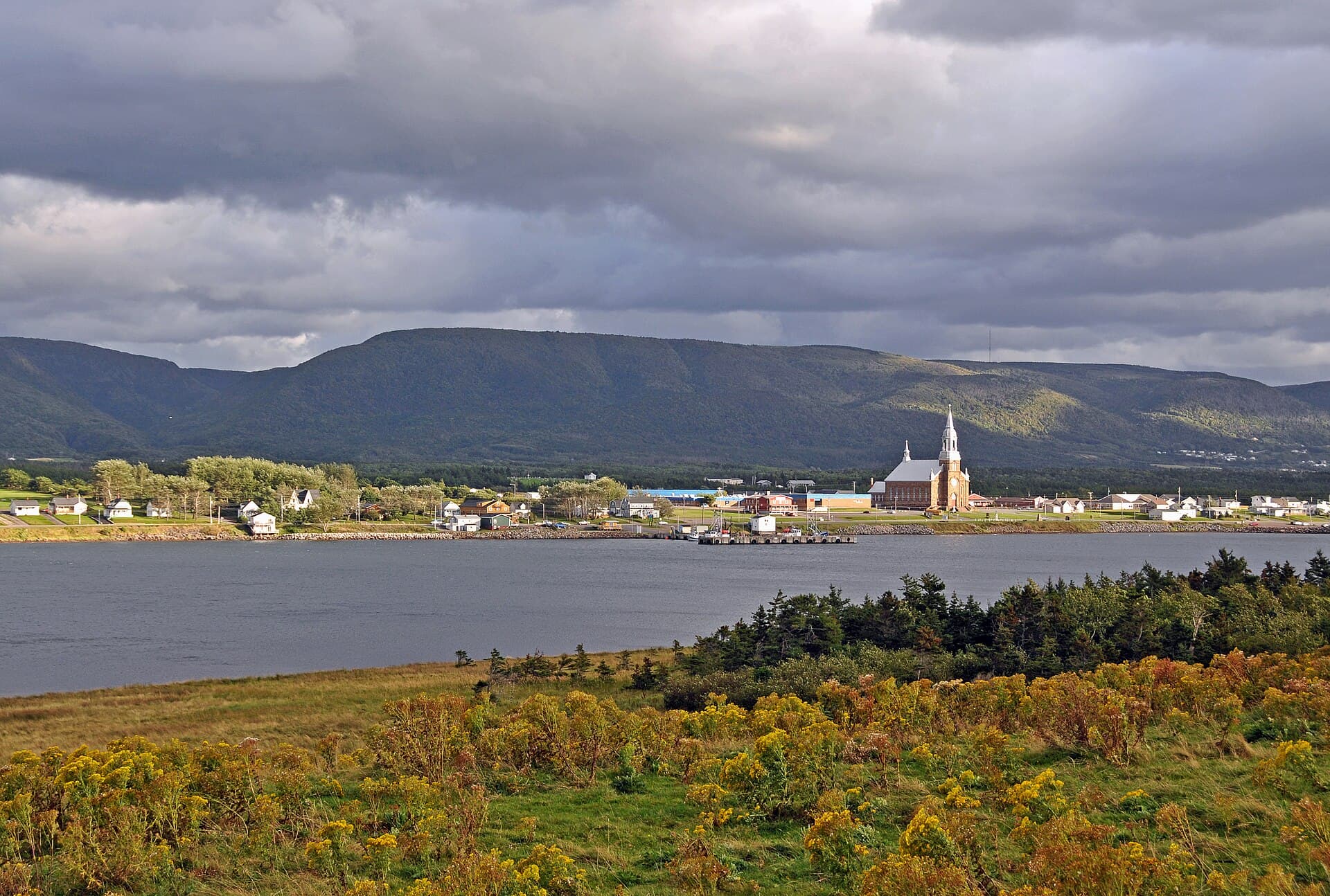
Dennis G. Jarvis / CC BY-SA 2.0, via Wikimedia CommonsChéticamp
Self-guided audio walking tour of Chéticamp — GPS route, offline playback, story-driven narration in 32 languages.
“Where Acadian spirit meets the wild beauty of the Cabot Trail.”
Chéticamp, as no one tells it.
Not the postcards. The stories even locals don't know — whispered in your ear, right where they happened.
The name 'Chéticamp' itself carries a singular meaning, rooted in the language of the Mi'kmaq First Nations, long before Acadian settlers arrived. It speaks to a particular characteristic of the local geography.
Beyond traditional holidays, Chéticamp celebrates a distinctive carnival tradition with roots stretching back to the Middle Ages. It's a time when identities are playfully concealed and community bonds are strengthened.
Discover every secret of Chéticamp
Every address, every reveal in full — in your ear, right where it happened.
You pick your stops. You walk. The voice reveals what the others miss.
How long do you have in Chéticamp?
Your self-guided audio tour of Chéticamp is ready — pick your landmarks, choose your language, and start the moment you arrive.
BuyThe story of Chéticamp
Chéticamp, an Acadian fishing village on Cape Breton Island, stretches along the world-renowned Cabot Trail, serving as the western entrance to Cape Breton Highlands National Park. This community pulses with French Acadian heritage, evident in its language, music, and culinary traditions. The village offers a distinct blend of rugged coastal scenery and a deep cultural landscape, drawing visitors to its shores for both outdoor adventures and immersive cultural experiences.
Chéticamp’s identity is profoundly intertwined with its Acadian roots, a culture forged through resilience and a strong sense of community. Visitors often hear the lively sounds of Acadian French spoken, and can sample traditional Acadian dishes like fricot and meat pie. The village is also recognized for its traditional rug hooking, a craft that has evolved into a significant art form.
The Acadian Journey to Chéticamp
Chéticamp’s history as a permanent settlement formally began in 1785 with a land grant to 14 original settlers, though some French families, like the Chiassons and AuCoins, are believed to have predated this by over a century. Before permanent settlement, the area was a seasonal fishing station, utilized by merchants from Jersey Island, such as Charles Robin, for drying cod. The Mi'kmaq First Nations also frequented the area for hunting, referring to the harbor as 'Awjátúj,' meaning 'rarely full.'
The years following the Great Expulsion (1755-1763), a period when the British forcibly removed Acadians from mainland Nova Scotia, saw many Acadians seeking new homes. Drawn by the mountains and the ocean, Acadians from the south coast of Cape Breton and Prince Edward Island resettled in areas like Chéticamp. These early Acadian families, including Pierre Bois and Joseph Richard who arrived in 1782, laid the foundation for the enduring Francophone community that exists today.
Fishing has been the lifeblood of Chéticamp since its founding, with the Bretons and Basques of France also utilizing the coast for cod drying. In a significant step for the community, Chéticamp established the first fish-selling co-operative in America in 1915, underscoring its innovative spirit and commitment to its maritime heritage. While fishing remains important, tourism has grown to become the largest industry, driven by the village's distinct French Acadian heritage and its location at the entrance to Cape Breton Highlands National Park.
Cultural Preservation and Evolution
Chéticamp is considered one of the Acadian capitals of the world, and its strong Acadian identity is a testament to the community's dedication to preserving its culture. This commitment is evident in the survival of the French language, traditional music, and unique customs. The Acadian flag, with its French tricolour base and a gold Stella Maris star representing the Virgin Mary, is a powerful symbol of Acadian identity, faith, and resilience, adopted in 1884.
Beyond language and music, Chéticamp is also known for its distinctive hooked rugs. What began as a household craft using worn-out clothing in the 19th century evolved into a significant cottage industry in the 1920s. This transformation was largely influenced by American artist Lilian Burke, who, with the encouragement of Alexander Graham Bell's daughters, introduced finer wool and refined designs, marketing the rugs in New York City and beyond. Today, these rugs are celebrated as a unique Acadian folk art, providing both creative expression and economic support.
Begin your exploration at Les Trois Pignons: Museum of the Hooked Rug and Home Life, an Acadian cultural and genealogical center. Here, you can delve into the history of rug hooking, admire masterpieces by fiber artist Elizabeth LeFort, and even witness demonstrations. Just outside Chéticamp, the Chéticamp Visitor Centre offers an interactive introduction to Cape Breton Highlands National Park, where you can purchase park passes and learn about the local flora and fauna.
For a taste of local traditions, visit the Centre de la Mi-Carême in Grand Étang. This center features exhibits and interactive experiences depicting the evolution of 'La Mi-Carême,' one of the oldest Acadian traditions, and offers mask-making and rug-hooking workshops. Take a stroll along Boardwalk Mathieu in the village center for views of the harbor and Chéticamp Island, especially at sunset. Chéticamp Island itself offers walking opportunities with views of the village, the highlands, and Saint Peter's Church.
Outdoor enthusiasts will find Chéticamp a gateway to numerous adventures. The Cape Breton Highlands National Park offers 26 hiking trails, including the famous Skyline Trail with its expansive ocean and highland views. Whale watching tours depart from Chéticamp, providing opportunities to spot various whale species from late spring to autumn, with August being a peak month. Golfers can enjoy a round at Le Portage Golf Club, known for its scenic course against the Gulf of St. Lawrence.
The best time to visit Chéticamp for warm-weather activities is from early July to early September, when average daily high temperatures are above 64°F (18°C). July is the warmest month, with an average high of 72°F (22°C) and a low of 56°F (13°C). For brilliant fall foliage, plan your visit from late September to mid-October. During this time, the landscape transforms with deep reds, bright yellows, and warm oranges, creating a memorable backdrop for scenic drives and hikes. While Chéticamp experiences significant precipitation throughout the year, November typically sees the highest rainfall, and May the lowest.
Chéticamp is located on the Cabot Trail on the west coast of Cape Breton Island, Nova Scotia. The village is approximately two hours by car from Sydney, Nova Scotia. Most residents are bilingual, speaking both French and English, so visitors can comfortably communicate in either language. Accommodations range from hotels and chalets to campgrounds, offering various options for your stay. Local restaurants serve traditional Acadian dishes and fresh seafood.
For those driving the Cabot Trail, Chéticamp serves as a convenient stop or base for exploring the western side of Cape Breton Highlands National Park. It's advisable to carry a portable charger for your devices, especially when exploring the scenic drives and trails, to capture the beautiful landscapes. The Chéticamp Visitor Centre can provide comprehensive information on park activities, local amenities, and cultural events.
- What language is spoken in Chéticamp?
- A majority of the population in Chéticamp are Acadians, and French is widely spoken. Most residents are bilingual, so you can expect to be greeted in French but can respond in English.
- What is the significance of the Acadian flag?
- The Acadian flag, adopted on August 15, 1884, is based on the French tricolour (blue, white, and red) but includes a gold Stella Maris (Star of the Sea) in the blue band. This star symbolizes the Virgin Mary, patroness of the Acadian people, representing faith, guidance through hardship, and Acadian identity.
- What are Chéticamp's traditional crafts?
- Chéticamp is particularly known for its traditional hooked rugs. This craft, which began with women using recycled fabrics for household items, evolved into a significant art form and cottage industry.
- Can I go whale watching from Chéticamp?
- Yes, Chéticamp is a popular spot for whale watching. The primary season for spotting whales in the waters around Nova Scotia is from late spring to autumn, with August being the peak month.
- What is the Mi-Carême celebration?
- Mi-Carême is an ancient Acadian carnival tradition celebrated in the area mid-way between Ash Wednesday and Easter. It's a festive period where people take a break from the penance of Lent to enjoy food, music, and drink, often involving disguised participants.
- What is the best way to experience the scenery around Chéticamp?
- Driving the Cabot Trail, which Chéticamp is on, is a popular way to experience the scenery. Additionally, hiking trails within Cape Breton Highlands National Park, such as the Skyline Trail, offer expansive views of the ocean and highlands.