Fortaleza de Louisbourg
Los franceses, a pesar de sus grandes planes para Louisbourg, cometieron un peculiar descuido en sus defensas.
La historia completa se desbloquea en el tour
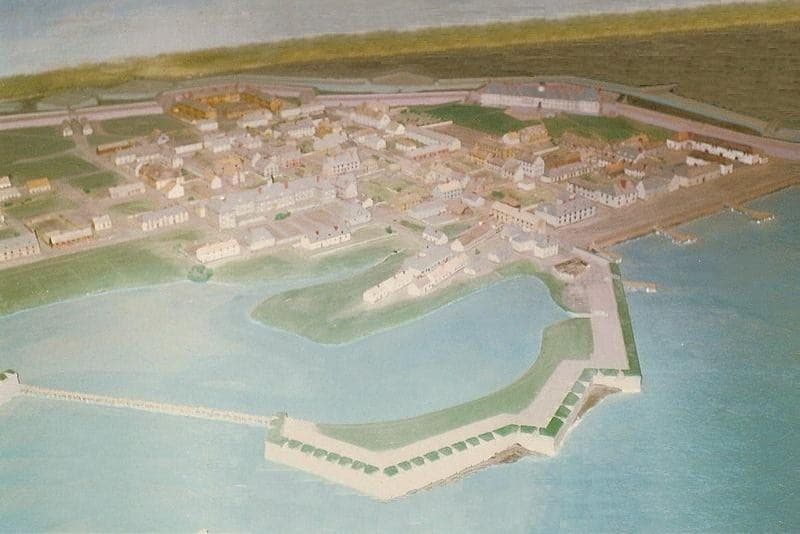 Charny / CC BY-SA 3.0, via Wikimedia Commons
Tour de audio autoguiado de Louisbourg — ruta GPS a pie, reproducción offline, narración en 32 idiomas.
“Retrocede a 1744: una ciudad fortaleza francesa renace en la costa de la Isla de Cape Breton.”
No las postales. Las historias que ni los locales conocen — al oído, justo donde ocurrieron.
Los franceses, a pesar de sus grandes planes para Louisbourg, cometieron un peculiar descuido en sus defensas.
La vida en una bulliciosa ciudad portuaria del siglo XVIII no siempre era tan pintoresca como parece.
Incluso dentro de los muros fortificados de Louisbourg, una comunidad inesperada prosperó una vez.
Descubre todos los secretos de Louisbourg
Cada dirección, cada revelación al completo — a tu oído, justo donde ocurrió.
Eliges tus paradas. Caminas. La voz te revela lo que los demás ignoran.

Tu tour de audioguía por Louisbourg te espera — elige tus lugares, tu idioma y empieza al llegar.
ComprarLume incluye una guía de realidad aumentada. Levanta el móvil y su cámara muestra la calle que tienes delante, con una flecha luminosa sobre la imagen real que siempre apunta a tu próxima parada — sin mapas que descifrar, sin giros equivocados. Como todo en Lume, funciona completamente sin conexión.
Louisbourg, una comunidad no incorporada en la Isla de Cape Breton, Nueva Escocia, ofrece una ventana única a la vida colonial del siglo XVIII. Dominada por el sustancial Sitio Histórico Nacional Fortaleza de Louisbourg, la ciudad ofrece una convincente mezcla de historia, paisajes costeros y una animada cultura local. Originalmente fundada por los franceses en 1713 y nombrada en honor a Luis XIV, rápidamente se convirtió en un puerto pesquero vital, un centro comercial y una fortaleza militar en América del Norte.
Hoy, la Fortaleza de Louisbourg se erige como la ciudad fortificada francesa del siglo XVIII reconstruida más grande de América del Norte, meticulosamente devuelta a la vida por Parks Canada. Los visitantes pueden sumergirse en las rutinas diarias de 1744, interactuando con intérpretes disfrazados, presenciando simulacros militares y explorando edificios reconstruidos. Más allá de la fortaleza, la moderna ciudad de Louisbourg conserva su atractivo como puerto pesquero, ofreciendo pintorescas rutas de senderismo, playas y un ambiente acogedor.
La historia de Louisbourg comienza en 1713, cuando Francia, habiendo cedido Terranova y partes de Acadia a los británicos, buscó una nueva base para su lucrativa industria pesquera del Atlántico Norte. Eligieron la ubicación estratégica en lo que hoy es la Isla de Cape Breton (entonces Isla Royale) y comenzaron a construir una ciudad fortificada, nombrándola en honor al Rey Luis XIV. Este ambicioso proyecto, que consumió una parte significativa del presupuesto colonial de Francia, tenía como objetivo establecer Louisbourg como una importante declaración del poder comercial y militar francés.
Para la década de 1740, Louisbourg se había convertido en un centro bullicioso y cosmopolita con una población de alrededor de 2.000 habitantes, que se duplicó en la década de 1750. Era un centro de comercio con Francia, las Indias Occidentales, Quebec y Nueva Inglaterra, y su pesquería de bacalao fue un pilar de su prosperidad. Sin embargo, su importancia estratégica también la convirtió en un punto focal en la lucha anglo-francesa por el imperio en América del Norte.
La fortaleza sufrió dos grandes asedios por parte de las fuerzas británicas. El primero ocurrió en 1745, cuando los habitantes de Nueva Inglaterra, creyendo que la fortaleza estaba en mal estado, la capturaron con éxito después de un asalto de 46 días. Para gran consternación de los habitantes de Nueva Inglaterra, Louisbourg fue devuelta a Francia en 1748 por el Tratado de Aquisgrán. La ciudad se recuperó, dedicándose a un animado comercio y floreciendo hasta el segundo asedio en 1758 durante la Guerra de los Siete Años. Esta vez, un gran ejército y flota británicos abrumaron las defensas, lo que llevó a la demolición sistemática de las fortificaciones entre 1760 y 1768.
Louisbourg fue abandonada a mediados de la década de 1780, y no fue hasta 1928 que fue designada Sitio Histórico Nacional. En una notable empresa, Parks Canada comenzó un proyecto de reconstrucción masiva en 1961, basado en una extensa investigación arqueológica y registros históricos. Esta iniciativa también proporcionó empleo a mineros de carbón desempleados en la región. Hoy, aproximadamente una cuarta parte del sitio original de la ciudad amurallada ha sido reconstruida, lo que permite a los visitantes experimentar de primera mano la vida colonial francesa del siglo XVIII.
El Sitio Histórico Nacional Fortaleza de Louisbourg es la pieza central de cualquier visita, ofreciendo un viaje inmersivo a 1744. Aquí, intérpretes disfrazados dan vida al pasado, demostrando actividades diarias, simulacros militares e incluso disparos de mosquetes. Puedes explorar casas reconstruidas, la Panadería del Rey y la Capilla Militar. Hay visitas guiadas disponibles, e incluso puedes participar en actividades como el disparo de cañones.
Más allá de los muros de la fortaleza, Louisbourg ofrece pintorescas experiencias al aire libre. El Sendero del Faro de Louisbourg conduce al primer sitio de faro de Canadá, con la actual estructura octogonal de hormigón que data de 1923. El sendero ofrece vistas costeras de acantilados y el Atlántico. Para aquellos interesados en la historia local, el Museo del Ferrocarril de Sydney y Louisbourg profundiza en el pasado minero, ferroviario y marítimo de la ciudad, incluyendo su conexión con el Titanic. El Louisbourg Playhouse, un teatro de estilo del siglo XVII, alberga producciones teatrales independientes. Además, la Playa de Kennington Cove ofrece orillas arenosas y paseos costeros.
La mejor época para visitar Louisbourg es generalmente entre mayo y octubre, cuando el clima es agradable y las actividades están en pleno apogeo. Julio y agosto ofrecen las temperaturas más cálidas y una gama completa de actividades, aunque puede haber más gente. Para una experiencia más tranquila con un clima agradable y menos multitudes, considere las temporadas intermedias de finales de primavera (junio) o principios de otoño (septiembre). Si bien el invierno ofrece un paisaje mágico cubierto de nieve, la accesibilidad y los servicios en la Fortaleza pueden ser limitados.
El Sitio Histórico Nacional Fortaleza de Louisbourg se encuentra en la costa este de la Isla de Cape Breton, aproximadamente a 40 minutos de Sydney, Nueva Escocia, y a 5,5 horas en coche de Halifax. El centro de visitantes se encuentra en 7336 Main Street. Planifique al menos un día completo para explorar la ciudad reconstruida. Las tarifas de entrada varían según la temporada, siendo la temporada alta (del 1 de julio al 12 de septiembre) la más cara. Un Pase Discovery de Parks Canada incluye la entrada. No se permiten mascotas dentro de la ciudad fortificada, pero sí en el Sendero del Faro de Louisbourg y otras áreas recreativas, siempre que estén atadas. Vístase por capas y use zapatos cómodos, ya que el clima puede cambiar rápidamente y gran parte de la visita implica caminar al aire libre. Hay opciones para comer dentro de la fortaleza, que ofrecen comidas al estilo del siglo XVIII y aperitivos modernos.
Louisbourg en coreano, en chino o en hebreo — y 29 idiomas más, cada parada narrada por una voz nativa. La mayor variedad de idiomas de cualquier audioguía autoguiada.
Disponible en: