Sydney Airport
Imagine booking a journey to a sun-drenched, distant land, only to disembark into a Canadian blizzard.
Full story unlocks in the tour
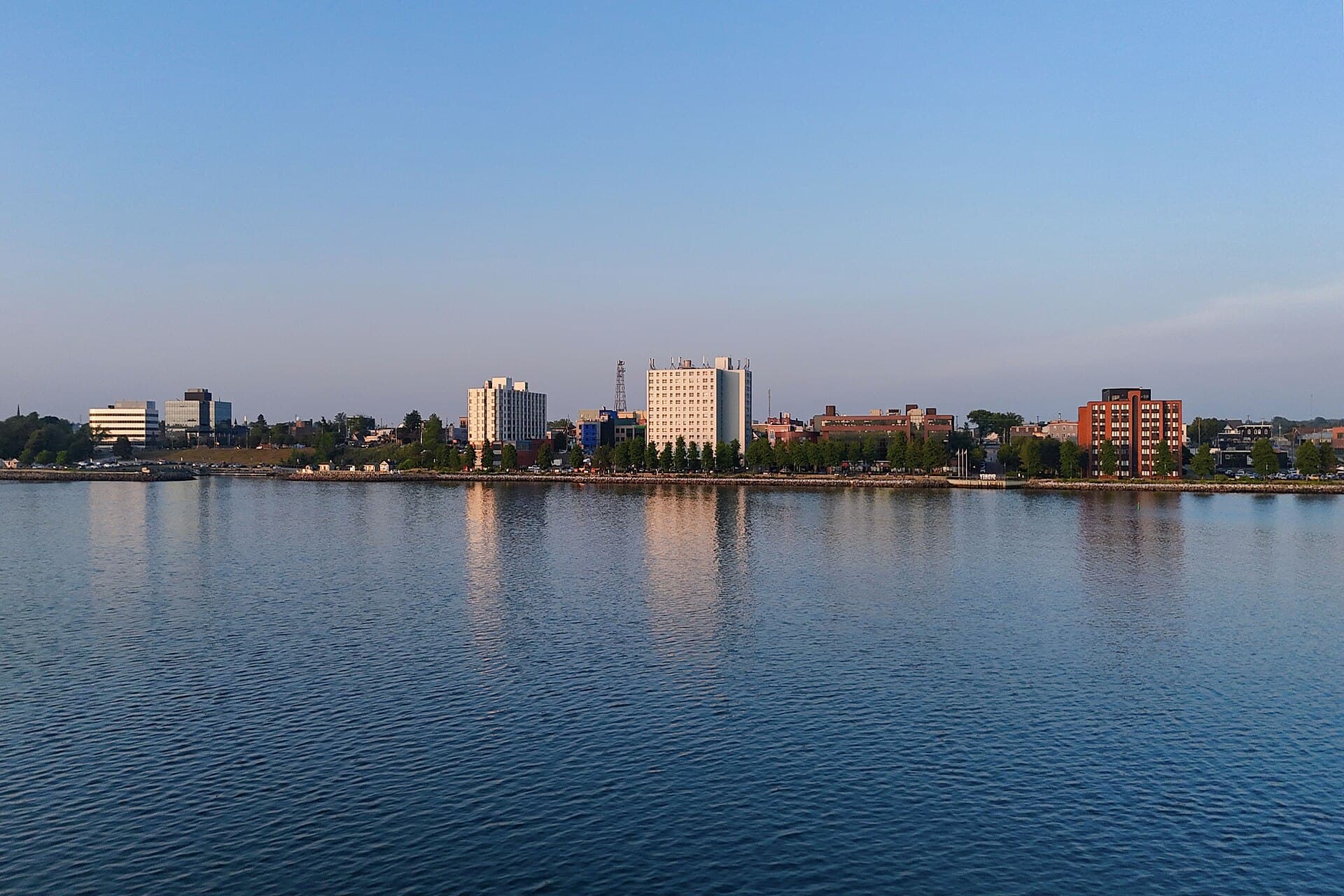 Quintin Soloviev / CC BY 4.0, via Wikimedia Commons
Self-guided audio walking tour of Sydney — GPS route, offline playback, story-driven narration in 32 languages.
“Beyond the Big Fiddle: Unearthing Sydney, Nova Scotia's Unexpected Stories”
Not the postcards. The stories even locals don't know — whispered in your ear, right where they happened.
Imagine booking a journey to a sun-drenched, distant land, only to disembark into a Canadian blizzard.
A local story suggests that a particular action within this venerable church can cause a door to mysteriously swing open.
This 18th-century dwelling, among Sydney's earliest, is said to possess a particularly disquieting past within its lower level.
Discover every secret of Sydney
Every address, every reveal in full — in your ear, right where it happened.
You pick your stops. You walk. The voice reveals what the others miss.


Your self-guided audio tour of Sydney is ready — pick your landmarks, choose your language, and start the moment you arrive.
BuySydney, the largest urban area on Cape Breton Island, offers a compelling blend of maritime heritage, industrial history, and engaging local culture. Positioned on the southeastern arm of Sydney Harbour, the city serves as a gateway to the broader Cape Breton Regional Municipality, an area rich in Mi'kmaw, Acadian, African Nova Scotian, and Gaelic influences. While often recognized for its striking 'Big Fiddle' at the waterfront, Sydney's true character unfolds through its resilient past and the genuine hospitality of its community.
The city's waterfront, a natural gathering place, invites unhurried strolls, offering views of the harbor and a chance to observe ships navigating the waters. Beyond the immediate downtown, Sydney acts as an excellent base for exploring the captivating landscapes and culturally significant sites across Cape Breton Island, including the dramatic expanses of the Cape Breton Highlands and the reconstructed Fortress of Louisbourg.
## From Colonial Capital to Steel City Sydney's origins trace back to 1785, when it was established by the British as a refuge for Loyalists fleeing the American Revolution. Colonel Joseph Frederick Wallet DesBarres founded the settlement and named it in honor of Thomas Townshend, 1st Viscount Sydney, who served as the British cabinet secretary. From its founding until 1820, Sydney held the distinction of being the capital of the British colony of Cape Breton Island, before the island was merged with Nova Scotia.
## The Industrial Boom and its Aftermath The 19th century saw a significant influx of immigrants, particularly from the Scottish Highlands, contributing to the region's distinct Gaelic culture. The early 20th century marked a period of rapid expansion for Sydney, as it became home to one of North America's largest steel mills. This industrial expansion, fueled by the surrounding coal mines, transformed Sydney into a bustling economic center, leading to its incorporation as a city in 1904. The steel plant and its associated coal industry played a crucial role in the region's economy for decades, even serving as a major staging area for convoys during both World Wars.
## A New Chapter However, by the late 1960s, the coal and steel industries faced severe challenges. The closure of the steel plant in 2001, after years of struggle and government intervention, marked the end of an era and a period of economic hardship for the community. Since then, Sydney has embarked on a new chapter, focusing on tourism and other service industries, while preserving its deep cultural and industrial heritage. The city was dissolved as a separate entity in 1995, becoming part of the larger Cape Breton Regional Municipality.
Begin your exploration at the Sydney waterfront, where the impressive World's Largest Fiddle stands as a tribute to Cape Breton's rich Celtic musical traditions. The adjacent Joan Harriss Cruise Pavilion offers shops, restaurants, and interpretive displays on local maritime history. Take a stroll along Charlotte Street, the historic downtown core, to discover local artisans and unique shops.
Delve into Sydney's past at the Cossit House Museum, one of the city's oldest residences, offering a glimpse into 18th-century life. Nearby, the St. Patrick's Church Museum, dating back to 1828, holds architectural and historical significance. For a deeper understanding of the region's diverse cultural fabric, visit Membertou Heritage Park, which celebrates the Mi'kmaw culture, or the Cape Breton Miners' Museum in nearby Glace Bay, offering underground tours of a coal mine.
Art and craft enthusiasts will appreciate the Cape Breton Centre for Craft & Design, showcasing the work of over 90 local artisans. For those interested in the performing arts, the Highland Arts Theatre, housed in a former church, is a notable venue. Nature lovers can venture to nearby Dominion Beach Provincial Park or Mira Gut Beach for sandy shores, or explore the trails of Cape Breton Highlands National Park for expansive vistas.
The ideal time to visit Sydney, Nova Scotia, for warm-weather activities is from early July to early September. Summers are generally warm and sunny, with temperatures ranging from 15°C to 25°C (59°F to 77°F), perfect for outdoor adventures and festivals. September is particularly pleasant, offering mild temperatures, crisp autumn air, and the beginning of fall foliage, making it ideal for exploring without the peak summer crowds. Fall, extending into October, brings spectacular colors as the leaves change, though temperatures cool considerably.
Sydney is accessible by car via the Canso Causeway, which connects Cape Breton Island to the Nova Scotia mainland. The Sydney Airport (YQY) serves the region for air travel. Once in Sydney, many downtown sights are within walking distance. For exploring beyond the immediate city center, or for day trips to attractions like the Fortress of Louisbourg, a car or pre-arranged tour is recommended. Transit Cape Breton operates a bus service within the Cape Breton Regional Municipality, connecting Sydney with surrounding communities like Glace Bay, North Sydney, and Sydney Mines. Buses run seven days a week on key routes, with exact cash fare or mobile tickets required. Taxis and shuttle services are also available.
Sydney in Korean, in Chinese or in Hebrew — and 29 more languages, every stop narrated by a native voice. The widest language range of any self-guided audio tour.
Available in: