Église fortifiée de Cisnădie
L'imposante tour de l'horloge de l'église fortifiée de Cisnădie cache un secret sur sa fonctionnalité durable.
L'histoire complète se débloque dans le tour
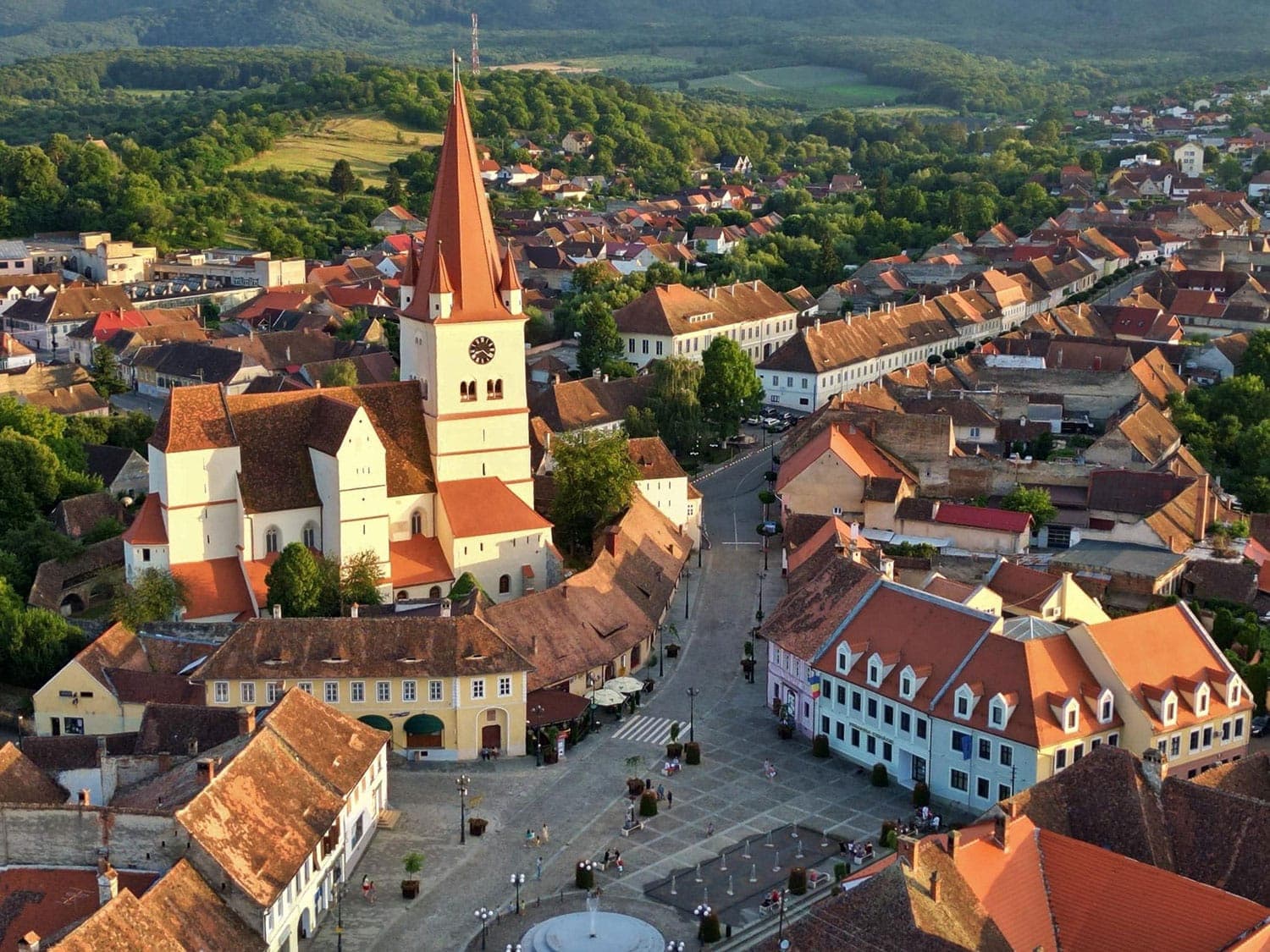 Johnwayne667 / CC BY-SA 4.0, via Wikimedia Commons
Visite audio autoguidée de Cisnădie — parcours GPS à pied, lecture hors ligne, narration en 32 langues.
“Au-delà des murs fortifiés, une ville forgée par la laine et la résilience.”
Pas les cartes postales. Les histoires que même les habitants ignorent — soufflées à l'oreille, là où elles se sont passées.
L'imposante tour de l'horloge de l'église fortifiée de Cisnădie cache un secret sur sa fonctionnalité durable.
Parmi les couches défensives de l'église fortifiée de Cisnădie, une chambre dissimulée a jadis protégé un précieux secret de la ville.
Avant ses usines textiles modernes, la prospérité de Cisnădie reposait sur un artisanat particulier qui rivalisait même avec une ville bien plus grande.
Découvrez tous les secrets de Cisnădie
Chaque adresse, chaque révélation en entier — dans ton oreille, là où elle s'est passée.
Tu choisis tes lieux. Tu marches. La voix te révèle ce que les autres ignorent.


Votre visite audioguidée de Cisnădie vous attend — choisissez vos lieux, votre langue, et lancez-vous dès votre arrivée.
AcheterLume intègre un guide en réalité augmentée. Levez votre téléphone : sa caméra montre la rue devant vous, avec une flèche lumineuse posée sur l'image réelle qui pointe toujours vers votre prochain arrêt — aucune carte à déchiffrer, aucun mauvais virage. Comme tout dans Lume, ça fonctionne entièrement hors-ligne.
Cisnădie, historiquement connue sous le nom allemand de Heltau, est une ville du centre de la Roumanie, dans la région de Transylvanie, à environ 10 kilomètres (6,2 miles) au sud de Sibiu. Située au pied des monts Cindrel, la ville offre un mélange de patrimoine saxon et de paysages captivants. Cisnădie, ainsi que son village voisin Cisnădioara, offre une fenêtre sur des siècles d'histoire transylvanienne, marquée par des églises fortifiées et un passé industriel substantiel.
Ancien centre florissant pour les forgerons et les tisserands de laine, l'héritage de Cisnădie est profondément lié à ses traditions textiles. Aujourd'hui, elle attire les visiteurs avec son église fortifiée bien conservée, ses bâtiments colorés et un rythme de vie plus lent que les grands centres urbains. La ville sert de point de départ idéal pour explorer la campagne transylvanienne environnante et ses nombreux sites historiques.
Au-delà de ses attractions historiques, Cisnădie offre une atmosphère communautaire accueillante et des opportunités d'exploration culturelle. De ses origines médiévales à son attrait moderne, Cisnădie invite les voyageurs à découvrir son caractère unique et les histoires gravées dans ses anciennes pierres.
## Premières implantations et influence saxonne L'histoire documentée de Cisnădie remonte à 1204, date à laquelle elle fut mentionnée pour la première fois sous le nom de "Rivetel". Au XIIe siècle, des colons saxons s'installèrent dans la région, façonnant considérablement le développement de la ville et lui donnant le nom allemand de Heltau, enregistré pour la première fois en 1323. Ces communautés saxonnes furent essentielles à la création de corporations, notamment pour les forgerons et les tisserands de laine, qui devinrent le fondement de la prospérité précoce de Cisnădie.
## Fortifications contre les raids ottomans L'histoire tumultueuse de la Transylvanie signifiait que Cisnădie, comme de nombreuses autres colonies saxonnes, faisait face à de nombreuses menaces. La ville a subi des raids des Mongols en 1241 et des attaques ultérieures de l'Empire ottoman. Pour protéger ses habitants, la basilique romane, construite à l'origine dans la seconde moitié du XIIe siècle et dédiée à Sainte Walburge, a été largement fortifiée au cours du XVe siècle. Cette transformation a inclus la construction de doubles murs défensifs, d'un fossé et de plusieurs tours, transformant l'église en une formidable forteresse.
## Croissance industrielle et ère moderne Le tissage est resté l'occupation dominante à Cisnădie jusqu'au XXe siècle. En 1750, six ménages sur dix à Cisnădie étaient impliqués dans le tissage, ce qui en faisait un centre majeur pour l'industrie lainière de Transylvanie. Ce boom industriel a entraîné une migration importante de la campagne au XIXe siècle, avec des Roumains venant travailler comme fileurs, produisant des millions de kilogrammes de laine par an. Après la Seconde Guerre mondiale, sous le régime communiste, l'industrie textile a été nationalisée, et Cisnădie est devenue réputée comme l'une des capitales européennes du tapis, exportant ses tapis dans le monde entier.
## Post-communisme et vie contemporaine La chute du communisme a entraîné des changements significatifs. Bien que la population saxonne, qui constituait 60% en 1941, ait diminué à moins de 2% aujourd'hui, Cisnădie a continué de croître. La population de la ville a plus que triplé depuis la Seconde Guerre mondiale, atteignant plus de 22 000 habitants, une exception notable en Roumanie post-communiste qui a par ailleurs connu une dépopulation rurale. Sa proximité avec Sibiu a contribué à son développement continu, offrant une alternative résidentielle plus calme avec un bon accès aux commodités urbaines.
Le monument le plus important de Cisnădie est son Église évangélique fortifiée, un site classé au patrimoine mondial de l'UNESCO. À l'origine une basilique romane du XIIe siècle, elle fut fortement fortifiée au XVe siècle pour se défendre contre les raids ottomans. Explorez ses doubles murs défensifs, ses tours et l'impressionnante tour de l'horloge, qui fonctionne sans réparation depuis 1868 et fut la première en Transylvanie à être équipée d'un paratonnerre. À l'intérieur, vous pourrez admirer l'architecture gothique et les vestiges de peintures murales romanes.
À seulement 2 kilomètres à l'ouest de Cisnădie se trouve le village de Cisnădioara, qui abrite l'Église fortifiée de Saint-Michel. Située au sommet d'une colline de 100 mètres de haut, cette église du XIIe siècle est considérée comme la plus ancienne église de style roman de Roumanie et offre des vues imprenables sur la campagne environnante.
Pour vous plonger dans le passé industriel de Cisnădie, visitez le Musée d'histoire de l'industrie textile. Cette exposition présente des outils, des documents et divers modèles de tapis, soulignant la contribution significative de la ville à la fabrication textile, de ses premières corporations à ses usines de tapis de l'ère communiste.
Au-delà de ces sites historiques, Cisnădie offre un aperçu de la vie saxonne traditionnelle avec ses maisons colorées et ses rues charmantes. La ville accueille des événements culturels et des festivals, dont un festival médiéval annuel, offrant un aperçu des traditions locales.
Cisnădie connaît un climat continental à quatre saisons. La meilleure période pour les activités par temps chaud est de fin juin à fin août, lorsque les températures moyennes se situent entre 24°C et 27°C (75-81°F), et que le ciel est le plus dégagé. Juillet est généralement le mois le plus chaud, avec une moyenne maximale de 25°C (77°F) et environ 8,2 heures d'ensoleillement par jour. Le printemps (avril-mai) et l'automne (septembre-octobre) offrent un temps agréable et doux, idéal pour les promenades pittoresques, avec des températures moyennes de 9°C à 16°C (48-61°F). Les hivers (décembre-février) sont froids et enneigés, avec une moyenne d'environ 0°C (32°F), transformant la ville en un paysage serein et saupoudré de neige. Juin est le mois le plus humide, avec les précipitations moyennes les plus élevées.
Cisnădie est idéalement située à environ 10 kilomètres (6,2 miles) au sud de Sibiu, ce qui la rend facilement accessible en voiture ou en transports en commun. Il existe plusieurs routes d'accès depuis Sibiu, offrant une flexibilité de voyage. Bien que de nombreuses personnes dans l'industrie hôtelière parlent anglais, le roumain est la langue officielle, et il est conseillé d'avoir quelques Lei roumains (RON) pour les petits achats, en particulier dans les zones rurales.
Lors de la visite de sites religieux comme l'église fortifiée, une tenue modeste est recommandée. L'église a généralement des heures de visite spécifiques ; par exemple, du lundi au samedi de 10h à 13h et de 15h à 18h, avec des visites le dimanche sur rendez-vous. Des frais d'entrée peuvent s'appliquer. Cisnădie offre une gamme d'hébergements, bien que de nombreux visiteurs choisissent de séjourner à Sibiu et de faire des excursions d'une journée. Les restaurants locaux offrent l'occasion de déguster la cuisine transylvanienne traditionnelle.
Cisnădie en coréen, en chinois ou en hébreu — et dans 29 autres langues, chaque étape narrée par une voix native. La plus large gamme de langues de tous les audioguides autoguidés.
Disponible en :