Plaza Almijara
La plaza central de Cómpeta bulle con la vida diaria, pero un peculiar detalle arquitectónico en su edificio más prominente insinúa un pasado dramático.
La historia completa se desbloquea en el tour
 Rufus46 / CC BY-SA 3.0, via Wikimedia Commons
Tour de audio autoguiado de Cómpeta — ruta GPS a pie, reproducción offline, narración en 32 idiomas.
“Cómpeta: Donde el aire de la montaña se encuentra con el vino Moscatel, y los caminos antiguos conducen a descubrimientos inesperados.”
No las postales. Las historias que ni los locales conocen — al oído, justo donde ocurrieron.
La plaza central de Cómpeta bulle con la vida diaria, pero un peculiar detalle arquitectónico en su edificio más prominente insinúa un pasado dramático.
Caminando por este sendero, verá mosaicos que representan costumbres locales, pero una leyenda particular sugiere una astuta estratagema durante un tiempo de rebelión.
A poca distancia de Cómpeta se encuentra un 'pueblo perdido' con una conmovedora historia de abandono y renacimiento.
Descubre todos los secretos de Cómpeta
Cada dirección, cada revelación al completo — a tu oído, justo donde ocurrió.
Eliges tus paradas. Caminas. La voz te revela lo que los demás ignoran.

Tu tour de audioguía por Cómpeta te espera — elige tus lugares, tu idioma y empieza al llegar.
ComprarLume incluye una guía de realidad aumentada. Levanta el móvil y su cámara muestra la calle que tienes delante, con una flecha luminosa sobre la imagen real que siempre apunta a tu próxima parada — sin mapas que descifrar, sin giros equivocados. Como todo en Lume, funciona completamente sin conexión.
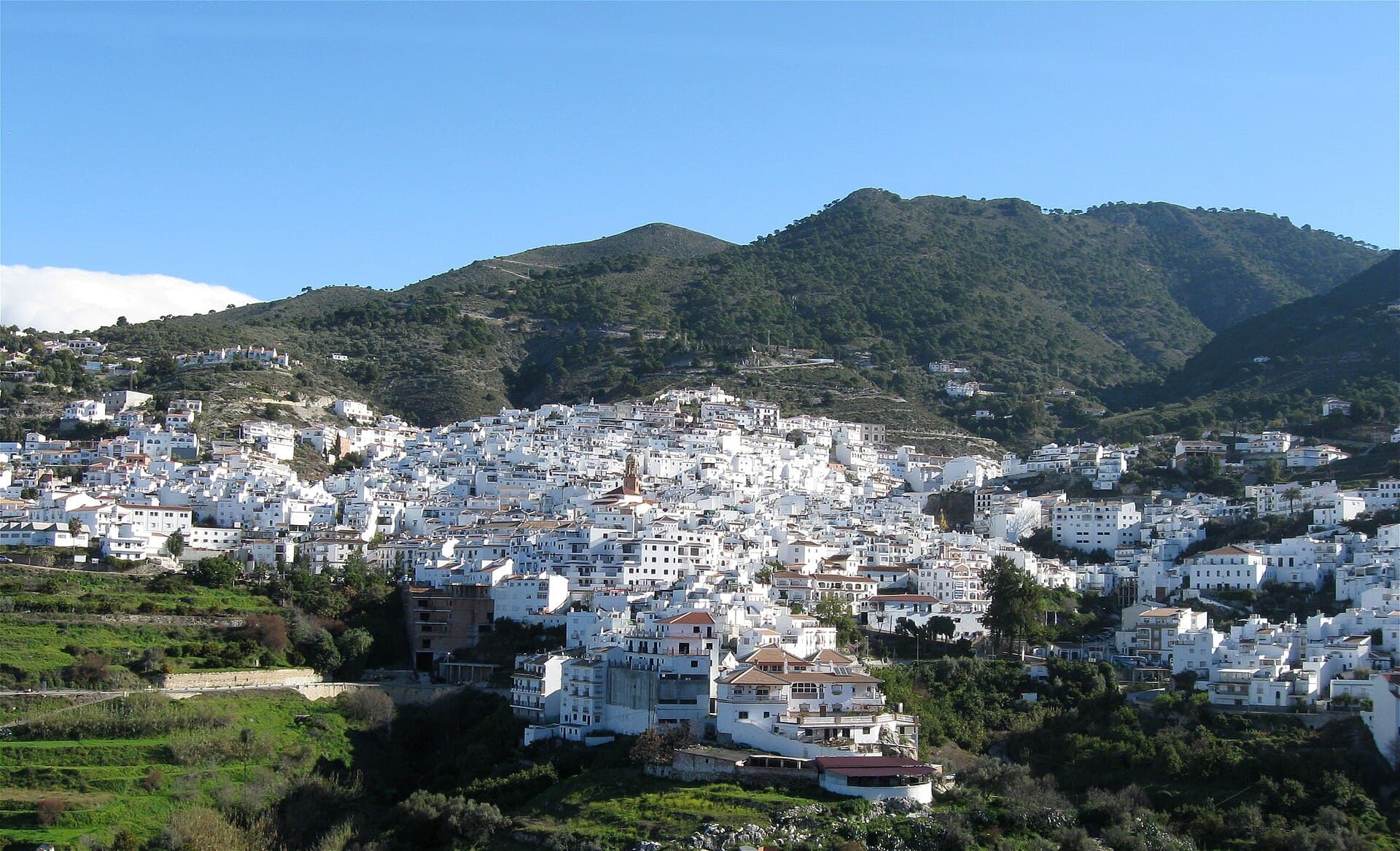
Cómpeta, un pueblo de casas blancas en la región de la Axarquía, provincia de Málaga, ofrece una mezcla de tradición andaluza y belleza natural. Conocido como la 'Cornisa de la Costa del Sol' o 'Balcón de la Axarquía' debido a su posición elevada, el pueblo ofrece amplias vistas de viñedos, olivares y el mar Mediterráneo. Situado a 638 metros sobre el nivel del mar, Cómpeta se encuentra en las laderas del sur de la Sierra Almijara, limitando con el Parque Natural Sierras de Tejeda, Almijara y Alhama.
Este atractivo pueblo, con una población de aproximadamente 4.000 residentes, mantiene un ritmo de vida más lento que las ciudades costeras. Sus calles estrechas y sinuosas y su arquitectura tradicional reflejan su herencia morisca. Cómpeta también es reconocida por su dulce vino Moscatel, un producto que se celebra anualmente durante la 'Noche del Vino'.
Se cree que el nombre Cómpeta proviene del latín 'Compita-Orum', que significa 'cruce de caminos' o 'lugares donde se encuentran los caminos'. Esto sugiere que la zona sirvió como centro comercial y festivo durante la época romana, aunque no hay grandes hallazgos arqueológicos dentro del propio pueblo que lo confirmen. La vida en la Cómpeta romana probablemente se centró en la agricultura, siendo las aceitunas, las uvas y los cereales los cultivos principales.
La historia registrada del pueblo comienza en 1487, cuando los pueblos musulmanes de Sierra de Bentomiz, incluida Cómpeta, se rindieron a los Reyes Católicos durante la Reconquista. Durante siglos anteriores, desde el siglo VIII, Cómpeta estuvo bajo dominio islámico como parte de al-Ándalus. Los moros introdujeron sofisticados sistemas de riego, permitiendo que cultivos como almendras, higos y cítricos prosperaran en las empinadas laderas. Su influencia todavía es visible en las casas encaladas, las calles estrechas y los espacios comunes.
Tras la Reconquista, muchos residentes moriscos permanecieron en Cómpeta, pero más tarde fueron obligados a convertirse al cristianismo. La mezquita fue consagrada como iglesia católica, dedicada a Nuestra Señora de la Asunción. Un acontecimiento significativo en la historia de Cómpeta fue la rebelión morisca de 1569. Un líder local, Martín Alcacín, se autoproclamó rey del Monte Bentomiz, liderando un levantamiento contra el dominio cristiano. Después de una serie de enfrentamientos, los rebeldes fueron derrotados en junio de 1569, y muchos fueron expulsados, dejando Cómpeta en gran parte abandonada.
En 1570, Cómpeta fue repoblada con Viejos Cristianos de Granada, Córdoba y Sevilla. El primer matrimonio cristiano se registró en la iglesia local en febrero de 1573. A los colonos se les dio tierra, que incluía moreras para la cría de gusanos de seda y colmenas. La Iglesia de Nuestra Señora de la Asunción, inicialmente construida en el siglo XVI, se convirtió en el monumento más emblemático del pueblo. Fue gravemente dañada por un terremoto en 1884, lo que llevó a renovaciones, incluida la sustitución de su minarete por una torre Neo-Mudéjar terminada en 1936.
Desde la repoblación cristiana, la viticultura ha sido fundamental para la economía de Cómpeta, con terrazas dedicadas casi exclusivamente al cultivo de la vid. A pesar de la plaga de filoxera de finales del siglo XIX, se introdujeron vides más resistentes, asegurando la continuación de la tradición vinícola del pueblo. Hoy en día, Cómpeta es reconocida por su vino Moscatel, y sus productos agrícolas también incluyen almendras, miel y frutas tropicales.
Cómpeta ha evolucionado hasta convertirse en una comunidad multicultural, con una parte significativa de sus residentes procedentes de otros países europeos. Esta mezcla de tradición andaluza e influencia internacional se refleja en su animada vida social, galerías de arte y diversas ofertas culinarias. El pueblo sigue celebrando su patrimonio a través de festivales como la Noche del Vino, al tiempo que abraza un estilo de vida moderno y da la bienvenida a visitantes de todo el mundo.
El corazón de Cómpeta es la Plaza Almijara, una animada plaza rodeada de fachadas del siglo XIX y una fuente andaluza. Aquí encontrará la Iglesia de Nuestra Señora de la Asunción, una iglesia del siglo XVI conocida como la 'Catedral de la Axarquía' con una torre Neo-Mudéjar. El interior de la iglesia presenta un fresco en el altar que representa la asunción de la Virgen María. Junto a la iglesia se encuentra el Paseo de las Tradiciones, donde los mosaicos ilustran las costumbres y la historia del pueblo.
Para los interesados en el patrimonio local, el Museo de Artes y Tradiciones, ubicado en un antiguo cuartel del siglo XIX, ofrece información sobre el pasado de Cómpeta. El museo Molino de Hadriano y el lagar de la Plaza de la Vendimia destacan la tradición vinícola del pueblo. La Plaza de la Vendimia en sí es un lugar significativo, especialmente durante la Noche del Vino, con un muro de roca que presenta mosaicos que representan la producción tradicional de vino Moscatel.
Más allá del centro del pueblo, Cómpeta sirve como puerta de entrada al Parque Natural Sierras de Tejeda, Almijara y Alhama, ofreciendo numerosas rutas de senderismo y paisajes espectaculares. El pueblo también tiene un mirador en su entrada, que ofrece amplias vistas del área protegida y el imponente pico de la Maroma. No se pierda las singulares casas colgantes en la parte más antigua del pueblo. Todos los sábados, la Plaza de la Axarquía acoge un mercado con productos frescos y locales.
Cómpeta disfruta de un clima mediterráneo con aproximadamente 300 días de sol al año. Las mejores épocas para visitar son primavera (marzo-mayo) y otoño (septiembre-noviembre) para temperaturas agradables, ideales para practicar senderismo y actividades al aire libre. Las temperaturas durante estos meses varían de agradables a cálidas, con noches más frescas. El verano (junio-agosto) trae un clima cálido y seco, con máximas diurnas promedio de alrededor de 28°C (82°F) en agosto, perfecto para los amantes del sol y los asistentes a festivales. El evento más significativo del pueblo, la Noche del Vino, tiene lugar el 15 de agosto. Los inviernos (diciembre-febrero) son suaves, con temperaturas diurnas promedio de alrededor de 14°C (57°F) en enero.
Cómpeta se encuentra a aproximadamente 52 kilómetros de Málaga, la capital de la provincia, y a unos 18 kilómetros tierra adentro de la Costa del Sol. El aeropuerto más cercano es el Aeropuerto de Málaga-Costa del Sol (AGP). Desde allí, puede alquilar un coche para un viaje de 1,5 horas o tomar un autobús a Torre del Mar, luego un taxi o un autobús local a Cómpeta. Una vez en Cómpeta, el pueblo se explora mejor a pie debido a sus calles estrechas y sinuosas. Hay aparcamiento disponible en las afueras del pueblo.
Aunque el español es el idioma dominante, muchos lugareños y expatriados en la industria del turismo hablan inglés. La moneda local es el Euro (€), y las tarjetas de crédito son ampliamente aceptadas, aunque es aconsejable llevar algo de efectivo para establecimientos más pequeños. Generalmente se observan las horas de siesta (14:00 - 17:00), y algunas tiendas cierran durante este tiempo. Cómpeta cuenta con un centro de salud local y un dentista, y el Hospital de La Axarquía está disponible para tratamientos más especializados.
Cómpeta en coreano, en chino o en hebreo — y 29 idiomas más, cada parada narrada por una voz nativa. La mayor variedad de idiomas de cualquier audioguía autoguiada.
Disponible en: