Le Couvent des Augustins
Cet ancien complexe monastique, aujourd'hui Hôtel de Ville, recèle une histoire inattendue entre ses murs.
L'histoire complète se débloque dans le tour
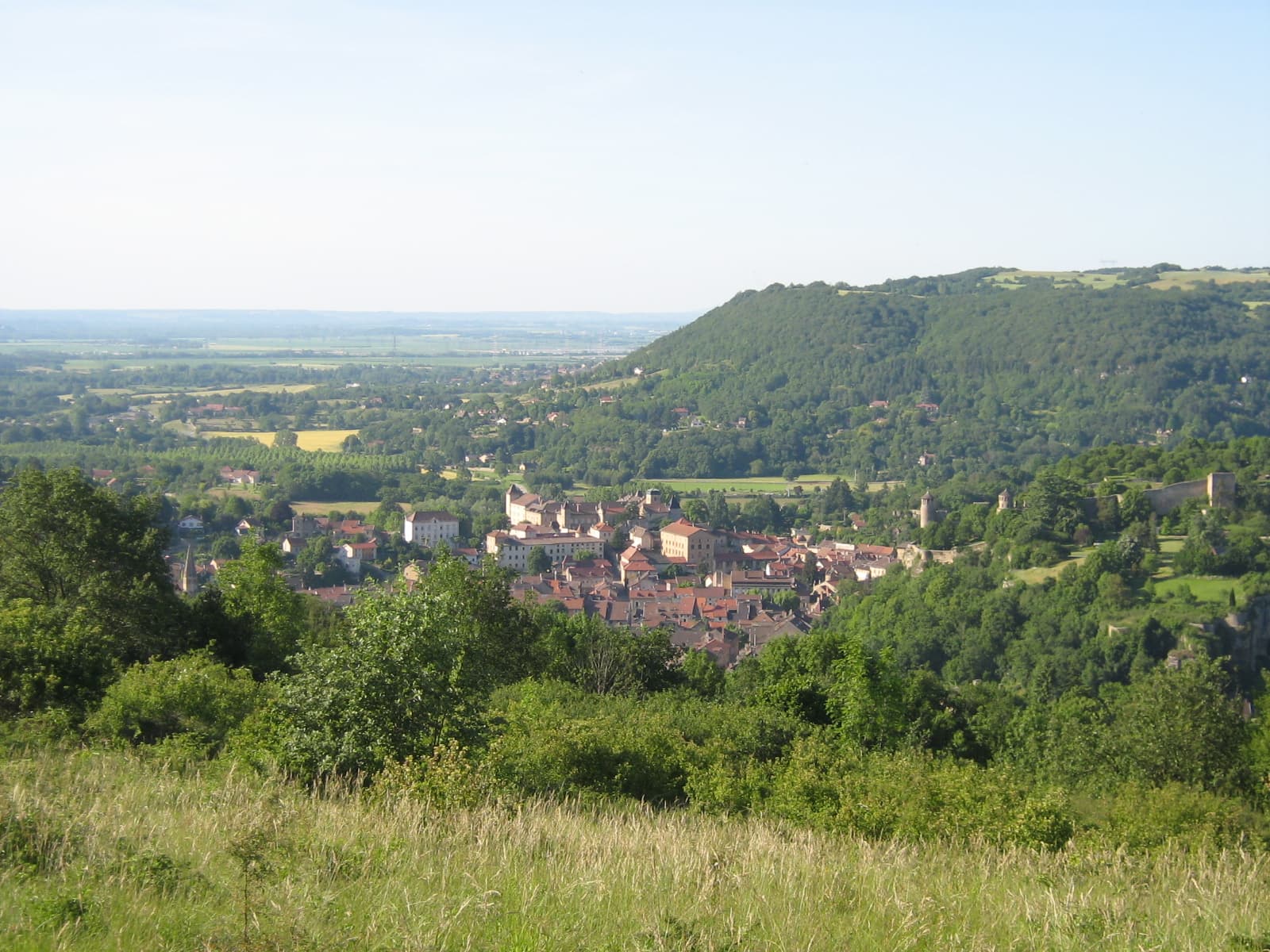 luigifab / CC BY-SA 3.0, via Wikimedia Commons
Visite audio autoguidée de Crémieu — parcours GPS à pied, lecture hors ligne, narration en 32 langues.
“Où les pierres médiévales racontent dauphins et marchands.”
Pas les cartes postales. Les histoires que même les habitants ignorent — soufflées à l'oreille, là où elles se sont passées.
Cet ancien complexe monastique, aujourd'hui Hôtel de Ville, recèle une histoire inattendue entre ses murs.
L'une des portes fortifiées de Crémieu, également connue sous le nom de Porte François Ier, suggère une évolution de la stratégie militaire.
Les liens historiques de Crémieu avec les 'Dauphins' s'étendent au-delà de son architecture, jusque dans la cuisine.
Découvrez tous les secrets de Crémieu
Chaque adresse, chaque révélation en entier — dans ton oreille, là où elle s'est passée.
Tu choisis tes lieux. Tu marches. La voix te révèle ce que les autres ignorent.


Votre visite audioguidée de Crémieu vous attend — choisissez vos lieux, votre langue, et lancez-vous dès votre arrivée.
AcheterLume intègre un guide en réalité augmentée. Levez votre téléphone : sa caméra montre la rue devant vous, avec une flèche lumineuse posée sur l'image réelle qui pointe toujours vers votre prochain arrêt — aucune carte à déchiffrer, aucun mauvais virage. Comme tout dans Lume, ça fonctionne entièrement hors-ligne.
Crémieu, cité médiévale située dans le département de l'Isère, dans le sud-est de la France, offre un véritable voyage dans le temps. Située à environ 40 à 47 kilomètres à l'est de Lyon, cette « Petite Cité de Caractère » est réputée pour son patrimoine architectural remarquablement préservé, dont certaines traces remontent au XIIe siècle. La position stratégique de la ville, historiquement au carrefour du Dauphiné, de la Savoie et du Royaume de France, a contribué à son importance militaire, économique et religieuse.
Les visiteurs de Crémieu peuvent flâner dans ses rues étroites et pavées, à la découverte d'une multitude de monuments historiques qui racontent l'histoire de son passé prospère. La ville est ceinturée par plus de deux kilomètres de remparts du XIVe siècle, ponctués de neuf portes et de quatorze tours défensives préservées, ce qui en fait l'un des ensembles les plus longs et les mieux conservés de France. Crémieu possède une concentration exceptionnelle de monuments historiques, avec 21 sites répertoriés, dont 6 classés et 15 inscrits, ce qui en fait une destination patrimoniale majeure.
Les origines de Crémieu remontent au XIIe siècle avec les premières mentions écrites de Cremacum, un centre administratif au sein de la baronnie de Tour du Pin. Le développement précoce de la ville au XIIIe siècle s'est articulé autour d'un prieuré bénédictin fortifié sur la colline Saint-Hippolyte et d'un château sur la colline Saint-Laurent. En 1282, la Baronnie fut annexée au Dauphiné, une région gouvernée par les Dauphins de Viennois.
Un moment charnière survint en 1315 lorsque le Dauphin Jean II accorda à Crémieu une charte de libertés, conférant de nouvelles libertés et d'importants privilèges commerciaux à ses habitants. Cet acte initia une ère de prospérité qui perdura pendant deux siècles. Pendant cette période, une seconde enceinte fortifiée fut construite au XIVe siècle, englobant une nouvelle ville qui s'est développée entre les deux collines. La croissance économique fut encore stimulée par la création d'un atelier monétaire en 1337, qui fonctionna jusqu'en 1554.
Les XVe et XVIe siècles virent Crémieu s'étendre avec le développement d'une Ville Basse et la construction de nouvelles portes. Sa position stratégique sur les routes commerciales et militaires vers l'Italie, notamment sous le règne du roi Louis XII, consolida son rôle de centre important pour le commerce du maïs entre la France, la Savoie, la Suisse et l'Italie. Crémieu a également abrité une notable communauté juive dès le XVe siècle.
Le XVIIe siècle marqua un tournant, l'orientation économique de la ville passant du commerce à l'établissement de divers ordres monastiques, dont les Capucins, les Pénitents Blancs, les Visitandines et les Ursulines. Le déclin économique fut officialisé en 1702 avec l'abolition des foires annuelles, incitant les habitants à développer les industries du textile et du cuir. Au XIXe siècle, le charme évocateur de Crémieu commença à attirer des paysagistes comme Corot, Ravier et Daubigny, et une nouvelle vague de tourisme.
Le cœur médiéval bien préservé de Crémieu invite à l'exploration. Commencez par la Halle de Crémieu, un marché couvert du XVe siècle qui a conservé son aspect et sa fonction d'origine pendant plus de 500 ans. Son impressionnante charpente en chêne supporte un toit de dalles de calcaire de 400 tonnes, et à l'intérieur, une mesure à grain en pierre à quatre bols subsiste. Un marché s'y tient encore tous les mercredis matin.
Promenez-vous le long des remparts médiévaux, qui s'étendent sur plus de deux kilomètres et comportent neuf portes et quatorze tours défensives préservées. Parmi les portes remarquables, citons la Porte de la Loi du XIVe siècle et la Porte Neuve du XVIe siècle, également connue sous le nom de Porte François Ier. Le Château Delphinal, un château du XIIe siècle situé sur la colline Saint-Laurent, offre un aperçu du passé de la ville, bien qu'il soit une propriété privée et non ouvert aux visiteurs.
Le Couvent des Augustins, fondé en 1317 et abritant aujourd'hui l'Hôtel de Ville, est un monument important. Vous pouvez visiter le cloître et l'ancienne salle de chauffe, qui présente une grande cheminée du XVIIe siècle. L'église du couvent, aujourd'hui l'église paroissiale Saint-Jean-Baptiste, date du XIVe siècle et est remarquable par son orientation Nord-Sud et ses fresques augustines récemment découvertes.
Explorez les charmantes maisons médiévales de la vieille ville, telles que la Maison du Colombier du XVe siècle avec ses fenêtres à meneaux et sa tour-pigeonnier, et la Maison de Martinas, l'une des plus anciennes maisons de Crémieu, mentionnée pour la première fois en 1327.
Crémieu est une destination attrayante tout au long de l'année. Pour une immersion vivante dans son passé médiéval, visitez la ville pendant le festival Les Médiévales de Crémieu, qui a lieu chaque année le deuxième week-end de septembre. Cet événement transforme la ville avec des défilés costumés, des spectacles de rue, des camps médiévaux et des banquets. Le printemps et l'automne offrent un temps agréable pour explorer l'architecture de la ville et les paysages naturels environnants, y compris la randonnée et le cyclisme sur la voie verte. Le marché hebdomadaire du mercredi matin dans la halle médiévale est un attrait constant pour les produits locaux.
Crémieu est situé à environ 40 à 47 kilomètres à l'est de Lyon. Si le Château Delphinal n'est pas ouvert aux visiteurs, de nombreux autres sites historiques, dont la halle et le cloître des Augustins, sont librement accessibles. L'Office de Tourisme local, situé Place du 8 mai 1945, fournit des cartes et des informations, et propose des services aux cyclistes, notamment des casiers sécurisés pour les sacs et les vélos (un jeton ou un cadenas peut être requis). Le stationnement est disponible, bien qu'il puisse être difficile lors des grands événements. Crémieu propose une sélection de restaurants, de boutiques et d'options d'hébergement, y compris des hôtels, des chambres d'hôtes et des campings dans les environs. La ville est un « Site Patrimonial Remarquable » reconnu et est candidate à l'inscription au patrimoine mondial de l'UNESCO.
Crémieu en coréen, en chinois ou en hébreu — et dans 29 autres langues, chaque étape narrée par une voix native. La plus large gamme de langues de tous les audioguides autoguidés.
Disponible en :