Fuente Caliente
Las humeantes aguas de la fuente más icónica de Dax guardan un secreto más allá de su calor terapéutico.
La historia completa se desbloquea en el tour
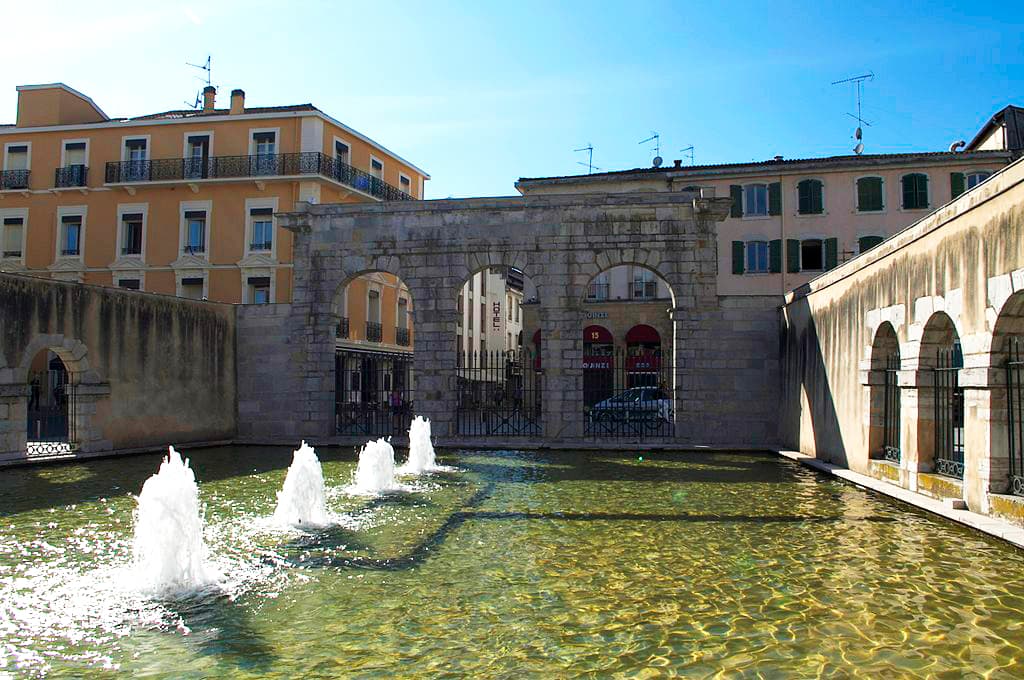 AubdaX / CC BY-SA 4.0, via Wikimedia Commons
Tour de audio autoguiado de Dax — ruta GPS a pie, reproducción offline, narración en 32 idiomas.
“Donde las aguas ancestrales se encuentran con tradiciones perdurables.”
No las postales. Las historias que ni los locales conocen — al oído, justo donde ocurrieron.
Las humeantes aguas de la fuente más icónica de Dax guardan un secreto más allá de su calor terapéutico.
Bajo una estructura contemporánea en Dax yace un secreto romano que casi fue confundido con otra cosa completamente distinta.
La llamativa arquitectura neomudéjar de las Plazas de Toros de Dax sugiere una conexión que se extiende mucho más allá de las fronteras francesas.
Descubre todos los secretos de Dax
Cada dirección, cada revelación al completo — a tu oído, justo donde ocurrió.
Eliges tus paradas. Caminas. La voz te revela lo que los demás ignoran.


Tu tour de audioguía por Dax te espera — elige tus lugares, tu idioma y empieza al llegar.
ComprarLume incluye una guía de realidad aumentada. Levanta el móvil y su cámara muestra la calle que tienes delante, con una flecha luminosa sobre la imagen real que siempre apunta a tu próxima parada — sin mapas que descifrar, sin giros equivocados. Como todo en Lume, funciona completamente sin conexión.
Dax, una ciudad en el suroeste de Francia, es reconocida como la principal ciudad balneario termal del país. Situada a orillas del río Adour en la región de Nueva Aquitania, Dax combina una atmósfera acogedora con un profundo trasfondo histórico. Su identidad está profundamente arraigada en los recursos geotérmicos, atrayendo a miles de visitantes anualmente que buscan las propiedades terapéuticas de sus aguas termales y su barro distintivo.
Las aguas termales de la ciudad, conocidas desde la época romana, son abundantes en minerales y son particularmente buscadas para tratar reumatología y flebología. Más allá de su cultura balnearia, Dax presenta una animada mezcla de festividades tradicionales, monumentos culturales y una energía urbana vibrante.
Desde antiguas ruinas romanas hasta arquitectura Art Decó, Dax ofrece un fascinante viaje a través del tiempo, convirtiéndola en un destino que satisface tanto la relajación como la exploración cultural.
## Orígenes Romanos y Patrimonio Termal La historia de Dax comenzó en el siglo I a.C., cuando los romanos establecieron el asentamiento de Aquae Tarbellicae, reconociendo las cualidades restauradoras de las fuentes termales locales. El nombre de la ciudad, derivado de "de Aquis" (que significa "de aguas" en latín), refleja este antiguo vínculo. Funcionarios romanos y personal militar frecuentaban los baños termales para recibir tratamiento, consolidando la reputación de Dax como un retiro curativo. Descubrimientos arqueológicos en el centro histórico, como los restos de opulentos baños que rodean la Fuente Caliente, dan testimonio de este floreciente período inicial.
## Transiciones Medievales y Gobierno Inglés En el siglo IV, se erigieron formidables murallas de fortaleza galorromanas alrededor de la ciudad; algunos fragmentos aún son discernibles hoy. Estas murallas definieron el núcleo histórico durante siglos. Tras el matrimonio de Leonor de Aquitania con Enrique II Plantagenet en 1152, Dax quedó bajo administración inglesa, permaneciendo así hasta 1451, cuando volvió a la autoridad francesa poco antes de la conclusión de la Guerra de los Cien Años. Durante la Edad Media, la economía de Dax también prosperó gracias al comercio fluvial, con su puerto en el Adour sirviendo como un centro crucial para el transporte de productos agrícolas, resina y madera.
## Renovada Prosperidad y Desarrollo Contemporáneo Para el siglo XIX, muchas de las fortificaciones medievales fueron desmanteladas, y la construcción de una línea ferroviaria inauguró un período de renovada prosperidad. Dax continuó evolucionando sus ofertas termales, convirtiéndose en el principal destino balneario de Francia. La ciudad también fue testigo de la construcción de importantes monumentos arquitectónicos, como la Plaza de Toros de Dax en 1913, con su distintivo estilo neomudéjar, y edificios Art Decó como el Hotel Splendid, que muestran una riqueza artística inesperada. Hoy, Dax sigue siendo una ciudad animada que combina armoniosamente sus antiguas tradiciones curativas con un profundo patrimonio cultural.
Comience su exploración en la Fuente Caliente, un emblema histórico y cultural de Dax. Este manantial termal, también conocido como el manantial de Nèhe, libera agua a una temperatura constante de 64°C (147°F) y está rodeado por un pintoresco entorno arquitectónico con columnas. A poca distancia, adéntrese en el pasado romano de la ciudad en la Cripta Arqueológica, donde podrá explorar los restos de una basílica civil galorromana de los siglos I o II. Este lugar es gestionado por el Museo de Borda, que ofrece más información sobre la arqueología e historia de Dax.
Experimente las tradiciones culturales de Dax en la Plaza de Toros de Dax. Construida en 1913 en estilo neomudéjar, alberga corridas de toros, conciertos y la tradicional Course Landaise, especialmente durante la animada Feria de Dax en agosto y el festival Toros y Salsa en septiembre. Adyacente a la plaza, el Parque de la Plaza de Toros de Dax ofrece un remanso de paz. Para una visión del patrimonio religioso de la ciudad, visite la Catedral de Notre-Dame Ste-Marie, que presenta un Portal de los Apóstoles, y la Iglesia de Saint-Vincent-de-Xaintes, hogar de un mosaico del siglo VI. Aproveche la oportunidad para pasear por las secciones restantes de las murallas galorromanas, que datan del siglo IV.
La época ideal para visitar Dax para actividades de clima cálido se extiende desde mediados de junio hasta mediados de septiembre. Durante julio y agosto, el aire se calienta a unos agradables 26-27°C (79-81°F), con un mínimo de días lluviosos, lo que lo hace perfecto para la exploración al aire libre y para disfrutar de las celebraciones de la ciudad. La famosa Feria de Dax tiene lugar a mediados de agosto, dando vida a la ciudad con desfiles, conciertos y eventos taurinos. Septiembre ofrece el festival Toros y Salsa, llenando el ambiente de música latina. Aunque los inviernos son suaves, con temperaturas medias de alrededor de 8-10°C (46-50°F), se caracterizan por una mayor humedad y precipitaciones frecuentes.
Dax es accesible a través de varios aeropuertos, siendo los más cercanos Biarritz-Parme (60 km), Pau-Pyrénées (80 km) y Burdeos-Merignac (145 km). Los servicios de tren de alta velocidad (TGV Atlantique) conectan Dax con París en aproximadamente 4 horas y 15 minutos. Una vez en Dax, la ciudad se puede recorrer en transporte público o en coche de alquiler. Los servicios de autobús suelen operar de 7:00 a.m. a 8:00 p.m. los días laborables, con horarios reducidos los domingos y festivos. Los horarios detallados están disponibles en la oficina de turismo. Para aquellos interesados en los balnearios termales, es aconsejable consultar los horarios de apertura y reservar los tratamientos con antelación.
El Centro de Información Turística y Balnearia de la ciudad proporciona información útil, datos de contacto y horarios de apertura para ayudar a planificar su visita. Muchas atracciones, como el centro histórico y la Fuente Caliente, se exploran fácilmente a pie.
Dax en coreano, en chino o en hebreo — y 29 idiomas más, cada parada narrada por una voz nativa. La mayor variedad de idiomas de cualquier audioguía autoguiada.
Disponible en: