Ros Beiaard Procession
Imagine a horse so legendary, it appears only once a decade, carried by a special guild.
Full story unlocks in the tour
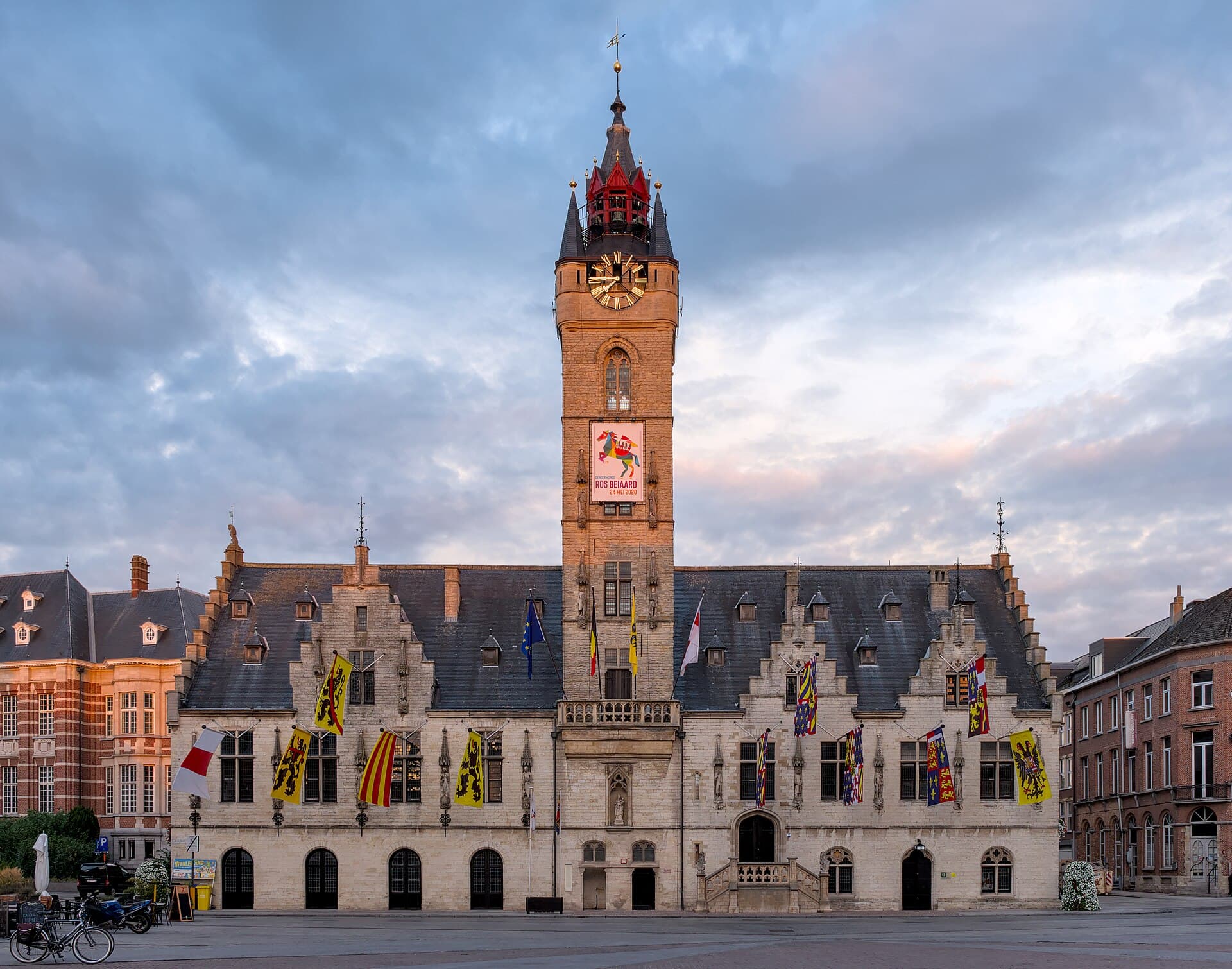 Trougnouf (Benoit Brummer) / CC BY 4.0, via Wikimedia Commons
Self-guided audio walking tour of Dendermonde — GPS route, offline playback, story-driven narration in 32 languages.
“Where a legendary horse gallops every ten years, and history is etched into every stone.”
Not the postcards. The stories even locals don't know — whispered in your ear, right where they happened.
Imagine a horse so legendary, it appears only once a decade, carried by a special guild.
This UNESCO World Heritage site does not merely tell time; it sings.
A serene sanctuary within the city, once home to women who chose a life of devotion without traditional vows.
Discover every secret of Dendermonde
Every address, every reveal in full — in your ear, right where it happened.
You pick your stops. You walk. The voice reveals what the others miss.

Your self-guided audio tour of Dendermonde is ready — pick your landmarks, choose your language, and start the moment you arrive.
BuyLume has a built-in augmented-reality guide. Hold your phone up and its camera shows the street ahead of you, with a glowing arrow laid over the real view that always points to your next stop — no map to puzzle over, no wrong turns. Like everything in Lume, it works fully offline.
Dendermonde, a historic city in Belgium's Flemish Region, rests at the strategic convergence of the Dender and Scheldt rivers. Its name, meaning "mouth of the Dender," directly reflects this watery origin. The city extends a quiet allure, with a medieval city center, paved streets, and colorful buildings, offering a refreshing departure from larger urban centers.
Beyond its scenic backdrop, Dendermonde is a city deeply rooted in folklore and tradition, most famously recognized for its decennial Ros Beiaard procession, featuring a colossal wooden horse. It also includes multiple UNESCO World Heritage sites, including its belfry and beguinage, making it a destination rich in cultural heritage.
While often overlooked by mainstream tourism, Dendermonde provides an intimate glimpse into Belgian history and local life, with convenient access to larger cities like Ghent and Brussels. Its blend of historical architecture, distinctive traditions, and tranquil river landscapes makes it a compelling stop for those seeking authentic Flemish experiences.
The area surrounding Dendermonde has been inhabited since ancient times, with evidence of human presence dating back to the La Tène culture (around 450 BC to 50 BC) and graves from the Gallo-Roman and Merovingian periods (2nd to 6th centuries). In 843, the Treaty of Verdun placed Dendermonde in Lotharingia, a region that would later be incorporated into the County of Flanders by Baldwin II in 883. A fort constructed in the 10th century encouraged further settlement, laying the groundwork for the city's future.
Dendermonde officially received its city charter in 1233 and quickly thrived, largely due to a robust cloth industry. This period saw the construction of numerous cloisters, chapels, churches, and a fortified defensive wall. The mid-14th century saw the erection of a cloth hall and a belfry on the main market square, reflecting the city's growing economic and administrative importance.
The 16th century brought a decline in Dendermonde's prosperity. In 1572, the city was conquered by William the Silent, only to be plundered and largely destroyed by Spanish troops under Duke Alexander Farnese of Parma in the same year. A decade later, the Spanish constructed their own fortress between the Dender and Scheldt rivers, underscoring the city's continued strategic significance. In 1667, French forces under Louis XIV attempted to attack, but were repelled when defenders inundated the surrounding countryside by opening the dikes. The most extensive damage occurred in 1706 during an attack by allied troops from the Netherlands and England, led by the Duke of Marlborough. Following this, the Austrians fortified the city to protect it from further French incursions.
After a final siege by Louis XV, Dendermonde finally experienced a period of peace, and its defenses were eventually dismantled. The late 18th century ushered in a new era of prosperity with the Industrial Revolution, bringing new industries such as cotton production. The 19th century saw improvements to the city's port and the establishment of its first railway connections. Today, Dendermonde serves as an important administrative, commercial, educational, and medical center for its surrounding region.
Begin your exploration in the Grote Markt, the main city square, where you will find the impressive Town Hall and Belfry, a UNESCO World Heritage site known for its 49-bell carillon. Adjacent is the Vleeshuis (Butcher's Hall), a 15th-century Gothic edifice now housing a municipal museum with archaeological and historical collections. Do not miss the St. Alexius Beguinage, another UNESCO site, featuring historic gabled houses surrounding a peaceful courtyard and a museum detailing the beguines' lives and local folklore.
For art enthusiasts, the Onze-Lieve-Vrouwekerk (Church of Our Lady), a 13th-century church, displays two paintings by Anthony van Dyck. Those interested in history can visit the Dendermonde Abbey, a Benedictine abbey famed for its library containing an original manuscript by Hildegard of Bingen. For a distinctive experience, consider a ride on the Dendermonde-Puurs Steam Train (seasonal), offering a scenic journey through the Scheldt countryside. Look for the modern Whale Sculpture, crafted from recycled materials, which subtly references a local legend.
The ideal time to visit Dendermonde for warm-weather activities and city exploration is from late June to early September. During these months, average daily high temperatures exceed 68°F (20°C), with July being the warmest month at an average high of 73°F (23°C). Spring (April, May, June) and early autumn (September, October) also offer pleasant conditions with mild weather and fewer crowds, making them suitable for sightseeing. While Dendermonde can be enjoyed year-round, the renowned Ros Beiaard procession occurs only once every ten years, so consult the schedule if this is a primary interest.
Dendermonde is readily accessible by train, with direct connections from Brussels (35-55 minutes) and Ghent (25-36 minutes). The train station is a brief walk from the city center. For navigating the city, the center is walkable, and cycling is a favored option, with bicycle rentals available. Major supermarkets such as Carrefour, Delhaize, Colruyt, and Aldi are present, and local markets operate weekly, primarily on Thursdays. Most shops and restaurants accept cards, but it is advisable to carry some cash for smaller purchases at markets. Tap water is safe for drinking. Healthcare facilities, including AZ Sint-Blasius hospital, are available, and staff often communicate in English.
Dendermonde in Korean, in Chinese or in Hebrew — and 29 more languages, every stop narrated by a native voice. The widest language range of any self-guided audio tour.
Available in: