Palais de Justice de Douai
Le palais de justice de la ville, un grand bâtiment construit en 1792, a connu un coup du sort ironique avec son tout premier 'accusé'.
L'histoire complète se débloque dans le tour
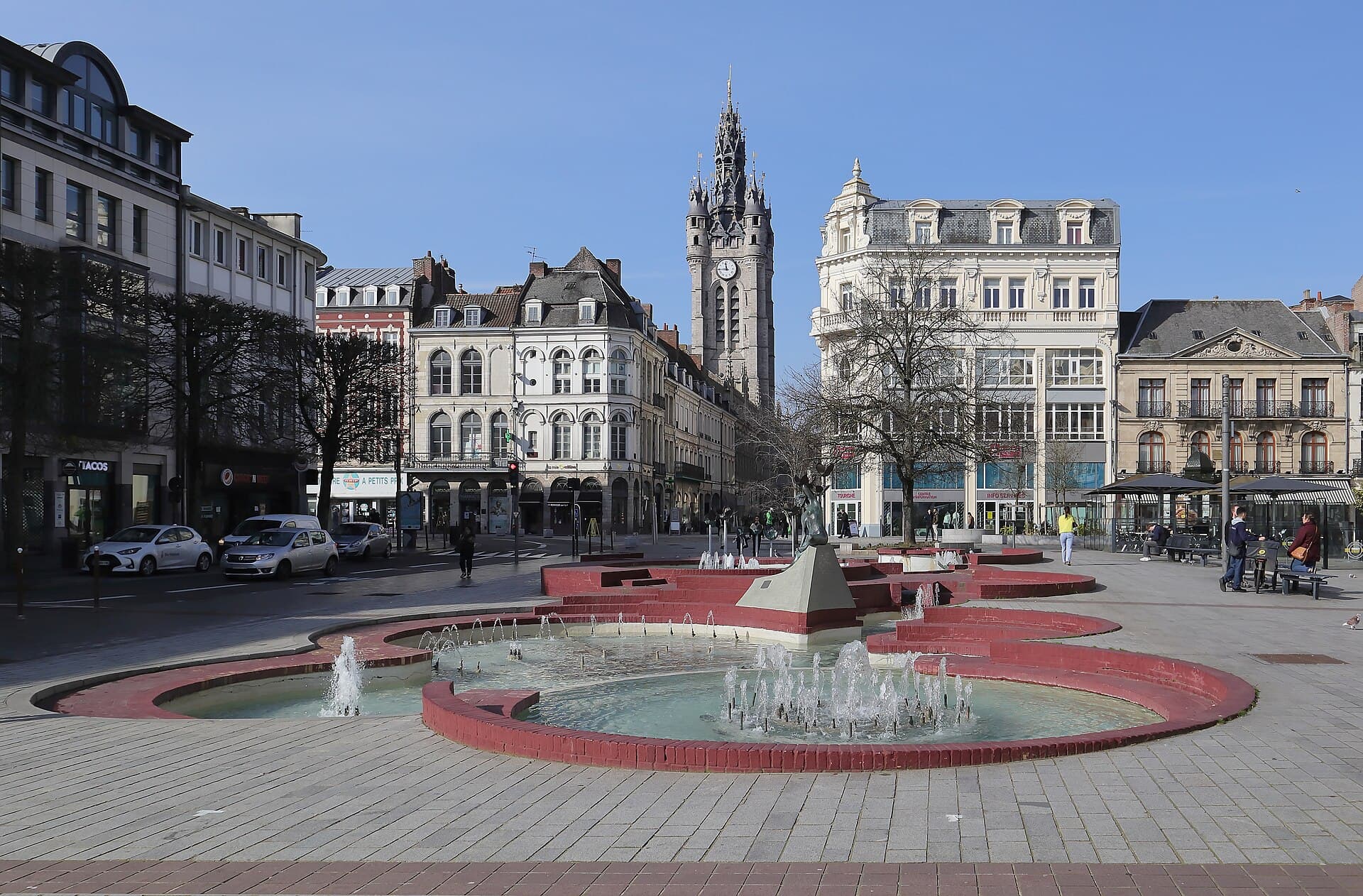 JackyM59 / CC BY-SA 4.0, via Wikimedia Commons
Visite audio autoguidée de Douai — parcours GPS à pied, lecture hors ligne, narration en 32 langues.
“Douai : Là où les échos flamands rencontrent le caractère français, et où les géants foulent encore les rues.”
Pas les cartes postales. Les histoires que même les habitants ignorent — soufflées à l'oreille, là où elles se sont passées.
Le palais de justice de la ville, un grand bâtiment construit en 1792, a connu un coup du sort ironique avec son tout premier 'accusé'.
The colossal figures of Monsieur and Madame Gayant, along with their children, are cherished protectors of Douai, paraded through the streets each summer. Still, Monsieur Gayant’s legend began with him defending the city from an unexpected adversary.
The city's courthouse, a grand building constructed in 1792, faced an ironic twist of fate with its very first 'accused' party.
Découvrez tous les secrets de Douai
Chaque adresse, chaque révélation en entier — dans ton oreille, là où elle s'est passée.
Tu choisis tes lieux. Tu marches. La voix te révèle ce que les autres ignorent.

Votre visite audioguidée de Douai vous attend — choisissez vos lieux, votre langue, et lancez-vous dès votre arrivée.
AcheterLume intègre un guide en réalité augmentée. Levez votre téléphone : sa caméra montre la rue devant vous, avec une flèche lumineuse posée sur l'image réelle qui pointe toujours vers votre prochain arrêt — aucune carte à déchiffrer, aucun mauvais virage. Comme tout dans Lume, ça fonctionne entièrement hors-ligne.
Douai, ville du département du Nord dans le nord de la France, offre un mélange captivant d'architecture flamande, d'une scène culturelle animée et d'un lien tangible avec son passé. Située sur la Scarpe, elle présente un paysage de grands beffrois, de maisons historiques de marchands de laine et d'une présence universitaire dynamique. Souvent décrite comme une "ville aux cent clochers", Douai s'est développée comme un centre important de commerce et d'apprentissage au Moyen Âge, conservant une grande partie de son caractère historique dans son beffroi classé à l'UNESCO, sa Grand'Place en pierre et ses cafés centenaires.
Le caractère singulier de la ville est renforcé par ses voies navigables, avec la Scarpe et divers canaux qui tissent leur toile dans le tissu urbain. Ces zones riveraines offrent d'agréables chemins pour se promener, lire et observer le rythme de la vie locale. Le pouls culturel de Douai est également fort, grâce à une université active et à un prestigieux conservatoire de musique, qui contribuent à une atmosphère dynamique. C'est un lieu où l'histoire se déroule à un rythme tranquille, invitant les visiteurs à découvrir son patrimoine entre façades en pierre ancienne et généreux espaces publics.
## De la forteresse romaine à la Flandre française Les origines de Douai remontent à une forteresse romaine du IVe siècle connue sous le nom de Duacum. Au Xe siècle, elle est devenue un fief des Comtes de Flandre. La ville a prospéré en tant que centre de marché textile au Moyen Âge, particulièrement connue pour son commerce de la laine. En 1384, Douai est devenue une partie des domaines des Ducs de Bourgogne, puis, en 1477, elle est passée aux possessions des Habsbourg.
Au XVIe siècle, sous le patronage de Philippe II d'Espagne, l'Université Catholique de Douai a été fondée, devenant un centre éducatif proéminent dans les Pays-Bas méridionaux. Cette université a joué un rôle crucial pour les catholiques anglais cherchant une éducation en dehors de l'Angleterre pendant les périodes de persécution, et c'est là que la Bible de Douai, une première traduction anglaise, a été produite pour la première fois en 1582. Douai a finalement été prise par les troupes de Louis XIV en 1667 et formellement cédée à la France par le Traité d'Aix-la-Chapelle en 1668. Suite à son intégration à la France, Douai est devenue le siège du Parlement de Flandre.
La ville a subi d'importantes destructions lors de sièges successifs entre 1710 et 1712, puis à nouveau pendant la Première Guerre mondiale, lorsqu'elle a été occupée par les forces allemandes. Notamment, l'aérodrome de La Brayelle à Douai a été un site important dans l'histoire de l'aviation française, accueillant le premier meeting aéronautique mondial en 1909 et servant plus tard de base à Manfred von Richthofen, le Baron Rouge, pendant la Première Guerre mondiale. Malgré ces défis, Douai s'est reconstruite et a maintenu son caractère singulier, mêlant son passé flamand à son présent français. L'université a été supprimée pendant la Révolution française, ses fonds de bibliothèque étant transférés à la bibliothèque municipale, dont une grande partie a été détruite lors des bombardements de 1944. Une nouvelle université a été fondée au milieu du XIXe siècle mais a ensuite déménagé à Lille.
Commencez votre exploration par le Beffroi de Douai, une structure gothique du XVe siècle reconnue comme site du patrimoine mondial de l'UNESCO. Montez ses 185 marches pour admirer la ville, la vallée de la Scarpe et au-delà. Le beffroi abrite un carillon de 62 cloches, qui sonnent toutes les 15 minutes. Adjacent au beffroi se trouvent la Grand'Place et l'Hôtel de Ville, une place centrale encadrée par des maisons de marchands ornées et l'hôtel de ville de style Renaissance. Cette zone est animée, surtout les jours de marché (mardi et samedi).
Plongez dans l'art et l'histoire au Musée de la Chartreuse, installé dans un ancien monastère chartreux. Le musée présente des collections couvrant l'art, l'archéologie et l'histoire locale, y compris des œuvres de peintres flamands et français. Pour une perspective différente, faites une promenade en bateau le long de la Scarpe et des quais du canal, où d'agréables chemins sont bordés de sièges et d'arbres. Douai conserve également des vestiges de ses fortifications médiévales, notamment la Porte de Valenciennes, la Porte d'Arras et la Tour des Dames. Ne manquez pas la Collégiale Saint-Pierre, l'une des plus grandes églises au nord de Paris, présentant un mélange de styles gothique et classique. À quelques kilomètres de Douai, le Centre Historique Minier de Lewarde offre un aperçu du patrimoine charbonnier de la région.
Les périodes idéales pour visiter Douai sont la fin du printemps (mai-juin) et le début de l'automne (septembre). Pendant ces saisons intermédiaires, le temps est doux, parfait pour les marchés en plein air et les spectacles. L'été (juillet-août) apporte de nombreux festivals de musique et est généralement propice aux activités par temps chaud, bien que ce soit la période la plus fréquentée et la plus chère. Les hivers sont plus calmes, avec décembre offrant des illuminations de Noël et des festivités saisonnières. Les températures moyennes varient de 4°C (39°F) en janvier à 18,6°C (65,5°F) en juillet.
Douai est bien desservie par la route, avec les autoroutes A1 (Paris-Lille) et A2 (Paris-Valenciennes) à proximité. C'est aussi un important nœud ferroviaire, avec des services de train fréquents vers Lille (30-45 minutes) et Arras (15-20 minutes). L'aéroport de Lille-Lesquin est à environ 28 minutes en voiture ou 20 minutes en train depuis la gare de Lille Flandres. Le centre-ville est largement piétonnier, notamment autour de la Place d'Armes. L'Office de Tourisme du Douaisis, situé à l'Hôtel du Dauphin sur la Place d'Armes, peut fournir des cartes et suggérer des itinéraires de promenade. Pour ceux qui arrivent en bateau, des points d'amarrage avec eau et électricité sont disponibles Quai d'Alsace et Quai de la Barque.
Douai en coréen, en chinois ou en hébreu — et dans 29 autres langues, chaque étape narrée par une voix native. La plus large gamme de langues de tous les audioguides autoguidés.
Disponible en :