Île Tristan
This small island, just off the coast, holds a secret that links it to one of the most enduring tales of tragic romance.
Full story unlocks in the tour
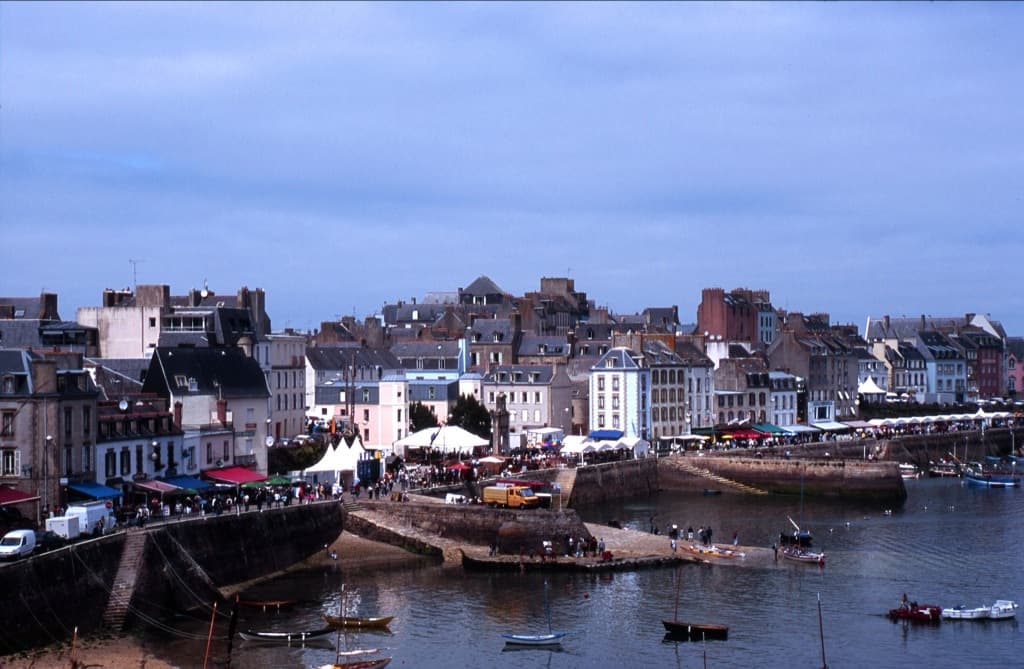 Unknown author / CC BY 2.0, via Wikimedia Commons
Self-guided audio walking tour of Douarnenez — GPS route, offline playback, story-driven narration in 32 languages.
“Where Breton legends meet the scent of the sea and the legacy of the sardine.”
Not the postcards. The stories even locals don't know — whispered in your ear, right where they happened.
This small island, just off the coast, holds a secret that links it to one of the most enduring tales of tragic romance.
Walk along the quays of Port-Rhu, and you're treading on a history that was once the economic heartbeat of Douarnenez, but not just for fish.
The very nickname for Douarnenez's cannery workers, 'Penn Sardin' (sardine heads), hints at a fierce spirit that shaped the town's social landscape.
Discover every secret of Douarnenez
Every address, every reveal in full — in your ear, right where it happened.
You pick your stops. You walk. The voice reveals what the others miss.


Your self-guided audio tour of Douarnenez is ready — pick your landmarks, choose your language, and start the moment you arrive.
BuyLume has a built-in augmented-reality guide. Hold your phone up and its camera shows the street ahead of you, with a glowing arrow laid over the real view that always points to your next stop — no map to puzzle over, no wrong turns. Like everything in Lume, it works fully offline.
Douarnenez, a coastal town in Brittany, France, is a place where maritime history, local culture, and natural beauty converge. Located in the Finistère department along Douarnenez Bay, the town is famously linked to the mythical sunken city of Ys and the Arthurian legend of Tristan and Iseult. Once a bustling fishing port renowned for its sardine industry, Douarnenez has evolved into a destination that offers a blend of historic charm, scenic landscapes, and a warm Breton atmosphere.
The town's identity is deeply intertwined with the sea, evident in its four harbors and the colorful fishing boats that line its quays. Beyond its maritime heritage, Douarnenez offers a strong connection to Breton culture, reflected in its festivals, traditional cuisine, and thriving arts scene.
The history of Douarnenez stretches back to Gallo-Roman times, when archaeological finds indicate that fish were salted along the cliffs of Plomarc'h. The Romans established one of Northern Europe's most significant industrial sites here, producing 'garum,' a fish-based condiment. The written history of Douarnenez truly begins around 1118, when Robert de Locuvan, Bishop of Cornouaille, donated Île Tristan and its surrounding lands to the Abbey of Marmoutier, leading to the construction of a priory on the island. The island, originally named St. Tutuarn Island, became known as Tristan in the 14th century, a name that echoes the medieval legend of Tristan and Iseult.
By the late 18th century and into the 19th, sardines became the driving force of the local economy, transforming Douarnenez into a major center for the sardine industry. The town's life revolved around the harvesting, processing, and canning of these small fish. This era of prosperity left its mark on the town's urban heritage, with former canneries, factory owners' houses, and the modest homes of fishing and cannery workers still visible today. The Port-Rhu, the old commercial port, was crucial during this period, handling not only sardines but also exporting canvas from the region.
In 1945, Douarnenez expanded to include the neighboring communes of Ploaré, Pouldavid, and Tréboul, forming what is now 'Greater Douarnenez.' While the fishing industry has seen a decline in recent years, with a reduction in jobs, fish canning facilities for sardines and mackerel still operate, and the town remains a center for boat building and repair. The spirit of Douarnenez's past is preserved in its museums, historic districts, and the enduring local pride in its maritime heritage.
Begin your exploration at the Port-Musée, Douarnenez's maritime museum, which showcases the town's rich seafaring history through exhibits on fishing, shipbuilding, and maritime culture. You can even explore historic boats moored in the harbor. Wander through the historic Port-Rhu district, a charming area with its boat cemetery, offering a glimpse into the town's past. From here, the Passerelle Jean Marin provides views of Île Tristan.
Île Tristan itself is a captivating destination, accessible by foot at low tide during certain times of the year, or by boat. The island features a botanical garden, orchards, and remnants of fortifications. For coastal beauty, visit Plage des Sables Blancs, a popular beach known for its fine white sand and clear waters, ideal for swimming and water sports. The nearby promenade offers cafés and restaurants. Other notable beaches include Plage du Ris, the largest of Douarnenez's four beaches, and Plage des Dames. Take a stroll along the Plomarc'h Trail, a coastal path that offers views of the bay and the fishing village. Don't miss Les Halles Market, a lively hub where you can find fresh produce, seafood, and Breton specialties like kouign-amann and galettes de blé noir. Douarnenez also has several 16th and 17th-century churches, including the Church of Ploaré with its Gothic steeple, and the chapels of Sainte-Hélène, Sainte-Croix, and Saint-Michel.
Douarnenez is a year-round destination, but the most pleasant time to visit is between May and September. During these months, the weather is generally warm, and outdoor attractions are at their best. Summer is particularly lively, with numerous festivals and events adding to the town's charm. Late June to early September is considered the best period for warm-weather activities. Autumn offers quieter streets and dramatic coastal scenery, while winter provides a serene, off-season tranquility. Expect mildly cool and slightly windy conditions in August, with temperatures ranging from 58-69°F (14-20°C).
Douarnenez is accessible by car, train, or bus. The nearest train station is in Quimper, approximately 20 km away, with regular bus connections to Douarnenez. By car, it's about a 5-hour drive from Paris or 2 hours from Rennes. For international visitors, the nearest airports are in Brest (1 hour away) and Quimper (30 minutes away). Once in Douarnenez, the town is compact enough to explore on foot, which is ideal for a relaxed pace. A local bus service runs between Port-Rhu and Tréboul, connecting to surrounding villages. Taxis and rideshare options are also available. If you're staying outside the town center or plan day trips to nearby towns like Quimper or Concarneau, a rental car is recommended for flexibility. Douarnenez offers several car parks near the harbor and town center. Remember to pack layers, including a waterproof jacket, as Brittany's weather can change quickly.
Douarnenez in Korean, in Chinese or in Hebrew — and 29 more languages, every stop narrated by a native voice. The widest language range of any self-guided audio tour.
Available in: