Westerturm
Le Westerturm, la distinctive tour en spirale de Duderstadt, recèle un secret concernant sa forme inhabituelle.
L'histoire complète se débloque dans le tour
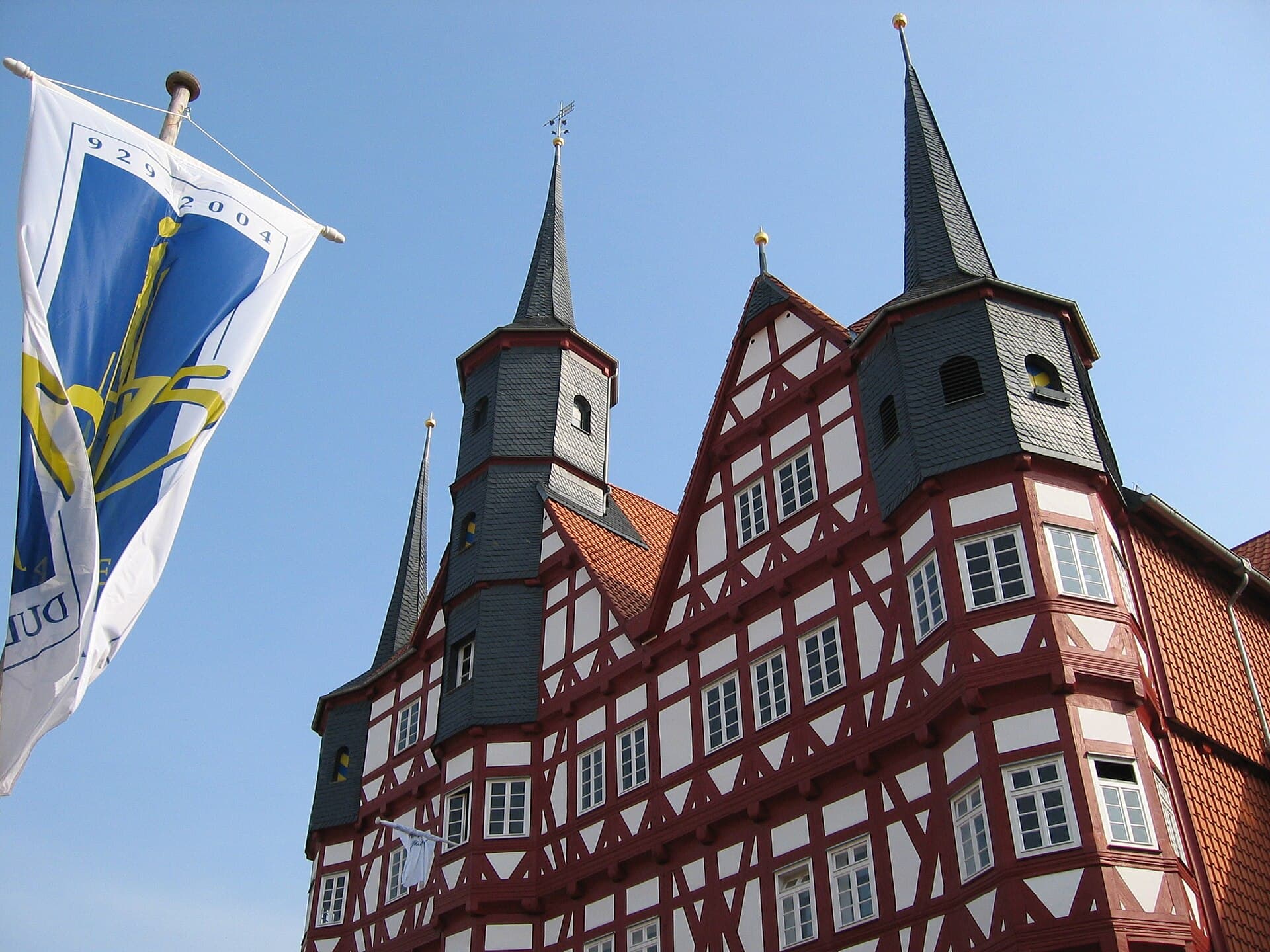 Unknown author / CC BY-SA 3.0, via Wikimedia Commons
Visite audio autoguidée de Duderstadt — parcours GPS à pied, lecture hors ligne, narration en 32 langues.
“Où les colombages millénaires encadrent des histoires séculaires.”
Pas les cartes postales. Les histoires que même les habitants ignorent — soufflées à l'oreille, là où elles se sont passées.
Le Westerturm, la distinctive tour en spirale de Duderstadt, recèle un secret concernant sa forme inhabituelle.
Le vénérable Hôtel de Ville de Duderstadt, parmi les plus anciens d'Allemagne, abrita autrefois des occupants inattendus qui interrompirent sa restauration.
Toutes les deux heures, une figure en bois émerge de l'Hôtel de Ville de Duderstadt, saluant ceux qui sont rassemblés sur la place du marché.
Découvrez tous les secrets de Duderstadt
Chaque adresse, chaque révélation en entier — dans ton oreille, là où elle s'est passée.
Tu choisis tes lieux. Tu marches. La voix te révèle ce que les autres ignorent.

Votre visite audioguidée de Duderstadt vous attend — choisissez vos lieux, votre langue, et lancez-vous dès votre arrivée.
AcheterLume intègre un guide en réalité augmentée. Levez votre téléphone : sa caméra montre la rue devant vous, avec une flèche lumineuse posée sur l'image réelle qui pointe toujours vers votre prochain arrêt — aucune carte à déchiffrer, aucun mauvais virage. Comme tout dans Lume, ça fonctionne entièrement hors-ligne.
Duderstadt, une ville captivante du sud de la Basse-Saxe, en Allemagne, vous invite à un voyage à travers le temps. Célébrée pour son cœur médiéval exceptionnellement préservé, la ville est une pierre angulaire de la Route allemande des maisons à colombages, présentant plus de 600 structures à colombages de diverses époques architecturales. Ses rues attrayantes, sa place de marché historique et ses grandes tours d'église racontent une chronique s'étendant sur plus d'un millénaire. En tant que cœur de la région du nord de l'Eichsfeld, Duderstadt offre une fenêtre fascinante sur le passé de l'Allemagne et une riche rencontre culturelle.
Au-delà de sa grandeur architecturale, Duderstadt est embrassée par la splendeur naturelle de la région de l'Eichsfeld et repose à la lisière sud des montagnes du Harz. Cette fusion de poids historique et d'environnement pittoresque en fait une destination idéale pour ceux qui recherchent à la fois une immersion culturelle et une exploration en plein air. Que vous soyez un passionné d'histoire, un admirateur d'architecture ou simplement un flâneur curieux, Duderstadt promet une expérience inoubliable.
L'histoire documentée de Duderstadt remonte à 929 après J.-C., une année que la ville considère toujours comme sa genèse. Initialement une propriété privée de l'archevêque catholique romain de Mayence, cette possession clarifie la profonde influence catholique qui a façonné la région. La colonie a officiellement obtenu le statut de ville au milieu du XIIIe siècle.
Au Moyen Âge, Duderstadt a prospéré en tant que poste de commerce important, bénéficiant de sa position stratégique au confluent de deux routes commerciales cruciales. Cette opulence a stimulé la construction d'édifices civiques remarquables. L'Hôtel de Ville, par exemple, a commencé comme une maison de commerce en grès de deux étages en 1302/1303, évoluant plus tard en l'édifice à colombages frappant visible aujourd'hui. Les défenses de la ville, y compris le distinctif Westerturm, ont également été établies à cette époque, le Westerturm étant documenté pour la première fois en 1343.
Le XVIe siècle a apporté à la fois une prospérité continue et de nouvelles épreuves, y compris la construction d'un mur d'enceinte de trois kilomètres de long en 1506 et des conflits religieux pendant la Réforme. Au fil des siècles, Duderstadt a traversé divers conflits et conflagrations, notamment un incendie destructeur en 1424 qui a consumé une grande partie de la ville, y compris le Westerturm original. Malgré ces adversités, Duderstadt a remarquablement conservé une grande partie de son caractère médiéval, évident dans son architecture à colombages magnifiquement préservée et ses bâtiments historiques. Même l'avènement du chemin de fer au XIXe siècle, tout en reliant d'autres villes, a laissé Duderstadt quelque peu en dehors des routes principales, contribuant à la sauvegarde de son essence historique.
Des efforts de restauration substantiels à la fin du XXe et au début du XXIe siècle ont en outre assuré la longévité du patrimoine de Duderstadt. L'Hôtel de Ville a subi une restauration approfondie de 1982 à 1987 et de nouveau en 2002. Le Westerturm, menaçant de s'effondrer en 1999, a subi une rénovation complète de 2002 à 2004, rouvrant en 2004 pour coïncider avec le 1075e anniversaire de la ville. Aujourd'hui, Duderstadt continue d'honorer son passé tout en offrant un présent culturel animé, ses bâtiments historiques servant de cadres pour des musées et des rassemblements communautaires.
L'artère centrale de Duderstadt, Marktstraße, est bordée de magnifiques maisons à colombages et constitue un point central pour l'exploration. L'hôtel de ville historique, avec son carillon et la figure mécanique de l''Anreischke', se dresse comme un repère proéminent, ses origines remontant au début du XIVe siècle. Vous pouvez entreprendre une visite de l'ancienne structure, de sa cave à vin et de son ancienne chambre de torture aux tours sous le toit, offrant des perspectives sur la ville.
Le Westerturm, une porte de ville emblématique de 1343 avec son toit en spirale caractéristique, est un autre site incontournable. Il abrite un musée dédié à la défense médiévale de la ville et à la société de tir de Duderstadt, et les visiteurs peuvent marcher sur un segment de l'ancienne muraille de la ville et monter à l'intérieur de la tour. L'héritage religieux de la ville est exposé dans l'impressionnante église gothique Saint-Cyriaque (Oberkirche) du XIIIe-XVe siècle et l'église Saint-Servais (Unterkirche), une église gothique tardive érigée entre 1370 et 1520.
Au-delà du centre-ville, le rempart en terre de 3 kilomètres de long encerclant la ville offre une promenade idéale, entourée de jardins communautaires et d'espaces verts. Les attractions à proximité incluent le musée de la frontière d'Eichsfeld, situé dans un ancien bureau de douane, qui offre une compréhension de l'histoire de la division allemande et présente des installations frontalières originales. Le Centre d'expérience nature Heinz Sielmann à Gut Herbigshagen présente des expositions interactives sur la durabilité et la biodiversité, ainsi que des enclos pour animaux et des vergers.
La période optimale pour visiter Duderstadt dépend de vos préférences. Le printemps et le début de l'automne offrent des températures douces et une flore en fleur, ce qui les rend agréables pour les activités de plein air et les visites touristiques. L'été apporte une atmosphère animée avec de nombreux festivals et événements, y compris le Schützenfest annuel de Duderstadt en juillet, l'un des plus anciens festivals de tir d'Allemagne. Les activités par temps chaud sont les plus agréables de fin juin à fin août, avec des températures maximales moyennes dépassant 19°C (67°F). L'hiver offre une ambiance réconfortante, particulièrement autour de la période des fêtes avec le marché de Noël de la ville. Bien que les températures soient plus froides, l'esprit festif en fait une période spéciale pour une visite.
Duderstadt est située dans le sud de l'État allemand de Basse-Saxe, à environ 30 kilomètres à l'est de Göttingen. La route la plus rapide vers Duderstadt passe par Göttingen, d'où vous pouvez louer une voiture ou prendre un bus (ligne 160). La ville est facilement traversable à pied, en particulier son centre historique piétonnier. Des visites guidées de la ville sont disponibles, axées sur l'histoire, l'art, l'architecture et même la population de chauves-souris de la ville. Des événements et festivals locaux ont lieu tout au long de l'année, donc consulter le calendrier local peut enrichir votre visite. Duderstadt offre une variété de choix d'hébergement, y compris des hôtels abordables et des locations de vacances. Pour ceux qui sont attirés par la nature, la région environnante de l'Eichsfeld offre des possibilités de randonnée et de cyclisme.
Duderstadt en coréen, en chinois ou en hébreu — et dans 29 autres langues, chaque étape narrée par une voix native. La plus large gamme de langues de tous les audioguides autoguidés.
Disponible en :