Cupola House
This 18th-century home has a permanent, unseen guest.
Full story unlocks in the tour
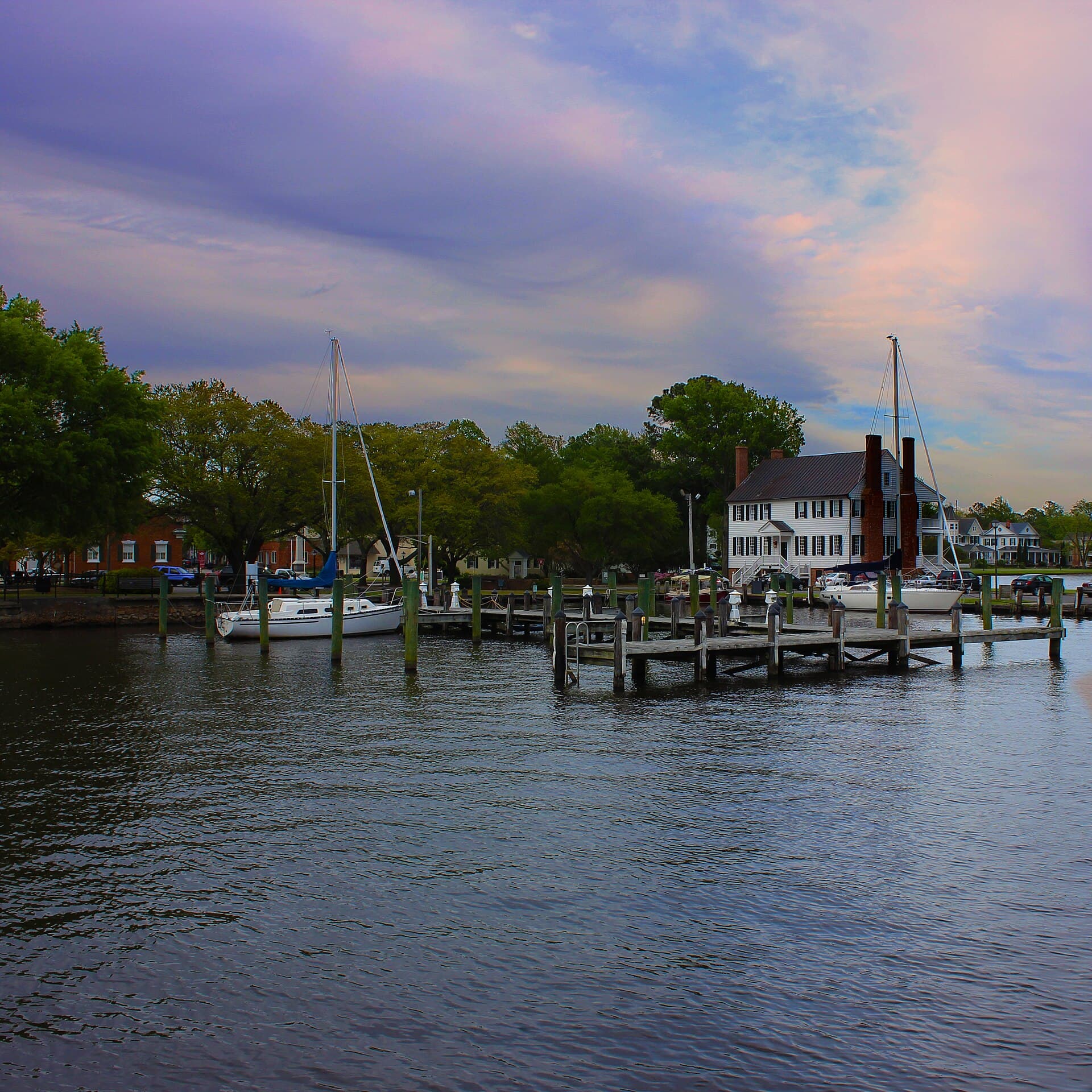 Tnewman39 / CC BY-SA 4.0, via Wikimedia Commons
Self-guided audio walking tour of Edenton — GPS route, offline playback, story-driven narration in 32 languages.
“Where colonial echoes meet Albemarle breezes.”
Not the postcards. The stories even locals don't know — whispered in your ear, right where they happened.
This 18th-century home has a permanent, unseen guest.
Knocks on the door of America's oldest operating courthouse aren't always from the living.
A Civil War colonel's ghastly return to a stately Edenton home.
Discover every secret of Edenton
Every address, every reveal in full — in your ear, right where it happened.
You pick your stops. You walk. The voice reveals what the others miss.

Your self-guided audio tour of Edenton is ready — pick your landmarks, choose your language, and start the moment you arrive.
BuyEdenton, North Carolina, often described as "America's Prettiest Small Town," offers a captivating journey into the past. Situated on the Albemarle Sound in the Inner Banks region, this appealing waterfront community is a living museum, where history is an everyday part of life for its residents. With an extensive historic district displaying architectural styles spanning over 300 years, Edenton invites visitors to explore a meticulously preserved colonial landscape.
Beyond its picturesque streetscapes and venerable homes, Edenton holds a significant place in the narrative of early America and North Carolina. It served as the first colonial capital of North Carolina from 1722 to 1743, making it a pivotal center of culture, trade, and politics. The town is recognized for its role in the American Revolution, particularly for the Edenton Tea Party, a landmark act of political defiance by women in 1774. Edenton's legacy is further enriched by the stories of influential figures who called it home, including signers of the Declaration of Independence and a U.S. Supreme Court Justice, alongside the poignant history of enslaved individuals who sought freedom through the Maritime Underground Railroad.
Edenton's story begins in the 17th century when farmers from Virginia, seeking better tobacco lands, settled along the Albemarle Sound and its navigable rivers. The town was formally established in 1712 as "the Towne on Queen Anne's Creek" and later incorporated in 1722, named in honor of Governor Charles Eden. From 1722 to 1743, Edenton served as North Carolina's first colonial capital, a busy port for the entire Albemarle region, where planters would send their tobacco and supplies.
The 18th century saw Edenton emerge as a focal point of resistance against British rule. The town played a crucial role in the lead-up to the American Revolution, most notably with the Edenton Tea Party in 1774. Fifty-one women, led by Penelope Barker, signed a petition boycotting British tea and other goods, marking the first known political action by women in the British American colonies. This courageous act resonated as far as London, where newspapers published etchings depicting the women as uncontrollable. Prominent figures like Supreme Court Justice James Iredell, Declaration of Independence signer Joseph Hewes, and Governor Samuel Johnston all resided in Edenton during this period, shaping not only local but also national history.
After the Revolution, Edenton's significance as a major port gradually diminished. A devastating hurricane in 1795 deposited silt into the Albemarle Sound's ocean inlet, further isolating the town. By the 1860 census, Edenton had fallen to the eighth-largest town in the state. However, its coastal position and proximity to Norfolk allowed it to retain a degree of importance in shipping and water transportation. During the Civil War, Edenton became a strategic target and was occupied by Union forces after the capture of Roanoke Island.
The late 19th century brought an economic revival, fueled by lumbering, the establishment of a cotton mill in the 1890s, and a peanut-processing plant. This era saw the construction of many stately Victorian homes that still grace the historic district. In the 20th century, Edenton embraced its deep historical legacy, becoming a pioneer in the historic preservation movement in North Carolina. The purchase and restoration of the 1758 Cupola House in 1918 by a local association is considered the earliest community preservation effort in the state. Today, Edenton continues to define itself through its commitment to preserving and sharing its remarkable past.
A visit to Edenton is a step back in time, with numerous well-preserved sites waiting to be explored. Begin at the Historic Edenton State Historic Site Visitor Center (108 N. Broad St.) to orient yourself and consider a guided tour, which offers access to several key buildings.
No visit is complete without seeing the 1767 Chowan County Courthouse, recognized as the oldest operating colonial courthouse in America and a National Historic Landmark. Nearby, the Cupola House, built between 1756 and 1758, is a unique architectural marvel, notable for its overhanging second floor. The Penelope Barker House, serving as the town's Welcome Center, commemorates the brave women of the Edenton Tea Party.
Stroll along the waterfront to admire the 1886 Roanoke River Lighthouse, a screw-pile design lighthouse that once guided vessels through the sound and is now a museum. History enthusiasts will also appreciate the James Iredell House, the 1773 home of a U.S. Supreme Court Justice. For a broader perspective, consider the Historic Trolley Tour, which provides a narrated journey through the Downtown Historic District and the Edenton Cotton Mill Village.
Edenton is delightful year-round, but the shoulder seasons of spring (April-May) and fall (September-October) offer the most pleasant weather for walking tours and outdoor exploration. Temperatures are mild, and the natural beauty of the Albemarle Sound region is at its peak. Summer (June-August) can be warm and humid, but also offers extended daylight hours and opportunities for water activities. Winter (November-March) is generally mild, with fewer crowds, making it ideal for a quieter historical immersion. Check the Historic Edenton State Historic Site's calendar for special events and living history programs, particularly around the anniversary of the Edenton Tea Party in October.
Edenton is best explored on foot, allowing you to appreciate its historic streetscapes and waterfront. The Historic Edenton State Historic Site Visitor Center (108 N. Broad St.) is your first stop for maps, information, and to book guided tours. Parking is generally available in the downtown area. While Edenton is not directly on an interstate, it's accessible via US-17. The town is pedestrian-friendly, and many historic sites are within walking distance of each other. For those with limited mobility or seeking a more comprehensive overview, the Historic Trolley Tour is an excellent option. Accommodations range from charming bed & breakfasts to vacation rentals and full-service hotels. The local economy is primarily driven by tourism, so you'll find a variety of dining and shopping options, particularly in the downtown area.
Edenton in Korean, in Chinese or in Hebrew — and 29 more languages, every stop narrated by a native voice. The widest language range of any self-guided audio tour.
Available in: