L'intersection de deux lignes imaginaires
Highlands a commencé avec une prémisse inhabituelle, un pari géographique de deux promoteurs du Kansas.
L'histoire complète se débloque dans le tour
 Photo: Jonathan Smith / Unsplash
Visite audio autoguidée de Highlands — parcours GPS à pied, lecture hors ligne, narration en 32 langues.
“Là où l'élégance montagnarde rencontre la nature sauvage, et où l'histoire résonne de chaque sommet.”
Pas les cartes postales. Les histoires que même les habitants ignorent — soufflées à l'oreille, là où elles se sont passées.
Highlands a commencé avec une prémisse inhabituelle, un pari géographique de deux promoteurs du Kansas.
Highlands fut autrefois le théâtre d'un bref et dramatique conflit connu sous le nom de 'Guerre des Mocassins'.
Un golfeur légendaire a contribué à établir Highlands comme destination de golf de luxe.
Découvrez tous les secrets de Highlands
Chaque adresse, chaque révélation en entier — dans ton oreille, là où elle s'est passée.
Tu choisis tes lieux. Tu marches. La voix te révèle ce que les autres ignorent.

Votre visite audioguidée de Highlands vous attend — choisissez vos lieux, votre langue, et lancez-vous dès votre arrivée.
AcheterÀ une altitude de 1 255 mètres, Highlands, en Caroline du Nord, offre une évasion fraîche en montagne au cœur des Appalaches du Sud. Cette ville distinctive, l'une des municipalités incorporées les plus élevées à l'est du fleuve Mississippi, a été fondée en 1875 par deux promoteurs du Kansas avec une vision ambitieuse, bien que légèrement mal calculée. Ils croyaient que l'intersection de lignes tracées depuis les grandes villes du pays ferait de Highlands un centre commercial animé. Bien que cette prophétie particulière ne se soit pas tout à fait matérialisée, ce qui a émergé à la place fut une station de santé et d'été distinctive, attirant les visiteurs par son air pur et ses paysages verdoyants.
Aujourd'hui, Highlands conserve son attrait en tant que destination de montagne sophistiquée. Entourée par la forêt nationale protégée de Nantahala, sa croissance a été soigneusement gérée, contribuant à son attrait exclusif et à son environnement immaculé. La ville allie harmonieusement son passé pionnier aux commodités modernes, offrant un centre-ville animé avec des boutiques uniques, des restaurants réputés et un fort sentiment de communauté. Son altitude assure un climat rafraîchissant, ce qui en fait une retraite privilégiée contre la chaleur estivale du Grand Sud, et un spectacle spectaculaire de couleurs automnales.
Au-delà de son centre-ville soigné, Highlands est une porte d'entrée vers une beauté naturelle abondante. Des cascades dévalent d'anciennes parois rocheuses, des sentiers de randonnée serpentent à travers des forêts diverses, et l'histoire géologique du plateau parle d'origines volcaniques et de minéraux insoupçonnés. C'est un endroit où la sauvagerie des montagnes rencontre le raffinement d'une ville de villégiature, créant une expérience à la fois revigorante et profondément relaxante.
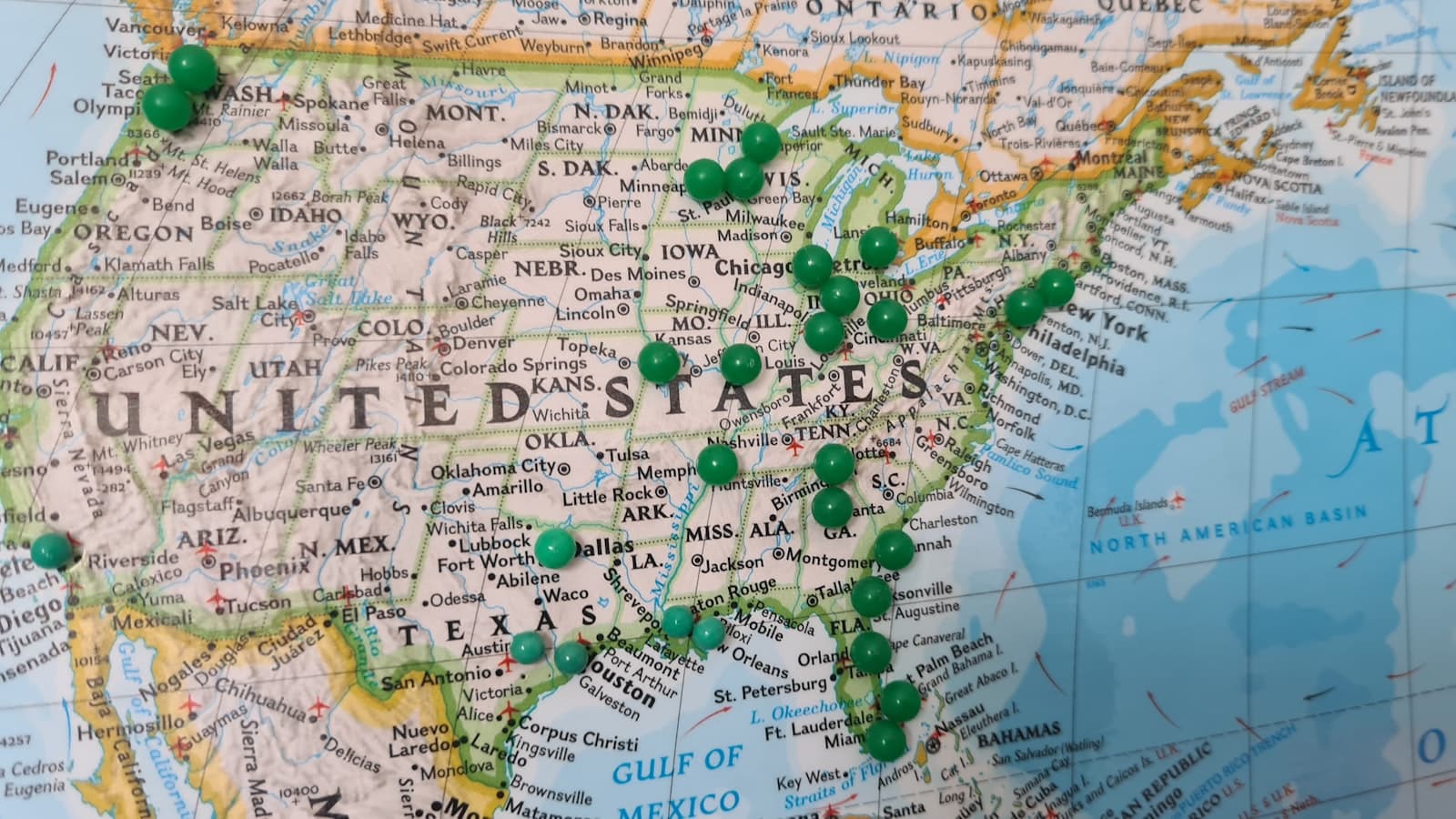
L'histoire de Highlands commence en 1875 avec Samuel Truman Kelsey et Clinton Carter Hutchinson, deux promoteurs du Kansas. La légende veut qu'ils aient tracé deux lignes qui se croisent sur une carte – l'une de Chicago à Savannah et l'autre de New York à La Nouvelle-Orléans – croyant que cet endroit précis deviendrait un carrefour commercial majeur. Si leur grande vision d'un centre commercial ne s'est jamais pleinement matérialisée (Atlanta a revendiqué ce destin), leur emplacement choisi, nommé Highlands pour son impressionnante élévation, est plutôt devenu une station de santé et d'été renommée.
Avant Kelsey et Hutchinson, le capitaine Joseph W. Dobson possédait une grande partie des terres qui constituent aujourd'hui le centre-ville de Highlands, l'utilisant pour le bétail. Hugh et Mary Ann Gibson, gardiens de ses animaux, sont reconnus comme les premiers colons du Highlands moderne en 1844. Les débuts de la ville furent marqués par un mélange d'esprit pionnier et un désir d'un climat plus frais. En 1883, près de 300 personnes s'y étaient installées, établissant des magasins, un bureau de poste, un hôtel et des églises.
L'un des chapitres les plus colorés du passé de Highlands est la 'Guerre des Mocassins' de 1885. En tant que ville 'sèche', Highlands s'est retrouvée en conflit avec les vendeurs d'alcool de la Géorgie voisine. L'arrestation de deux contrebandiers géorgiens a déclenché une impasse de trois jours sur Main Street, avec des échanges de tirs et un décès, illustrant de manière vivante les forts courants moraux et économiques de l'époque.
Le début du 20e siècle a vu Highlands contribuer à l'innovation médicale. Mary Lapham, une pionnière du traitement de la tuberculose, a établi un sanatorium où les patients étaient logés dans des tentes en plein air, comme le 'Bug Hill Cottage', pour bénéficier de l'air frais de la montagne. Bien que le sanatorium ait ensuite brûlé, l'héritage de Lapham en matière de santé publique demeure. La ville a également subi des changements importants à la fin des années 1920 avec l'endiguement de la rivière Cullasaja, créant le lac Sequoyah pour l'énergie hydroélectrique et ouvrant la voie à un meilleur accès routier, y compris la route panoramique vers Franklin.
Le golf a joué un rôle crucial dans la formation de l'identité de Highlands en tant que destination de luxe. Le Highlands Country Club, conçu par Donald Ross, a ouvert en 1928, avec la légende du golf Bobby Jones effectuant le drive inaugural. Cet événement a contribué à solidifier la réputation de Highlands en tant que lieu de golf de premier plan. Au fil des décennies, le mélange unique de beauté naturelle, de climat frais et d'atmosphère exclusive de la ville a attiré une communauté diversifiée d'artistes, de professionnels et de ceux qui recherchent un style de vie montagnard raffiné. La forêt nationale de Nantahala environnante et une planification stricte de l'utilisation des terres ont veillé à ce que Highlands conserve son caractère et son attrait distincts, empêchant un développement incontrôlé et préservant ses atouts naturels.
Highlands offre un mélange de merveilles naturelles et d'expériences culturelles. Commencez votre exploration au Village historique de la Highlands Historical Society, où vous pourrez remonter le temps à la Prince House, la plus ancienne maison existante de Highlands, datant de 1877. Le village abrite également le Highlands Historical Museum et l'unique Bug Hill Cottage, une structure en plein air utilisée pour les patients atteints de tuberculose au début des années 1900. Ne manquez pas l'Audioguide des bâtiments historiques, qui vous guide à travers 17 sites importants de la ville, révélant leurs histoires via des codes QR.
Pour les amateurs de plein air, la région est un paradis de cascades et de sentiers de randonnée. Conduisez le long de l'autoroute 64 Ouest pour découvrir les Bridal Veil Falls, les Dry Falls et les Cullasaja Falls. Bien que vous ne puissiez plus passer en voiture derrière les Bridal Veil Falls en raison du verglas hivernal, elles conservent la distinction d'être la seule cascade de Caroline du Nord derrière laquelle un véhicule pouvait passer. Au sud de Highlands, sur l'autoroute 106, vous trouverez les Glen Falls. La Forêt nationale de Nantahala offre de nombreuses possibilités de randonnée, y compris des sentiers sur le Whiteside Mountain et dans la Panthertown Valley. Pour une source naturelle unique avec un nom biblique, cherchez Moses Rock sur la route de Horse Cove.
Promenez-vous le long de Main Street pour découvrir le cœur commercial animé de la ville, abritant des entreprises historiques comme Wit's End, un magasin de vêtements familial depuis 1940, et Reeves Hardware, une pierre angulaire depuis 1944. Le Highlands Inn, le premier hôtel de la ville construit en 1880, est un autre monument historique à noter. Gardez l'œil ouvert pour l'érable 'Signal' au coin de la 4e et Main Street, connu pour être le premier à montrer les couleurs de l'automne.
Highlands est une destination ouverte toute l'année, mais chaque saison offre une expérience distincte. L'été (juin-août) est particulièrement populaire en raison des températures fraîches de la ville, atteignant en moyenne environ 24 degrés Celsius en juillet, offrant une évasion bienvenue de la chaleur des basses altitudes. L'automne (septembre-novembre) est spectaculaire pour admirer le brillant feuillage d'automne, l'érable 'Signal' sur Main Street étant souvent le premier à changer. Le printemps (avril-mai) apporte des fleurs sauvages en pleine floraison et un temps agréable pour la randonnée. L'hiver (décembre-mars) peut être assez froid avec un potentiel de neige et de glace, en particulier sur les routes de montagne, alors soyez prêt aux conditions de conduite.
Highlands est située dans le comté de Macon, en Caroline du Nord, à une altitude de 1 255 mètres. L'accès à Highlands se fait principalement par des routes de montagne sinueuses à deux voies, alors prévoyez suffisamment de temps de trajet et soyez attentif aux conditions routières, surtout pendant les mois d'hiver où le verglas peut être un facteur. Il n'y a pas de transports en commun à Highlands, donc un véhicule personnel est essentiel pour explorer la ville et les attractions naturelles environnantes. Le stationnement est généralement disponible dans les zones désignées du centre-ville. Le service cellulaire est fiable dans la plupart des parties de la ville, mais la couverture peut être inégale sur certains sentiers de randonnée isolés. La ville est connue pour son style 'chic montagnard', mélangeant des équipements haut de gamme avec une atmosphère de plein air. Il est conseillé de faire des réservations pour les repas et l'hébergement, surtout pendant les hautes saisons.
Highlands en coréen, en chinois ou en hébreu — et dans 29 autres langues, chaque étape narrée par une voix native. La plus large gamme de langues de tous les audioguides autoguidés.
Disponible en :