Einbecker Brauhaus
Einbeck dio nombre a un renombrado estilo de cerveza, pero su historia de origen implica un viaje lingüístico y una potente bebida.
La historia completa se desbloquea en el tour
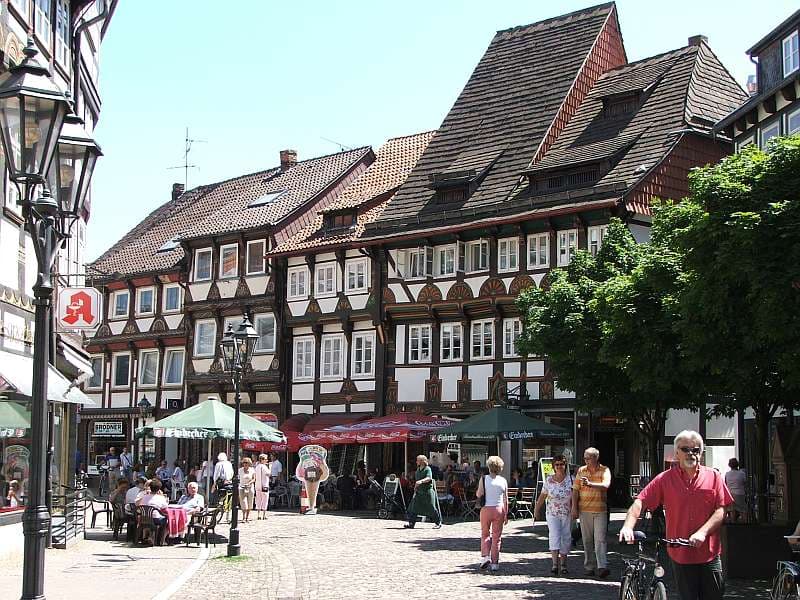 Unknown author / CC BY-SA 3.0, via Wikimedia Commons
Tour de audio autoguiado de Einbeck — ruta GPS a pie, reproducción offline, narración en 32 idiomas.
“Donde las casas con entramado de madera cuentan sus historias y la cerveza bock fluye a través de los siglos.”
No las postales. Las historias que ni los locales conocen — al oído, justo donde ocurrieron.
Einbeck dio nombre a un renombrado estilo de cerveza, pero su historia de origen implica un viaje lingüístico y una potente bebida.
Muchas de las casas con entramado de madera de Einbeck presentan puertas arqueadas inusualmente anchas, un detalle directamente relacionado con la principal industria histórica de la ciudad.
Einbeck conserva un oficio tradicional, alguna vez considerado una 'maravilla azul', que se ha practicado continuamente durante siglos.
Descubre todos los secretos de Einbeck
Cada dirección, cada revelación al completo — a tu oído, justo donde ocurrió.
Eliges tus paradas. Caminas. La voz te revela lo que los demás ignoran.


Tu tour de audioguía por Einbeck te espera — elige tus lugares, tu idioma y empieza al llegar.
ComprarLume incluye una guía de realidad aumentada. Levanta el móvil y su cámara muestra la calle que tienes delante, con una flecha luminosa sobre la imagen real que siempre apunta a tu próxima parada — sin mapas que descifrar, sin giros equivocados. Como todo en Lume, funciona completamente sin conexión.
Einbeck, una ciudad en el sur de Baja Sajonia, Alemania, ofrece un pasaje a través de siglos de tiempo, evidente en sus casas con entramado de madera cuidadosamente conservadas y calles empedradas. Situada entre las tierras altas del Weser, las regiones de Harz y Solling, Einbeck forma parte de la Ruta Alemana de los Entramados de Madera, mostrando un rico legado arquitectónico. Más allá de su atractivo visual, la ciudad está profundamente arraigada en una tradición cervecera que ha moldeado su identidad y economía durante más de 700 años.
Esta antigua ciudad hanseática, con una población de aproximadamente 29,751 habitantes, entrelaza su gracia histórica con notables atracciones contemporáneas, como el museo de vehículos antiguos más grande de Europa. Einbeck ofrece un retiro sereno, invitando a los visitantes a explorar sus ofertas culturales, desde artesanías tradicionales hasta delicias culinarias locales, todo dentro de una atmósfera tranquila de pueblo pequeño.
La historia de Einbeck se remonta a tiempos prehistóricos, con artefactos del Paleolítico descubiertos dentro y alrededor de la ciudad. La ciudad comenzó a tomar forma en la Alta Edad Media, recibiendo su carta de ciudad y estableciendo un consejo municipal en 1252. Una expansión significativa de su carta siguió en 1279. Para los siglos XIV y XV, Einbeck era un centro prominente, con su mercado, la iglesia de St. Jacob y el stift de St. Alexandri encerrados por murallas. El 'nuevo mercado' y la 'nueva ciudad', con su propia iglesia, St. Mary, surgieron a finales del siglo XIV.
La prosperidad económica de Einbeck durante la Edad Media fue impulsada en gran medida por su industria cervecera. Para el siglo XIV, la elaboración de cerveza era una actividad cívica generalizada, con más de 700 maestros cerveceros, y cada ciudadano de pleno derecho tenía el derecho a elaborar cerveza. El ayuntamiento desempeñó un papel activo, regulando la producción, comprando el excedente de cerveza y comercializándola en toda Alemania y más allá. La membresía de Einbeck en la Liga Hanseática, a partir de 1368, fue vital para distribuir su potente 'Ainpöckisch beer' por todo el norte de Europa, llegando a lugares como Hamburgo, Lübeck, Múnich e incluso Ámsterdam. Este período marcó una edad de oro, estableciendo a Einbeck como una de las ciudades más grandes del norte de Alemania.
Sin embargo, Einbeck encontró considerables dificultades. Un incendio destructivo en julio de 1540 consumió casi todos los edificios residenciales. La ciudad fue reconstruida rápidamente en los 15 años siguientes, lo que resultó en un estilo arquitectónico consistente de casas con entramado de madera, muchas con fechas de construcción talladas. Las bodegas originales, intactas por el fuego, a menudo se reutilizaron para las nuevas estructuras. La Guerra de los Treinta Años afectó aún más el dominio de Einbeck. En 1794, las operaciones cerveceras se consolidaron en una cervecería municipal de propiedad pública, convirtiéndose en la única cervecería de la ciudad. En el siglo XIX, la comunidad judía de Einbeck experimentó un crecimiento, dedicando una nueva sinagoga en 1896, que fue destruida más tarde en 1938.
Después de la Segunda Guerra Mundial, la población de Einbeck se duplicó debido a una afluencia de personas desplazadas, lo que llevó a una expansión residencial e industrial sustancial. Hoy en día, Einbeck continúa su legado con empresas como KWS SAAT AG, un proveedor global de semillas, con sede en la ciudad.
Comience su exploración en el Casco Antiguo de Einbeck (Historisches Altstadt), donde antiguas casas con entramado de madera bordean calles empedradas, creando un ambiente pintoresco. La Tiedexer Straße es particularmente notable por su larga e ininterrumpida hilera de estos edificios históricos. Asegúrese de visitar la Plaza del Mercado (Marktplatz) y el Ayuntamiento (Rathaus), que ofrecen excelentes oportunidades para tomar fotografías. Ascienda a la torre de la Iglesia de St. Jacobi para disfrutar de amplias vistas de la colorida arquitectura de la ciudad. La Iglesia Colegiata de St. Alexandri, una de las iglesias góticas de salón más grandes del norte de Alemania, también merece una visita.
Para los entusiastas del automóvil, el PS.SPEICHER es una parada esencial. Este museo, situado en un antiguo granero, exhibe la colección más grande de vehículos antiguos de Europa, con más de 2,500 exhibiciones en cinco sitios, incluyendo motocicletas, automóviles, camiones, autobuses e incluso maquinaria agrícola. Sumérjase en la herencia cervecera de la ciudad en la Einbecker Brauhaus, donde puede hacer un recorrido, aprender sobre el proceso de elaboración y probar la renombrada cerveza Einbecker. Siga el Sendero de los Barriles de Cerveza de Einbeck por el Casco Antiguo, marcado por barriles de metal que brindan información sobre la historia cervecera de la ciudad. Para una experiencia cultural distintiva, visite el taller Einbecker Blaudruck, el negocio de impresión de índigo tradicional más antiguo de Europa, donde podrá observar el oficio de primera mano. El Stadtmuseum Einbeck también ofrece información sobre la historia de la ciudad y alberga el barril de cerveza más antiguo de Alemania.
La época más agradable para visitar Einbeck para actividades de clima cálido es desde finales de junio hasta principios de septiembre, cuando las temperaturas máximas diarias promedio superan los 19°C (67°F). Julio suele ser el mes más cálido, con una máxima promedio de 24°C (73°F). La primavera, de mayo a junio, también ofrece un clima templado y paisajes florecientes, lo que la convierte en una época agradable para una visita. Si bien el verano trae clima cálido y festivales locales, también puede significar más visitantes. El otoño ofrece un hermoso follaje y una experiencia más tranquila. Einbeck alberga varios festivales durante todo el año, incluido el Einbecker Maifest en mayo y un mercado navideño desde finales de noviembre hasta finales de diciembre.
Einbeck está estratégicamente ubicada en Alemania, lo que la hace accesible en coche a través de la carretera federal B3 y a unos 20 minutos de la autopista A7. Los viajes en tren desde grandes ciudades como Hamburgo o Berlín duran aproximadamente de 2.5 a 3 horas. Una vez en Einbeck, la ciudad se explora mejor a pie, especialmente el encantador Casco Antiguo con sus calles empedradas, por lo que son esenciales unos zapatos cómodos para caminar. También se pueden alquilar bicicletas para explorar la ciudad y sus alrededores naturales. Para la cocina local, asegúrese de probar la sustanciosa comida alemana y, por supuesto, la renombrada cerveza Einbecker, con más de 14 variedades disponibles en restaurantes y pubs locales. El molino de mostaza de Einbeck también ofrece degustaciones de sus mostazas molidas a la piedra. Consulte los eventos y festivales locales, ya que Einbeck es conocida por sus animadas celebraciones.
Einbeck en coreano, en chino o en hebreo — y 29 idiomas más, cada parada narrada por una voz nativa. La mayor variedad de idiomas de cualquier audioguía autoguiada.
Disponible en: