El Quseir Fort
This Ottoman-era fortress, a silent guardian overlooking the Red Sea, once served a surprising dual purpose beyond military defense.
Full story unlocks in the tour
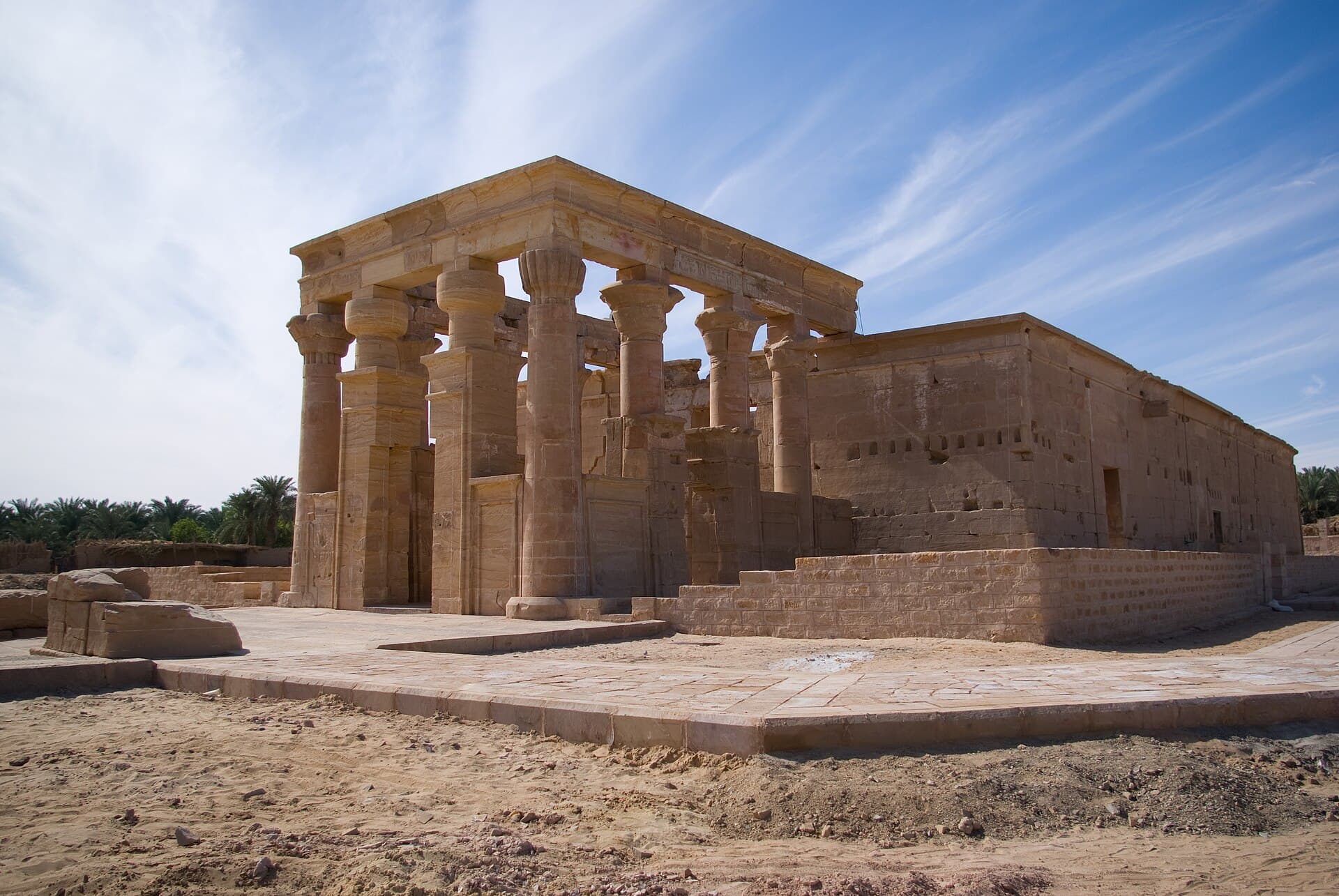 ASartan / cc by-sa 3.0, via Wikimedia Commons
Self-guided audio walking tour of El Quseir — GPS route, offline playback, story-driven narration in 32 languages.
“Where the desert sands meet the Red Sea, and ancient echoes resonate through time.”
Not the postcards. The stories even locals don't know — whispered in your ear, right where they happened.
This Ottoman-era fortress, a silent guardian overlooking the Red Sea, once served a surprising dual purpose beyond military defense.
The remnants of El Quseir's ancient Roman port hold a secret about its original name, which could hint at something far less grand than trade.
Along the ancient trade route connecting the Nile to the Red Sea, the desert landscape contains an unexpected, very early form of communication.
Discover every secret of El Quseir
Every address, every reveal in full — in your ear, right where it happened.
You pick your stops. You walk. The voice reveals what the others miss.


Your self-guided audio tour of El Quseir is ready — pick your landmarks, choose your language, and start the moment you arrive.
BuyLume has a built-in augmented-reality guide. Hold your phone up and its camera shows the street ahead of you, with a glowing arrow laid over the real view that always points to your next stop — no map to puzzle over, no wrong turns. Like everything in Lume, it works fully offline.
El Quseir, an ancient port town on Egypt's Red Sea coast, offers a window into a history spanning over 5,000 years. Situated between the more active resorts of Hurghada and Marsa Alam, El Quseir maintains a quieter, more authentic Egyptian character. Its strategic location, where the Wadi Hammamat trade route converged with the Red Sea, made it a vital link for commerce and pilgrimage for millennia.
Today, El Quseir is a destination for those seeking a blend of profound history, lively marine ecosystems, and a relaxed atmosphere. The town's architecture, with its coral-block houses, wooden mashrabiya balconies, and colorful doors, narrates stories of its past. From exploring ancient fortresses to diving among pristine coral reefs, El Quseir provides a distinctive Red Sea experience away from the crowds.
El Quseir's history extends back approximately 5,000 years, making it one of Egypt's oldest coastal cities. Known as Tjau in ancient Egyptian times, it served as a crucial port for Queen Hatshepsut's expeditions around 1470 BCE, notably her famous journey to the Land of Punt to acquire exotic goods like frankincense, myrrh, and ebony. This early recognition of its strategic value established El Quseir as a gateway for importing vital commodities, including gold.
During the Graeco-Roman period, the port, then called Myos Hormos (meaning 'Mussel Harbour' or 'Mouse Harbour'), thrived as a major commercial hub. From the 1st century BCE to the 3rd century CE, it was a critical node in the vast trade network connecting the Mediterranean world with India, Arabia, and the Horn of Africa. Ships laden with Egyptian grain, glassware, and wine departed for distant lands, returning with precious spices, silk, pearls, and ivory. The desert road to Coptos on the Nile, part of the Wadi Hammamat route, became one of the busiest commercial arteries, protected by fortified way stations.
With the rise of Islam, El Quseir maintained its commercial importance and gained new religious significance as a departure point for pilgrims traveling to Mecca. The Mamluk Sultanate fortified the town and encouraged trade with Yemen and India. In 1571, Sultan Selim I ordered the construction of a new port and the Ottoman Castle to control the port and safeguard the passage to Mecca. This fortress, modified by the French and British, played a vital role in protecting trade routes and pilgrims. The town itself relocated from its medieval site, near the modern Mövenpick hotel, to its current location around the fort and harbor in the late 16th century.
El Quseir's strategic significance diminished with the opening of the Suez Canal in 1869, leading to a period of decline. However, it continued to be used by the Egyptian coast guard until 1975. In the 20th century, the town also saw an economic boom due to phosphate mining, attracting Italian engineers and creating a multicultural population that left its mark on the town's architecture. Today, El Quseir stands as an open museum, its history etched into every corner, from ancient ruins to Ottoman-era buildings.
Begin your exploration at the Ottoman Castle, a prominent 16th-century fortress built by Sultan Selim I. This coral stone structure, which once protected the port and Hajj pilgrims, now houses a museum offering wide views of the city and Red Sea. Within its confines, you'll find murals depicting Queen Hatshepsut's voyage to Punt and various artifacts.
Just 8 kilometers north of the city center lie the remnants of Quseir al-Qadim, the ancient Roman port of Myos Hormos. This archaeological site has yielded numerous artifacts of Indian and Chinese origin, testifying to its historical role in international trade. You can also visit the Shaykh Al-Farran Mosque, the oldest mosque in El Quseir, known for its traditional carved wooden balconies and old-world charm.
Stroll along the corniche, Sharia Port Said, bordered by narrow alleyways with old houses featuring wooden balconies and brightly painted doors. Here, you'll find small cafes and restaurants, offering a chance to observe local life and fishermen. Do not miss the Sheikh Tawfik House, a beautifully restored piece of Islamic architecture with a large, well-preserved mashrabiya. For a glimpse into more recent history, seek out the Church of the Blessed Virgin Mary, built in 1920, and the remnants of the Italian phosphate factory, which illuminate El Quseir's 20th-century economic past.
El Quseir enjoys agreeable weather year-round, but the ideal time to visit is from October through April. During these months, temperatures comfortably range between 20-28°C (68-82°F) with low humidity, perfect for outdoor activities and exploring the city. Spring and autumn offer a good balance of pleasant weather and moderate tourist numbers. While summer (June to August) can be intensely hot, exceeding 40°C (104°F), it also presents fewer crowds and potentially lower rates for budget-conscious travelers.
El Quseir is accessible via Hurghada International Airport (140 km north) or Marsa Alam International Airport (130 km south). Many hotels arrange private transfers, or you can pre-book shuttle services and taxis. Once in town, most attractions are within walking distance, especially around the fort and beach area. For longer distances or desert excursions, a car with a driver is recommended.
Egyptian pounds (EGP) are the local currency, and while ATMs are available, it's advisable to withdraw cash in larger cities as machines can occasionally run empty. Credit cards are accepted at many hotels and dive centers, but smaller establishments prefer cash. Egypt is a conservative Muslim country; modest dress is appreciated, particularly when exploring the old town or local markets. Lightweight linen or cotton clothing is ideal for the heat, and it's essential to use reef-safe sunscreen to protect both your skin and the delicate coral ecosystems.
El Quseir in Korean, in Chinese or in Hebrew — and 29 more languages, every stop narrated by a native voice. The widest language range of any self-guided audio tour.
Available in: