Ełk Castle
The island castle in Ełk, constructed by the Teutonic Knights, conceals a secret beneath its venerable walls.
Full story unlocks in the tour
 1957birth / CC BY-SA 4.0, via Wikimedia Commons
Self-guided audio walking tour of Ełk — GPS route, offline playback, story-driven narration in 32 languages.
“Where glacial waters meet ancient Teutonic foundations and Masurian character.”
Not the postcards. The stories even locals don't know — whispered in your ear, right where they happened.
The island castle in Ełk, constructed by the Teutonic Knights, conceals a secret beneath its venerable walls.
This appealing railway extends beyond tourism; it served a crucial function, linking distant villages to Ełk for decades, even through significant conflicts.
Observe the city's historic water tower, and you will find it is more than merely a functional structure.
Discover every secret of Ełk
Every address, every reveal in full — in your ear, right where it happened.
You pick your stops. You walk. The voice reveals what the others miss.


Your self-guided audio tour of Ełk is ready — pick your landmarks, choose your language, and start the moment you arrive.
BuyLume has a built-in augmented-reality guide. Hold your phone up and its camera shows the street ahead of you, with a glowing arrow laid over the real view that always points to your next stop — no map to puzzle over, no wrong turns. Like everything in Lume, it works fully offline.
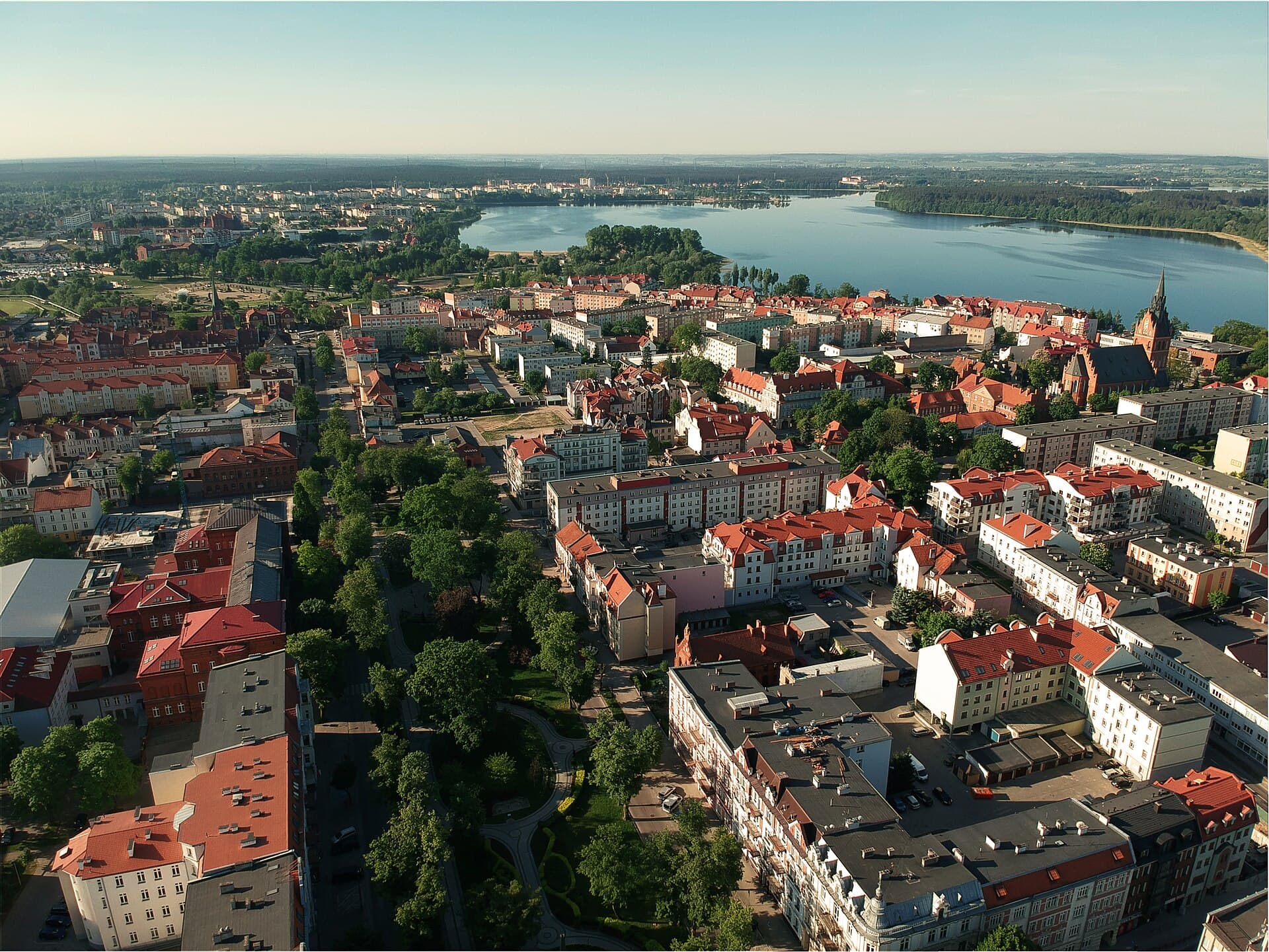
Ełk, a city in northeastern Poland, stands as the largest urban center in the evocative Masuria region. Situated along the shores of the glacial Ełk Lake and surrounded by expansive forests, the city offers a convergence of natural splendor and historical depth. Its landscape, sculpted by the last ice age, provides a tranquil setting for exploration, with a lengthy promenade inviting leisurely walks and bicycle rides along the lake.
Historically regarded as the capital of Masuria, Ełk's past is intimately woven with the Teutonic Order, Polish settlement, and a singular regional identity forged over centuries. Today, it functions as a significant rail and road junction, as well as a center for the food industry. Those who visit Ełk will uncover a city that embraces its past while looking toward a future focused on tourism and ecology, evidenced by its participation in the 'Green Lungs of Poland' program.
The origins of Ełk trace back to an Old Prussian settlement, with the area eventually brought under the control of the Teutonic Knights in 1283. A Teutonic stronghold was first documented in 1398, constructed on an island on Lake Ełk, likely to secure the border with Mazovia. This initial wooden castle, later rebuilt in brick in 1497, served as a strategic point and was the seat of the Teutonic pfleger, an official responsible for courts and collecting tributes.
Ełk's formal founding and town rights are somewhat debated, with some sources citing 1425 and others placing the town rights between 1435 and 1445. In the 16th century, Ełk thrived, becoming a leading center for Polish printing and education in Masuria. Weekly markets were established in 1560, and by 1600, the town's population was predominantly Polish. The town endured numerous challenges, including plagues in the 16th and 17th centuries, a major fire in 1651, and being burned by the Tartars in 1655.
After the secularization of the Teutonic Order in 1525, the region's population largely adopted Protestantism, which, along with the Masurian dialect, became central to the Masurian identity. Ełk regained its town rights in 1670 after a period of decline. The 18th and 19th centuries brought significant growth, marked by the opening of schools and pharmacies, and the arrival of railway links in the latter half of the 19th century, connecting Ełk to major cities like Königsberg. This period saw improvements in infrastructure, including fresh water supply and electricity.
The 20th century proved particularly turbulent for Ełk. The city sustained severe damage during both World War I and World War II. After World War II, in 1945, Ełk was incorporated into Poland, leading to a near-complete population exchange, with Polish settlers replacing the former inhabitants. In 1999, the city received a notable visit from Pope John Paul II. Today, Ełk continues to develop, balancing its historical legacy with modern aspirations.
Begin your exploration at the Ełk Lake promenade, a 6-kilometer path ideal for walking, cycling, or roller-skating, offering expansive views and access to playgrounds and parks. From here, you can discern the Ełk Observation Tower, sometimes called the 'Eye of Sauron,' which provides sweeping views of the lake and city.
Delve into history at the Ełk Narrow-Gauge Railway, one of Poland's few still-operating narrow-gauge lines. Take an evocative trip to Sypitki and visit the Historical Museum in Ełk, housed in the former railway station building, which displays historic trains and the city's past. Nearby, the Teutonic Knights' Castle, though largely converted into a prison until 1976, still stands on an island in the lake and offers a glimpse into the city's medieval origins.
Other notable architectural sights include the Art Nouveau tenements on Armia Krajowa and Kosciuszki Streets, the historic Water Tower with its Museum of the Water Drop, and the neo-Gothic St. Adalbert's Church (Katedra św. Wojciecha), a significant place of worship in eastern Masuria. For a moment of quiet contemplation, visit John Paul II Square, featuring a monument to the Pope and a boat-shaped concert stage. The oldest park in Ełk, Solidarity Park, also provides a peaceful escape with its 19th-century fountain and natural monuments.
The most pleasant time to visit Ełk for warm-weather activities extends from late June to late August, when average daily high temperatures remain above 18°C (64°F). July is typically the warmest month, with an average high of 23-24°C (73-75°F). This period also coincides with the busiest months for visitors. While summers can bring some rainy days, they are generally mild. For those who prefer slightly cooler weather and fewer crowds, late spring (May) and early fall (September and October) also offer agreeable conditions. Winters are cold and snowy, with January being the coldest month, averaging -5°C (23°F) at night and 1°C (34°F) during the day.
Ełk is located in northeastern Poland, approximately 230 km from Warsaw. As a significant rail and road junction, it is accessible by both car and train. The city's official population was 61,677 as of December 2021, though recent estimates for 2025 indicate a slight decrease to 58,889 in the city municipality. The local currency is the Polish Złoty (PLN). Many hotels and guesthouses are available, with options like Hotel Rydzewski and Horeka Hotel & Spa being popular choices. The city is developing its tourism infrastructure, with a focus on its natural surroundings. English is not as widely spoken as in larger Polish cities, so having a translation app or some basic Polish phrases can be helpful. The time in Ełk is Central European Time (CET), which is UTC+1.
Ełk in Korean, in Chinese or in Hebrew — and 29 more languages, every stop narrated by a native voice. The widest language range of any self-guided audio tour.
Available in: