Ostróda Castle
Imagine Napoleon, not in Paris, but within the walls of a small Polish castle, orchestrating an empire.
Full story unlocks in the tour
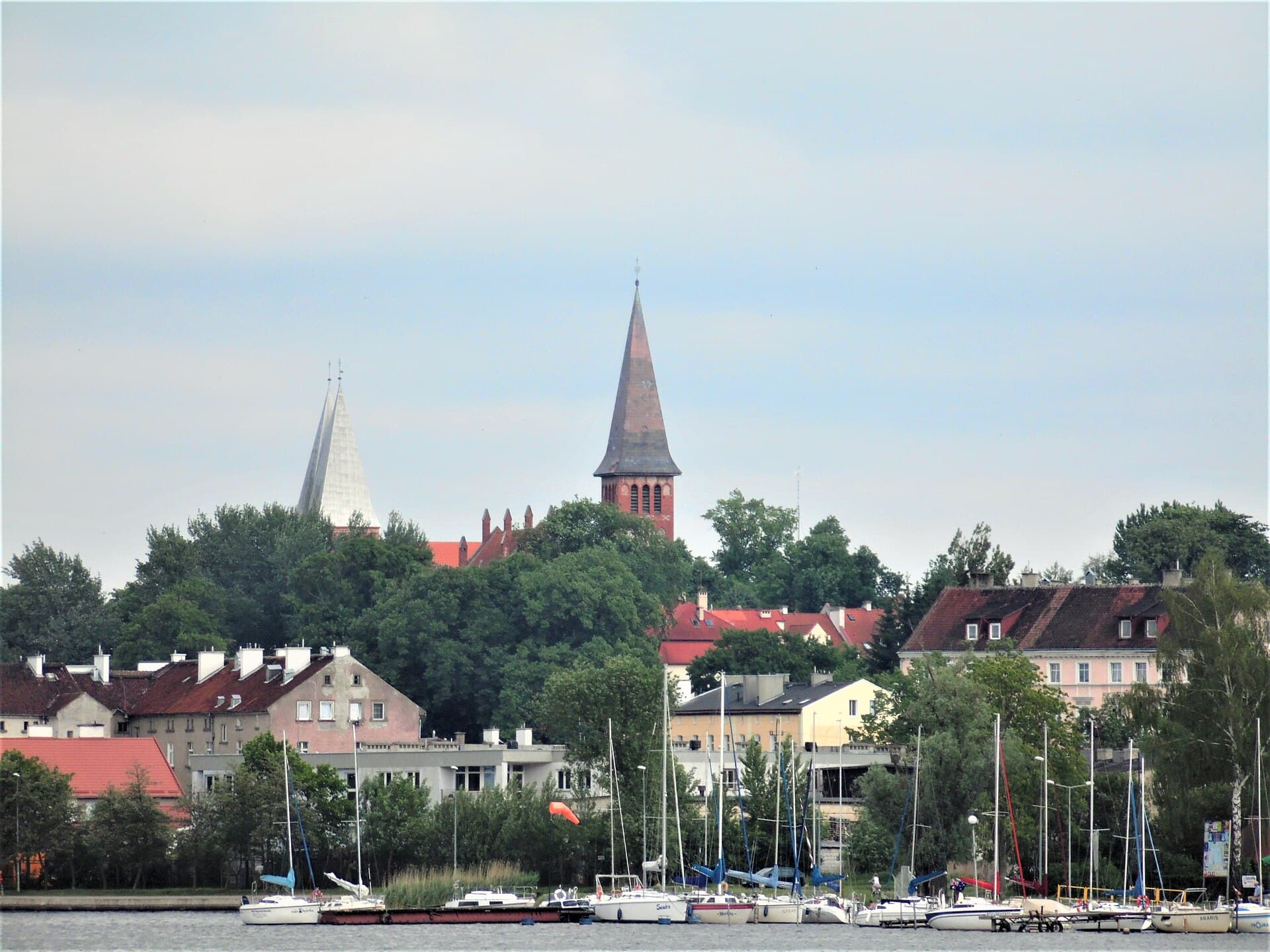 Antekbojar / CC BY-SA 4.0, via Wikimedia Commons
Self-guided audio walking tour of Ostróda — GPS route, offline playback, story-driven narration in 32 languages.
“Where Teutonic foundations meet Napoleonic ambition on Masuria's waters.”
Not the postcards. The stories even locals don't know — whispered in your ear, right where they happened.
Imagine Napoleon, not in Paris, but within the walls of a small Polish castle, orchestrating an empire.
The Battle of Grunwald was a pivotal moment in medieval history, and Ostróda played a grim, post-battle role.
Much of Ostróda's historic character was almost entirely erased in a single, devastating event.
Discover every secret of Ostróda
Every address, every reveal in full — in your ear, right where it happened.
You pick your stops. You walk. The voice reveals what the others miss.

Your self-guided audio tour of Ostróda is ready — pick your landmarks, choose your language, and start the moment you arrive.
BuyLume has a built-in augmented-reality guide. Hold your phone up and its camera shows the street ahead of you, with a glowing arrow laid over the real view that always points to your next stop — no map to puzzle over, no wrong turns. Like everything in Lume, it works fully offline.
Ostróda, often called the 'summer capital' of Masuria, is a picturesque town in northern Poland, situated amidst the Warmian-Masurian Voivodeship. Surrounded by as many as five lakes, with Lake Drwęckie at its heart, Ostróda offers a captivating blend of natural beauty and profound history. The Drwęca River, a designated nature reserve and popular kayaking route, flows into Lake Drwęckie, further enhancing the town's appeal for outdoor enthusiasts.
While Ostróda today is a lively hub for water sports, festivals, and leisurely strolls along its pier and European Boulevard, its past is marked by significant historical events and transformations. From its origins as a Teutonic stronghold to its brief but impactful role as Napoleon's headquarters, the town has witnessed centuries of change. Despite suffering extensive damage during World War II, Ostróda has carefully rebuilt and preserved its heritage, offering visitors a compelling journey through time.
## From Prussian Settlement to Teutonic Stronghold Ostróda's story begins with an original settlement of Old Prussians on an island where the Drwęca River flows into Lake Drwęckie. In the mid-13th century, the Teutonic Order recognized the strategic importance of this location and began constructing wooden earthworks to control the area and defend early Polish and German settlers. They named the new town Osterode, after Osterode am Harz in Germany. Between 1349 and 1370, the wooden fort was replaced with a more formidable stone castle under the supervision of commander Günter von Hohenstein. This castle quickly became a regional administrative, economic, and military center for the Order, playing a crucial role in their expansion and control of the southern border.
## Shifting Powers and Napoleonic Interlude Ostróda's strategic location meant it frequently changed hands throughout the Middle Ages. After the Battle of Grunwald in 1410, Polish King Władysław II Jagiełło briefly held the castle, even bringing the body of the fallen Grand Master Ulrich von Jungingen there. The town later co-founded the anti-Teutonic Prussian Confederation in 1440, leading to its incorporation into the Kingdom of Poland. The subsequent Thirteen Years' War saw Ostróda repeatedly captured by both Polish and Teutonic forces. In the 17th century, the castle hosted Swedish King Gustav Adolph, highlighting its continued importance.
One of the most dramatic chapters in Ostróda's history unfolded in 1807 when Napoleon Bonaparte established his headquarters in Ostróda Castle for nearly two months. From this relatively small town, he issued commands and managed his vast empire, leaving an indelible mark on the town's narrative. The castle, however, faced significant challenges, including a devastating fire in 1788 that destroyed its east wing and altered its structure.
## Modern Era and Reconstruction The 19th century saw Ostróda as a significant Polish cultural center, with Polish-language newspapers and a strong sense of national identity. However, the 20th century brought immense destruction. In 1945, the Red Army burned down much of Ostróda's old town, including the castle, which remained a ruin for nearly three decades. Reconstruction of the castle began in 1974 and was completed in 1996, restoring it to its post-1788 appearance. Today, Ostróda has emerged as a lively tourist destination, embracing its profound past while looking towards the future.
Begin your exploration at the Teutonic Castle, a meticulously reconstructed Gothic fortress that now houses a museum, library, and cultural center. Discover exhibits detailing Ostróda's history, including its time as Napoleon's headquarters, and view models depicting the town in earlier centuries. Adjacent to the castle, the Ostróda Pier extends into Lake Drwęckie, offering expansive views and a popular spot for leisurely strolls. The nearby European Boulevard hums with restaurants and a modern amphitheater, hosting various events throughout the year.
For a glimpse into the town's religious heritage, visit the Kościół św. Dominika Savio (St. Dominic Savio Church), the oldest church in Ostróda, which still retains fragments of its 14th-century Gothic walls. Another notable religious site is the Neo-Gothic Immaculate Conception Church, built in the mid-19th century, featuring a Gothic pietà from 1400 and beautiful stained-glass windows. Beyond the architectural marvels, Ostróda's true character lies in its connection to the water. Consider a boat cruise on Lake Drwęckie or explore sections of the historic Elbląg Canal, a unique waterway system that connects Ostróda to the Baltic coast. The canal's innovative inclined planes are a marvel of 19th-century engineering.
The most pleasant time to visit Ostróda for comfortable weather and outdoor activities is from June through August. During these summer months, daytime temperatures average a comfortable 24°C (75°F), making it ideal for lake cruises, festivals, and exploring the town. This period also sees the highest number of events, including the renowned Ostróda Reggae Festival and Days of Ostróda. For fewer crowds and potentially better value, consider the quieter months of October through December, though temperatures will be cooler. Winters (January to March) are very cold, with daytime highs around 1°C (34°F) and freezing nights.
Ostróda is easily accessible by car, situated near the S7 expressway, a major route connecting Gdańsk, Elbląg, and Warsaw. The town also has good regional road connections to Olsztyn, Iława, and Grunwald. For those traveling by train, Ostroda Station provides convenient access. Once in Ostróda, the town center is compact and walkable, especially the area around the lake, castle, and amphitheater. Local tourist information is available at Plac 1000-lecia Państwa Polskiego 1a, offering maps, leaflets, and information on cruises and events.
The local currency is the Polish Złoty (PLN), and Polish is the official language. While many in the tourism sector may speak English, learning a few basic Polish phrases is always appreciated. Ostróda is generally a safe city, but standard precautions against petty theft should always be observed, especially in crowded areas or during large festivals.
Ostróda in Korean, in Chinese or in Hebrew — and 29 more languages, every stop narrated by a native voice. The widest language range of any self-guided audio tour.
Available in: