Ålleberg mountain
Local lore speaks of a sleeping army, deep within a mountain, poised to defend Falköping in times of peril.
Full story unlocks in the tour
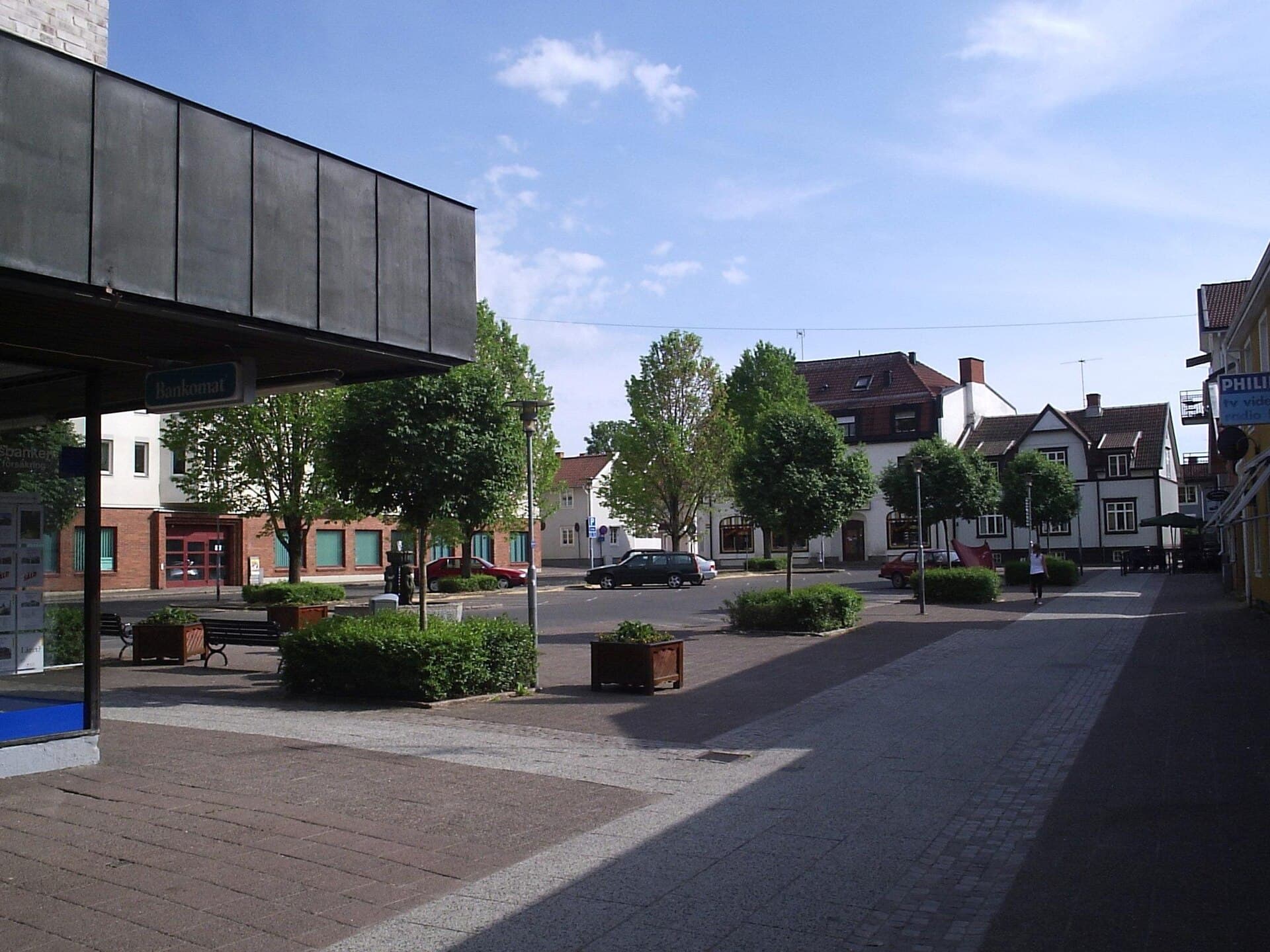 Harri Blomberg / CC BY-SA 3.0, via Wikimedia Commons
Self-guided audio walking tour of Falköping — GPS route, offline playback, story-driven narration in 32 languages.
“Where ancient echoes meet modern purpose, Falköping reveals a land shaped by ice, fire, and enduring spirit.”
Not the postcards. The stories even locals don't know — whispered in your ear, right where they happened.
Local lore speaks of a sleeping army, deep within a mountain, poised to defend Falköping in times of peril.
This agricultural expanse surrounding Falköping holds an extraordinary concentration of ancient burial grounds.
An ancient Stone Age burial chamber close to Falköping yielded a curious detail about its former occupants.
Discover every secret of Falköping
Every address, every reveal in full — in your ear, right where it happened.
You pick your stops. You walk. The voice reveals what the others miss.
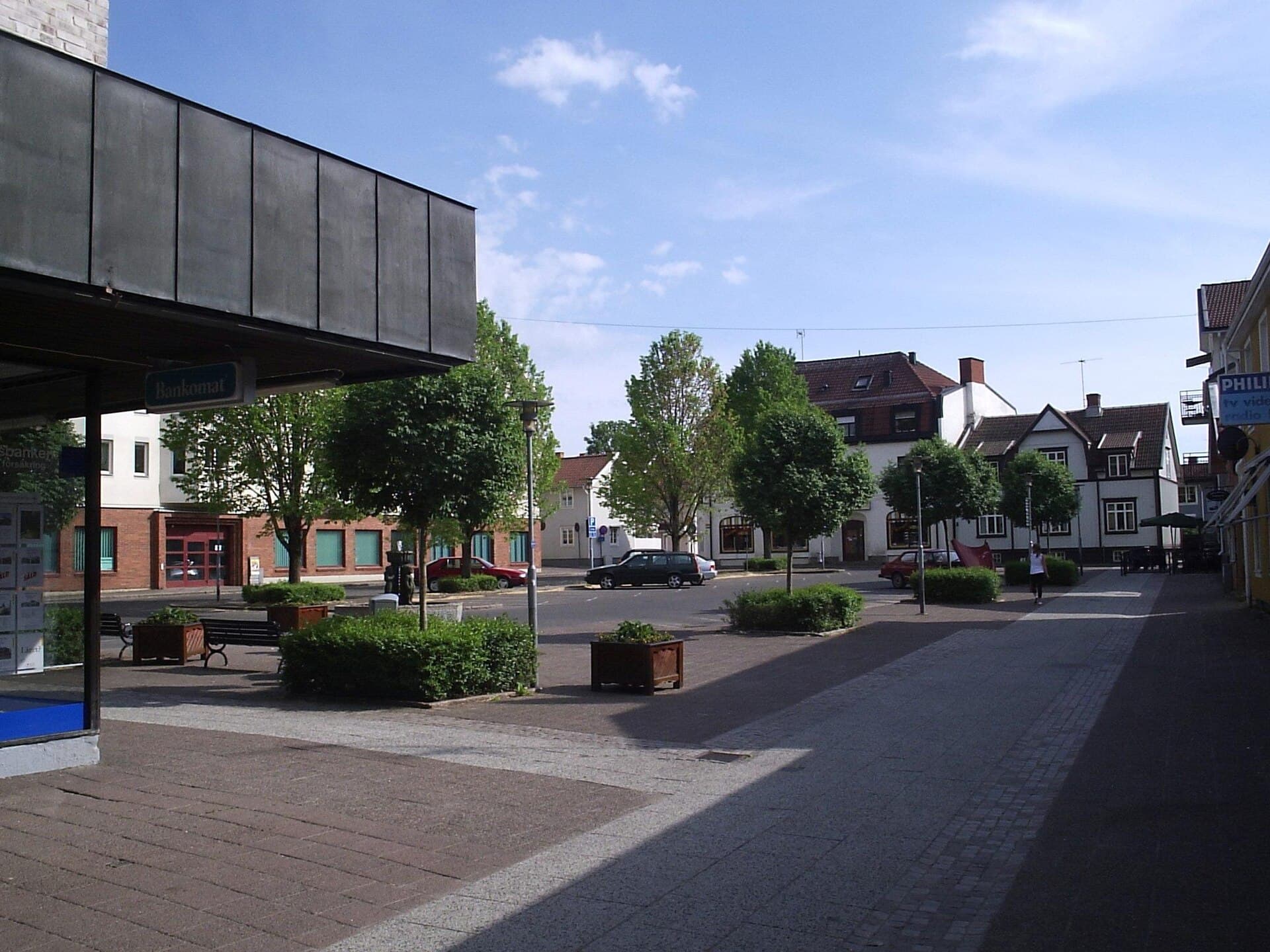
Your self-guided audio tour of Falköping is ready — pick your landmarks, choose your language, and start the moment you arrive.
BuyLume has a built-in augmented-reality guide. Hold your phone up and its camera shows the street ahead of you, with a glowing arrow laid over the real view that always points to your next stop — no map to puzzle over, no wrong turns. Like everything in Lume, it works fully offline.
Falköping, a town in Västra Götaland County, Sweden, offers a distinctive journey through time, where prehistoric mysteries intertwine with a lively present. Situated on the fertile plains of Falbygden, between the striking table mountains of Mösseberg and Ålleberg, the town possesses an exceptionally deep archaeological heritage. With a population of around 17,900, Falköping retains the appeal of a peaceful Scandinavian provincial town, yet serves as a significant hub due to its strategic location on the Western Main Line connecting Stockholm and Gothenburg.
Often called the 'gateway to Västergötland,' Falköping is an ideal starting point for exploring the surrounding region's natural splendor and cultural traditions. From ancient megalithic tombs scattered across the landscape to its celebrated cheese production, the town offers a blend of outdoor pursuits, historical locations, and local savories. Whether you are drawn to the echoes of ancient civilizations or the allure of contemporary Swedish life, Falköping provides an authentic and engaging experience.
The town's character is profoundly rooted in its past, with evidence of human habitation dating back to the end of the last ice age, approximately 6,000 years ago. This long history has shaped a landscape rich in narratives and visible remnants of bygone eras, inviting visitors to delve into a story that spans millennia.
## From Ice Age Settlements to Medieval Hub Falköping's history extends to the very end of the ice age, with evidence of human settlement in the Falbygden area for the last 6,000 years. The region is particularly notable for its concentration of megalithic tombs, including dolmens from 3400 B.C. and 28 passage graves from 3300 B.C., making it a significant center of Neolithic culture in Europe. These ancient burial sites, some even visible within the town itself, are a testament to early inhabitants and their sophisticated practices.
Before the advent of Christianity, the area around Falköping is believed to have been a vital religious center, possibly dedicated to the Norse goddess Frigg, associated with foresight and wisdom. The town's formation as an urban settlement began in the early Middle Ages, marked by the construction of Sankt Olofs kyrka (Saint Olaf's Church) in the 12th century. This church became an important pilgrimage site, drawing travelers and stimulating trade and services, and stands today as the city's oldest building.
## Battles, Fires, and Railway Boom Falköping played a role in shaping Scandinavian history, notably through the Battle of Åsle in 1389, fought near the town. This pivotal victory for Queen Margaret I's forces over King Albert of Mecklenburg paved the way for the creation of the Kalmar Union, uniting the Scandinavian countries. Despite its early importance, the town faced hardship in the 16th century, being almost entirely consumed by fire by the Danish army during the Northern Seven Years' War. However, Falköping persevered and was rebuilt, maintaining its role as an important hub in western Sweden.
A turning point in Falköping's development arrived in the mid-19th century with the completion of the Western Main Line, connecting Stockholm and Gothenburg. This transformed Falköping into a key railway junction, pulling the town out of centuries of relative isolation and ushering in an era of industrialization and increased trade. The town's unique 'dual city' development, contrasting its medieval core with the new station district, reflects this period of growth and transformation. Today, Falköping continues to evolve, balancing its deep historical roots with modern industry, including its celebrated cheese production.
Falköping offers a varied range of attractions, blending ancient history with natural beauty and local culture. Begin your exploration at the Falbygdens Museum, an archaeologically focused institution in the town center. Here, you can delve into the region's prehistoric past, viewing unique artifacts such as the 9,000-year-old dog skeleton, a Stone Age flute, and a replica of the Ålleberg gold collar. The museum also features the reconstructed face of the 'Raspberry Girl,' a Neolithic bog body.
For a deeper immersion into ancient history, visit the Ekornavallen burial ground, a remarkable site showcasing graves from the Stone, Bronze, and Iron Ages, spanning over 4,000 years of continuous use. You can also explore several megalithic tombs, including dolmens and passage graves, many of which are easily accessible within and around the town.
Nature enthusiasts will find calm in the Mösseberg Recreation Area, a plateau rising over the town with kilometers of hiking and running tracks, nature reserves, and a small zoo. Another iconic table mountain, Ålleberg, is known for its expansive panoramic views, gliding activities, and Sweden's only glider museum. Do not miss the opportunity to observe the spectacular crane dance at Lake Hornborga during spring.
For a taste of local flavor, a visit to Falbygdens Osteria is essential, where you can sample hundreds of cheese varieties. History enthusiasts can also explore Gudhem Medieval Convent and the recreated Stone Age village of Ekehagens Forntidsby. The town also offers inviting shops, cafes, and restaurants, perfect for a traditional Swedish fika.
The ideal time to visit Falköping is generally between May and September, when the weather is mild and pleasant, offering comfortable conditions for outdoor activities and exploring the town's historical sites. July and August are the warmest months, with daytime temperatures typically reaching 20-21°C, perfect for leisurely strolls and nature excursions. Spring, particularly March and April, is notable for the annual crane dance at Lake Hornborga, a unique natural spectacle. While summer is peak tourist season, offering long daylight hours and many festivals, autumn (September-November) sees fewer crowds and still pleasant temperatures, making it a more relaxed and potentially budget-friendly option. Winter, from November to March, brings colder temperatures and a chance of snow, creating a classic Scandinavian winter scene, though be prepared for shorter daylight hours.
Falköping is readily accessible by car, bus, or train, serving as a railway hub with good connections to major Swedish cities like Gothenburg and Stockholm. The closest major international airport is Göteborg Landvetter Airport (GOT), approximately 93.7 km away, with a taxi or rental car journey taking about 1 hour and 40 minutes.
Within Falköping, public transport consists of four bus lines originating from the town center, and walking is a pleasant way to explore. Sweden is largely a cashless society, so bank cards are widely accepted, and cash may not be necessary. Tipping is not mandatory as service is included, but rounding up in restaurants is a polite gesture. The town is generally very safe, allowing for evening strolls with standard precautions. The weather can be changeable, so dressing in layers and bringing a light jacket or raincoat is advisable, even in summer. For accommodation, booking several weeks or months in advance is recommended, especially during popular events like the crane dance at Lake Hornborga.
The Falköping Tourist Office is a valuable resource for information on the town and surrounding region.
Falköping in Korean, in Chinese or in Hebrew — and 29 more languages, every stop narrated by a native voice. The widest language range of any self-guided audio tour.
Available in: