Nordertor
This enduring city gate, a landmark of Flensburg, displays a motto that speaks to the city's aspirations.
Full story unlocks in the tour
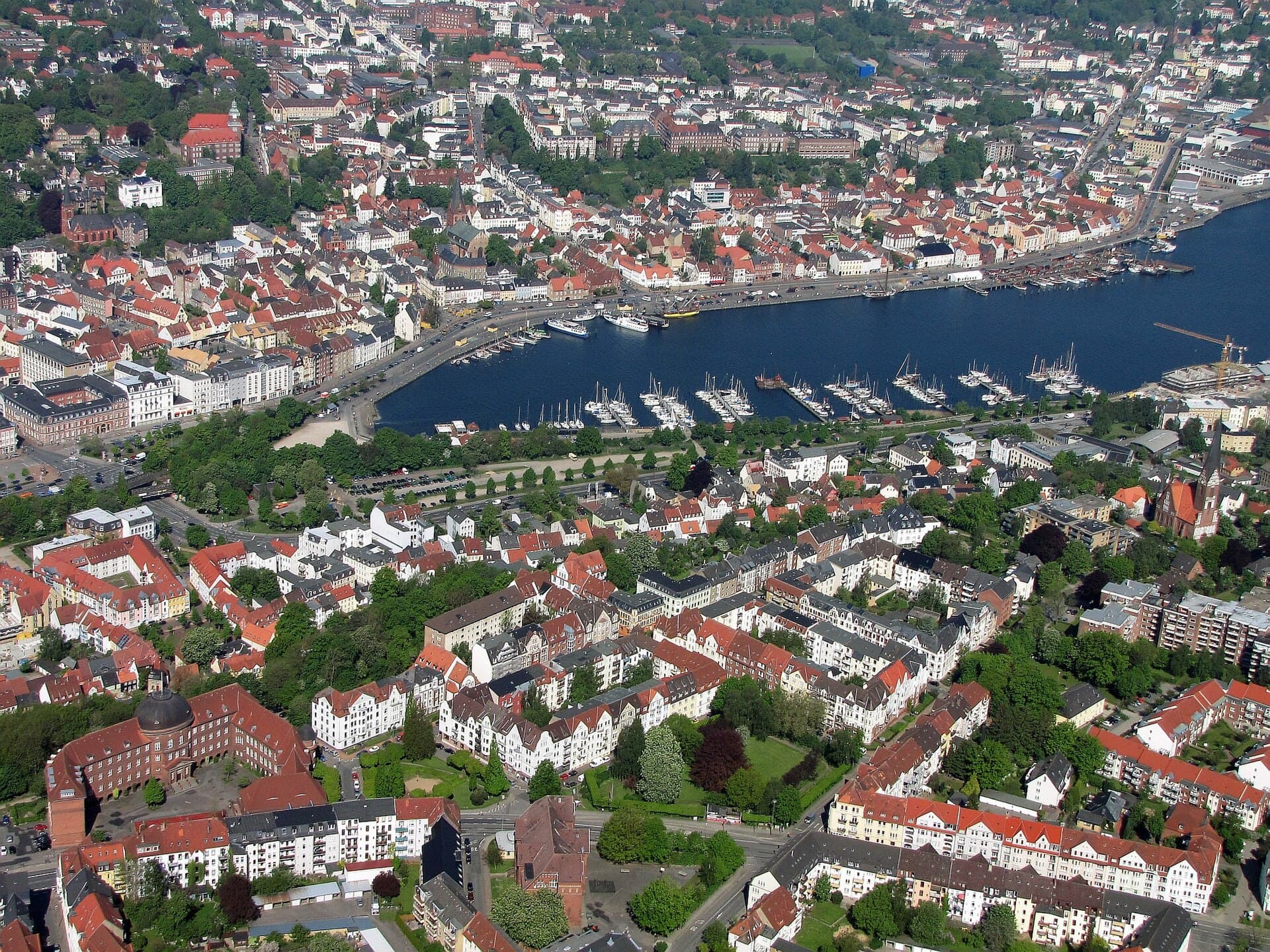 Wolfgang Pehlemann / CC BY-SA 3.0, via Wikimedia Commons
Self-guided audio walking tour of Flensburg — GPS route, offline playback, story-driven narration in 32 languages.
“Where German precision meets Danish comfort, with a hint of Caribbean rum.”
Not the postcards. The stories even locals don't know — whispered in your ear, right where they happened.
This enduring city gate, a landmark of Flensburg, displays a motto that speaks to the city's aspirations.
The calm waters of the Flensburg Fjord conceal a surprising linguistic evolution, born from leisurely excursions.
Germany is not typically associated with rum, yet Flensburg once held a surprising designation related to the spirit.
Discover every secret of Flensburg
Every address, every reveal in full — in your ear, right where it happened.
You pick your stops. You walk. The voice reveals what the others miss.


Your self-guided audio tour of Flensburg is ready — pick your landmarks, choose your language, and start the moment you arrive.
BuyLume has a built-in augmented-reality guide. Hold your phone up and its camera shows the street ahead of you, with a glowing arrow laid over the real view that always points to your next stop — no map to puzzle over, no wrong turns. Like everything in Lume, it works fully offline.
Flensburg, Germany's northernmost city, rests at the innermost reach of the Flensburg Fjord, an inlet of the Baltic Sea that delineates a natural boundary with Denmark. This singular geographical placement has profoundly shaped its identity, forging a captivating fusion of German and Danish cultures. From its venerable harbor, adorned with traditional sailing vessels and former merchant houses, to its appealing Old Town with narrow passages and secluded courtyards, Flensburg extends a distinctive European encounter.
The city's essence is a testament to its past as a significant trading port and its enduring connection to Denmark. You will encounter a relaxed atmosphere, where the German greeting "moin" is common, and Danish is frequently spoken alongside German. Flensburg is a city that encourages exploration on foot, revealing its maritime legacy, architectural grace, and a surprising narrative, including its particular role in the rum trade.
Flensburg's origins trace back to the 12th century, established by Danish settlers at the sheltered end of the Flensburg Firth. German merchants soon joined them, and by 1284, the settlement was granted town rights, swiftly becoming a vital port in the Duchy of Schleswig. Unlike Holstein, Schleswig was not part of the Holy Roman Empire, meaning Flensburg, while maintaining strong ties, was not formally a member of the influential Hanseatic League. Its early economy flourished on herring fishing and maritime trade, with merchants actively engaging in commerce across the Baltic Sea.
By the 16th century, after the decline of the Hanseatic League, Flensburg emerged as one of the most important trading towns in the Scandinavian region. Flensburg merchants journeyed as far as the Mediterranean, Greenland, and the Caribbean, with sugar and whale oil becoming significant commodities after herring. This "Golden Age" of trade, particularly in rum imported from the Danish West Indies, established Flensburg as a major rum production center. The city remained under Danish rule for centuries, becoming the Kingdom of Denmark's second-largest port after Copenhagen between 1460 and 1864.
However, the mid-19th century brought significant transformation. Following the Danish-Prussian War of 1864, Flensburg, along with Schleswig, transferred to the Kingdom of Prussia. Despite this, a Danish majority persisted in Flensburg's elections until around 1880, a testament to its strong Danish cultural ties. In a 1920 referendum, Flensburg residents voted to remain part of Germany, solidifying its place within the German state of Schleswig-Holstein, though the cultural blend endured. During the final days of World War II, Flensburg briefly served as the seat of the last Nazi German government in May 1945. Today, Flensburg honors its dual heritage, a city where German efficiency and Danish charm coexist harmoniously.
Begin your exploration at the Historischer Hafen (Historic Harbour), where traditional sailing ships are moored against a backdrop of historic merchant houses. The Museumshafen, a museum harbor, preserves around 20 traditional wooden vessels in seaworthy condition. Nearby, the Flensburg Maritime Museum delves into the city's seafaring and rum trade history.
Walk through the Old Town (Altstadt), characterized by narrow passages and unique Kaufmannshöfe (merchants' courtyards). The main pedestrian shopping streets, Holm and Grosse Strasse, are lined with gabled houses and shops. Take time to see the Nordertor, the iconic 16th-century city gate, a symbol of Flensburg's past as a fortified trading hub. Its red brick facade and stepped gables are a classic example of Northern German Renaissance brickwork.
Visit St. Nikolai Church (Nikolaikirche) at Südermarkt, Flensburg's largest church, recognized for its impressive 90-meter steeple and a significant Renaissance organ. The Museumsberg Flensburg offers a comprehensive insight into the art and cultural history of the Schleswig region. For a unique experience, consider a trip on the Salondampfer Alexandra, Germany's last seaworthy, coal-fired passenger steamer, offering fjord cruises from May to October.
The ideal time to visit Flensburg for warm-weather activities is during the summer months, from late June to late August. During this period, temperatures are warmest, perfect for enjoying the harbor, sailing on the fjord, and exploring outdoor cafes. Spring and autumn offer cooler, pleasant weather with fewer crowds. A key annual event is the Rum Regatta in spring, one of Northern Europe's largest gatherings of gaff-rigged sailing ships. December brings a traditional German Christmas market.
Flensburg is easily reached by train, car, and bus, with Hamburg Airport being the nearest major international airport. The city's historic center is compact and best explored on foot, so comfortable shoes are recommended for the textured streets. While public transportation, primarily buses, is reliable, a car isn't necessary for exploring the city itself, and parking can be challenging. The official currency is the Euro (EUR); credit and debit cards are widely accepted, but having some cash is useful for smaller purchases. German is the official language, but due to its proximity and history, Danish is also widely spoken, especially by the Danish minority. English is commonly understood in tourist areas. Tipping is not obligatory but rounding up the bill or leaving 5-10% for good service is customary.
Flensburg in Korean, in Chinese or in Hebrew — and 29 more languages, every stop narrated by a native voice. The widest language range of any self-guided audio tour.
Available in: