Río Jølstra
El río Jølstra, que fluye a través de Førde, es más que una pintoresca vía fluvial.
La historia completa se desbloquea en el tour
 Algkalv (talk) / CC BY 3.0, via Wikimedia Commons
Tour de audio autoguiado de Førde — ruta GPS a pie, reproducción offline, narración en 32 idiomas.
“Donde el río Jølstra se encuentra con el fiordo, un corazón regional late entre las montañas.”
No las postales. Las historias que ni los locales conocen — al oído, justo donde ocurrieron.
El río Jølstra, que fluye a través de Førde, es más que una pintoresca vía fluvial.
Una cascada cerca de Førde tiene un nombre que insinúa un uso histórico sorprendentemente mórbido, pero práctico.
El Museo de Arte de Sogn og Fjordane no es solo un lugar para el arte; su edificio tiene un sorprendente parecido con una maravilla natural.
Descubre todos los secretos de Førde
Cada dirección, cada revelación al completo — a tu oído, justo donde ocurrió.
Eliges tus paradas. Caminas. La voz te revela lo que los demás ignoran.


Tu tour de audioguía por Førde te espera — elige tus lugares, tu idioma y empieza al llegar.
ComprarFørde, un animado corazón comercial y cultural en el condado de Vestland de Noruega, se asienta en el extremo oriental del Førdefjorden, donde el río Jølstra converge con el fiordo. Rodeada de grandes montañas, la ciudad ofrece una atractiva mezcla de servicios urbanos y acceso inmediato a los impresionantes paisajes naturales de la región de Sunnfjord. Con una población de aproximadamente 10.000 residentes, sirve como un centro vital para el comercio, los servicios de salud y la educación.
Aunque Førde no siempre reciba elogios por su estética urbana, su ubicación estratégica la convierte en una base ideal para explorar el espectacular paisaje del oeste de Noruega. Desde impresionantes cascadas y antiguos glaciares hasta pintorescas rutas de senderismo e instituciones culturales, Førde ofrece una puerta de entrada a una amplia gama de experiencias. La profunda conexión de la ciudad con la tierra y las tradiciones locales sigue siendo evidente, incluso a medida que ha evolucionado hasta convertirse en un centro regional moderno.
La historia de Førde se remonta a la antigüedad, aunque no existe una fecha de fundación precisa. El nombre en sí, derivado de la palabra nórdica antigua "fjörðr" (que significa "fiordo"), refleja su importante posición dentro de la región de Sunnfjord. Los primeros asentamientos prosperaron aquí debido a las condiciones naturales favorables, con Førde desarrollándose como un centro natural para una comunidad agrícola agrupada alrededor de una antigua iglesia, referenciada en documentos históricos de la Edad Media.
La economía temprana de Førde se basaba principalmente en la agricultura tradicional, la ganadería y la producción de madera, apoyada por los suelos fértiles del valle del río. El río Jølstra, conocido por su abundante salmón, también desempeñó un papel crucial en la provisión de sustento. La vida cultural giraba en torno a la iglesia, que servía tanto como lugar de culto como lugar central para reuniones públicas. Durante mucho tiempo, Førde mantuvo el estilo de vida de una tranquila comunidad rural, transformándose gradualmente en un importante centro comercial y de servicios.
Grandes hitos marcaron el desarrollo de Førde. En 1838, se produjo la creación oficial del municipio de Førde, consolidando su estatus como centro de gobierno local. El actual edificio de la iglesia de la ciudad fue consagrado en 1885, reemplazando un templo más antiguo. Una nueva fase de crecimiento comenzó en la década de 1960 cuando Førde fue designada centro de desarrollo regional en 1965, lo que llevó a una inversión sustancial en infraestructura e industria. Esto impulsó un rápido crecimiento demográfico, de alrededor de 3.100 residentes en la década de 1950 a más de 7.000 en 1980.
Un mayor desarrollo urbano llevó a que Førde obtuviera el estatus oficial de ciudad en 1997. Se establecieron instituciones municipales y regionales clave, incluida una sucursal de la Universidad de Sogn og Fjordane y el hospital central, lo que fortaleció su papel como corazón administrativo y de servicios de la región de Sunnfjord. En 2020, el antiguo municipio de Førde se fusionó con el nuevo municipio de Sunnfjord, y Førde continúa sirviendo como la ciudad principal y el punto focal de la zona.
Comience su exploración en el Museo Sunnfjord, un museo al aire libre y cubierto que muestra la vida cotidiana en la región desde tiempos históricos hasta el presente. Cuenta con 32 edificios históricos, incluyendo casas de labranza y una cabaña de pastores, ofreciendo un fascinante viaje al pasado.
Para los entusiastas del arte, el Museo de Arte de Sogn og Fjordane en el centro de la ciudad es una visita obligada. Su llamativo diseño arquitectónico, que se asemeja a un bloque de hielo, alberga exposiciones de arte contemporáneo y clásico, con un enfoque en obras regionales y nacionales.
La grandeza de la naturaleza se exhibe en la cascada Huldefossen, una cascada de 80 metros que se encuentra entre las más fotografiadas de Fjord Norway. Los alrededores son perfectos para caminatas cortas. Otro impresionante espectáculo natural es la cascada Likholefossen, conocida por sus dramáticas cascadas y un puente construido directamente sobre ellas.
Ascienda al Mirador Vidsyn, una instalación circular de hormigón que ofrece vistas panorámicas de Førde, el fiordo y las montañas circundantes. Se llega fácilmente a través de las escaleras de Hafstadkleiva. Para una caminata más desafiante con vistas aún mejores, aborde Viafjellet, un sendero de 3,2 km de ida y vuelta. El Sendero Bekkjavatnet ofrece una ruta de 6 km apta para familias alrededor de un lago aislado, con una zona al aire libre para picnics y natación en Hunsrasta.
No se pierda el centro cultural Førdehuset, un lugar central para conciertos, teatro y exposiciones de arte, que también alberga una piscina y una distintiva escultura de salmón.
La mejor época para visitar Førde para actividades en clima cálido es desde principios de julio hasta mediados de agosto, cuando las temperaturas máximas diarias promedio superan los 13 °C (56 °F) y pueden alcanzar alrededor de 16 °C (61 °F). Este período ofrece las horas de luz más largas y las condiciones climáticas más fiables, aunque también es el más concurrido. Principios de otoño (finales de agosto a septiembre) trae un ritmo más tranquilo, una luz dorada más suave y agua que aún conserva el calor del verano. Si bien el oeste de Noruega es conocido por su clima impredecible y húmedo durante todo el año, mayo tiende a ser el mes más seco. Independientemente de la temporada, se recomienda encarecidamente llevar ropa impermeable y cortavientos.
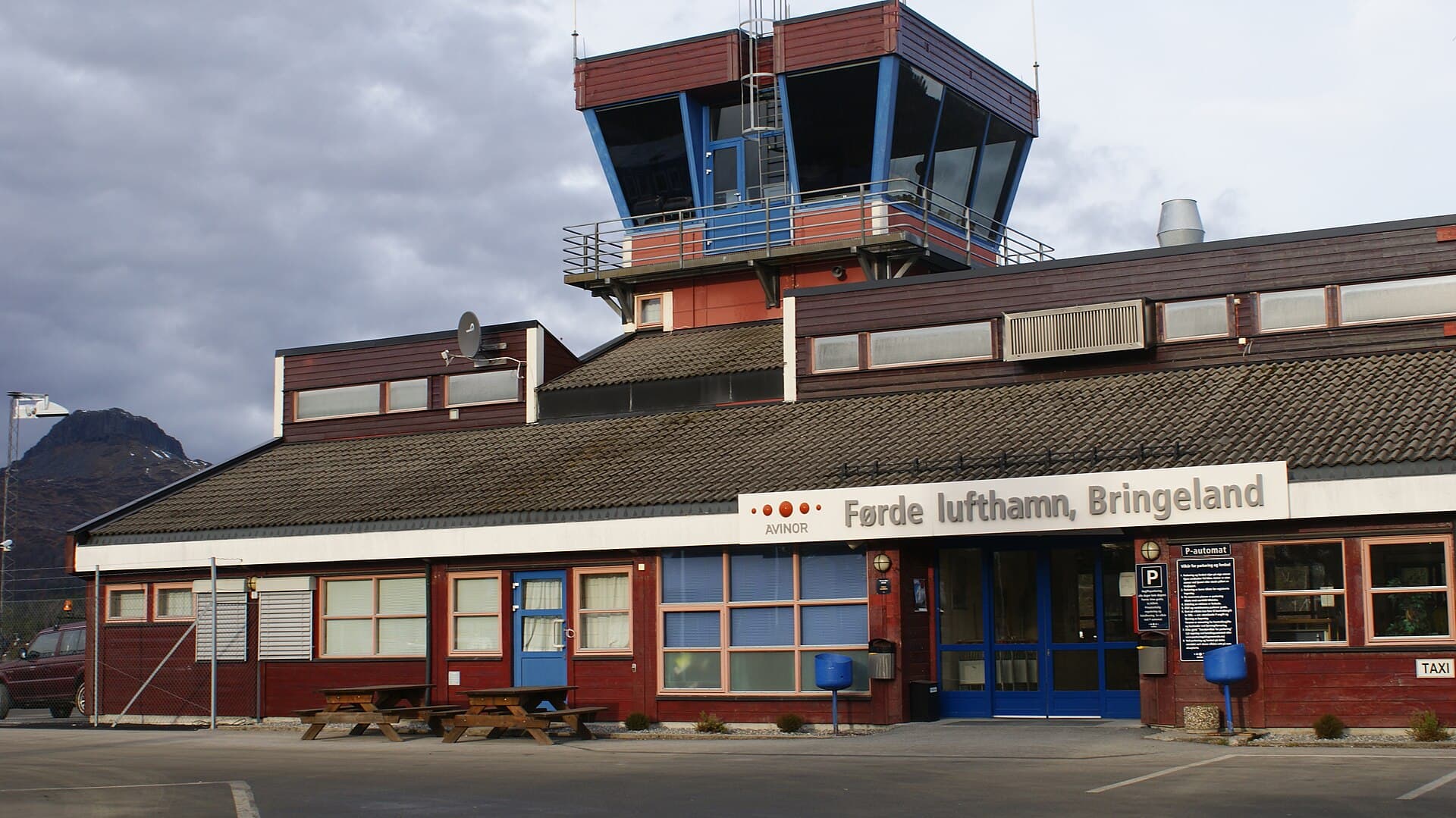
Førde está bien conectada por vuelos regionales y redes de carreteras. El punto de entrada más conveniente es el Aeropuerto de Førde, Bringeland (FDE), ubicado aproximadamente a 8,3 km del centro de la ciudad, con rápidos traslados en taxi o autobús. Los autobuses exprés conectan Førde con las principales ciudades como Oslo, Bergen y Ålesund. Aunque Førde es un centro regional, alquilar un coche es la forma más conveniente de explorar los fiordos y valles circundantes. Conducir en Førde, como en el resto de Noruega, es por el lado derecho de la carretera.
El alojamiento en Førde puede llenarse rápidamente durante los meses pico de verano (junio a agosto), por lo que se recomienda encarecidamente reservar con antelación. Los precios tienden a ser de rango medio a alto, lo que refleja el costo de vida general en Noruega. La moneda local es la Corona Noruega (NOK). Førde opera en la hora de verano de Europa Central (UTC +01:00). En caso de emergencia, marque 112 para la policía, 113 para la ambulancia y 110 para los bomberos.
Førde en coreano, en chino o en hebreo — y 29 idiomas más, cada parada narrada por una voz nativa. La mayor variedad de idiomas de cualquier audioguía autoguiada.
Disponible en: